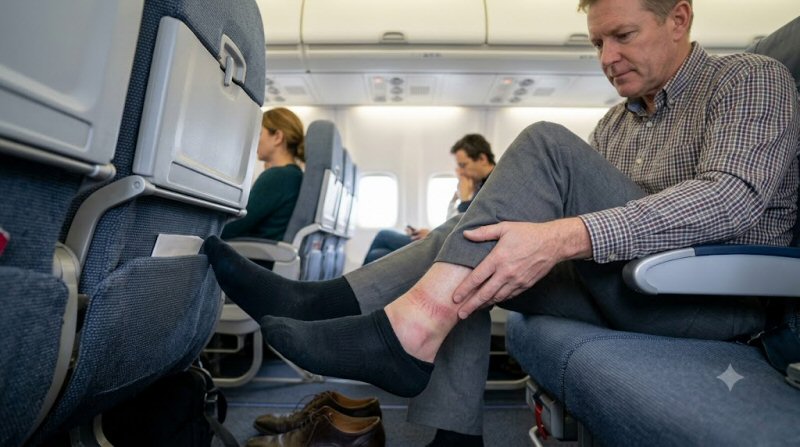
The sinus node still expects daytime walking and a long night of vagal quiet. Desk days leave resting rate higher and the breath-linked rise and fall harder to feel.

You notice it on the stairs after a still afternoon. The pulse in your neck is suddenly obvious, a little fast, a little loud, as if the heart had been waiting for permission to work. At the desk it had felt quiet. On the walk to the car it feels like a small engine catching up. That catch-up is not a flaw. It is the sinus node doing a job it was built for, on a day that barely asked for it.
The sinus node is the heart’s pacemaker, a few millimeters of specialized cells in the wall of the right atrium where the superior vena cava joins. Arthur Keith and Martin Flack described it in 1907, and it has been the ordinary starter of every heartbeat since long before chairs. It does not wait for a nerve to fire each beat. It leaks, depolarizes, and fires on its own. Nerves only lean on the rate. Walking was the lean it expected most of the day. Sitting is a new instruction.
What This Rhythm Feels Like
Most people never feel the node itself. They feel the rate it sets. A resting pulse in the 60s or 70s at a quiet desk. A jump of ten or twenty beats when you stand. A softer, slower beat on a long exhale. A quicker one when you climb a hill, laugh, or drink coffee on an empty stomach. After a day of almost no steps, the first brisk walk can make the chest feel “busy” for a minute or two, then settle into a steadier working rate.
You may also notice the opposite: a gentle speed-up as you breathe in and a slowdown as you breathe out, easiest to feel at night or after a calm walk. That rise and fall is respiratory sinus arrhythmia. It is a sign the vagus nerve still has a hand on the node, not a skipped beat. A truly skipped sensation, one hard thump after a pause, is usually a premature beat, covered in is it normal for your heart to skip a beat. The walking speed-up is smoother. It tracks effort, then fades when you stop.
What is easy to misread is the desk-day contrast. A heart that has idled for hours can feel dramatic the moment the baroreceptors still expect you to stand. The rate change is real. The danger, in a healthy person, usually is not.
What the Node Was Built to Do
Pacemaker cells do not hold a steady voltage the way ordinary atrial muscle does. They drift upward until a threshold is crossed and a beat begins. Dario DiFrancesco traced much of that drift to the “funny” current through HCN channels. Edward Lakatta and colleagues added a calcium clock in the same cells, a second timer that helps set the pace. The two clocks talk. Sympathetic nerves speed both. The vagus slows both.
Left alone, the node is faster than the resting pulse you count. Antonio José and David Collison, blocking both autonomic limbs, found an intrinsic rate near 100 beats per minute in young adults, falling with age roughly along the line of 118 minus about 0.57 times age. Everyday rates in the 60s exist because the vagus is winning. Matthew Levy mapped that autonomic push and pull: acetylcholine on muscarinic receptors slows the node within a beat or two, norepinephrine on beta receptors speeds it.
Respiratory sinus arrhythmia is the clearest everyday proof of the vagal hand. Heart rate rises in inspiration as vagal traffic briefly lifts, and falls in expiration as it returns. Dwain Eckberg and Paul Katona showed how tightly that pattern follows breath and vagal tone. It is larger in the young, in fit people, and when breathing is slow. It shrinks with age, with anxiety, and with a high sympathetic background. Thomas Lewis had already watched the clinical version on early electrocardiograms: a regular irregularity that tracked the breath, not disease.
Daytime walking was the other half of the design. A foraging day is not a sprint. It is hours of easy locomotion, brief carries, hills, stops, and a long dark rest. The node expects that pattern: a working rate in the 90s to low 100s for ordinary walking, a quick vagal drop when you pause, and a slower night. Loring Rowell described the cardiovascular side of that work. Muscle asks for flow, the node supplies rate, and the vessels share the job. A chair asks for almost none of it.
Why Desk Days Feel Different
A modern heart can spend ten hours at a rate the node would once have used only for sitting in camp. The intrinsic clock is still near 100. The vagus holds it down, but the hold is flatter. There is less respiratory sinus arrhythmia if breathing is shallow and the day is keyed up. There is less of the natural rise and fall that comes from starting and stopping a walk. When you finally stand, vagal tone withdraws, sympathetic traffic rises, and the rate jumps. That jump is the baroreflex, not a malfunction. It can feel like a flutter if you have also had coffee, a short night, or a skipped lunch.
Training changes the same machinery in the other direction. Endurance athletes often rest in the 40s or 50s. Part of that is vagal tone. Part may be the node itself. Alicia D’Souza, Mark Boyett, and colleagues reported that training can downregulate HCN4 in the sinus node and lower the intrinsic rate, not only the nerve input. Other physiologists, including George Billman, have argued that the famous athletic bradycardia is still mostly autonomic. Both can be true in different people: more vagal restraint, and a pacemaker that has been remodeled by repeated work. The mismatch is the person who does neither. The node is not “broken” by a desk. It is under-rehearsed, and the autonomic brakes are less practiced.
Epidemiology has noticed the idle rate. A higher resting pulse tracks higher long-term risk in population studies associated with Xavier Jouven, William Kannel, and others. It is a marker, not a verdict. It travels with poor fitness, poor sleep, higher blood pressure, and fewer daily steps. Lowering it on purpose with a walking habit is a different project from chasing a number on a watch.
Night still belongs in the story. Heart rate usually falls in sleep as vagal tone rises, in step with the blood pressure that still expects a nighttime dip. A late meal, alcohol, a bright screen, or a short sleep can flatten that drop. You wake with a rate that already feels busy, before the desk day starts.
Less Common but Serious Patterns
A sinus node that is tired in the medical sense is not the same as a desk-day pulse. Sick sinus syndrome, more often in older adults, can bring pauses, a very slow rate, or a rate that alternates between too slow and abrupt atrial tachycardias. Fainting, a pause you can feel as a long silence, or a rate that stays under 40 with dizziness is a reason to be seen, not a reason to walk it off.
Other rhythms borrow the feeling. Atrial fibrillation is irregularly irregular, often faster, and does not track your breath. Supraventricular tachycardia starts and stops like a switch, often at 150 or more, out of proportion to the hill you are on. Inappropriate sinus tachycardia is a sustained fast sinus rate at rest, sometimes after a viral illness, and it is uncommon. Postural tachycardia is a large rate jump on standing with symptoms, more than the ordinary 10 to 20 beat rise. Chest pain, fainting, a rate that stays above 100 while you are truly at rest, or a new irregular rhythm needs a clinician, not a longer exhale.
Anemia, fever, thyroid excess, dehydration, and some medicines (including stimulant decongestants and excess thyroid hormone) can also push a normal node faster. The node is doing what it was told. The instruction is the problem.
Hidden Triggers
Caffeine and nicotine lean on the same beta-adrenergic side the node uses for a hill. On a moving day the extra rate hides inside the walk. On a still day it shows up as a forceful pulse at the laptop. Alcohol can speed the night rate and fragment sleep, so the morning node starts higher. Poor sleep does the same through cortisol and a less effective vagal brake. A large rushed lunch pulls blood toward the gut and can leave the rate a little higher while you sit, especially if you skip the after-meal stroll the arteries still expect.
Shallow chest breathing shrinks respiratory sinus arrhythmia even when nothing is wrong with the node. So does constant pulse checking. The act of watching the number is a small sympathetic event. Heat, a poorly ventilated room, and a high-carbon-dioxide afternoon do their own version: a faster rate for the same work, because the blood is carrying less useful oxygen per liter and the chemoreceptors are less satisfied.
Deconditioning is the slow trigger. Two weeks of very little walking and the same hill costs more beats. The node has not forgotten the hill. The muscles and vessels have stopped sharing the load, so rate has to cover more of it.
When to Worry
Ordinary clues can wait for a routine visit: a resting rate in the 80s on desk days that falls when you walk more, a noticeable but brief jump when you stand, and a breath-linked rise and fall. Urgent clues should not wait. Chest pressure, fainting or near-fainting, a sudden racing rate that does not match the effort, a new irregular rhythm, shortness of breath at rest, or a slow rate with confusion or chest pain belongs in urgent care. A watch alert is a hint, not a diagnosis. If the hint includes a pause, a sustained rate over 100 at true rest, or symptoms, bring the tracing to someone who can read it.
Myths vs Facts
Myth: A resting pulse over 60 means the node is unhealthy.
Fact: José and Collison’s intrinsic rate sits near 100. A resting 70 often means the vagus is doing its job. Athletes can sit much lower. Context matters more than a single cut-off.
Myth: Feeling your heart on a walk means you are unfit or in danger.
Fact: A smooth rise with effort and a fall when you stop is the node working. Danger is a rate that stays high at rest, arrives in a sudden burst, or comes with pain or fainting.
Myth: Respiratory sinus arrhythmia is an arrhythmia to treat.
Fact: The breath-linked speed-up and slowdown is vagal physiology. Lewis watched it a century ago. It usually shrinks when you are stressed and grows when you are calm and fit.
Myth: You can reset the node with a supplement.
Fact: The levers that actually change sinus rate are walking, sleep, breathing pattern, caffeine, alcohol, fever, thyroid status, and a few medicines. No powder replaces a daily walk.
How to Give the Node a Walking Day
You do not need a training plan to match the old pattern. You need rate changes that look like locomotion.
- Break still time. A few minutes of easy walking each hour gives the node a small, expected rise and a vagal drop when you sit again. The drop is the rehearsal.
- Keep one genuine walk. Twenty to forty minutes at a pace where you can talk changes the day’s average more than a perfect gym plan you skip.
- Use the long exhale the vagus still expects. A slightly longer out-breath at the end of a walk makes respiratory sinus arrhythmia easier to feel, which is reassurance, not a treatment for disease.
- Put caffeine earlier, and not on an empty, still stomach. The same cup during a walk feels different from the same cup at a deadline.
- Protect the night drop. A dimmer last hour and a consistent wake time give the node the slow chapter it still schedules.
- Ignore single readings. Count a resting pulse after five quiet minutes, morning and evening, for a week if you are curious. Trend beats a screenshot.
If you are starting from a very still month, let the first walks be easy. The node will overshoot a little until the calves and vessels share the work again. That overshoot settling across days is the adaptation, not a setback.
When to See a Doctor
See a clinician if resting rate is persistently over 100, under 50 with dizziness and you are not a trained athlete, the pulse is irregularly irregular, standing makes you faint, or a racing episode starts and stops like a switch. Bring medicines, caffeine and alcohol pattern, and any watch tracings. A simple electrocardiogram answers more than another week of guessing. Thyroid tests, blood count, and iron status are reasonable if the rate changed without a change in fitness.
FAQs
Is it normal for my pulse to jump when I stand after sitting all day?
Yes. A rise of about 10 to 20 beats is an ordinary baroreflex. A much larger jump with dizziness, especially if it keeps happening, is worth a medical look.
Why can I feel my heartbeat on a walk but not at my desk?
Walking withdraws vagal tone and adds sympathetic drive, so each beat is faster and often stronger. The node was built for that shift. A desk rate is the braked version.
Does a higher resting heart rate mean my sinus node is failing?
Usually no. Desk time, poor sleep, caffeine, fever, anemia, and an overactive thyroid all speed a normal node. Failure looks more like pauses, very slow rates, or fainting.
Can breathing exercises lower my heart rate?
A longer exhale can increase vagal effect within minutes and make sinus arrhythmia more obvious. It does not replace walking, and it will not fix an abnormal rhythm.
Should athletes worry about a pulse in the 40s?
A slow resting rate in a trained person is common, and some of it may be intrinsic remodeling of the node, as Boyett and D’Souza have argued. Dizziness, pauses, or a rate that does not rise with effort is the part that needs checking.
Does the sinus node age?
Yes. Intrinsic rate falls with age, and respiratory sinus arrhythmia shrinks. That is expected. A new irregular rhythm or fainting is not explained by age alone.
Conclusion
The sinus node still expects a walking day and a quiet night. Keith and Flack’s small strip of pacemaker cells fires on its own near 100 beats when no nerve is leaning on it. The vagus is what makes a resting pulse feel calm, and walking is what teaches that brake to let go and return. A desk day leaves the rate flatter, then dramatic on the stairs. Give the node the rises and the recoveries it counted on, and the busy feeling on the first hill usually becomes an ordinary working rhythm again. Pain, fainting, or a rate that will not match the effort is the signal to stop experimenting and get an electrocardiogram.