Healthy blood pressure still falls 10–20% in true darkness. O’Brien, Pickering, Kario and Staessen mapped why a missing night dip predicts risk — and how light, salt, apnea and sitting flatten an old circadian script.
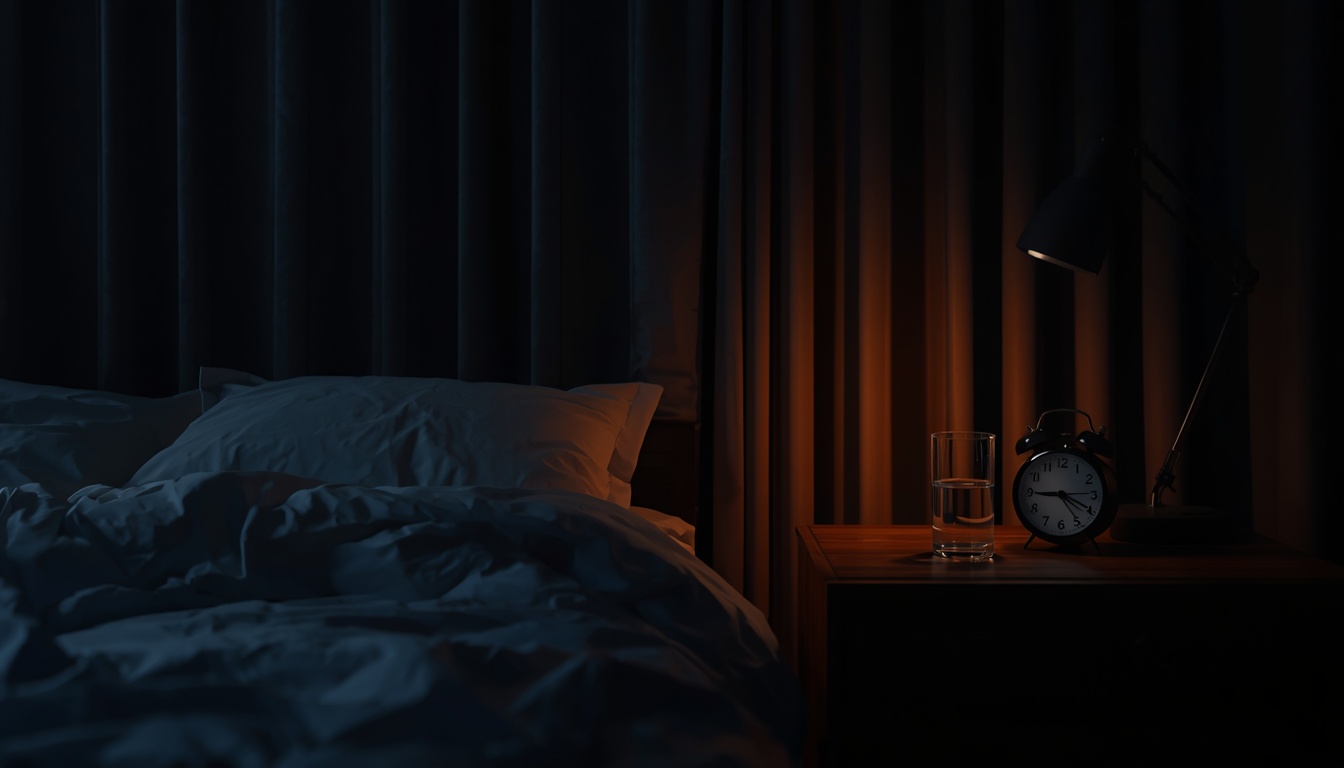
Your daytime blood pressure is a work number. It has to keep the brain perfused when you stand, walk, talk and lift. Night is supposed to be a different job. In a dark, recumbent, fasting stretch, healthy arteries usually let pressure fall by about 10 to 20 percent from the daytime mean. That drop is so consistent that hypertension researchers gave it a name: the nocturnal dip.
Eoin O’Brien in Dublin, Thomas Pickering in New York, Kazuomi Kario in Japan and Jan Staessen in Leuven spent decades putting portable monitors on people and watching what happened after lights-out. The pattern that emerged is not a wellness slogan. People whose pressure barely falls at night — “non-dippers” — and people whose pressure rises after they lie down — “reverse dippers” — carry more stroke, heart-failure and kidney risk than people with the same daytime number and a clean night drop. The cuff in the clinic never sees that half of the story.
The dip is old biology meeting a new bedroom. Arteries still expect darkness, recumbency, quieter breathing and a pause in salt and calories. Modern evenings often send the opposite brief: screens, late meals, apnea, alcohol, a full bladder and a mind that will not stand down. The vessels notice.
What a Night Dip Actually Is
Ambulatory blood-pressure monitoring samples the arm every 15 to 30 minutes for 24 hours. The nocturnal window is usually defined as the hours the person reports sleeping, or as a fixed clock window such as midnight to 6 a.m. A conventional dip is a fall of 10 to 20 percent in both systolic and diastolic pressure relative to the awake mean. Less than 10 percent is non-dipping. A night average higher than the day average is reverse dipping. A drop greater than about 20 percent is sometimes called extreme dipping; that pattern has its own debate, especially in older adults whose brain may need a higher floor.
The dip is not a single switch. It is the sum of recumbency (less hydrostatic load on the heart and brain), slower breathing, lower muscle tone, a fall in sympathetic traffic, a rise in parasympathetic tone, a drop in circulating catecholamines and a night-time rise in melatonin and other circadian signals. The kidney joins in. Night should be a stretch of lower renin and aldosterone traffic and a chance to excrete the day’s sodium. When that renal night shift fails, pressure stays up.
Pickering’s group showed that the clinic reading and the night reading can disagree in both directions. Some people are high only in the office. Some are high only after dark. The cardiovascular risk tracks the night number more tightly than the white-coat spike. That is why guidelines eventually made space for home and ambulatory monitoring rather than treating the single morning cuff as the whole truth.
The Body That Learned to Stand Down After Dark
Ancestral nights were dark, cool and relatively still. There was no reason for arterioles to stay braced for a chase. The hypothalamic clock, the pineal melatonin signal and the baroreflex had a clean cue: light gone, body horizontal, gut quiet. Pressure could fall without leaving the brain under-perfused, because the person was not about to stand and sprint.
Melatonin is not only a sleep hormone. It has vascular effects. Night-time melatonin helps the vessels relax and helps the clock keep the autonomic nervous system on a night schedule. That is one reason the article on why the pineal still expects true darkness belongs next to this one. Evening light delays melatonin onset. Delayed melatonin delays the vascular night shift. The cuff does not care that the delay came from a phone.
Cortisol’s dawn rise is the other bookend. A healthy 24-hour curve has low night cortisol and a morning surge that helps you stand up. Flatten the night and you often flatten or mistime the morning as well. The piece on why cortisol still expects dawn is the hormonal twin of the pressure dip: both systems still treat first light after darkness as the start of the workday.
Salt is the third old constraint. Kidneys evolved under scarce sodium. They are good at holding salt and less practiced at dumping a modern evening load while you sleep. Staessen and others showed that non-dipping is more common when sodium intake is high and when the kidney is already stiff from age, diabetes or chronic kidney disease. The sister article on why blood pressure still expects scarce salt is the daytime half of the same set point. Night is when the leftover sodium is supposed to leave. If it does not, the vessels stay slightly overfilled.
What Flattens the Dip in Modern Life
Obstructive sleep apnea is the loudest medical flattening force. Repeated airway collapse jerks sympathetic outflow, spikes pressure, fragments slow-wave sleep and leaves the night average high even when the clinic number looks ordinary. Kario’s work on morning surge and nocturnal hypertension in Japanese cohorts made the apnea–pressure link hard to ignore. Snoring, witnessed pauses, unrefreshing sleep and a wide neck are not lifestyle footnotes. They are vascular data.
Evening light and social jet lag shift the clock later than the work alarm. The body tries to keep pressure up through a night that is not yet “night” by internal time. Shift work and late screens do a smaller version of the same thing every week.
Late, salty, large dinners keep the gut and the kidney on a day shift. Alcohol fragments sleep and can raise night-time pressure even when it feels like it helped you fall asleep. A full bladder at 2 a.m. is a sympathetic cue. So is pain. So is a hot, dry bedroom that keeps you in light, restless sleep.
Daytime sitting changes the other half of the 24-hour curve. Arteries that rarely see walking shear run stiffer by evening. A stiff vessel does not relax as cleanly when you finally lie down. The dip is not only a night event. It is the night expression of a vessel that was loaded, walked and fed on a day schedule.
Medications matter in both directions. Some blood-pressure pills are taken only in the morning and run out before midnight. Some people need a night-time dose; that is a clinician’s call, not a blog experiment. Decongestants, some antidepressants, NSAIDs, steroids and extra evening sodium from restaurant food all push the night number up. So does untreated hyperthyroidism, primary aldosteronism and chronic kidney disease. A missing dip is a pattern. It is not a diagnosis by itself.
When a Missing Dip Is a Warning
Non-dipping becomes more urgent when it travels with morning headache, unrefreshing sleep, loud snoring, swelling in the legs, rising creatinine, protein in the urine, diabetes, prior stroke or a strong family history of early vascular disease. Reverse dipping deserves the same seriousness as a high clinic reading. Extreme dipping in an older person with stiff arteries can theoretically under-perfuse the brain at 4 a.m.; that is one reason home numbers and symptoms belong in the same conversation.
A single bad night does not rewrite your risk. Travel, a late wedding, a fever or a full moon of worry can flatten one tracing. The pattern that matters is the usual night, measured on ordinary days, ideally with a validated monitor and a sleep diary.
Do not chase a perfect percentage at home with extra pills you were not prescribed. The useful move is to bring a 24-hour or well-kept home series to someone who can look for apnea, aldosteronism, kidney disease, timing of existing medicines and the ordinary evening habits that are cheaper to change than a second drug.
Myths vs Facts
Myth: If the clinic number is fine, night pressure must be fine.
Fact: Masked nocturnal hypertension is real. Pickering’s work is one reason guidelines now value out-of-office readings.
Myth: The dip is just “relaxation.”
Fact: It is a coordinated circadian, autonomic, renal and postural program. You cannot meditate a kidney into dumping sodium if the clock and the salt load are wrong.
Myth: Everyone should take blood-pressure medicine at night.
Fact: Timing trials have disagreed. Some people benefit from evening dosing; some get too low at 3 a.m. That decision belongs with the person who sees your tracing.
Myth: A wearable wrist cuff is as good as a medical ambulatory monitor.
Fact: Many consumer devices are not validated for sleep. A certified upper-arm monitor and a true 24-hour medical study still earn more trust.
How to Give the Night Dip a Fair Chance
Protect darkness in the last two hours before bed. Dim household lights. Keep phones out of the pillow zone. The pineal does not negotiate with autoplay.
Finish the main salt and calorie load earlier. A walking finish after dinner helps the arteries and the glucose curve; it also gives the kidney a head start on the night shift.
Treat the airway as vascular equipment. If you snore, choke, gasp or wake unrefreshed, ask about sleep apnea before you add a third pressure pill.
Stand and walk in daylight. Baroreflexes and endothelial nitric oxide stay more flexible when the day includes real upright minutes, not only a gym burst after ten seated hours.
Keep the bedroom cool enough to sleep. Empty the bladder before lights-out. Go easy on evening alcohol. If you already take pressure medicine, take it as prescribed and bring a log rather than inventing a new schedule.
None of this replaces treatment when the night number stays high. It is the environment the dip evolved inside. You are not obliged to live in a cave. You are better off not lighting a stadium over the pillow.
When to See a Doctor
See a clinician promptly for sudden severe headache with high readings, chest pain, one-sided weakness, breathlessness at rest or swelling with rising home numbers. Book a non-urgent visit if home or work readings are high, if you snore and wake tired, if morning headaches are routine, if you are pregnant, or if a 24-hour monitor already showed non-dipping or reverse dipping. Bring the device, the times you slept and the times you took medicine. The night half of the curve is only useful if someone reads it.
FAQs
How much should blood pressure fall at night?
A common research definition is a 10 to 20 percent fall from the daytime mean. Individuals vary. The shape of the 24-hour curve and the night average often matter more than hitting an exact percentage.
Can I measure the dip with a home cuff?
A few scheduled night readings help, but they interrupt sleep and miss the full curve. A validated 24-hour ambulatory monitor is still the reference tool when the question is dipping.
Does sleep position change night pressure?
Lying down lowers hydrostatic load compared with sitting. Severe apnea is worse on the back for many people and can spike night pressure regardless of the mattress. Position is a modifier, not the whole mechanism.
Is a missing dip always sleep apnea?
No. Apnea is a leading fixable cause, but high evening salt, kidney disease, diabetes, autonomic neuropathy, late light, some medicines and primary aldosteronism can flatten the curve without a single snore.
Should I wake myself to check a 3 a.m. reading?
Not as a nightly habit. One or two planned checks can be informative. Repeated alarms wreck the sleep the dip needs. Use a medical 24-hour study when the answer matters.
Does a good dip mean I can ignore daytime pressure?
No. Daytime load still injures vessels. The dip is additional information, not a free pass on the hours you are awake.
Conclusion
Blood pressure is not a single number. It is a 24-hour story that still expects the work of standing and the permission of night. O’Brien, Pickering, Kario and Staessen did not invent that story. They measured it well enough that a missing dip became a clinical finding instead of a curiosity.
You cannot recreate a pre-electric night. You can stop arguing with the last piece of the script the vessels still know: darkness, a quieter gut, an open airway and a kidney that is allowed to finish the day’s salt before dawn. The morning cuff will make more sense once the night has been allowed to do its older job.