Mild ankle puffiness by evening is often gravity, a quiet calf pump, heat, or salt — fluid that settles overnight. Here is when sock marks are ordinary and when one-sided or lasting swelling needs a closer look.
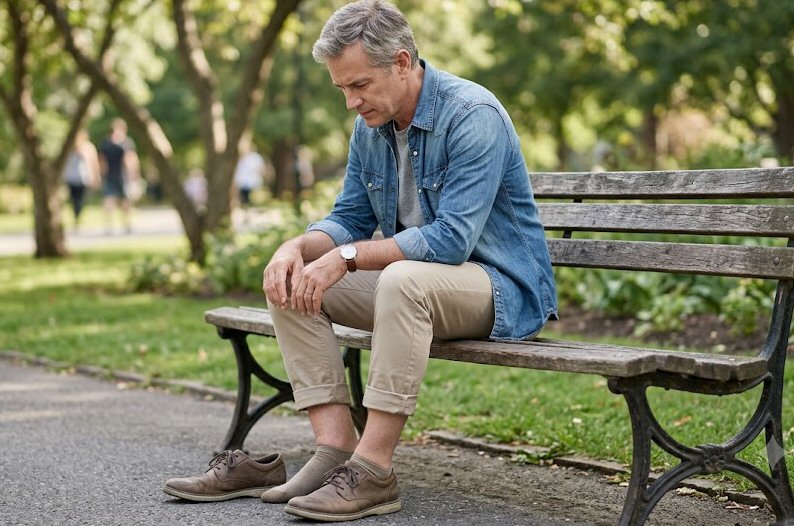
You put your shoes on in the morning and they fit. By late afternoon the same pair feels snug, the skin over the ankle bones looks smoother, and your socks have left a pale ring. It is one of the most ordinary end-of-day complaints, and for many people it is also one of the most ordinary pieces of circulation physics: fluid has spent hours under a column of gravity, and the muscles that usually push it back up have been standing still.
That pattern — both ankles, mild, worse in heat or after a long day upright, gone again by morning — is usually dependent edema, not a failing heart. The less ordinary version is sudden, one-sided, painful, or still there after a night with the legs up. Those deserve a different kind of attention.
What Evening Ankle Swelling Feels Like
The change is often easier to see than to feel. The hollows beside the Achilles tendon fill in. Rings of sock elastic stay visible for a few minutes after you take the socks off. Shoes that were comfortable at breakfast press across the instep by dinner. Press a fingertip into the skin just above the ankle bone and a shallow dent may linger for a second or two. That dent is pitting, and a brief shallow pit after a long day is common.
The swelling is usually symmetric. It sits lowest: ankles and the tops of the feet, not the thighs. It is rarely hot, red, or sharply tender. Walking may actually feel better than standing still, because the calf starts working again. Lying down with the feet higher than the heart often shrinks it within an hour or two, and a night of sleep usually finishes the job.
If only one ankle balloons, if the skin is warm and sore, or if the swelling climbs the calf and is still there at breakfast, that is a different story from ordinary evening puffiness.
Why Fluid Collects at the Ankle
Blood returning from the feet has to climb. In a quiet standing posture the veins of the ankle carry a tall column of blood. Classic venous-pressure recordings, including the walking studies of Pollack and Wood, showed ankle venous pressure near the full standing column — often around 80 to 90 mmHg — and a sharp drop once the calf pump is working. Andrew Nicolaides and colleagues later mapped the same ambulatory venous pressure: healthy walking lowers it; standing in place does not.
Capillaries leak a little fluid all day. Ernest Starling described the balance in 1896: hydrostatic pressure pushes fluid out, plasma proteins pull some of it back, and what remains is the lymphatics’ job. At the ankle, standing raises the outward push. Arthur Guyton later showed that tissues have safety factors against edema — a slightly negative interstitial pressure, protein wash-down, and a lymph flow that can rise many-fold — so a little extra filtration does not instantly become swollen legs. Those brakes are finite. After hours upright, especially in heat, a teaspoon or two of fluid in each ankle is enough to erase the hollows and print a sock mark.
Heat widens skin vessels and raises capillary flow, which Loring Rowell’s work on circulatory adjustments to temperature helps explain. Salt-heavy meals and a large fluid load give the kidneys more volume to place. Hormonal shifts across the menstrual cycle, and the later trimesters of pregnancy, do the same on a larger scale. Age adds softer vein walls and valves that close less perfectly, so the column of pressure is harder to break. None of that requires a diseased heart. It requires gravity, time, and a calf that has not been pumping.
The same pump is why a day of sitting can feel like a day of standing. Related patterns are covered in why your veins still expect the calf pump and why legs feel heavy after sitting.
Common Everyday Triggers
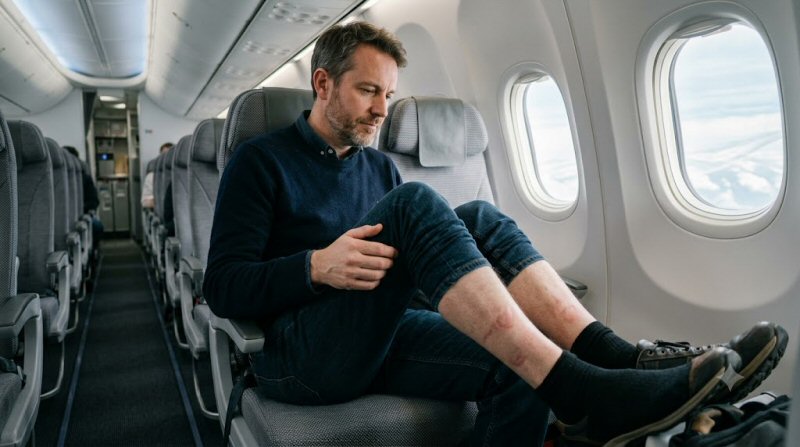
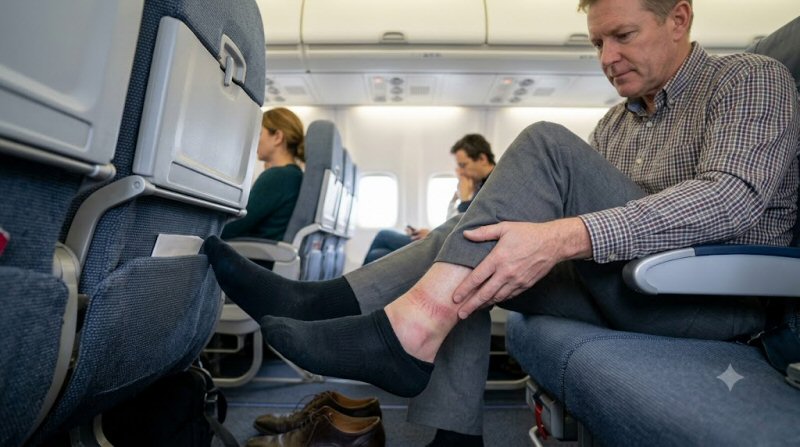
A retail shift, a kitchen line, a security post, or a conference where you stand in conversation all do the same thing: ankles down, soleus quiet. Desk days do it too, because the chair takes the pump offline even though the feet are not bearing full weight. Long drives and flights add a cramped knee angle and low cabin pressure; cabin ankle swelling is the travel version of the same dependent pattern, described in is it normal for your ankles to swell on a plane.
Hot weather and hot rooms dilate veins and increase filtration. A salty restaurant meal the night before leaves more circulating volume the next afternoon. Soft, unsupportive shoes and tight sock cuffs do not cause the fluid, but they make the swelling obvious and can add a dent of their own. Extra body weight raises abdominal pressure and the work the leg veins must do. Early pregnancy and the days before a period are classic times for bilateral ankle softness that tracks the calendar more than the heart.
Some common medicines shift the same Starling balance. Dihydropyridine calcium-channel blockers such as amlodipine dilate precapillary vessels and are well known for ankle edema, a point Murray Epstein and Franz Messerli have both emphasized: the swelling is from local filtration, not from the kidneys failing to pass urine. Other drugs — some anti-inflammatory painkillers, certain diabetes medicines, hormones — can add fluid retention. A new puffiness that starts days after a prescription change is worth mentioning to the prescriber, not quietly enduring.
Less Common but Serious Causes
Heart failure can cause ankle edema, but the everyday version is usually different in texture. Cardiac edema tends to build over days, may reach the shins or thighs, often comes with breathlessness on stairs, a cough when lying flat, or sudden weight gain, and may not vanish after one night of elevation. Kidney and liver disease can do the same through low protein or salt retention, sometimes with swelling around the eyes in the morning rather than only at the ankles at night.
A clot in a deep leg vein is the pattern people most need not to miss. It is usually one leg, often with calf ache, warmth, and redness, and it does not politely resolve by morning. Charles Homans described calf pain on foot dorsiflexion, but that sign is unreliable either way; absence of it does not clear a swollen calf. Sudden one-sided swelling after a flight, surgery, a leg cast, cancer treatment, or a week in bed belongs with urgent care, not with a salt lecture.
Chronic venous disease — valves that no longer hold — leaves hemosiderin staining, skin thickening near the ankle, itching, or a vein that aches and swells every evening for months. Lymphedema is firmer, may pit poorly, and often starts at the toes. Neither is an emergency on a quiet Tuesday, but both are reasons to stop calling it “just the end of the day” once skin starts to change.
Hidden Triggers People Miss
The quietest trigger is stillness with the knees bent. A soleus that never shortens cannot empty the deep veins, so pressure at the ankle stays high even if you feel you have “been on your feet.” Crossing the legs adds a local tourniquet. Very tight leggings or knee-high boots can do the same.
Air conditioning that is actually warm at floor level, a heated office, and a salty lunch eaten at the desk stack together. So does the habit of drinking very little until evening, then catching up with a large volume that the ankles see before the kidneys do. Poor sleep and a high-salt dinner the night before show up as tighter shoes the next afternoon.
People who have recently stopped a walk commute, started a standing desk without movement breaks, or switched to softer shoes often notice the change and blame the shoes alone. The shoes reveal the fluid. The day without a calf pump produced it. Feet that puff after a single long sit are the shorter version of the same story, covered in is it normal for your feet to swell after sitting.
When to Worry
Seek urgent care if one leg swells suddenly, especially with calf pain, warmth, or redness; if swelling arrives with chest pain, sudden breathlessness, coughing blood, or fainting; or if both legs swell rapidly with trouble breathing when you lie down.
Book a routine visit if both ankles swell and the puffiness is still obvious every morning, if it is climbing toward the knees, if you are gaining weight quickly without a change in eating, if the skin is browning, hardening, or breaking down, or if swelling began after a new medicine. Pregnancy with sudden swelling of the face or hands, headache, or visual change needs same-day obstetric advice, not a wait until the next routine visit.
Mild bilateral sock marks that fade overnight, in an otherwise well person, are a circulation habit more than a diagnosis.
Myths vs Facts
Myth: Evening ankle swelling always means heart failure. Fact: Heart failure is one cause, usually with breathlessness, lasting swelling, and other signs. Gravity plus a quiet calf is far more common.
Myth: If it pits, it is dangerous. Fact: A brief pit is just fluid in soft tissue. Danger lives in the pattern — one side, pain, redness, breathlessness — not in the dent itself.
Myth: Drinking more water will flush the swelling the same day. Fact: Extra water does not speed the calf pump. Movement, elevation, and less all-day standing do. Chronic severe restriction is not the answer either.
Myth: Compression socks are only for older people or flights. Fact: Graduated compression is a mechanical substitute for a missing pump. Hugo Partsch and others showed it lowers venous pressure and limits filtration when it is fitted, not painfully tight at the top.
Myth: Homans’ sign rules a clot in or out. Fact: Calf pain on pulling the foot up is neither sensitive nor specific. One-sided painful swelling still needs assessment.
How to Manage Ordinary Evening Puffiness
Use the calf on purpose. A few minutes of walking each hour beats a single heroic stroll at 6 p.m. Heel raises at the counter, ankle circles under a desk, and taking calls on foot all drop venous pressure the way Pollack and Wood recorded during walking. Avoid long stands with locked knees.
Elevate when you can. Feet above heart level on a sofa for 20 to 30 minutes in the evening moves fluid back into circulation, where the kidneys can handle it overnight. A pillow under the calves in bed is enough for many people; the goal is drainage, not a circus pose.
If heat and salt are obvious culprits, cool the room, choose a less salty lunch, and spread fluid across the day instead of catching up at night. Supportive shoes with room in the toe box keep the swelling from becoming pain. Graduated compression socks, stronger at the ankle than at the calf, help people who stand for work — put them on before the fluid arrives, not after the ankles are already full. A clinician should guide compression if you have arterial disease, neuropathy, or skin breaks.
Review medicines with the prescriber if edema started after a new drug. Do not stop a blood-pressure medicine on your own. Track a few mornings: weight, whether the sock marks are gone, and whether one side is leading. That log is more useful than a single worried evening.
When to See a Doctor
See a doctor when the swelling is new and persistent, one-sided, paired with breathlessness or chest symptoms, associated with skin color change or wounds, or unexplained by a long day, heat, a period, pregnancy, or a known medicine. Primary care can sort dependent edema from venous disease, medication effects, and the less common heart, kidney, and liver patterns, and can decide whether an ultrasound is needed. Urgent care or emergency care is the right door for sudden one-leg swelling or swelling with breathing trouble.
FAQs
Is a sock ring at the end of the day normal? A pale ring that fades after you have been off your feet is common. It means soft tissue held a little fluid under an elastic cuff. Rings that are deep, painful, or still there at breakfast are worth mentioning to a clinician.
Why is it gone in the morning? Horizontal sleep removes the standing column. Lymphatics and veins catch up, and the kidneys excrete the returned fluid. That overnight reset is the reassuring half of ordinary dependent edema.
Does standing all day damage the veins? A single day does not. Years of high ambulatory pressure, with failing valves, can contribute to chronic venous disease. Regular walking breaks and fitted compression are the practical protections, not fear of a normal shift.
Can salty food alone do this? Salt can add volume, especially with heat and stillness, but it rarely produces one hot painful calf. If swelling tracks restaurant meals and resolves overnight, salt and gravity are reasonable suspects.
Should I worry if only the left ankle swells? One side can be how you stand, an old ankle injury, or a tighter shoe. New one-sided swelling with pain or redness should not be watched for a week at home.
Are compression socks safe to try? For most healthy people, light graduated socks (often 15–20 mmHg) worn during upright hours are reasonable. Skip them, or get advice first, if you have poor leg pulses, severe neuropathy, or open skin.
Conclusion
Ankles that puff by evening and slim by morning are usually doing fluid accounting in public. Gravity raises capillary pressure, a quiet calf never resets it, and heat or salt tips Starling’s balance just enough to print a sock mark. Walk, elevate, cool down, and notice medicines. Keep the urgent door for one leg, pain, redness, or breathlessness — and let the ordinary pair of ankles finish draining overnight.