A puffy face after landing is usually cabin air, salt, sleep posture, and a fluid shift—not a sudden allergy. Here is when post-flight facial swelling is ordinary and when it is not.
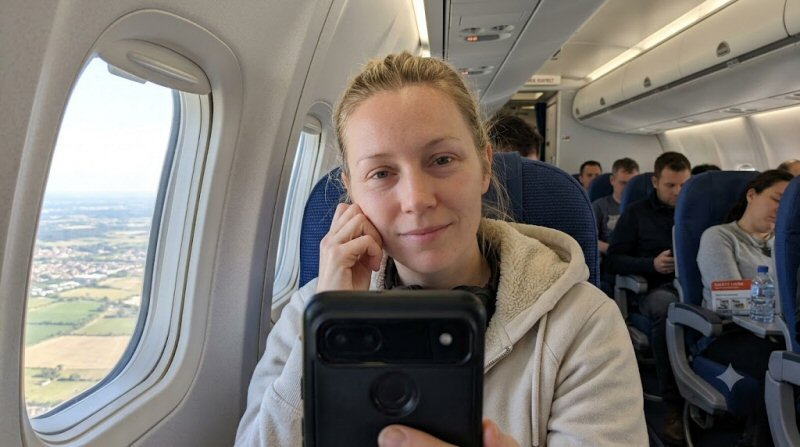
You look fine at the gate. After a long-haul night you meet a restroom mirror that looks a little unfamiliar. Eyelids sit heavier. Cheeks look rounder. The crease beside your nose is softer. Rings may already feel snug, and now your face has joined the same slightly waterlogged club. Makeup sits differently. Nothing itches. You can still breathe through both sides of your nose.
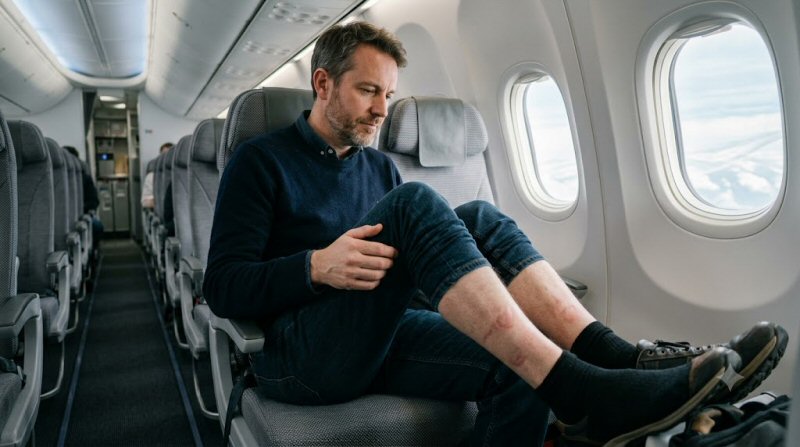
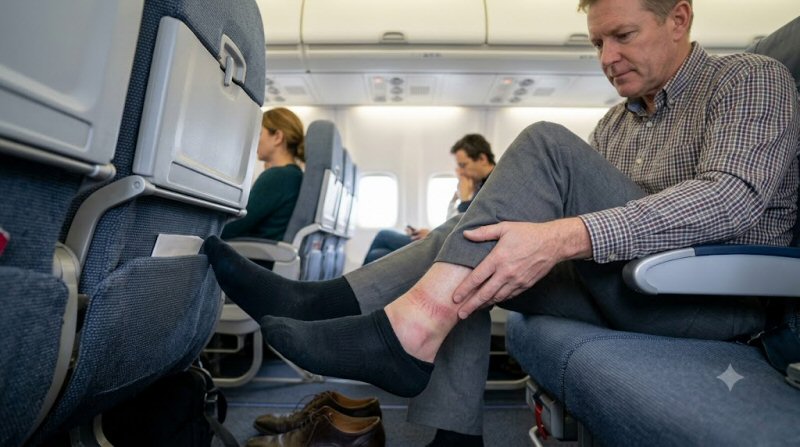
For most healthy adults, a puffy face after a flight is a temporary fluid-and-air problem. Cabin pressure sits below sea level. Recirculated air is dry. You sit still, eat salt, maybe drink alcohol, and often sleep with your head tilted against a window. Fluid that would have been pumped around by walking and ordinary barometric pressure settles in loose tissue around the eyes and cheeks. The same cabin physics that can swell fingers and tighten rings and leave sock marks at the ankles can also plump the face.
What This Symptom Feels Like
Typical post-flight facial puffiness is:
- Softer, slightly rounded cheeks and under-eye pads
- Heavier lids that look more “morning” than they should at landing
- Skin that feels tight or shiny rather than itchy or hot
- A face that looks more swollen in photos than it felt in the seat
- Often worse after a night flight, a salty meal, or sleeping against the window
- Both sides, or a little more on the side that was down against the headrest
It usually builds over hours. It should ease through the first day on the ground once you walk, drink ordinary water, and sleep with your head slightly elevated. A residual “travel face” the next morning is common after a red-eye. Sudden one-sided swelling, hives, lip or tongue swelling, or trouble breathing is a different story.
Common Causes
The usual recipe is cabin physics plus sitting and salt, not a new facial disease.
Lower cabin pressure. Most commercial cabins are pressurized to the equivalent of roughly 6,000 to 8,000 feet. High-altitude physiologist John B. West and colleagues showed that this modest drop in barometric pressure and oxygen tension can shift a little fluid from blood vessels into tissues. Loose periorbital tissue shows that shift quickly.
Dry recirculated air. Cabin humidity often sits well below what indoor rooms hold on the ground. The face loses water through the skin and the lining of the nose and eyes. Paradoxically, that surface dryness can sit next to deeper tissue that looks puffy, because vascular fluid has moved outward while the outer barrier looks tight.
Sitting still. Walking uses the calf muscle pump that vascular researchers including John Homans and later Andrew Nicolaides described. Hours in a seat slow that pump. Fluid that would have been returned from the legs can redistribute as you change posture on landing—and some of it is already sitting in the face from overnight recumbency in the seat.
Salt, alcohol, and the drink cart. Tomato juice, pretzels, and alcohol pull water into the vascular space and then into dependent and loose tissue. Alcohol also dilates skin vessels, which can make cheeks look fuller even before extra fluid arrives.
Sleep posture. A window-seat nap with the cheek mashed into a thin pillow or the headrest is a short version of the same overnight fluid that can leave puffy eyes in the morning. Gravity parks fluid on the down side.
A stuffy nose from cabin air. Dry mucosa swells a little. Mouth breathing then dries the lips and makes the mid-face look more congested than it is.
Why This Happens
Facial skin, especially around the eyelids, is thin and loosely anchored. It has less tight connective restraint than the shin. When Starling forces—the balance between capillary pressure pushing fluid out and plasma proteins pulling it back in—tilt even slightly toward the tissue side, the lids and cheeks are an easy billboard.
Cabin altitude lowers the outside pressure on the body a little. Combined with sitting, a modest rise in venous pressure, and extra dietary sodium, capillaries leak a small extra volume. Lymphatics can clear it, but they also need movement and time. A night flight stacks several of those factors: recumbent head position, less walking, salt, alcohol, and dry air.
None of this means the face has “retained ten pounds of water.” The volume that changes how a photograph looks is often only a few extra milliliters in a very visible place.
Less Common but Serious Causes
Most landing-day puffiness is cabin physiology. A shorter list deserves a lower threshold for help:
- Sudden lip, tongue, or throat swelling, hives, or wheeze — treat as possible anaphylaxis, not travel face
- One-sided facial swelling with pain, fever, or a hot patch of skin
- Puffiness with crushing chest pain, sudden breathlessness, or a swollen painful calf — emergency evaluation for clot or heart strain
- New swelling that does not ease after a day of walking and ordinary fluids, especially with shortness of breath when you lie flat
- Known heart, kidney, or liver disease with rapidly worsening facial edema after travel
Cabin sitting can contribute to deep-vein thrombosis on long flights. Facial puffiness by itself is not a clot sign. Pair it with a hot, one-sided, painful calf or sudden breathlessness and the story changes.
Hidden Triggers
A few extras make travel face more obvious:
- Window-seat sleep with the down-side cheek compressed
- Compression socks that move fluid upward without extra walking — useful for ankles, sometimes more visible in the face
- Contact lenses worn through a dry cabin
- High-salt airport food before boarding
- Hormonal days later in the cycle, when baseline tissue fluid is already a little higher
- A cold starting in the sinuses, which adds mucosal swelling on top of cabin dryness
When to Worry
Get prompt care if facial swelling is sudden and one-sided, involves the lips or tongue, comes with rash or trouble breathing, or sits next to chest pain or a painful swollen leg. See a clinician soon if puffiness lasts more than a couple of days after you are walking normally, keeps worsening, or arrives with unexplained weight gain and shortness of breath.
Ordinary post-flight puffiness is both-sided or sleep-sided, painless, and fading.
Myths vs Facts
Myth: A puffy face after a flight means you are having an allergic reaction to cabin air.
Fact: True allergy usually itches, welts, or involves lips and breathing. Cabin dryness and fluid shift usually do not.
Myth: If your face swells, you must have a clot.
Fact: Clot concern tracks with a painful one-sided calf, sudden breathlessness, or known high risk—not with symmetric lid puffiness.
Myth: Drinking as much water as possible will prevent it.
Fact: Ordinary hydration helps. Flooding does not cancel cabin pressure or sitting. Salt and alcohol matter more than a second bottle of still water.
Myth: The puffiness is permanent damage from flying.
Fact: Loose facial tissue is simply a visible place for a reversible fluid shift.
How to Manage It
You do not need a special in-flight facial protocol. Small habits help.
- Walk the aisle when the seat-belt sign allows. Calf-pump work helps the whole fluid budget.
- Ease salt and alcohol on long-haul nights if your face always balloons.
- Sleep with your head as upright as the seat allows, and switch sides if you nap against the window.
- Use a simple moisturizer on the face; dry surface skin can look tighter next to puffy lids.
- On arrival, walk, elevate your head for a nap, and give it a day before judging the mirror.
- Compression stockings still help ankles on long flights; they are not a facial treatment.
When to See a Doctor
See someone promptly for lip or tongue swelling, breathing trouble, one-sided hot swelling, or puffiness plus calf pain or chest symptoms. Book a regular visit if every flight leaves your face swollen for days, or if the same puffiness now happens at home without travel.
FAQs
Is a puffy face after a red-eye normal?
Yes for many people. Overnight sitting, a tilted head, salt, and cabin pressure are enough.
Why do my eyes look worse than my cheeks?
Eyelid skin is thin and loosely attached. A few milliliters show there first.
Will drinking more water fix it in the air?
It helps you not add dehydration on top. It will not erase cabin altitude or a still calf pump.
Is this the same as ankle swelling on a plane?
Same physics, different billboard. Gravity favors ankles while you sit; sleep posture and loose lid tissue favor the face.
Should I take a water pill before flying?
Not as a routine for ordinary travel face. Diuretics belong to a clinician’s plan, not a carry-on habit.
How long should it last?
Hours to a day for most healthy adults. Longer than two days, or swelling that grows after landing, deserves a check.
Conclusion
A puffy face after a flight is usually cabin air, sitting, salt, and a head that spent the night against a window—not a verdict on your health. Walk when you can, keep the drink cart from becoming a salt-and-alcohol experiment, and give the mirror until evening. Save urgency for swelling that involves breathing, one side of the face with pain, or a painful leg. The rest is travel physics in a very visible place.