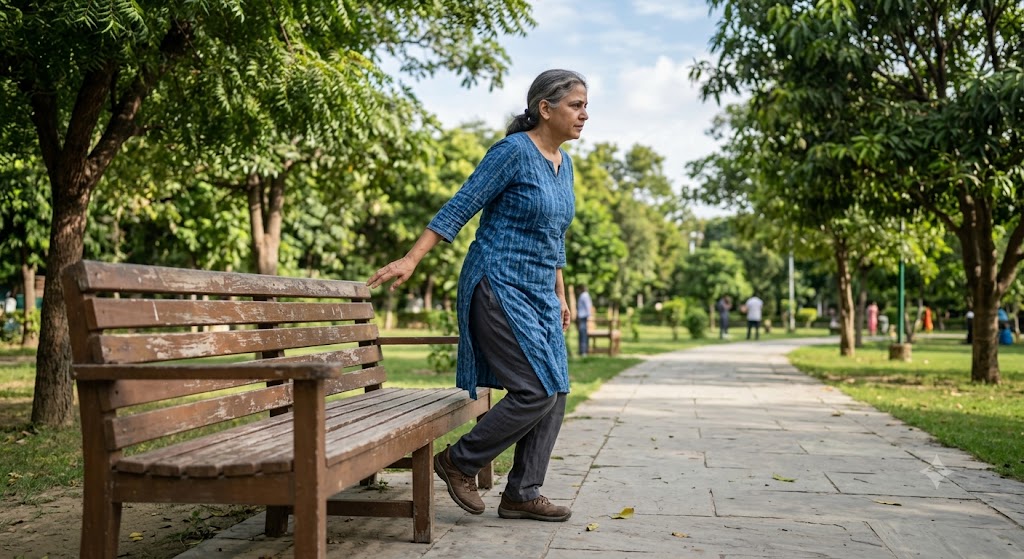
Red cells still expect hills, thin air and daily work. Hypoxia-inducible factor, EPO and 2,3-DPG were tuned for altitude and movement, not sea-level sitting.

Your red cells are not just tiny bags of hemoglobin. They are a circulating oxygen plan written for a life that climbed, walked, slept cooler at night and sometimes spent weeks at a height where every breath carried less oxygen. The plan still works. The briefing has changed.
A modern day can look like this: sea-level air, climate-controlled rooms, sitting after meals, short indoor walks and an occasional gym burst. The bone marrow still listens for hypoxia-inducible factor. The kidney still watches oxygen delivery. Each red cell still carries 2,3-bisphosphoglycerate to loosen hemoglobin’s grip when tissues need air. Those systems do not need a mountain every week. They do need a reason to stay trained.
This is not a call to move to the Andes. It is a map of what Paul Bert, Denis Jourdanet, François Viault, Joseph Barcroft, Alberto Hurtado, Gregg Semenza, Wolfgang Jelkmann, Benjamin Levine and James Stray-Gundersen actually measured — and how a flatter, stiller life quietly under-doses the same machinery.
What This System Was Built to Do
A mature red cell lives about 120 days. It has no nucleus. It cannot make new protein. What it can do is carry four oxygen molecules per hemoglobin tetramer, flex through a capillary narrower than itself, and dump that oxygen where tissues are warm, acidic and already working.
The factory sits in marrow. The sensor sits mainly in the kidney. When local oxygen delivery falls, renal interstitial fibroblasts stabilize hypoxia-inducible factor. HIF then drives erythropoietin. EPO tells progenitor cells to finish more red cells. That loop is old, tight and still the reason a week at altitude raises hematocrit.
François Viault counted the rise in red cells after a stay in the Andes in 1890. Paul Bert and Denis Jourdanet had already argued that thin air, not mountain magic, was the stimulus. Joseph Barcroft later took himself and colleagues onto the Cerro de Pasco and showed that the blood’s oxygen affinity and the person’s ventilation both change. Alberto Hurtado spent decades describing how Andean natives live with a different mix of hemoglobin, lung volumes and circulation. Gregg Semenza isolated HIF-1 and showed the transcription switch that turns “less oxygen here” into a gene program. Wolfgang Jelkmann mapped how EPO is made and cleared. None of that work assumed an elevator and a desk.
The Hidden Chemistry Inside Each Cell
Oxygen binding is not a fixed lock. Hemoglobin’s affinity shifts with pH, carbon dioxide, temperature and 2,3-bisphosphoglycerate (2,3-DPG), the side product Reinhold Benesch and Ruth Benesch helped put on the map as an allosteric helper.
When you work a muscle, local blood becomes warmer and more acidic. Hemoglobin lets go more easily — the Bohr effect Christian Bohr described. When 2,3-DPG rises, the curve shifts further so tissues can extract oxygen at the same arterial saturation. Altitude and training both move that chemistry. Sitting in cool air with quiet legs does the opposite: less heat, less acid, less reason for the curve to open.
That is why a red-cell story is also a movement story. Muscle capillaries still recruit when the tissue works. More open capillaries plus a right-shifted curve is how oxygen actually arrives. A trained network without a trained cell, or a trained cell without open capillaries, is a half briefing.
Why Hills and Thin Air Were the Original Cue
Ancestral days were not all spent at 4,000 meters. Most human lineages lived nearer sea level. What they did have, often, was:
- Repeated uphill walking with a load
- Days that raised ventilation and muscle oxygen extraction
- Nights that were cooler and darker than modern bedrooms
- Occasional sojourns or seasonal moves into thinner air
- No all-day chair that left the calf pump and endothelial lining idle
Hills are a portable altitude. They raise the work of breathing a little, raise muscle oxygen demand a lot, and force the heart to push a larger stroke volume against gravity. Thin air is the classic HIF stimulus. Together they told marrow: keep the factory ready.
Live high, train low — the model Benjamin Levine and James Stray-Gundersen tested in athletes — is a laboratory version of that old pairing: a hypoxic signal for EPO, plus enough oxygen during hard work to keep quality high. You do not need their protocol to borrow the principle. You need some days that raise demand and some nights that do not erase the repair window.
What Modern Life Quietly Removes
Sea-level cities are not a disease. They are a missing cue. The problems stack when several absences arrive together:
No grade. Flat floors and lifts remove the cheapest daily rise in oxygen cost.
No lasting work. A twenty-minute gym class is real. It is not the same stimulus as hours of walking with a pack. EPO and red-cell mass respond to the integral of hypoxic and metabolic stress, not to a single sweaty hour.
All-day sitting. Stasis changes more than veins. Blood still expects shear and a working calf pump to stay liquid. Quiet legs also leave muscle capillaries unrecruited and local oxygen extraction low.
Warm, even air. Cool mornings and a little thermal contrast used to raise ventilation and catecholamines. Climate control flattens that pulse the way it flattens brown-fat cues.
Evening light and late food. Marrow and immune clocks still prefer a dark night. A late heavy meal and bright screens do not cancel EPO, but they scramble the overnight repair the rest of the blood factory expects.
The result is not instant anemia. Most people keep a hematocrit in the “normal” lab window. The quieter loss is reserve: how fast you can raise oxygen delivery when a hill, a fever or a flight asks for it.
Less Common but Serious
Not every low energy story is “you needed a mountain.” True pathology exists and should not be poetically renamed.
- Iron deficiency empties the factory even when HIF is screaming. Ferritin and a complete blood count matter more than altitude folklore.
- Chronic kidney disease can blunt EPO because the sensor tissue is scarred.
- Sleep apnea creates nocturnal hypoxia. That can raise hematocrit — a stressed version of the altitude signal, not a training plan.
- Smoking and some lung diseases create a similar “false altitude” inside arterial blood.
- Unexplained high hematocrit needs a proper workup for hypoxia, EPO-producing tumors or myeloproliferative disease, not a congratulations for “thick mountain blood.”
- Sudden severe shortness of breath, chest pain, one-sided swelling or coughing blood is a clot or heart-lung emergency, not a red-cell essay.
HIF biology is also why some tumors hijack the same switch. That is a specialist problem. Everyday reserve is not.
Hidden Triggers That Flatten the Signal
A few modern habits look harmless and still dull the briefing:
- Iron-poor eating plus heavy menstrual loss or frequent blood donation
- Endurance work without enough protein or calories, so the marrow cannot finish cells
- Very high indoor heat after training, which adds plasma volume without a matching oxygen cue
- Living at sea level and never walking a grade, then expecting a weekend hike to feel easy
- Assuming a normal hemoglobin means oxygen delivery on a hill will feel the same as it did at twenty
Women of reproductive age sit closer to the edge of the iron budget. That is physiology, not fragility. The same HIF-EPO loop runs. The raw material is tighter.
When to Worry
Seek care rather than another walking plan if you have:
- Persistent fatigue with pale skin, brittle nails or restless legs that might be iron deficiency
- Known kidney, heart or lung disease and a changing exercise ceiling
- Headaches, visual change or itching after a hot shower with a high hematocrit
- Breathlessness out of proportion to fitness, especially when lying flat
- A family history of clotting or unexplained high red-cell counts
Labs are allowed. A thoughtful ferritin, CBC and, when indicated, kidney panel will tell you more than a guess about “thin air genes.”
Myths vs Facts
Myth: You need to live at altitude to have healthy red cells.
Fact: Most of the world’s healthy marrow works at sea level. Hills, intervals of real work and enough iron are the portable version of the cue.
Myth: A higher hematocrit is always better fitness.
Fact: Blood that is too thick raises viscosity and clotting risk. Athletes learned this the hard way. Hurtado’s high-altitude natives are not a template for injecting EPO at the coast.
Myth: Breathing canned oxygen at sea level trains the same system.
Fact: Extra oxygen when you already have enough removes the HIF stimulus. Training needs demand, not a luxury gas.
Myth: Only elite runners care about 2,3-DPG and EPO.
Fact: Those molecules run in every adult. The elite literature just measured them first.
Myth: If your hemoglobin is “normal,” oxygen delivery cannot be the issue.
Fact: Hemoglobin concentration is one term. Stroke volume, capillary recruitment, local 2,3-DPG and mitochondrial use are the others. Sitting quietly can leave those terms low while the lab line still looks fine.
How to Give the System a Fair Briefing
You do not need a hypoxic tent. You need repeatable, boring cues.
Walk grades. Stairs, hills, a slightly longer route home. Grade is the cheapest rise in oxygen cost.
Keep some lasting work. A long walk after a mixed meal still helps glucose and still asks muscles to extract oxygen. That pairs with the insulin story: daytime muscle is still the main glucose sink.
Protect iron and protein. Marrow cannot invent heme. People who menstruate, donate blood or eat little animal or fortified iron should treat stores as part of training, not as a separate “women’s issue.”
Sleep in the dark. Overnight is when a lot of marrow housekeeping runs. You already have articles in this series on night and clocks. The red-cell factory reads the same night.
Use cold mornings if you tolerate them. A cool start raises ventilation and catecholamines a little. It is a cousin of the brown-fat cue, not a replacement for walking.
Respect recovery after real altitude. A trip to 2,500 meters or higher is a genuine HIF dose. Hydrate, walk, and do not treat headache plus poor sleep as a badge. Descent is part of the protocol.
Do not chase hematocrit as a hobby. Donate if you are eligible and well. Do not self-thicken. The line between “adapted” and “viscous” is thinner than social media suggests.
When to See a Doctor
See a clinician if fatigue, breathlessness or reduced exercise tolerance is new, if you have bleeding, black stools or very heavy periods, if you live with kidney or heart disease, or if a routine blood count comes back unexpectedly high or low. Bring the context: how much you walk, whether you sleep, whether you donate blood. That history is data.
Urgent care is for chest pain, sudden severe breathlessness, fainting, one-sided swelling or coughing blood. Those are not altitude metaphors.
FAQs
Does living at sea level make my red cells weaker?
No. Sea-level marrow is normal marrow. What fades without hills and work is reserve and the ease of raising delivery, not the existence of hemoglobin.
Will a weekend in the mountains fix my energy?
A few days at moderate altitude can raise EPO and, over weeks of exposure, red-cell mass. One weekend mostly gives you a ventilation and sleep experiment. Useful as a cue. Not a cure for iron deficiency or a still weekday.
Is altitude training safe for ordinary adults?
Moderate hiking altitude is fine for many healthy people. Sleep apnea, heart disease, pregnancy and prior altitude illness change the advice. Going higher fast is how people get acute mountain sickness, not extra fitness.
Why do I feel wrecked on the first hike of the season?
Capillary recruitment, stroke volume, 2,3-DPG and mitochondrial enzymes all detrain with sitting. The first hill is several systems waking up at once. That feeling is information, not failure.
Can I mimic altitude by holding my breath?
Breath-hold sports train tolerance and spleen contraction in specialists. Random desk breath-holds are not an EPO protocol and can drop you if you push them. Walk the hill.
Do women need a different plan?
The HIF-EPO loop is the same. Iron losses are often higher. Check stores if hills suddenly feel much harder across a cycle or after donation.
Conclusion
Your red cells still expect a world that sometimes went uphill and sometimes slept in thinner air. Bert, Viault, Barcroft, Hurtado, Semenza, Jelkmann, Levine and Stray-Gundersen did not write that expectation as poetry. They measured oxygen, counts, transcription factors and training blocks.
You do not owe the system a mountain address. You owe it a grade, enough iron, working muscle and a dark night. Give those, and the 120-day cells circulating now will be better prepared than the ones that only ever rode an elevator.