Most of your smallest vessels sit quiet until muscle works. August Krogh mapped capillary recruitment as a demand system; sitting leaves the exchange surface unused and the tissue hungrier than the blood count suggests.
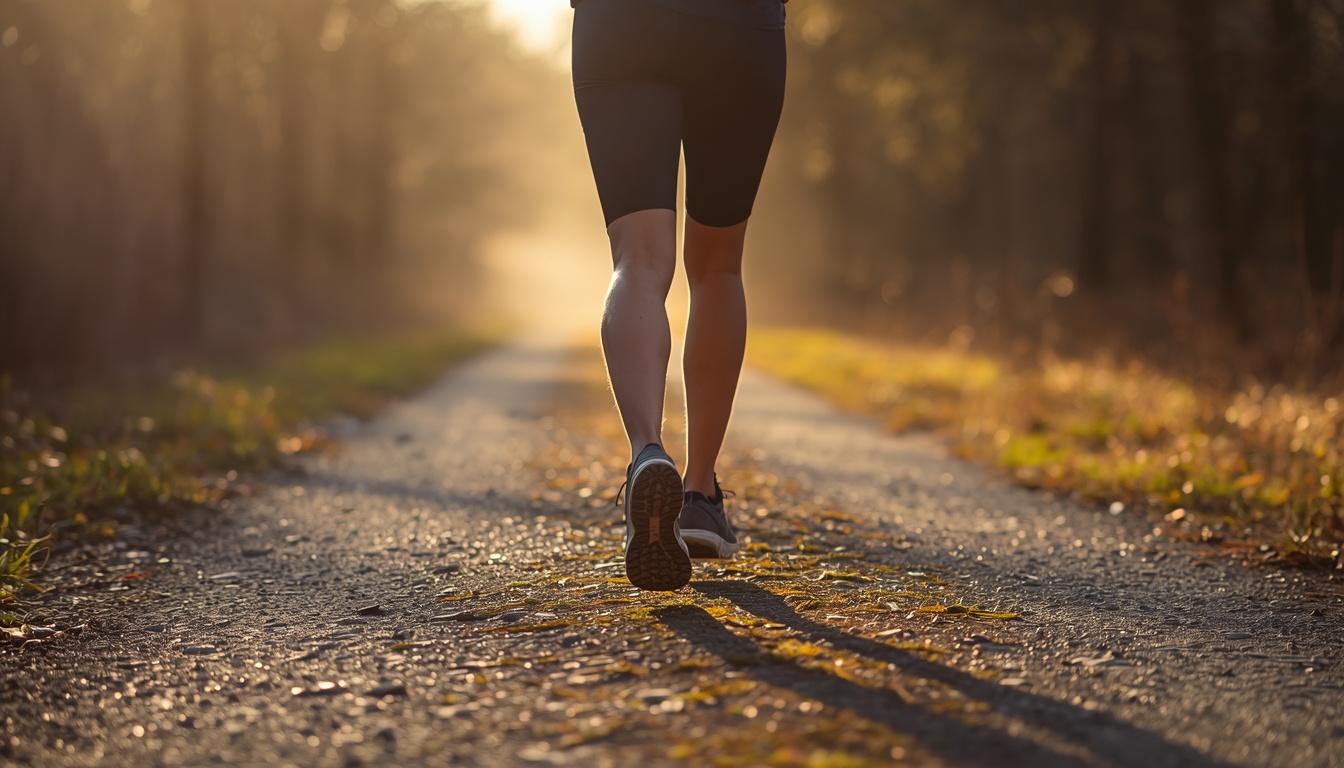
A resting calf looks well supplied. The pulse is there. The oxygen saturation on a fingertip looks fine. Inside the muscle, though, most of the smallest vessels are not doing the job you think they are. Capillaries are not a fully open garden hose. They are a demand system. When the fibers are quiet, many of those tubes carry little or no flow. Diffusion distances stretch. Waste lingers. Insulin has farther to walk. The moment the muscle works — a hill, a carry, a rise from the floor — more capillaries open, more red cells file through, and the exchange surface multiplies.
August Krogh won the 1920 Nobel Prize for showing that this is not a metaphor. It is anatomy under a microscope and oxygen under a calculation. The human body still runs that script. Modern life often does not. Hours of sitting keep large muscle beds in the “few open pipes” state. A later gym hour cannot fully rewrite a day of unused surface. The blood count can look normal while the tissue is under-perfused in the only way that matters: distance and time.
This is not a lecture against rest. Capillaries need off-hours. It is a reminder that the smallest vessels were built for a body that used its large muscles often enough that opening them was ordinary, not a weekend event.
What This System Was Built to Do
A capillary is a single layer of endothelium, often just wide enough for red cells to squeeze through in single file. Oxygen, glucose, fatty acids, insulin, and carbon dioxide cross by diffusion. Diffusion is fast over a few microns and cruel over a few dozen. Krogh’s insight, published in the Journal of Physiology in 1919, was that muscle does not keep every capillary open at rest. It recruits them when demand rises. The “Krogh cylinder” was a model: each open capillary serves a cylinder of tissue around it. Open more capillaries and the cylinders shrink. Distances fall. Partial pressure of oxygen at the farthest mitochondrion stays above the danger line.
Later work refined the picture without killing it. Not every closed-looking capillary is anatomically shut. Some have plasma but few red cells. Some have slow, intermittent flow. David Poole, Timothy Musch and colleagues have argued that “recruitment” in modern language often means more red-cell flux and a more even distribution, not a binary open-or-shut gate. The functional point survives. Working muscle increases the surface that actually exchanges. Quiet muscle does not.
The opening is local and fast. Contracting fibers release metabolites — potassium, adenosine, CO2, protons — that relax nearby arterioles. Endothelium adds nitric oxide when shear rises, the same language large arteries use in why your arteries still expect the push of walking. Sympathetic nerves can clamp unused beds. When you walk, the working muscle wins the argument. When you sit, the clamp and the quiet metabolites keep the bed small.
The Ancestral Briefing
For most of human history the large muscles of the legs and trunk were not decorative. They walked terrain, stood from the ground, carried water and children, climbed, squatted, and recovered. Each bout was a capillary briefing. Flow rose. Red cells visited fibers that had been waiting. Insulin found more endothelial surface. Myokines left the muscle and reached other organs, a conversation we traced in why your muscles still expect to message the rest of you.
There was no separate “cardio block.” Capillary density itself adapted to the week. Bengt Saltin’s classic training studies showed that endurance work increases the number of capillaries around each fiber. Michael Joyner and others have kept mapping how that density, plus the ability to send blood there, sets the ceiling for oxygen use. The briefing was daily and varied. A day of sitting interrupted by one hard class is a thinner letter than a day of mixed walking and load.
Night still mattered. Overnight, flow fell. Repair and a fasted liver shift used a different script, the one in why your liver still expects an overnight fast. The mismatch is not rest. It is a waking day that never asks the legs to open their exchange surface.
The Modern Mismatch
A chair is a blood-flow decision. Below the hips, large muscle beds stay near resting recruitment for hours. The heart can still beat. The arm pulse oximeter can still look excellent. Those readings do not measure diffusion distance in a quiet vastus lateralis. They measure a different circuit.
After a meal the mismatch has a metabolic name. Insulin-mediated glucose uptake is not only a receptor story. It is also a perfusion story. Working muscle brings more insulin and more glucose to more endothelial surface, then more GLUT4 to the membrane — the pairing behind why your insulin still expects daytime muscle and the after-meal walk in why your blood sugar still expects a walk after meals. Sitting after a large lunch leaves the hormone circulating past a smaller working surface.
Over months the architecture can thin. Unused muscle loses some of the capillary-to-fiber advantage training built. Bed-rest studies from the Dallas and European groups showed how quickly peak oxygen use and peripheral extraction fall when the legs stop working, even if calories are controlled. Age adds another cut: fewer capillaries per fiber in unused muscle, stiffer arterioles, noisier endothelial signals. The system still responds to a walk. It responds less to a plan that exists only on a calendar.
Climate-controlled stillness compounds the quiet. Heat and cold normally recruit skin and, in the cold, brown fat and muscle tone. Indoor evenness removes those extra reasons to open beds. The capillary map becomes a map of the last things you actually did with your body, not of the gym you meant to join.
What Quiet Capillaries Feel Like
You will not feel a closed capillary. You feel the downstream weather.
Heavy legs after a long sit are partly pooled venous blood and partly a muscle that has not been rinsed. A stiff first minute of walking is cold, unused flow finding its pipes. Post-meal fog after a desk lunch is glucose and blood-flow geography as much as willpower. Slow recovery from a rare hard session is a network that was asked to open all at once after weeks of near-rest.
People with insulin resistance, microvascular angina, or “normal arteries, tired legs” are not all living the same disease. Some of them are living a capillary problem that a large-vessel angiogram will never show. Krogh’s cylinder still applies. If the open pipes are few, the farthest mitochondria work in a poorer neighborhood no matter how pretty the femoral artery looks on a scan.
Hidden Triggers That Keep Beds Quiet
- Unbroken sitting, especially after meals
- “Saving” all movement for one evening workout
- Very tight garments that blunt calf and thigh muscle pump
- Chronic dehydration thick enough to slow microvascular flow
- Smoking and dirty air, which injure endothelium at the smallest scale first
- Hot, still rooms that remove thermal reasons to recruit skin and muscle flow
- Sleep loss, which worsens insulin’s microvascular action the next day
When Quiet Flow Is Not Just Disuse
Not every heavy-leg day is a chair problem. Diabetes can thicken basement membranes and impair recruitment. Peripheral artery disease limits the upstream feed. Heart failure raises venous pressure and starves the gradient that should drive exchange. Autoimmune vasculitis attacks the wall. A sudden swollen, painful, one-sided calf is a clot until proven otherwise — the stasis story in why your blood still expects movement to stay liquid. Exertional chest pressure, breathlessness out of proportion to fitness, or wounds that will not granulate need a clinician, not another article about walking.
Myths vs Facts
Myth: If your pulse and oxygen saturation are normal, your capillaries are fine.
Fact: Those numbers do not measure diffusion distance or red-cell flux inside quiet muscle.
Myth: A hard hour at the gym fully pays the capillary debt of a seated day.
Fact: Training raises density over weeks. Hour-to-hour recruitment still needs the muscle to work in the hours you are awake.
Myth: Capillaries are either all open or all shut.
Fact: Flow is graded. More work means more red cells, more even distribution, shorter effective distances.
Myth: Only athletes need to think about capillary density.
Fact: Everyday walking and standing from the floor are the ancestral dose. Density follows use at every age that still has muscle.
Myth: Compression socks replace muscle work.
Fact: They can help veins. They do not recruit the exchange surface inside the fiber.
How to Give the System the Briefing It Expects
Think in bouts, not heroics. Two or three minutes of easy walking after sitting, especially after meals, reopen flow in the beds that were waiting. Stairs and a slight hill recruit more than a flat corridor. Standing from the floor, carrying a bag in one hand, and a few slow calf raises while the kettle boils are not a workout brand. They are Krogh’s demand signal.
If you train, keep some of it on your feet. Cycling and swimming are excellent. They still leave the standing and carrying map thinner than a life that walks. Mix them. Strength work matters because larger, used fibers draw a richer capillary surround over time — Saltin’s lesson, not a fashion.
Heat and cool, used gently, add a skin and muscle cue. A warm shower then cooler air, or a brief outdoor cold morning, is a vascular conversation. Do not chase extremes if you have heart disease, neuropathy, or pregnancy without advice.
Sleep and a real overnight gap help the next day’s insulin and endothelial behavior. So does not smoking. The smallest vessels keep the score of smoke long before a large artery complains.
When to See a Doctor
Seek care for one-sided swelling or heat in a leg, wounds that stall, exertional calf pain that stops you at a predictable distance, chest pressure on effort, breathlessness that is new, or dizziness on standing that does not ease with slower rises and fluids. People with diabetes need regular foot and vascular checks because microvascular disease is quiet until it is not. A normal resting oxygen number does not replace that exam.
FAQs
Do capillaries actually close when I sit?
Many rest with little red-cell flux. Whether you call that “closed” or “under-perfused,” the exchange surface shrinks until the muscle works.
Will fidgeting help?
Small movements are better than none. They are not a substitute for walking that uses the large fibers and the calf pump together.
Is this the same as poor circulation in the feet?
Not always. Cold toes can be skin-vessel tone. Capillary recruitment in muscle is a deeper, effort-linked story. Both can coexist.
Can I rebuild capillary density later in life?
Yes, within limits. Consistent walking and training still increase capillaries around used fibers in older adults. The adaptation is slower. It is not closed.
Does caffeine or a pre-workout open muscle capillaries?
Caffeine can raise heart rate and alertness. It does not replace local metabolites and shear from contracting muscle.
Why do my legs feel better a few minutes into a walk?
That is recruitment and warming in real time: more flow, more even red-cell distribution, shorter diffusion distances. The first stiff minutes are the system catching up.
Conclusion
Your capillaries were never a static lace. They were a demand surface August Krogh measured when muscle worked and oxygen had to travel a shorter road. Sitting does not delete the vessels. It leaves them with little to do. A body that stands, walks, carries and then sleeps gives those tubes the only briefing they understand: work here, now, in this fiber. You do not need a laboratory to send it. You need a day that remembers your legs are not furniture.