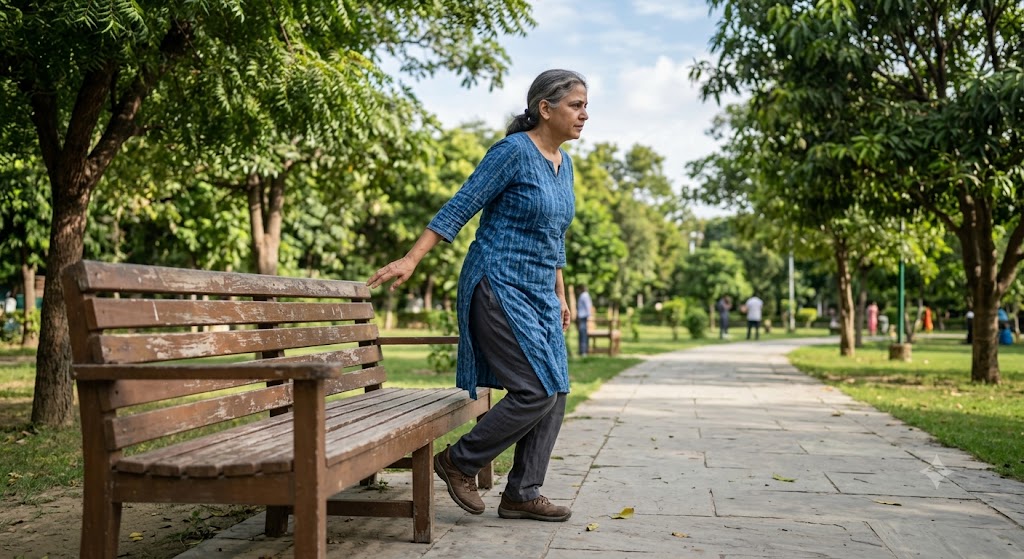
Blood is meant to clot after a wound, not after an afternoon in a chair. Stasis in valve pockets, quiet endothelium and unused fibrinolysis are why sitting still is a clotting cue the body never evolved to ignore.
Blood is a liquid that is always one cue away from becoming a solid. That is not a design flaw. It is the price of having a repair kit that can plug a torn vessel in seconds. The kit was calibrated for a cut, a bruise, a birth, a hunt that ends. It was not calibrated for eight hours of quiet veins behind a desk, a long flight with the calves asleep, or an evening that never stands up.
When flow slows, the chemistry that keeps blood liquid starts to lose the argument. Valve pockets in the legs become small hypoxic coves. Endothelial cells that usually broadcast “do not clot here” go quieter. Fibrin that should be cleared stays longer. Rudolf Virchow, working in the nineteenth century on what happens when blood stops moving, grouped the danger into three parts that still organize the field: the blood itself, the vessel wall, and the flow. Modern life mainly attacks the third, then pretends the first two will forgive it.
This is not a warning that sitting once will give you a clot. Most quiet hours end without drama. It is a reminder that liquidity is an active state. Walking is not only exercise. It is how veins keep blood from rehearsing a plug.
What This System Was Built to Do
Hemostasis is a local, timed explosion. When a vessel opens, tissue factor on cells under the endothelium meets circulating factor VII. Yale Nemerson and Samuel Rapaport mapped how that complex starts the cascade that turns prothrombin into thrombin. Thrombin then turns fibrinogen into fibrin. Platelets stick, contract and give the mesh a living surface. Charles Esmon later showed how the same thrombin, once it meets thrombomodulin on intact endothelium, flips and helps activate protein C — a built-in brake so the clot does not paint the entire tree.
On the other side of the ledger is fibrinolysis. Plasminogen is converted to plasmin, which cuts fibrin into fragments including D-dimer. Vein walls and endothelium release tissue plasminogen activator (tPA) when they are sheared and stretched. Movement is not a lifestyle add-on to that chemistry. It is one of the switches.
Venous blood in the legs has a special problem gravity invented. Valves break the column so the calf does not have to lift a six-foot tube of fluid in one pull. Behind those valves are pockets. When the calf pump fires — as we described in why your veins still expect the calf pump — the pocket empties, fresh blood arrives, and the endothelium sees shear. When the pump sleeps, the pocket becomes a still pool. Oxygen falls. The lining that should stay antithrombotic starts looking more like a surface that will tolerate a nidus.
John Homans, writing in the 1930s and 1940s, kept pointing clinicians at the quiet calf after surgery and bed rest. Later work on immobilized stroke patients made the geometry blunt: clots form far more often in the paralyzed leg than in the one that still walks. Flow is not a metaphor in this system. It is the difference between a pocket that rinses and a pocket that incubates.
The Ancestral Briefing
For most of human time, legs were not furniture. People stood, walked, squatted, carried and slept on surfaces that still asked the calves to twitch. Long stillness existed — injury, fever, childbirth, a storm in a shelter — but it was bounded. The clotting system could treat those hours as an exception. The everyday state was intermittent shear in the legs and a night spent horizontal after a day spent upright.
That pattern trained two habits at once. Arteries learned walking shear and nitric oxide, which we have unpacked in why your arteries still expect the push of walking. Veins learned the calf squeeze that both returns blood and keeps valve pockets from going stale. Fibrinolysis learned to rise when muscle worked. None of this required a gym. It required not parking the lower limbs for the length of a workday.
Clotting itself stayed useful. A cut on a tool, a thorn, a birth canal, a fight — those events needed a fast plug. The system is biased toward making a clot and then taking it apart. What it is not biased toward is hours of intact vessels with no flow. That combination — undamaged wall plus stasis — is the modern trick. The cascade hears “stillness” and does not always wait to hear “wound.”
Where Modern Life Breaks the Script
Chairs, desks, cars and aircraft create stasis without trauma. The endothelium in a valve pocket does not know you are answering email. It knows shear has fallen, oxygen has dipped and white cells are lingering. Work from labs studying venous thrombosis in mice and in human valve anatomy has shown that these pockets are where red, fibrin-rich clots like to start — not because you injured the vein, but because the blood stopped rehearsing liquidity.
Sitting also pairs with other modern loads. Dehydration thickens plasma a little. A long-haul cabin is dry and cramped. Estrogen from pregnancy or some contraceptives shifts clotting proteins. Cancer, surgery and inherited thrombophilias (factor V Leiden, prothrombin G20210A, antithrombin or protein C/S defects) change the first two legs of Virchow’s triad. Sitting then becomes the third match on a pile that already had kindling. The chair did not invent clotting risk. It made the commonest everyday trigger cheap and invisible.
The same hours that swell ankles after sitting — the dependent fluid we described in why feet swell after sitting — are hours of slow venous return. Swelling is not a clot. It is a cousin: Starling forces and a quiet muscle pump. The cousin is visible. The clot, when it happens, is not.
Evening compression on a couch after a large meal adds splanchnic pooling to leg pooling. Alcohol adds vasodilation. None of this is a moral story. It is plumbing plus a cascade that still thinks the most likely reason blood has stopped is that a vessel opened.
What Still Helps the Old Design
The intervention that matches the design is embarrassingly small. Stand. Walk the length of the room. Flex the calves against the floor while the plane seatbelt light is on. Point and flex the feet every half hour on a call. These are not calorie tricks. They empty valve pockets, restore shear and give endothelium a reason to keep advertising “liquid.”
After surgery or on a long flight, that same logic is why clinicians talk about early walking, compression and, when risk is high, medicine. Compression stockings are a mechanical stand-in for a calf that cannot work. They are not a personality. They are a pump substitute.
Hydration matters at the margin because concentrated blood flows less kindly through a quiet vein. It is not a clot vaccine. It is one less nudge toward sludge. Muscle work later in the day still helps fibrinolysis more than another hour of stillness plus a late snack. The cascade does not require heroics. It requires that stasis not become the default setting of the lower limb.
People with a prior clot, active cancer, recent major surgery, late pregnancy or a known thrombophilia are not in the “just fidget” category. They need a clinician’s plan. For everyone else, the ancestral cue is still the cheapest one: do not let the pocket behind the valve go still for the length of a feature film without a walk.
When Stillness Is a Medical Problem
A clot in a deep leg vein is not a cramp. Classic signs — one-sided swelling, warmth, a cord-like tenderness, pain that grows rather than eases with walking — deserve same-day care. Sudden shortness of breath, chest pain that is worse with a deep breath, coughing blood or a faint after travel need emergency evaluation for a possible pulmonary embolus. Those are not articles of faith. They are the downstream of a plug that left the leg.
Inherited clotting disorders, recurrent miscarriage with certain antibodies, and unprovoked clots at a young age also change the conversation from “move more” to “test and treat.” Movement remains useful. It is not a substitute for anticoagulation when a physician has already named a high-risk state.
Myths vs Facts
Myth: Only long-haul flights cause travel clots.
Fact: Any long, cramped stillness can. Cars, trains, desks and hospital beds use the same valve-pocket physics. Distance in the air is famous because it packs dehydration, immobility and a story people remember.
Myth: If you are young and healthy, sitting cannot matter.
Fact: Age and illness raise the baseline. Stasis still writes on that baseline. Young people do get travel and postpartum clots. Rarity is not immunity.
Myth: Aspirin is a sitting antidote.
Fact: Aspirin mainly affects platelets, which dominate arterial plugs more than the fibrin-rich red clots of deep veins. Do not self-prescribe a pill to cancel a workday in a chair.
Myth: Crossing your legs causes DVT.
Fact: Crossing can be uncomfortable and can nudge local flow. It is not the main actor. Hours without a calf squeeze are.
How to Give Blood the Cue It Still Expects
- Break sitting every 30–60 minutes with a short walk or a full minute of calf raises.
- On planes and long drives, point, flex and circle the feet even if you cannot stand.
- After a large meal, stand and walk before the next seated block — good for glucose and for veins.
- If you have had a clot, are pregnant, recently had surgery or have a known thrombophilia, ask about compression and medical prevention instead of improvising.
- Treat one-sided swelling, warmth and progressive leg pain as a same-day question, not a foam-roller project.
When to See a Doctor
Seek urgent care for one-sided leg swelling with warmth or pain, sudden unexplained breathlessness, chest pain on inspiration, or fainting after travel or bed rest. See a clinician promptly for recurrent clots, a family pattern of unprovoked thrombosis, or swelling that does not ease overnight. Mention hormones, recent flights, surgery and cancer history; those details change the pretest odds.
FAQs
Is fidgeting enough, or do I need a real walk?
Any calf contraction helps empty a valve pocket. A walk is better because it also raises whole-limb flow and shear. Fidgeting is the minimum viable version when you cannot leave the seat.
Do standing desks solve this?
Standing is not sitting, and it is not walking. Static standing still leaves the calf pump under-used. Weight-shift and short walks do more for venous flow than a heroic motionless stand.
Why do clots like the left leg?
Anatomy plays a part. The right iliac artery can cross and slightly compress the left iliac vein in some people (May–Thurner anatomy). Stasis plus that geometry is a reason left-sided iliofemoral clots show up more often, not a reason to ignore the right leg.
Does dehydration cause DVT by itself?
Rarely by itself in a healthy moving person. It is a modest thickener that matters more when it is stacked on immobility, illness or hormones.
If my D-dimer was normal last year, am I safe to sit?
D-dimer is a snapshot used when a clot is already suspected. It is not a sitting license. A normal result last year says nothing about this afternoon’s valve pocket.
Are compression socks only for flights?
They are a tool whenever the calf pump is offline and risk is higher — travel, some pregnancies, some post-op weeks. Ill-fitted cheap socks that roll into a tourniquet are worse than none. Fit matters.
Conclusion
Your clotting system is a brilliant, slightly paranoid repair crew. It still expects a wound, a brief still spell and then motion. Give it the motion. Liquidity is not the default of sitting blood. It is the product of a pump that was supposed to keep working while you lived on your feet.