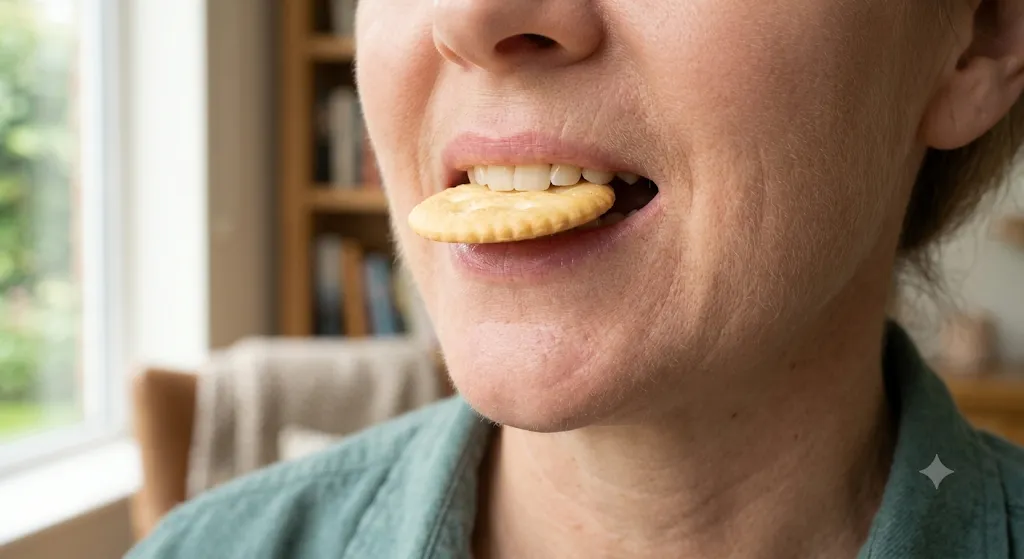
The esophagus still expects a finished meal, gravity, and a pause before you lie down. Late dinners and the sofa keep acid in a tube built to clear it.

The plate is empty and the sofa is right there. A large dinner, a belt a notch tighter, then a half-reclined hour with a screen. An hour later the chest burns, the throat tastes sour, or a cough starts the moment you lie flat. None of that requires a rare disease. The food pipe between throat and stomach was built to move a bolus downward, close behind it, and spend most of the day empty. Gravity, swallows, and saliva were part of the clearance plan. Modern evenings remove the upright pause the tube still expects.
What the Esophagus Was Built to Do
The esophagus is a muscular tube about 25 centimeters long. The upper part is striated muscle under more direct brainstem control. The lower part is smooth muscle paced by its own nerves and by vagal input. A swallow starts primary peristalsis, a coordinated wave that travels a few centimeters per second and strips the bolus toward the stomach. If something is left behind, or if acid comes back up, a secondary wave can start without a swallow and try again.
At the bottom sits the lower esophageal sphincter, a high-pressure zone rather than a door you can see. Resting tone in the smooth muscle keeps it closed. The crural diaphragm, the sling of breathing muscle around the hiatus, squeezes the same zone harder when you inhale or brace. Ravinder Mittal and earlier physiologists, including Charles Code, showed that the sphincter and the diaphragm share the job. One is a muscle ring. The other is a breathing muscle that happens to guard the same opening.
Above the sphincter, the tube is not lined for long acid baths the way the stomach is. Clearance depends on three ordinary things: a peristaltic wave, gravity when you are upright, and saliva. James Helm and Wylie Dodds showed that swallowed saliva is a large part of how acid is neutralized once it has entered the esophagus. Bicarbonate in that saliva matters. A dry mouth and a low swallow rate leave acid sitting longer.
John Dent, Donald Castell, and Peter Kahrilas mapped the other half of the story. Most reflux in healthy people is not a sphincter that is weak all day. It is a brief, inappropriate opening called a transient lower esophageal sphincter relaxation. Gastric distension, especially after a large or fatty meal, triggers these vents through a vagal reflex. A belch uses the same pathway. Acid can ride along.
The Ancestral Pattern
For most of human history a meal was eaten upright or in a supported squat, then followed by walking, tool work, or at least not an immediate lie-down. Dinners were not routinely the largest calorie load of the day, taken an hour before sleep. Carbonated drinks, mint, chocolate, and large liquid calories with the meal were not daily fixtures. Waistbands did not cinch the abdomen right after eating.
The tube did not evolve a timer that says “sofa is safe.” It evolved a sequence: swallow, close, clear, rest. Hours between meals let the sphincter stay mostly shut and let any small splash get washed out by ordinary swallows. Sleep came later, when the stomach was no longer at peak volume. That is the pattern the modern evening often inverts.
What Changed
A late, large dinner fills the stomach when melatonin and the sleep drive are already rising. Transient sphincter relaxations increase with distension. If you then recline, gravity no longer helps the wave. Acid that slips up stays in contact longer. Tom DeMeester’s group and later reflux studies found that supine acid clearance is slower than upright clearance, and that nighttime episodes last longer because swallow frequency and salivary flow both fall in sleep. William Orr and John Dent described how sleep itself changes reflux: fewer swallows, longer contact, more chance of waking with a sour throat.
Tight clothing and a soft, full abdomen raise pressure below the diaphragm. John Pandolfino and Peter Kahrilas linked higher intra-gastric pressure and disruption of the hiatus to more reflux, especially with central weight. You do not need obesity for a single tight belt after a big meal to push in the same direction for an hour.
Grazing adds a different mismatch. The sphincter expects closures between finished meals. Sips of acidic or carbonated drinks, mint tea, and frequent snacks keep triggering swallows, belches, and relaxations. Carbonation stretches the stomach with gas and favors venting. Peppermint and chocolate can lower sphincter tone in susceptible people. None of these is a moral failing. They are inputs the closure reflex was not calibrated for all evening.
There is also a postural detail that feels minor and is not. Lying on the right side places the acid pocket nearer the opening in many people. Left-side lying tends to keep that pocket away from the sphincter. Donald Castell, Philip Katz, and others have shown lower acid exposure on the left. It is not a cure. It is anatomy.
Heartburn after dinner has its own practical pattern, covered in why heartburn shows up after the evening meal. The mismatch underneath is the same: a clearance system that still assumes you will be upright, finished, and not about to sleep on a full stomach.
Why the Burn, the Cough, and the Sour Taste Happen
Acid in the esophagus stimulates sensory nerves and can trigger a spasm-like squeeze. That is the burn. It is often worse when you bend, lie down, or wear a tight waistband, because those positions favor reflux and slow clearance.
A sour or bitter taste means material reached the throat. You may not feel classic heartburn at all. Laryngopharyngeal reflux, the throat-level version, can show up as morning hoarseness, a lump sensation, or a cough that starts when you lie down. Saliva is supposed to neutralize what reaches the esophagus. If flow is low from mouth breathing or dehydration, the same splash lasts longer. That is one reason the chewing-and-saliva system still matters upstream, as described in why saliva still expects real chewing.
The stomach’s own acid is not the villain in isolation. Acid is supposed to be there, briefed by the meal, which is the point of why the stomach still expects acid before the food arrives. The mismatch is location and timing. Acid belongs below a closed sphincter, not coating a tube that clears best when you are upright and swallowing.
Less Common but Serious Causes
Occasional reflux after a late meal is common. Some patterns are not just a sofa problem.
A hiatus hernia lets part of the stomach sit above the diaphragm, so the sphincter and the crural sling no longer line up. Reflux becomes easier and clearance harder. Progressive trouble swallowing solids, food sticking, or regurgitation of undigested food hours later can point to a motility disorder or a narrowing, not simple heartburn. Odynophagia, pain on swallowing, needs a look for inflammation or infection. Unintentional weight loss, vomiting blood, or black stools are red flags, not lifestyle notes.
Chest pressure with sweating, pain into the arm or jaw, or breathlessness can be cardiac even if it follows a meal. Meal timing does not rule that out.
Hidden Triggers
The obvious triggers are portion size and lying down. A few quieter ones show up again and again.
Eating within two or three hours of sleep. A large liquid calorie load, such as a milkshake or juice, that distends without much chewing. Carbonated drinks with the meal. Peppermint, chocolate, and a lot of fat in people who already reflux. A tight belt or high-waist shapewear right after eating. Mouth breathing at night, which dries the saliva that should finish clearance. Alcohol in the evening, which both relaxes the sphincter region and makes sleep lighter and more reflux-prone. Bending to load a dishwasher immediately after dinner. These are ordinary. Stacked together they recreate the exposure the tube was not built to hold.
When to Worry
Get prompt care for chest pain that could be cardiac, vomiting blood, black or tarry stools, trouble breathing, or food that sticks and will not pass. See a clinician soon for progressive difficulty swallowing, painful swallowing, unintentional weight loss, reflux that wakes you choking, or heartburn most days that does not ease with simpler timing and portion changes. New reflux after age 60, or symptoms with anemia, also deserve an evaluation rather than another week of antacids alone.
Occasional burn after a clearly late, large meal, gone by morning and rare across the week, is the pattern this article is about.
Myths vs Facts
Myth: Spicy food burns a hole in the esophagus. Fact: Chili can feel hotter on an already irritated lining. It is not the main reason the sphincter opens. Volume, fat, and lying down matter more for most people.
Myth: Milk cures heartburn. Fact: Milk can briefly buffer and then stimulate more acid and more distension. It is a short coat, not a repair.
Myth: You should never make stomach acid. Fact: Acid is required for digestion and for the barrier below the sphincter. The goal is to keep it there, not to erase it.
Myth: If you do not feel heartburn, nothing is refluxing. Fact: Throat cough, sour taste, and morning hoarseness can be reflux without a chest burn.
Myth: Proton pump medicines are the first and only fix. Fact: Meal timing, portion size, and staying upright are the conditions the tube was built for. Medicines help selected people. They do not restore the pause.
How to Give the Tube the Pause It Expects
Finish the main meal at least two to three hours before lying down. Make lunch or an earlier dinner the larger meal if evenings are when you reflux. Stay upright for a while after eating. A short walk uses the same gravity and the diaphragm’s crural squeeze. It does not need to be a workout.
Loosen the waistband after meals. Skip carbonation, mint, and a large fatty dessert on nights you already feel the burn. If night symptoms are the issue, try lying on the left side, and raise the head of the bed slightly if a clinician has already confirmed reflux. Extra pillows alone often bend the waist and can make pressure worse. The elevation has to come from the torso, not a folded neck.
Chew the meal instead of drinking it. Saliva is part of clearance. Sip water with food if you need it, then leave the esophagus alone rather than grazing acidic drinks until bed. None of this treats a hernia, a stricture, or alarm symptoms. It puts the ordinary tube back in the conditions it still clears best.
When to See a Doctor
See a doctor if the burn is new, frequent, or paired with swallowing trouble, weight loss, bleeding, or chest pain that is not clearly a brief post-meal splash. People with long-standing reflux may need endoscopy to look for inflammation or Barrett’s changes. Do not self-escalate acid-suppressing medicine for weeks without advice if red flags are present. A one-off late-dinner burn that tracks with portion and posture can be watched while you restore the upright pause.
FAQs
Is it normal for heartburn to start only when I lie down?
Yes, often. Upright, gravity and swallows clear small splashes. Flat, the same splash lingers, and sleep cuts the swallow rate. If it happens most nights, or with choking, get it checked.
Does walking after dinner actually help?
A gentle walk can. It keeps you upright, uses the diaphragm around the hiatus, and may speed gastric emptying compared with an immediate recline. A hard workout right after a large meal can feel worse. Easy movement is the match.
Why does a small late snack cause more burn than a bigger lunch?
Timing and position. The same snack eaten upright at midday meets saliva, swallows, and gravity. The same snack at 11 p.m., followed by bed, meets a falling swallow rate. Volume matters, but the missing pause matters as much.
Is left-side sleeping a real remedy?
For many people with night reflux, left-side lying reduces acid exposure compared with the right side, because of where the acid pocket sits relative to the opening. It is a useful habit, not a diagnosis or a substitute for care if symptoms are severe.
Can stress cause this without any food trigger?
Stress can tighten the chest, increase air swallowing, and make the same splash feel louder. It does not replace the mechanical story. A calm evening on a full stomach can still reflux. A stressed evening adds perception and belching on top.
Conclusion
The esophagus is a transit tube with a shared lock at the bottom, not a second stomach. It still expects a finished meal, an upright interval, saliva, and sleep that arrives after the stomach has emptied. Late dinners, tight waists, carbonation, and the sofa remove that interval. Restoring it will not fix every hernia or every alarm symptom. It does put the ordinary burn back in the conditions the tube was built to clear.