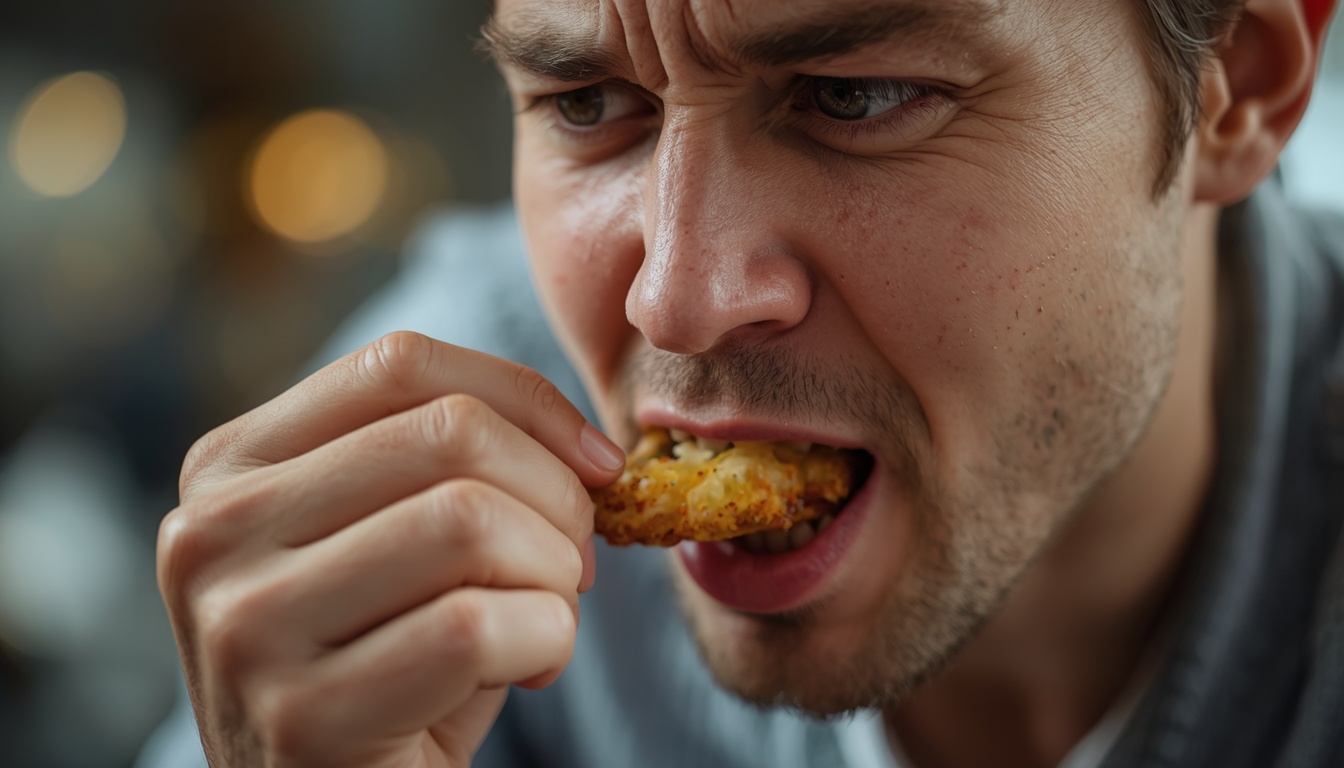
Your stomach is not a passive bag that only wakes up when the first bite lands. Long before protein hits the lining, the vagus nerve, smell, chewing, and the idea of food are supposed to turn on acid, enzymes, and mucus. That preview is called the cephalic phase. It is old, measurable, and easy to skip in a world of desk snacks and swallowed lunch.
When the briefing never comes, people often blame “too much acid” or “not enough acid” as if the gland were a broken faucet. More often the faucet still works. It just never gets the signal that a real meal is about to arrive — the same kind of mismatch that leaves the pancreas waiting for chewing and time and the gallbladder waiting for a real meal.
What This Mismatch Feels Like
A stomach that missed its warmup does not always burn. Common everyday patterns include:
- Heaviness or fullness after a meal that was not actually huge
- Belching and a sour taste when you ate quickly at a keyboard
- A need for antacids that seems to grow the more often you use them
- Feeling better with warm, slower, mixed meals than with a cold shake gulped between calls
- Occasional hunger-like gnawing that is not the same as a growling empty gut
None of those prove a disease. They are what a muscular, acid-secreting organ feels like when meals have no beginning.
How Stomach Acid Was Supposed to Work
Parietal cells in the stomach lining pump hydrogen ions through a proton pump, dropping fasting gastric juice to a pH near 1 to 2. That acid does three practical jobs: it starts protein unfolding, it converts pepsinogen into pepsin, and it is a barrier against many swallowed microbes.
The pump does not wait for food to splash in. Work dating to Ivan Pavlov showed that sham feeding — taste and chew without anything reaching the stomach — already raises acid. Later human studies by gastroenterologists such as Mark Feldman and Charles Richardson confirmed that thought, sight, and smell can account for a substantial share of meal-stimulated acid. Acetylcholine from the vagus, gastrin from antral G cells, and histamine from enterochromaffin-like cells then amplify one another. Mitchell Schubert and colleagues mapped that three-way control in detail: block one limb and the others compensate; remove the cephalic start and the whole cascade is late.
William Beaumont, watching digestion through Alexis St. Martin’s fistula in the 1820s, already noticed that emotion and anticipation changed the juice. The chemistry is newer. The timing is not.
Between meals, acid output falls but does not vanish. A fasting stomach is supposed to be acidic. Mucus and bicarbonate protect the lining. The mismatch is not “acid exists.” It is acid arriving out of sync with a chewed, paced meal.
Why Modern Eating Confuses the Pump
Several ordinary habits delete the preview:
No sensory start. A flavored drink or a bar eaten while answering email gives almost no sight, smell, or chewing. The cephalic phase is small. Food then lands on a lining that has not finished laying mucus or recruiting pumps.
Grazing instead of meals. Frequent small intakes keep gastrin and acid in a low simmer without a clear empty–fill cycle. The stomach rarely gets the long inter-meal rest that migrating motor complexes use to sweep residue.
Speed. Large bites and little chewing shorten the oral briefing the pancreas also depends on. Acid and pepsin meet poorly mixed lumps.
Acid suppression as a lifestyle. Proton-pump inhibitors and daily antacids have clear medical uses. They also raise gastrin. When the drug stops, rebound acid hypersecretion can last weeks — a pattern documented by researchers including Reidar Fossmark and Christina Reimer. The stomach was not “addicted to burning.” It was compensating for a blocked pump.
Very low-protein sipping. Acid and pepsin evolved around protein-containing meals. Repeated sweet liquids ask the antrum for a job it was not primarily built to do.
Helicobacter pylori, identified by Barry Marshall and Robin Warren, can lower acid in some people and raise it in others depending on where the infection sits. That is a separate medical story. Most modern “my stomach hates lunch” complaints do not require an ulcer. They require a beginning.
Hidden Triggers
- Coffee on a fully empty stomach if you already reflux, not because coffee is uniquely poisonous, but because it is a strong cephalic and gastric stimulus without food
- Carbonated drinks that distend the fundus and loosen the barrier at the top of the stomach
- Late huge dinners after a day of almost no real meals
- Tight waistbands and slumping after swallowing, which make a full fundus more likely to share acid with the esophagus
- Chronic mouth breathing and rushed swallowing of air
- Bitter-free diets that skip the extra-oral taste briefing described in work on gut bitter receptors
Bitter plant flavors are not a miracle acid “reset,” but they are one of the old sensory cues the upper gut still recognizes — a theme explored in why the gut still expects bitter flavors.
When to Worry
See a clinician promptly for:
- Trouble swallowing, food sticking, or vomiting blood
- Black stools, unexplained weight loss, or anemia
- Persistent vomiting or pain that wakes you every night
- New severe upper-abdominal pain, especially with fever or yellowing of the skin
- Heartburn that is frequent, progressive, or present for years without evaluation
Occasional heaviness after a rushed lunch is not an emergency. Progressive alarm features are.
Myths vs Facts
Myth: Healthy people should have a “neutral” stomach.
Fact: A fasting healthy stomach is supposed to be strongly acidic. Neutral pH is a drug effect or a disease effect, not the ancestral default.
Myth: All upper discomfort means too much acid.
Fact: Delayed emptying, air, large volume, and a weak barrier can feel identical to “excess acid.”
Myth: You must never feel hungry emptiness.
Fact: Inter-meal emptiness is part of the program that lets the next cephalic phase start cleanly.
Myth: Stopping an acid-blocking drug proves you need it forever if symptoms rebound.
Fact: Rebound can be a temporary gastrin-driven overshoot. Tapering under medical advice is often more informative than panic.
Myth: Chewing does not matter because the stomach will “blend it anyway.”
Fact: Chewing is part of the nerve briefing for acid, pepsin, and later insulin.
How to Work With the Stomach You Have
You do not need a frontier diet. You need a beginning.
- Sit down and look at the plate for a minute. Smell counts.
- Chew until the bite is boring. The cephalic phase is a chewing phase.
- Put protein and some fat in the first part of the meal, not only dessert or a sweet drink.
- Leave gaps between meals most days so the stomach can empty and the next briefing is obvious.
- Keep coffee with or after food if black coffee on emptiness reliably burns.
- Use acid-lowering drugs for diagnosed reasons and planned durations, not as a seasoning.
- Walk after larger meals. Upright motion helps emptying and pairs well with the same post-meal logic that steadies blood sugar.
These steps will not heal an ulcer or erase H. pylori. They return the timing the parietal cell still expects.
When to See a Doctor
Book care if symptoms are frequent, you need daily over-the-counter acid reducers for weeks, you are over 50 with new reflux, or any red-flag feature above appears. Testing can include H. pylori evaluation, review of medications that irritate the lining, and, when indicated, endoscopy. Self-managing a briefing is reasonable. Self-managing bleeding is not.
Frequently Asked Questions
Is stomach acid dangerous?
In the lumen it is supposed to be strong. Danger starts when acid reaches the esophagus often, or when the lining’s mucus defense fails. The existence of acid is not the disease.
Can I have low acid and still burn?
Yes. A small amount of acid in the wrong place (the esophagus) burns. A large amount in the right place (the stomach) is normal digestion.
Does apple cider vinegar “fix” low acid?
It is an acid you swallow, not a restored parietal-cell program. Some people like the sensory cue. It is not a substitute for evaluation if you have true alarm symptoms.
Why do I feel worse when I stop my acid reducer?
Rebound acid secretion after proton-pump inhibitors is a documented, often temporary effect. Ask the prescribing clinician about a taper rather than assuming the original problem instantly returned at full force.
Is an empty acidic stomach the same as an ulcer?
No. Fasting acidity is normal. Ulcers are breaks in the lining, commonly tied to H. pylori or certain pain medicines.
Will eating more slowly really change acid?
It changes the nerve briefing that turns acid and enzymes on in time with the food. That is physiology, not a wellness slogan.
Conclusion
The stomach you have is still the stomach that expected a seen, smelled, chewed meal after a gap. Acid is not a modern villain that appeared with spicy food. It is a scheduled tool. Give the tool a beginning — sit, sense, chew, then swallow — and many “sensitive stomach” days become ordinary digestion again. When the pattern is new, severe, or accompanied by warning signs, let medicine look at the lining. The rest of the time, the most evolutionary thing you can do at lunch is start it on purpose.