A smoothie does not ask much of a salivary gland. It arrives wet, cold, already broken into particles small enough to swallow. You can finish it in two minutes with almost no chewing. The mouth stays relatively quiet. Then, an hour later, the same mouth can feel sticky, sour, or oddly dry even though you have been drinking all morning.
That gap is not a character flaw. Saliva is not a background drip that runs at one speed. It is a reflex organ that still expects a meal you have to work on: something with texture, taste, and a bolus that needs wetting before it is safe to swallow.
Colin Dawes spent decades measuring that reflex in humans. Resting whole-saliva flow sits around 0.3 to 0.4 milliliters per minute in a typical adult, with a wide healthy range. Chewing, sour taste, and a real food bolus can push flow several times higher. The glands are built for that jump. A day of sipping and blended food rarely asks for it.
What Saliva Is Actually For
People think of saliva as spit. That undersells the chemistry.
Unstimulated saliva, the thin film that coats the mouth between meals, is mostly a product of the submandibular and sublingual glands. It is richer in mucins. Those proteins make the film slippery so the tongue can move and so speech does not feel like sandpaper. The film is not even. Work by Wolff and Kleinberg showed it is thickest on the back of the tongue and thinnest on the hard palate, which is why the roof of the mouth often feels dry first.
Stimulated saliva is a different fluid. The parotid glands contribute more of it. Flow rises, bicarbonate rises, and the fluid becomes better at buffering acid and washing sugar off enamel. Dawes showed that stimulated saliva is more supersaturated with respect to hydroxyapatite than resting saliva. That is one reason a meal that makes you chew also helps protect teeth, provided the food is not a constant sugar bath.
Saliva also starts starch digestion with salivary amylase, packs food into a swallowable bolus, carries taste molecules to receptors, and supplies antimicrobial peptides and secretory IgA. It is a first-pass immune and digestive fluid, not just lubrication.
Total output over a day is often estimated at one to two liters. Most of that volume is not produced while you sit at a keyboard. It is produced when something in the mouth is worth responding to.
The Reflexes Evolution Actually Built
There is more than one on-switch.
The gustatory-salivary reflex is the sour-and-bitter one. Citric acid is the classic laboratory stimulus because it is reliable and strong. Dawes and colleagues measured stepwise jumps in flow as acid concentration rose. Taste buds on the tongue are only part of the story. The soft palate and other oral sites carry taste receptors as well, which is why a flavor that coats the whole mouth drives more saliva than a sip that barely touches the tongue.
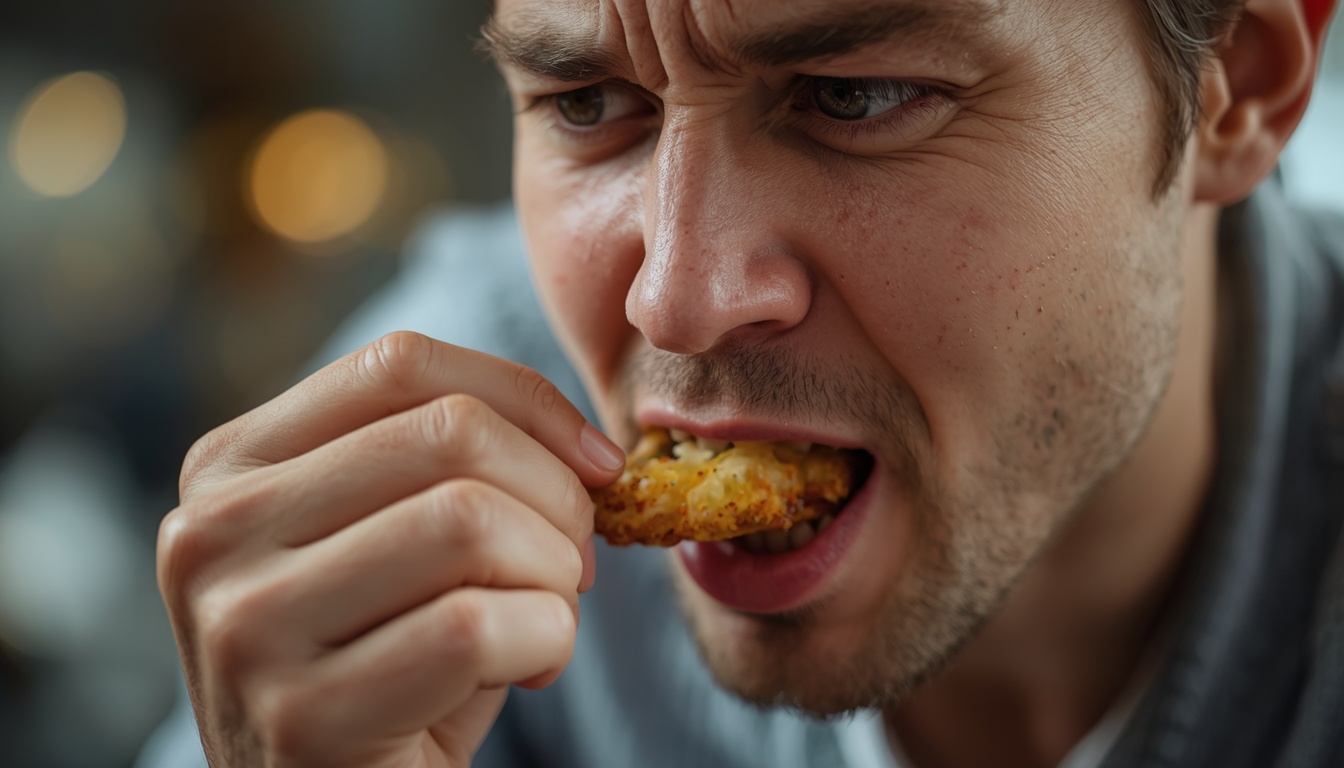
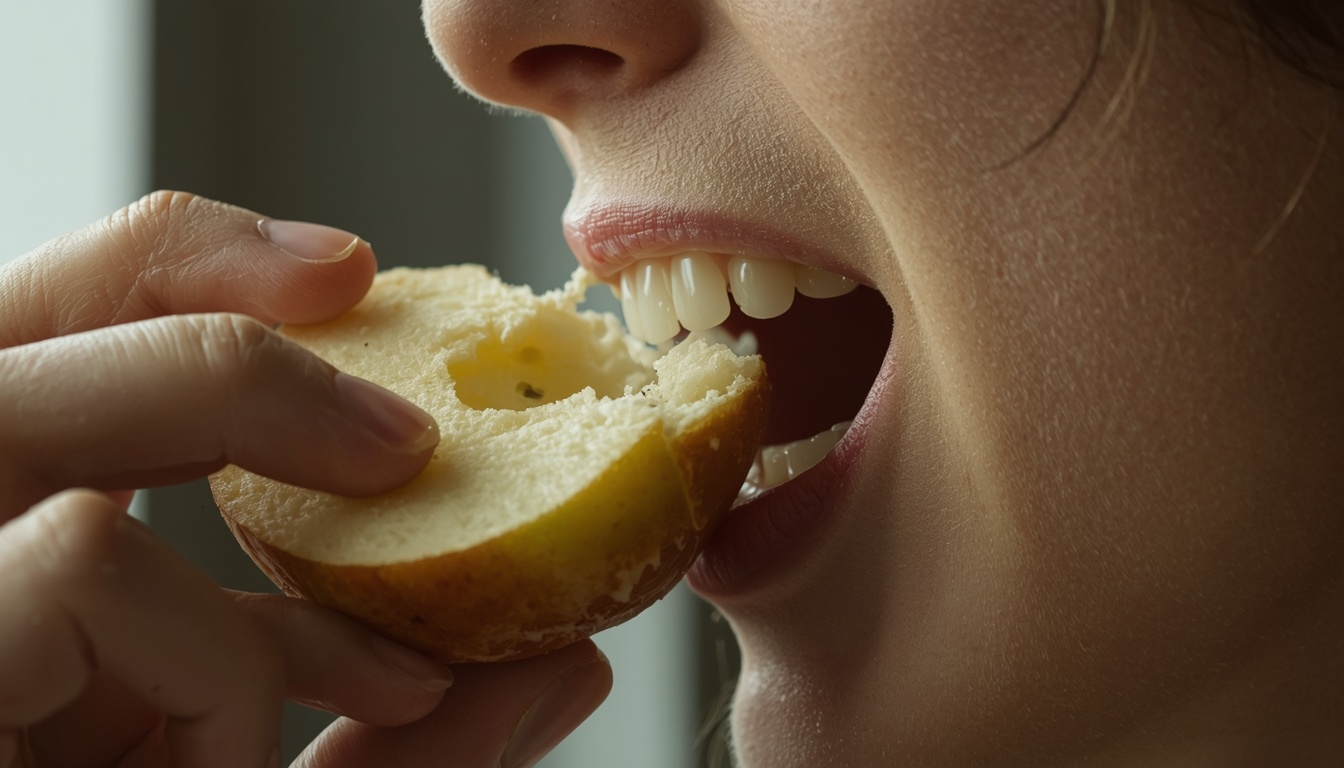
The masticatory-salivary reflex is the chewing one. Periodontal mechanoreceptors around the teeth fire when you load a bolus. Anderson, Hector and Linden showed in experimental work that those receptors make a real contribution to secretion. Empty clenching of the teeth does not do the same job. The receptors want a little separation and a rhythmic load, the kind you get from food or gum, not from grinding your molars together.
Then there is the cephalic piece. Sight and smell of food, and the expectation of eating, can start the glands before the first bite. That is the salivary half of the briefing Ivan Pavlov made famous, the same family of anticipatory responses that also prime stomach acid and pancreatic insulin. Recent circuit work has even mapped how gustatory cortex input to brainstem salivatory neurons is required for cue-predicted salivation in animals. The mouth is supposed to get a memo that lunch is coming.
Chewing and taste interact. Flavor without texture helps. Texture without flavor helps. Both together work better. A 2020 human study that stacked odor, vision, taste and mastication found that flow and amylase output rose as more of those channels came online, with chewing in the mix mattering for the enzyme.
What Modern Eating Quietly Removes
Ancestral meals were rarely pre-liquefied. Roots, meat, fibrous plants and seeds required dozens to hundreds of chews. Each chew was a mechanical letter to the periodontal receptors. Each burst of taste was a letter to the brainstem. The glands answered with volume, buffer and enzymes timed to the bolus.
A large share of modern calories arrives as liquids, soft breads, yogurt, and foods already processed to a paste. They are not inherently unhealthy. They are under-stimulating. Parotid output, which is especially tied to chewing, stays closer to resting mode. The incomplete-siphon model Dawes used for oral clearance assumes saliva keeps arriving to dilute and wash. If flow stays low after a sweet drink, sugar lingers in the residual film on teeth longer than it would after a chew-heavy meal.
Mouth-breathing, indoor dry air, and a long list of common medicines push the same system the other way. Anticholinergic drugs, some antidepressants, antihistamines and blood pressure medicines blunt the cholinergic drive that makes watery saliva. Stress does too. Sympathetic tone thickens saliva and can make the mouth feel dry even when some fluid is still present.
None of that means smoothies are a medical error. It means the gland is still calibrated for a world in which most calories required a jaw.
The pancreas has a parallel problem: it still expects chewing and time before glucose arrives, which is why a slammed liquid meal can outrun the briefing. That story sits in Why Your Pancreas Still Expects Chewing and Time. The stomach has its own version in Why Your Stomach Still Expects Acid Before the Meal. Saliva is the first station on the same line.
What Low Stimulation Feels Like
A dry, sticky film on the palate by mid-afternoon. A sour taste that was not there at breakfast. Food that seems to cling to teeth after a soft lunch. Difficulty talking after a long meeting because the mucin film has thinned. Waking with a glued tongue, which is a separate overnight story but the same gland family.
Hyposalivation is the clinical word for objectively low flow. Xerostomia is the feeling of dryness, and the two do not always match. Some people feel dry with a normal measured rate. Some have a low rate and barely notice until a dentist points to new decay along the gumline or under a filling.
Bitter and sour foods still punch above their weight. That is not nostalgia. Extra-oral bitter receptors also brief the gut, which is why the flavor system and the salivary system still share a logic. That wider briefing is covered in Why Your Gut Still Expects Bitter Flavors.
Hidden Triggers That Make the Mismatch Louder
A week of only soft or liquid meals after dental work. All-day flavored water that never quite replaces a chew. Chronic nasal blockage that forces mouth breathing and evaporates the thin palatal film. A new medicine started for sleep or blood pressure. High indoor heat in winter. A diet so low in acid-tasting plants that the gustatory reflex almost never fires hard.
Athletes sometimes notice the opposite after a long session: thick saliva and a cotton mouth from fluid loss. Hydration status is one of the strongest modulators Dawes documented. A dry body makes a dry mouth. That is physiology, not poor willpower.
When Low Flow Is More Than a Soft-Food Problem
See a clinician if dryness is new and persistent, if you cannot eat a dry cracker without water, if you have rapidly progressing cavities, oral yeast, burning tongue, or difficulty swallowing pills. Sjögren’s disease, uncontrolled diabetes, radiation to the head and neck, and some neurologic conditions can drop flow into a range that home chewing will not fix.
Sudden one-sided gland swelling and pain with meals can be a stone in a duct. Fever and a bad taste with swelling can be infection. Those are gland problems, not lifestyle footnotes.
Myths vs Facts
Myth: If you drink enough water, saliva is automatically fine.
Fact: Systemic hydration helps, but the glands still need oral stimuli. Water in the stomach does not replace periodontal and taste input.
Myth: Chewing gum “wears out” the glands and leaves you drier afterward.
Fact: Dawes tested prolonged gum chewing and did not find a rebound drop in unstimulated flow. People sometimes feel drier afterward because they have gotten used to the extra volume while chewing.
Myth: Thick morning saliva means the glands are overactive.
Fact: Overnight flow falls with sleep. What you notice on waking is a small, more mucinous residual, especially if you mouth-breathed.
Myth: Only sour candy is a real salivary stimulus.
Fact: Sour is the strongest lab tool. Chewing, smell, and mixed-taste foods are the everyday ones the system evolved around.
How to Give the Glands a Job Again
You do not need to abandon convenient food. You need a few minutes a day of the stimulus the reflex was built on.
Chew something that requires work at least at one meal: raw vegetables, a piece of meat or fish that is not minced into paste, firm fruit, nuts if your teeth allow it. The point is load and time, not a particular superfood.
If you drink a smoothie, eat something chewable with it or after it. The liquid calories can stay. The jaw letter still gets sent.
Sugar-free gum is a practical tool. After the flavor fades, flow settles at about two to three times resting rate from the gum base alone. That is useful after a sweet snack, on a dry flight, or during a medicine-related dry spell, as long as the jaw joint is happy.
Taste helps even without a full meal. A squeeze of citrus, a few bitter leaves, or a sour element in a salad is a gustatory nudge. It is not a treatment for disease. It is using the switch that is already wired.
Watch the air. A dry heated room evaporates the thinnest part of the film first. Nasal breathing, when you can manage it, keeps that film from being blown off all night.
If a medicine is the main driver, do not stop it on your own. Mention the dryness. Dose timing and saliva substitutes exist for a reason.
When to See a Dentist or Doctor
Ask for a flow check if dryness has lasted weeks, if cavities have accelerated, or if you need water to speak comfortably. Unstimulated whole-saliva rates under about 0.1 milliliters per minute are the usual laboratory flag for hyposalivation, though clinics vary in how they collect.
A rheumatology workup is reasonable when dryness of mouth and eyes travel together, especially with fatigue or joint pain. A sudden painful gland with meals needs a look for a stone. New neurologic symptoms plus dryness need a broader exam, not another pack of gum.
FAQs
Why does my mouth feel dry even though I drink water all day?
Drinking hydrates the body, which supports saliva, but the glands still respond to chewing and taste. Continuous sipping without those cues leaves resting flow in charge. Some drinks, especially caffeinated or very sweet ones, also do not coat the mouth the way mucin-rich saliva does.
Does chewing gum actually help long term?
It reliably raises flow while you chew and helps clear sugar. Dawes did not find that it suppresses later resting flow. Whether years of gum use raise baseline unstimulated rate is less settled. It is a tool, not a gland transplant.
Why is the roof of my mouth the first place that feels dry?
The salivary film is thinnest on the hard palate. Mouth breathing and dry air hit that spot first. It is anatomy, not a separate disease.
Can a liquid diet after surgery permanently slow the glands?
Short liquid stretches do not usually remodel adult glands in a lasting way. Extended exclusive liquid feeding can reduce the daily training stimulus. As soon as chewing is safe again, use it.
Is thick saliva a sign of dehydration or of too much saliva?
Often it is lower watery output with mucins still present, which happens with dehydration, mouth breathing, and sympathetic tone. True excess saliva is less common and usually has another cause, such as a new medicine or a swallowing problem that lets fluid pool.
Should children drink more smoothies if they are picky eaters?
Calories matter. Texture still matters for jaws, saliva and later swallowing skill. When a child can safely handle it, keep some foods that require chewing in the day rather than liquefying every meal.
Conclusion
Salivary glands are not decorative. They are reflex organs waiting for a bolus and a taste. Smooth modern calories can feed you and still leave that reflex under-employed, which is why a hydrated person can still have a sticky mouth and a dentist who keeps finding new soft spots.
You do not have to eat like a forager. You have to let the jaw and the tongue send the letters the brainstem still reads. A few minutes of real chewing, a sour or bitter note, and air that does not strip the palatal film are small acts. They are also the conditions the fluid in your mouth was built to meet.