A quick, sticky dryness after a few crackers is usually just your saliva working hard to moisten dry starch. Learn why it happens and when it might signal something more.
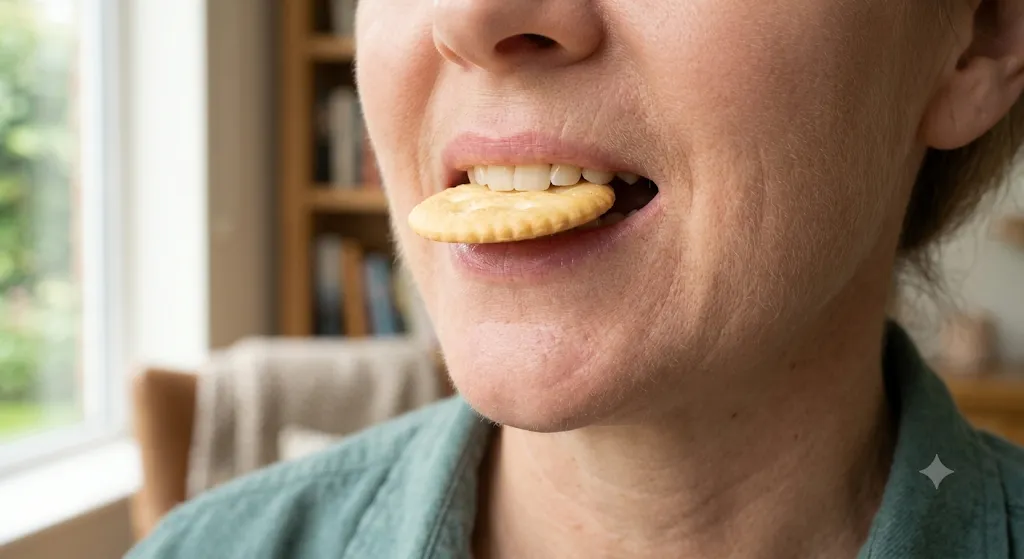
You reach for a handful of crackers, take a couple of bites, and suddenly your mouth feels oddly dry and sticky. The cracker seems to absorb every bit of moisture, and you find yourself wanting a sip of water before you can swallow comfortably. It happens so fast it can feel like something is off, yet most of the time this is simply your mouth doing exactly what it is built to do.
Crackers, toast, and other dry starchy foods demand a surprising amount of saliva. When that demand briefly outpaces the supply already present in your mouth, the sticky sensation appears. For most people it fades within a minute or two once more saliva arrives or you take a drink. Understanding the simple mechanics behind it helps separate a normal everyday response from the rarer times when persistent dryness deserves a closer look.
What This Dryness Actually Feels Like
The sensation is usually brief and local. After the first few bites your tongue may feel rough against the roof of your mouth, the cracker turns to paste that clings to your teeth or palate, and swallowing feels effortful until moisture returns. Some people describe it as cottony or papery for a few seconds. It is different from the deeper, ongoing dryness that can come with certain medicines or medical conditions; here the feeling is tightly linked to the food itself and usually lifts quickly.
You may also notice that a plain, unsalted cracker produces the effect more strongly than one with a little fat or seasoning. The texture and lack of moisture are the main triggers, not any special chemical reaction.
Common Reasons Dry Foods Leave Your Mouth Feeling Parched
Several everyday factors make this response stronger:
- The food itself absorbs saliva. Dry crackers, crispbread, and toast act like sponges. They pull water from the thin film of saliva already coating your mouth before new saliva can fully replace it.
- Your baseline saliva level. If you have not had anything to drink for a while, or if you are slightly dehydrated, there is simply less fluid available when the cracker arrives.
- Mouth breathing or recent talking. Breathing through your mouth or speaking for a stretch can lower the moisture film, so the same cracker feels drier than it would after a quiet period of nasal breathing.
- Caffeine or alcohol earlier in the day. Both can reduce salivary flow temporarily, leaving less reserve for a dry snack.
- Medications or mild nasal congestion. Many common drugs list dry mouth as a side effect; a stuffy nose that forces mouth breathing does the same.
In each case the underlying process is the same: the mouth’s protective moisture layer is temporarily outmatched by the food’s demand for lubrication.
Why This Happens: The Science of Saliva and Dry Starch
Saliva is more than water. It contains mucins that lubricate, enzymes that begin starch breakdown, and minerals that protect teeth. Unstimulated saliva flow is relatively low; most of the volume that appears during a meal is stimulated by chewing and taste.
Research by Colin Dawes and others has shown that the sensation of dryness appears when salivary flow falls below the combined rate at which water is absorbed by food or evaporates from the mouth. Dry, high-surface-area foods such as crackers and crispbread raise that absorption rate sharply. Classic work by Rose Marie Pangborn demonstrated that more saliva is required to handle powdered or highly textured dry breads than for pieces with lower surface area—the greater contact area simply soaks up more fluid before the bolus can be swallowed.
Chewing also triggers the parotid glands in particular to increase output, which is why the dryness often eases after a few more chews or once you pause. If the cracker contains a little fat or flavor, that sensory input can further boost flow, which is why some varieties feel less drying than plain ones. The whole sequence is rapid and normal; it is simply the mouth balancing the moisture budget in real time.
You may notice a related pattern if your mouth also feels dry after long conversations or during air travel. In each situation the common thread is a temporary mismatch between saliva supply and the demands of the moment. Articles on mouth dryness after talking a lot and dry mouth on a plane explore those parallel everyday triggers.
Less Common but Worth Noting
If the same dryness appears with moist foods, lasts long after the meal, or is accompanied by difficulty speaking or a burning feeling, other factors may be involved. Reduced salivary flow can occur with certain autoimmune conditions, radiation to the head or neck, or a long list of medications. Age alone does not cause dry mouth, but the number of medicines people take often rises with age, which can make the sensation more frequent.
Temporary drops in flow also happen with anxiety or concentrated focus, because the autonomic nervous system can briefly favor the “fight-or-flight” pathway over the “rest-and-digest” signals that drive saliva. That is why some people notice dryness when they are nervous even without eating anything dry. The piece on nervous dry mouth covers that specific situation in more detail.
Hidden Triggers That Make Crackers Feel Drier
A few less obvious habits amplify the effect:
- Skipping water for hours before the snack.
- Eating the crackers while talking or walking, which increases mouth breathing.
- Using alcohol-based mouthwash earlier, which can thin the protective film.
- High-salt varieties that draw additional fluid out of the oral tissues.
- Working in very dry indoor air (heated offices or air-conditioned rooms) that increases evaporation from the mouth.
None of these create a problem on their own, but they stack with the cracker’s natural absorbency.
When to Worry
The brief, food-linked dryness after crackers is almost always harmless. Seek advice if you notice:
- Persistent dryness that lasts hours or all day, not just after dry snacks.
- Difficulty swallowing or speaking that is not relieved by water.
- A burning sensation, sores, or a constant bad taste.
- Increased cavities or gum problems that appear alongside the dryness.
- Dryness that began right after starting a new medication.
These patterns are still often manageable, but a dentist or physician can check salivary flow and review possible contributors. Occasional cracker-related dryness does not require that step.
Myths vs Facts
Myth: Feeling dry after crackers means you are dehydrated and need to drink large amounts of water immediately.
Fact: Mild temporary dryness is mainly about the food absorbing the existing salivary film. A normal sip is usually enough; forcing large volumes is unnecessary for this specific sensation.
Myth: Only older people get dry mouth from foods.
Fact: Anyone can experience it. The mechanism is the same across ages; frequency simply rises when salivary reserve is lower for any reason.
Myth: The dryness means the crackers are “bad” for you.
Fact: It is a mechanical effect of low-moisture starch. The same thing happens with plain toast or dry cereal. Pairing them with a drink or a small amount of fat or moisture reduces the feeling without changing the food’s basic nature.
How to Manage the Feeling in Everyday Life
Small adjustments keep the sensation from becoming annoying:
- Take a sip of water just before or with the first bite of crackers.
- Choose varieties that contain a little fat or are lightly seasoned; they often stimulate more saliva.
- Chew slowly enough for stimulated saliva to keep pace.
- Keep a water bottle nearby during dry-snack times, especially in low-humidity rooms.
- If you know a medication reduces saliva, plan moist foods or extra sips around those doses.
- Breathe through your nose when possible while eating; it preserves the moisture film.
These steps work because they either increase the available fluid or reduce the rate at which it is absorbed or lost. Most people find the sticky feeling disappears almost entirely once the habit of pairing dry snacks with a sip becomes automatic.
When to See a Doctor or Dentist
Make an appointment if dryness is daily, interferes with eating a normal range of foods, or comes with dental problems. Mention any new medicines, nasal congestion, or other symptoms. Simple tests can measure stimulated and unstimulated flow, and many causes have straightforward solutions once identified. For the common cracker-related moment, no visit is needed.
FAQs
Why do crackers make my mouth drier than other snacks?
Crackers have very low moisture and a large surface area. They absorb the thin layer of saliva already in your mouth faster than new saliva can replace it, creating a temporary sticky feeling. Foods with more water or fat do not create the same imbalance.
Does this mean I have dry mouth (xerostomia)?
Not usually. True xerostomia is a persistent reduction in salivary flow that is present most of the day. Feeling dry only while eating crackers and recovering quickly is a normal response to the food’s texture, not a sign of a salivary-gland problem.
Will drinking more water throughout the day stop it?
Staying reasonably hydrated helps maintain your baseline saliva volume, so the effect is milder. You do not need to drink large amounts right before every snack; a normal fluid intake plus a sip with the crackers is typically enough.
Can chewing gum or sucking on something help?
Yes. Sugar-free gum or a small piece of moist food stimulates extra saliva and can clear the sticky residue faster. Just avoid constant sugary options if you do this often, since reduced saliva already raises cavity risk.
Is it worse if I eat crackers late at night?
It can feel more noticeable because salivary flow naturally drops during sleep and in the evening for many people. The same absorption process occurs, but the starting moisture level is often lower.
Should I avoid crackers if this happens?
No. The sensation is harmless for most people. Pairing them with water, choosing slightly less dry varieties, or simply chewing a little longer solves it without giving up the snack.
Conclusion
A mouth that feels briefly dry and sticky after eating crackers is a normal response to a low-moisture, high-surface-area food. Your salivary glands are simply catching up to the sudden demand for lubrication and starch breakdown. The feeling passes quickly for nearly everyone once more saliva arrives or you take a sip. Paying attention to hydration, nasal breathing, and pairing dry snacks with fluid keeps the moment from becoming annoying, while persistent all-day dryness is the pattern that deserves a professional check. In everyday life, the cracker-related pause is just your mouth doing its ordinary job of balancing moisture in real time.