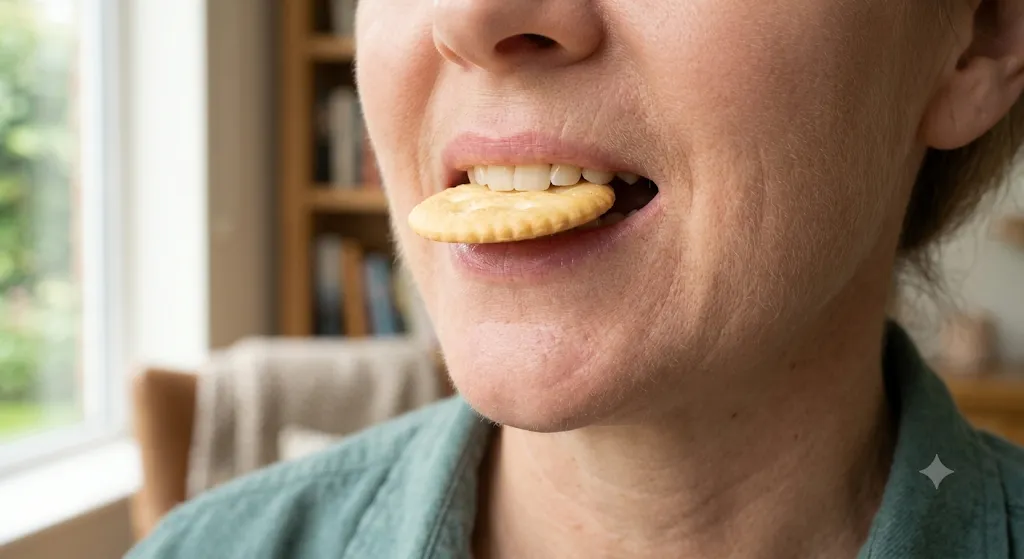
Yes — a watery mouth when you merely think about, remember, or picture a meal is a normal cephalic-phase saliva response shaped by conditioning and anticipation.

You are not even near the kitchen. Someone mentions pizza, or you scroll past a photo of a warm loaf of bread, or you simply remember the taste of something you love — and within seconds your mouth feels wetter. A thin film of saliva pools under your tongue or you catch yourself swallowing more often. It can feel almost automatic, and for a moment you wonder if your body is overreacting to an idea.
This is one of the more reliable everyday reflexes your digestive system still performs. The mouth does not wait for food to arrive before it starts preparing. Thinking, remembering, or imagining a meal is often enough to raise saliva flow. In most people it is a brief, harmless signal that the cephalic (head-stage) phase of digestion has begun.
What This Feels Like
The sensation is usually mild and short-lived. You notice a sudden increase in thin, watery saliva rather than thick mucus. You may swallow once or twice, or feel a slight coolness or wetness along the tongue and inner cheeks. The change is often clearer when you are already a little hungry or when the food thought is vivid — a specific smell, a childhood dish, or a picture on a screen.
It is different from the constant excess saliva some people notice with nausea, reflux, or certain medications. Here the flow rises quickly with the thought and settles once your attention moves on. Many people only become aware of it because modern life is full of food images and casual talk about meals.
Why This Happens
Saliva production is controlled by the autonomic nervous system, mainly the parasympathetic branch. Before any food enters the mouth, signals from the brain can already increase flow from the major salivary glands (parotid, submandibular, and sublingual). This early rise is called the cephalic phase.
Ivan Pavlov’s classic conditioning work showed that a previously neutral cue — a bell, a sight, even an idea — can become linked to eating and then trigger the same preparatory responses. In humans the same principle operates with thoughts and mental images. Studies of cephalic-phase responses, including work by researchers such as Richard Mattes, have confirmed that simply thinking about or looking at food can raise saliva flow, gastric acid, and insulin release in many people. Colin Dawes and others who measured human saliva secretion noted that mental stimuli are among the weaker but still reliable triggers compared with actual chewing or strong smells.
The saliva that appears is mostly watery and enzyme-rich. It helps lubricate the mouth, begins starch digestion with amylase, and protects the teeth and mucosa. From an evolutionary standpoint this makes sense: seeing or recalling a food source meant a meal was likely, so starting the process early saved time and energy. Today the same circuitry responds to a text message about dinner or a photo on a phone.
You can read more about the related smell-triggered version in Is It Normal for Your Mouth to Water When You Smell Food? and about why saliva is built for real chewing in Why Your Saliva Still Expects Real Chewing.
Common Everyday Triggers
- Vivid mental images or memories of a favorite meal
- Casual conversation about food
- Photos, videos, or ads on screens
- Hunger combined with any food-related thought
- Time of day that usually means a meal (conditioned routine)
The response is stronger in some people than others. Individual differences in conditioning, current hunger, and how vividly someone visualizes all play a role. It is not a sign of poor self-control; it is simply the digestive system doing an early rehearsal.
Less Common but Serious Causes
True excessive saliva (sialorrhea or hypersalivation) that lasts for hours or days is different from the brief, thought-triggered rise. Persistent excess can appear with nausea, gastroesophageal reflux, certain neurological conditions, medication side effects, oral infections, or pregnancy. Sudden, one-sided increase in saliva production is uncommon and worth medical review if it comes with facial weakness, trouble swallowing, or other new neurological symptoms.
The opposite problem — a mouth that stays dry even when you think about food — can point to reduced gland function, dehydration, medications, or mouth breathing. That pattern is covered in other articles on morning dry mouth and nervous dry mouth.
Hidden Triggers
Screens full of food content can keep the reflex primed throughout the day. Stress sometimes dampens saliva (sympathetic dominance), so the watery response may feel more noticeable on calmer days or when you are actually hungry. Strongly conditioned personal associations — a specific restaurant, a family recipe, or even the sound of a kitchen timer — can also fire the response without any actual smell or sight of food.
The stomach’s own early acid response follows a similar logic; see Why Your Stomach Still Expects Acid Before the Meal for the parallel cephalic phase lower in the digestive tract.
When to Worry
Occasional mouth-watering when you think about food is normal. Consider speaking with a doctor or dentist if you notice:
- Constant excess saliva that interferes with speech or sleep
- Drooling that is new and unexplained
- The change comes with facial numbness, weakness, or difficulty swallowing
- Persistent dry mouth instead, or a metallic or bitter taste that does not clear
- Pain, swelling under the jaw, or fever suggesting a salivary-gland problem
Most people who simply notice the watery feeling with food thoughts never need evaluation.
Myths vs Facts
Myth: A mouth that waters at the thought of food means you are especially hungry or lack willpower.
Fact: It is a conditioned cephalic-phase reflex. Hunger can amplify it, but the response can appear even when you are not particularly hungry.
Myth: Only the smell or taste of food should trigger saliva.
Fact: Mental imagery, memory, and even words are sufficient cues for many people, exactly as Pavlov demonstrated with non-food signals.
Myth: Extra saliva at the thought of food is a sign of a digestive disorder.
Fact: Brief anticipatory saliva is a healthy preparatory step. Disorders involve sustained excess, deficiency, or other accompanying symptoms.
How to Manage It
For most people no management is required. If the sensation is frequent enough to feel distracting:
- Notice the trigger (a particular photo, conversation, or time of day) and gently redirect attention if you wish.
- Stay reasonably hydrated so baseline saliva feels comfortable.
- Chew sugar-free gum or a small piece of real food when you are ready to eat; actual chewing produces a stronger, more satisfying saliva response and can reset the anticipation.
- Limit constant food imagery on screens if you find the reflex keeps firing when you are not planning to eat.
There is no need to suppress the response. It is simply the body getting ready.
When to See a Doctor
See a clinician if the watery mouth is constant rather than brief, if it arrives with pain or swelling near the salivary glands, if swallowing or speech is affected, or if you have other new neurological or digestive symptoms. A dentist can also evaluate if dry mouth or oral changes are the larger concern.
FAQs
Is it normal for my mouth to water just from looking at a picture of food?
Yes. Visual cues are among the classic triggers of the cephalic-phase saliva response in humans.
Why does it happen more when I am already hungry?
Hunger heightens the brain’s responsiveness to food-related signals, so the same thought produces a larger saliva increase.
Can thinking about food raise stomach acid too?
Yes. The cephalic phase includes early acid secretion and other digestive preparations, not only saliva.
Does everyone experience this?
Most people do to some degree. Strength varies with conditioning history, current hunger, and how vividly someone imagines the food.
Is there a difference between watery saliva from a thought and thick saliva from reflux?
Yes. Thought-triggered saliva is usually thin and short-lived. Reflux-related excess often feels thicker, comes with heartburn or a sour taste, and lasts longer.
Should I worry if my mouth never waters when I think about food?
Not usually. Some people simply have a quieter response. Persistent dry mouth with other symptoms is the pattern that deserves attention.
Conclusion
A mouth that waters when you think about, remember, or picture food is a normal, well-studied reflex. It is the cephalic phase of digestion doing exactly what it evolved to do: prepare the mouth the moment a meal seems likely. In a world full of food images and conversation, the cue arrives more often than it once did, yet the response itself remains ordinary and harmless for the great majority of people. Enjoy the signal if you like; it simply means your digestive system is paying attention.