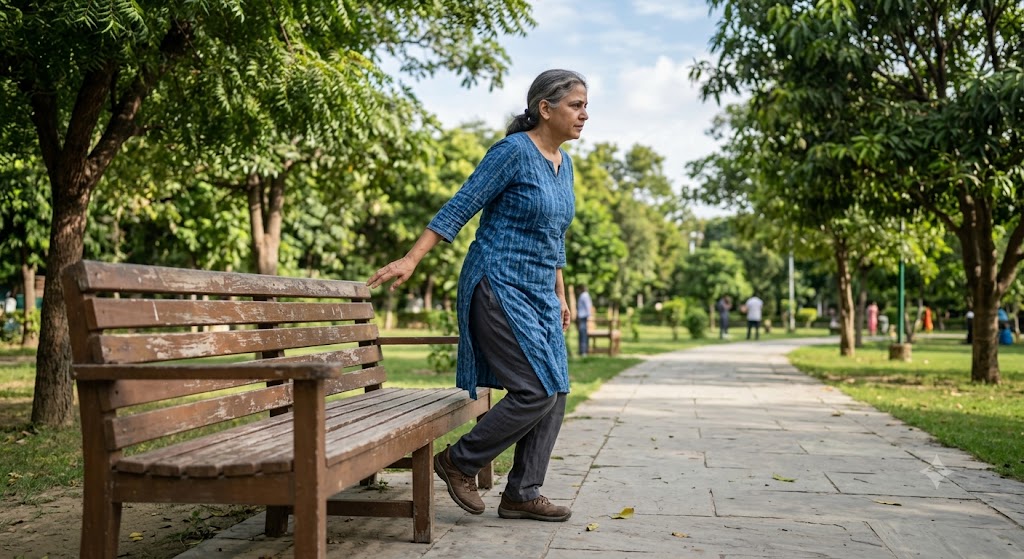
A brief lightheaded dip after a large meal is often blood being borrowed by the gut, not a failing heart. Postprandial hypotension, splanchnic steal and standing too soon explain most of the swirl.
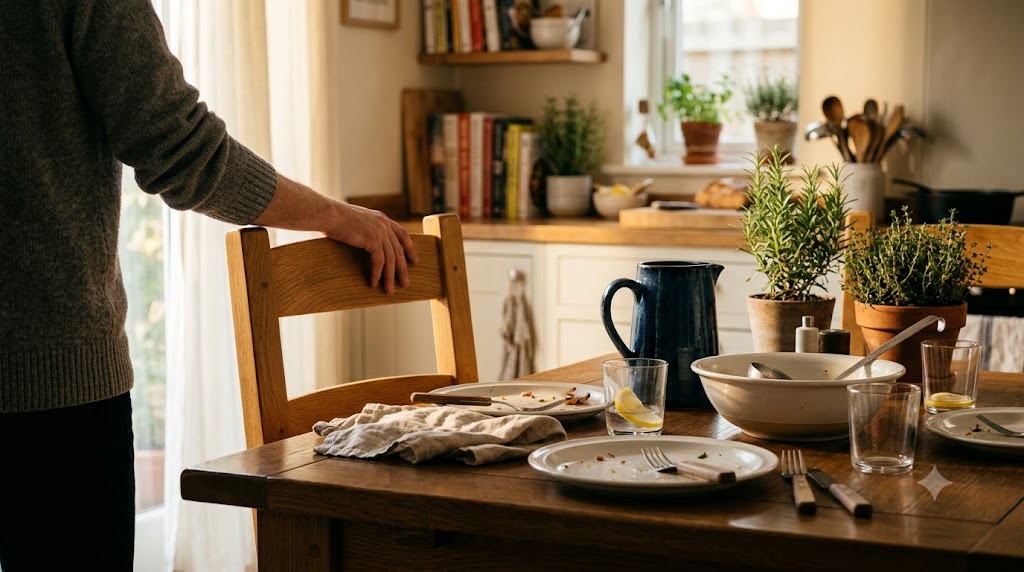
You finish a heavy lunch, stand up to clear the plates, and the room takes a half-step sideways. It is not spinning like a carnival ride. It is a brief drain — warmth in the face, a hollow second behind the eyes, the sense that your blood went somewhere else. Then it settles. Most people blame the meal, the heat, or “low blood sugar,” and go on. The first two guesses are closer than the third.
A large meal asks the gut for a real blood budget. Arteries in the stomach and intestine open. A surprising fraction of circulating volume parks in the splanchnic bed while digestion starts. If you stand while that loan is still being written, and if the usual standing reflexes are a beat late, the brain feels the dip. In older adults the pattern has a name — postprandial hypotension — and it is one of the better-studied quiet causes of after-lunch unsteadiness. In younger people the same plumbing can produce a milder, shorter version after a banquet, a buffet or a holiday plate.
That does not make every post-meal swirl harmless. A first thunderclap, chest pain, a true faint, or dizziness that arrives with a racing irregular pulse still needs a real workup. The common version, though, is not a character flaw and not automatically hypoglycemia. It is circulation doing meal math while gravity asks for an upright report.
What This Symptom Feels Like
People describe it in almost the same language. Five to sixty minutes after a large meal, standing or walking to another room brings a warm flush, lightheadedness, a soft pressure behind the eyes, or the feeling that the floor is a half-inch farther away. Sitting back down usually ends it in seconds to a minute. Some notice it more after a carbohydrate-heavy plate, a hot meal, alcohol with food, or a meal eaten fast. Others only feel it on a hot day, after a restaurant portion, or when they stand immediately instead of sitting a few extra minutes.
It is not the same as the heavy-eyed slump after lunch. That post-meal sleepiness is a different mix of meal size, circadian afternoon dip and rest-and-digest tone, which we have unpacked in why you get sleepy after a meal. Dizziness is a perfusion story. Sleepiness is a brain-state story. They can travel together after a huge plate, which is why the afternoon crash and the afternoon swirl get blamed on the same sandwich.
It is also not vertigo in the spinning, room-tilting sense. True spinning after meals is uncommon and should not be folded into this pattern without a second look at the inner ear and blood pressure.
Why a Meal Borrows Blood
Digestion is not a local hobby. After you swallow, the stomach and small intestine need oxygen, motor energy and a route for absorbed nutrients. Splanchnic blood flow — the supply to stomach, intestine, pancreas, liver and spleen — can rise by fifty to a hundred percent after a mixed meal. That extra volume has to come from somewhere. For a while, it comes from the shared circulating pool.
In a healthy young adult the loan is covered. Heart rate ticks up a little. The sympathetic nervous system tightens vessels in muscle and skin just enough. Baroreflexes, the same stretch sensors in the carotid and aorta that keep you from blacking out when you stand, notice the dip and recruit more tone. Cardiac output can rise. The brain’s share stays inside its comfort zone.
The cover is not infinite. A very large meal, a high-carbohydrate load, alcohol, heat, dehydration, and standing too soon all widen the loan or blunt the repayment. Insulin and gut peptides add a vasodilating whisper. The result is a brief mismatch: more blood parked in the abdomen, less immediate reserve for the head when you stand.
Lewis Lipsitz and colleagues at Hebrew SeniorLife and Harvard spent years measuring this in older adults. They showed that systolic blood pressure can fall 20 mm Hg or more within an hour of eating in a sizable fraction of elderly clinic patients, sometimes without the person noticing until they stand. René Jansen, Christopher Mathias and later work by Karen Jones, Laurence Trahair and colleagues in Adelaide mapped the same physiology with meal challenges, gastric emptying and superior mesenteric artery flow. The pattern is not imaginary. It is measurable, meal-sized and worse when the plate is large and the standing is early.
Common Causes of After-Meal Lightheadedness
The usual combination is ordinary and stacked.
Meal size. A banquet portion is a bigger splanchnic ask than a modest plate. Buffet and holiday meals are classic triggers because volume, fat, carbohydrate and sitting time all rise together.
Carbohydrate load. Rapidly absorbed starch and sugar empty faster, raise insulin more sharply and tend to drop blood pressure more than an isocaloric protein-and-fat plate. Trahair, Jones and colleagues have shown that the glucose and gastric-emptying profile tracks the blood-pressure dip better than calories alone.
Standing too soon. Sitting protects you while the loan is being written. The first upright minute after a heavy meal is when baroreflexes and the muscle pump have to cover both gravity and the gut. The same standing physics that cause ordinary lightheadedness — described in why you get lightheaded when you stand up — is simply asked to work on a smaller reserve.
Heat, alcohol and dehydration. Skin vessels already open in a warm room or after a hot meal. Alcohol adds its own vasodilation. A dry morning plus coffee plus a large lunch leaves less volume to share. Heat plus a meal is why some people only notice this at summer weddings.
Age and medications. Baroreflex gain falls with age. Diuretics, some blood-pressure drugs, nitrates, Parkinson medicines and many antidepressants blunt the standing response. In that setting a normal-sized meal can act like a large one.
Autonomic vulnerability. People with diabetic autonomic neuropathy, Parkinson disease, pure autonomic failure or multiple-system atrophy can drop pressure after almost any meal. That is a medical pattern, not a buffet problem, and it belongs with a clinician, not a lifestyle tip sheet.
The Hypoglycemia Myth
The first story people tell themselves is low blood sugar. True reactive hypoglycemia after a meal exists, but it is far less common than the phrase. In people without diabetes or gastric-bypass anatomy, a documented glucose low that matches the swirl is unusual. Most post-meal lightheadedness happens while glucose is still normal or high — which is exactly when splanchnic flow and insulin-related vessel opening are busiest.
If you tremble, sweat, get intensely hungry and feel better within minutes of a measured snack, that is a different script and worth checking. If you only feel briefly empty-headed on standing after a feast, and it fades when you sit, the circulation story fits better than a sugar crash.
Less Common but Serious Patterns
A few after-meal events are not the ordinary loan.
True syncope. A full faint after eating, especially in an older adult, is postprandial hypotension until proven otherwise and needs blood-pressure checks before and after meals, a medication review and a look at the heart. Falling and hitting the head is the danger, not the dip itself.
Dumping after gastric surgery. People with bypass or sleeve anatomy can get a rapid fluid shift into the intestine, a surge of gut peptides and a real glycemic swing. The timing is often 15–30 minutes (early dumping) or 1–3 hours (late dumping). That is not the same as a holiday buffet in an intact gut.
Arrhythmia or ischemia unmasked by a meal. A heavy meal increases cardiac work. New chest pressure, an irregular pounding, or dizziness that comes with shortness of breath is not “just digestion.”
Anaphylaxis or severe food allergy. Flushing plus hives, throat tightness, wheeze or collapse after a specific food is not postprandial hypotension.
Gastrointestinal bleed or volume loss. Feeling faint after meals in the setting of black stools, vomiting blood or a known ulcer is a different emergency.
Hidden Triggers
Several everyday habits make a normal meal act larger.
Eating quickly leaves less time for the cephalic briefing the pancreas and stomach expect, so the later insulin and emptying curve can be steeper. We have written about that briefing in why insulin still expects daytime muscle — the muscle walk after the meal is one of the simplest ways to give the borrowed blood a second job.
A second coffee or a glass of wine with the plate stacks vasodilators. A very hot soup in a warm room does the same through skin vessels, a cousin of the drain some people feel after a hot shower.
Compression of the legs helps. Going from a long sit at the table straight to standing without a calf squeeze is the opposite of what the venous pump wants. Ankle pumps before you stand are not folklore. They return a little of the parked volume before gravity takes its cut.
Breakfast skippers who then eat a huge late lunch combine a long fast, a large splanchnic ask and an afternoon circadian slump. The swirl and the fog arrive together and feel like one problem.
When to Worry
See a clinician promptly if after-meal dizziness is new and repeated, if you actually faint, if it happens after ordinary snacks rather than large meals, or if it comes with chest pain, breathlessness, a very fast or irregular heartbeat, one-sided weakness, trouble speaking, a severe headache, black stools, or vomiting blood.
Older adults, people with diabetes, Parkinson disease, known low blood pressure, or a recent change in blood-pressure medication should not treat repeated post-meal unsteadiness as a trivia fact. Home checks of blood pressure sitting and then standing, both before a meal and 30–60 minutes after, often tell the story more clearly than a single clinic reading.
Anyone who only feels a brief dip after a feast, recovers on sitting, and has a normal day otherwise can start with smaller plates, slower standing and a short walk — and still mention it at the next routine visit if it becomes a habit.
Myths vs Facts
Myth: Dizziness after eating always means low blood sugar.
Fact: In people without diabetes or gastric surgery, the common mechanism is a blood-pressure and blood-flow shift, often while glucose is still normal or high.
Myth: If you did not faint, the drop was imaginary.
Fact: You can feel a 15–20 mm Hg systolic dip without losing consciousness. Feeling it is data, not drama.
Myth: Only frail older people get this.
Fact: The measured syndrome is more common and more dangerous with age, but younger adults can feel a milder version after a very large, hot, or alcohol-accompanied meal, especially in heat.
Myth: Lying down for an hour after every meal is required.
Fact: A few extra sitting minutes, then standing slowly, then a short easy walk is usually better than a long recumbent nap. Walking uses muscle as a second glucose sink and a pump.
Myth: Salt loading is the universal fix.
Fact: Extra salt can help some people with chronic orthostatic hypotension under medical advice. It is not a free treatment for a one-off buffet swirl, and it fights other blood-pressure goals.
How to Manage the Ordinary Version
Make the meal smaller or split it. Two modest plates two hours apart ask for two smaller loans instead of one large one.
Put protein, fat and fiber next to the starch. A slower emptying curve is a slower pressure curve.
Sit a few extra minutes, then stand in stages — uncross, ankle-pump, stand, pause, walk. Do not sprint from the last bite to the sink.
Walk ten minutes on level ground after the meal if you are steady enough. Muscle contraction returns venous blood and gives glucose a destination other than a sharp insulin pulse.
Cool the room if you can. A fan and a non-alcoholic drink help more than another glass of wine.
Review diuretics and blood-pressure timing with the person who prescribed them if this happens daily. Moving a dose relative to the main meal is sometimes enough. Do not change prescription drugs on a blog’s advice.
Water before the meal, not only after, gives the circulating pool a little more to share. A very large fluid load with the food can work against you if it distends the stomach further; a glass twenty minutes before is a cleaner trick than chugging at the table.
When to See a Doctor
Book a visit if the symptom is frequent, if you have fallen, if you have diabetes or a neurologic diagnosis, or if home standing blood pressures after meals are clearly lower than your usual. Bring a simple log: meal size, timing of the swirl, sitting and standing numbers, and medicines. That log is more useful than a dramatic description.
Urgent care or emergency evaluation is the right move for a first faint, chest pain, neurologic signs, or bleeding. Postprandial lightheadedness is common. Postprandial catastrophe is not, and the two should not share a waiting strategy.
FAQs
How long after eating does the dizzy feeling usually start?
Most measured blood-pressure dips begin within 15–30 minutes and can last up to about two hours, with a peak often around 30–60 minutes. A swirl the instant you swallow is more likely gas, reflux or anxiety than splanchnic steal.
Why is it worse after carbohydrates than after a steak?
Faster gastric emptying and a larger insulin and gut-peptide response open splanchnic and some peripheral vessels more quickly. Protein and fat slow the curve. The calories can be similar. The timing is not.
Can this happen after a small snack?
A true small snack rarely moves blood pressure much in a healthy adult. If modest snacks drop you, look at medicines, dehydration, autonomic disease, dumping anatomy or a different diagnosis rather than blaming the cracker.
Is it the same as feeling sleepy after lunch?
No. Sleepiness is mostly meal size plus the afternoon circadian dip and parasympathetic tone. Lightheadedness is a standing perfusion problem. They can coexist after a huge plate.
Should I check my blood sugar when this happens?
If you have diabetes, use insulin, or have had gastric surgery, yes — and follow the plan you already have. If you do not, a one-off home glucose that is normal during the swirl supports the circulation explanation. Repeated unexplained episodes still deserve a clinic visit, not endless finger-sticks.
Does lying down after meals prevent it?
Lying down avoids gravity, so the dip may be smaller, but it also delays the muscle pump and the after-meal glucose sink. A short sit, a slow stand and an easy walk is usually the better everyday script unless a clinician has told you otherwise after documented postprandial hypotension.
Conclusion
A brief lightheaded dip after a big meal is often the gut taking a legitimate blood loan while you ask your baroreflexes to stand you up. The biology is old, measurable and usually modest. Smaller plates, slower standing, cooler rooms and a short walk repay most of the loan. What the feeling is not, in the common case, is proof that your heart failed or that your sugar crashed. Listen if it becomes a habit, a faint or a companion of chest pain. Otherwise treat it as circulation doing meal arithmetic — and give it a smaller problem to solve.