A tight waist after landing is usually cabin pressure expanding gut gas plus sitting and salty snacks—not a sudden food allergy. Here is when post-flight bloating is ordinary and when it is not.
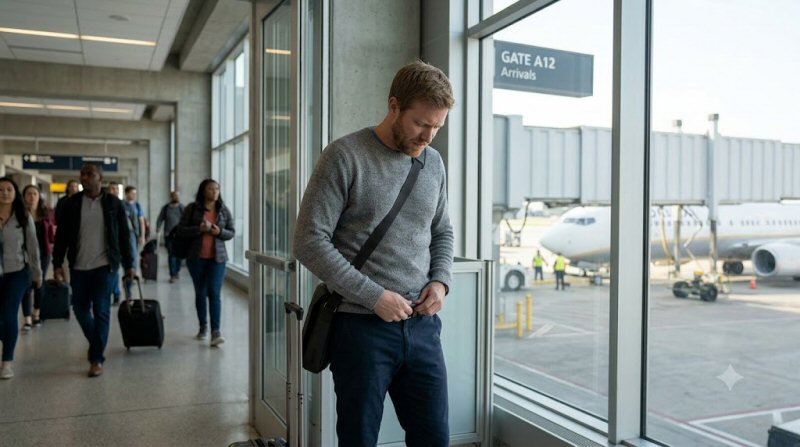
You boarded comfortable. Somewhere over the middle of the route the waistband started to announce itself. By landing the belt needs a new hole, the abdomen feels drum-tight, and you would rather not tuck the shirt in. Nothing is stabbing. You are not short of breath. You just look and feel a size larger than the person who went through security.
For most healthy adults, feeling bloated after a flight is a temporary gas-and-fluid problem. Cabin air sits at a lower pressure than the gate. Gas already in the stomach and intestine expands a little. Sitting still, swallowing air with dry snacks, carbonated drinks, and a pause in the usual walking rhythm of digestion finish the recipe. It is related to the same cabin physics that can puff fingers and ankles in flight, but the sensation lives in the gut, not the limbs.
What This Symptom Feels Like
Typical post-flight bloating is:
- A tight, full, or drum-like abdomen rather than a sharp pain
- A waistband or belt that feels snugger at landing than at takeoff
- Extra burping or a need to pass gas after you stand
- Sometimes mild lower-rib pressure when you lean forward
- No fever, no vomiting, no rigid belly
- Often worse after a long-haul flight, a carbonated drink, or a salty meal tray
It usually builds over hours. It should ease once you walk the jet bridge, use the bathroom, and return to ordinary meals and upright time. A little residual tightness the same evening is common. Pain that wakes you, vomiting, or a belly that stays hard and one-sided is a different story.
Common Causes
The usual recipe is Boyle’s law plus sitting, not a sudden intolerance that appeared at 35,000 feet.
Lower cabin pressure and expanding gas. Most commercial cabins are pressurized to the equivalent of roughly 6,000 to 8,000 feet. Robert Boyle’s relationship between pressure and gas volume still applies inside you. As outside pressure falls, the same amount of swallowed air and fermented gas occupies more space. Aviation physiologists including John Ernsting described this modest expansion as a routine cabin effect, not an emergency.
Swallowed air. Dry cabin air, talking, chewing gum, sipping through a small cup, and carbonated mixers all increase the air you swallow. That air has to go somewhere. On the ground you burp or walk it through. In a seat you sit on it.
A quiet gut clock. The migrating motor complex that sweeps leftover gas and residue between meals prefers movement and an upright posture. Hours of sitting slow that housekeeping. The same pattern shows up in afternoon burping after a desk lunch.
Salty trays and alcohol. Cabin meals and snacks are often high in sodium. Extra salt pulls water into the gut and the vascular space. Alcohol relaxes the lower esophageal sphincter and can add more swallowed air. The result is volume you can feel at the waist.
Constipation timing. Travel, time zones, and a cramped lavatory delay a bowel movement that would have happened at home. Stool and gas that stay put take up room.
Why This Happens
The intestine is not a rigid pipe. It is a soft, gas-containing tube inside a pressurized cabin.
At sea level the gas in your gut is already a mix of swallowed nitrogen and oxygen plus hydrogen, carbon dioxide, and a little methane from microbes. When cabin pressure drops, that mixture expands until it is burped, passed, or reabsorbed. The abdominal wall has to accommodate the extra volume. Sitting folds the hips and reduces the space the diaphragm can use, so the same extra milliliters feel tighter than they would on a walk.
Michael Levitt and later William Hasler, who mapped intestinal gas handling, showed that most healthy people move gas along quickly when they are upright and walking. Immobility plus extra swallowed air is enough to cross the threshold from unnoticed to “my jeans do not agree with this landing.” Fluid shifts from cabin altitude and salt can add a little abdominal wall puffiness on top of the gas, which is why some people also notice a puffy face after the same flight.
None of this requires a new food allergy. It requires physics, posture, and a meal cart.
Less Common but Serious Causes
Most post-flight tightness is gas. A few patterns are not.
- Sudden severe abdominal pain, a rigid belly, or vomiting after a flight needs urgent care, not another walk around the carousel
- One-sided swelling of a calf with chest pain or shortness of breath is a clot question, not a bloating question
- Known hernias can feel more prominent when gut gas expands; a new painful bulge is not “just cabin air”
- People with recent abdominal surgery, active inflammatory bowel disease, or known bowel obstruction risk should treat unusual post-flight pain as a reason to call a clinician, not as routine travel discomfort
- Jaundice, black stools, or fever with abdominal pain are not cabin bloating
Cabin gas expansion can make an already unhappy gut louder. It does not create appendicitis or a blocked bowel by itself.
Hidden Triggers
Small choices change how obvious the expansion feels.
- Carbonated sodas, beer, and sparkling water in flight
- Chewing gum or hard candy “to keep the ears happy”
- Eating quickly before the seatbelt sign, which adds swallowed air
- Tight waistbands and shapewear that leave the gut nowhere to go
- Skipping usual walking time in a long layover, then sitting again
- High-FODMAP tray items (onions, beans, sugar alcohols in snacks) if your gut is already sensitive
- Constipation from travel dehydration and a delayed toilet stop
When to Worry
Ordinary post-flight bloating is bilateral-feeling, gas-related, and better after walking and a bathroom trip. Get prompt care if you have:
- Severe or worsening pain, a hard abdomen, or repeated vomiting
- Blood in the stool, black stools, or fainting
- Shortness of breath, chest pain, or one swollen, tender calf
- A new painful bulge in the groin or at an old surgical scar
- Fever, yellow skin or eyes, or pain that does not ease after you are home and moving
- Bloating that lasts days and is paired with weight loss or night sweats
Myths vs Facts
Myth: Post-flight bloating means the airplane food was spoiled.
Fact: Most trays are not the problem by themselves. Expansion of gas you already had, plus salt and sitting, explains far more landings than food poisoning. Foodborne illness usually brings diarrhea, vomiting, and a delay of hours, not only a tight waist at the gate.
Myth: If your stomach expands, the cabin must be unsafe.
Fact: Cabins are designed around a modest altitude equivalent. A little extra gut volume is expected physics, the same way a bag of chips looks puffed at cruising altitude.
Myth: You should skip all fluids so you swell less.
Fact: Dehydration makes constipation and thick secretions worse. Ordinary water is still the better default. What usually helps more is walking and going easy on bubbles and salt.
Myth: Tight clothes prevent bloating by holding everything in.
Fact: A rigid waistband only makes the same volume feel worse. Soft clothes and a walk work better than compression at the belt line.
How to Manage It
You do not need a special in-flight cleanse. You need less extra gas and more movement.
- Walk the aisle when the seatbelt sign is off. Even short loops help the gut and the calf pump.
- Choose still water over sparkling drinks on board.
- Eat more slowly. Put the cup down between sips so you swallow less air.
- Loosen the belt once you sit. Give the abdomen room as cabin pressure changes.
- After landing, walk before you sit in the next vehicle. A bathroom stop plus ten minutes on your feet often does more than a pill.
- Resume your usual fiber and water the same day so the delayed bowel movement can happen.
- If you already know specific tray foods bloat you on the ground, skip them in the air. The cabin will not make them kinder.
Compression stockings can help ankle swelling. They do nothing useful for gut gas. Do not confuse the two problems.
When to See a Doctor
See a clinician if post-flight bloating is new and severe, if it lasts more than a day or two after you are walking and eating normally, or if it comes with the red flags above. Mention recent flights, what you ate and drank, whether you passed gas or stool after landing, and any hernia or bowel history. Ordinary cabin bloating does not need imaging. Pain that looks like an emergency does.
FAQs
Is it normal to feel bloated after a short flight too?
Yes, especially if you drank something fizzy, ate quickly, or already felt gassy at the gate. Longer flights give gas more time to announce itself, but Boyle’s law starts as soon as cabin pressure drops.
Why do I burp more after landing?
Standing and walking let trapped air find an exit that a folded sitting posture blocked. Extra burping for an hour after a flight is common and usually a good sign that the volume is leaving.
Does this mean I have a food intolerance?
Not by itself. If the same foods bloat you on the ground, the cabin will not hide that. If they never bother you except in the air, pressure, air-swallowing, and sitting are the likelier explanation.
Can bloating after a flight be a clot?
Clots cause limb swelling, calf pain, chest pain, or breathlessness—not a gassy, belt-tight abdomen. Treat those symptoms as urgent. Do not treat ordinary waist tightness as a clot.
Will lying down after landing make it worse?
Sometimes. Recumbent rest can slow gas transit the way the seat did. A walk and an upright meal usually beat a nap if the only complaint is a tight waist.
Should I take an antacid or simethicone before every flight?
Some people find simethicone or a familiar antacid helpful if they already use them for ground-level gas. They are optional, not required. Movement and skipping bubbles help more people than a new supplement stack.
Conclusion
A tight waist after a flight is usually cabin pressure expanding ordinary gut gas, plus sitting, salt, and swallowed air. The same body that handles meals on the ground is working in a slightly lower-pressure room with fewer chances to walk the gas along. Loosen the belt, skip the bubbles, walk when you can, and give the abdomen the rest of the arrival day. If pain is severe, the belly is rigid, or breathing and one leg join the story, get care. For everyone else, the extra hole in the belt is physics, not a verdict on the airplane meal.