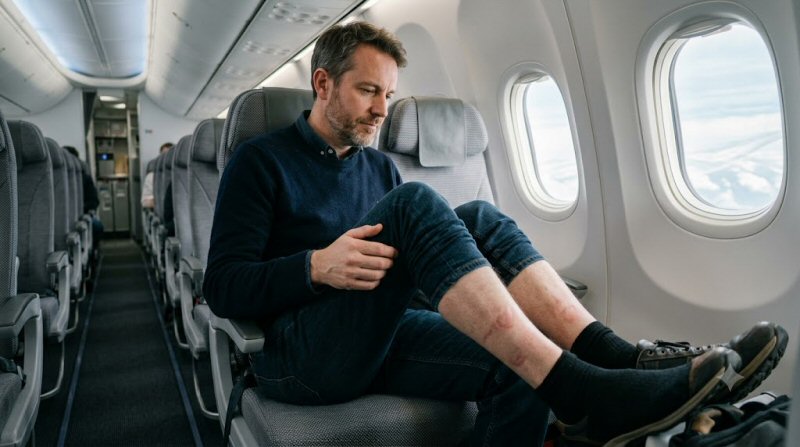
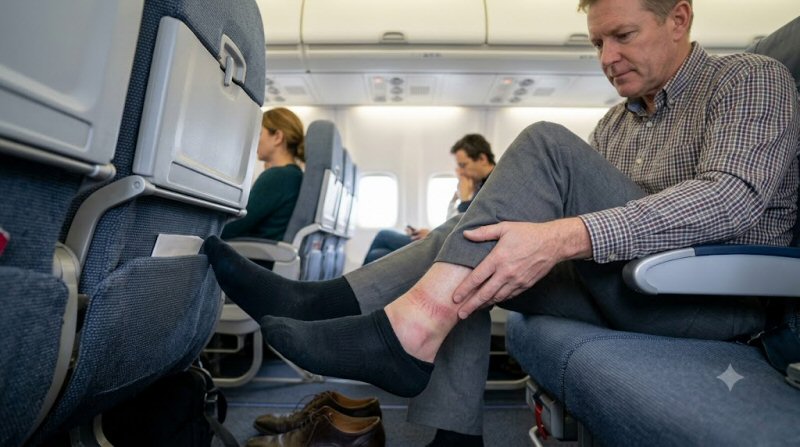
Puffy fingers and tight rings on a flight are usually cabin pressure, sitting, and fluid shift—not a clot in your hand. Here is when plane-hand swelling is ordinary and when it is not.
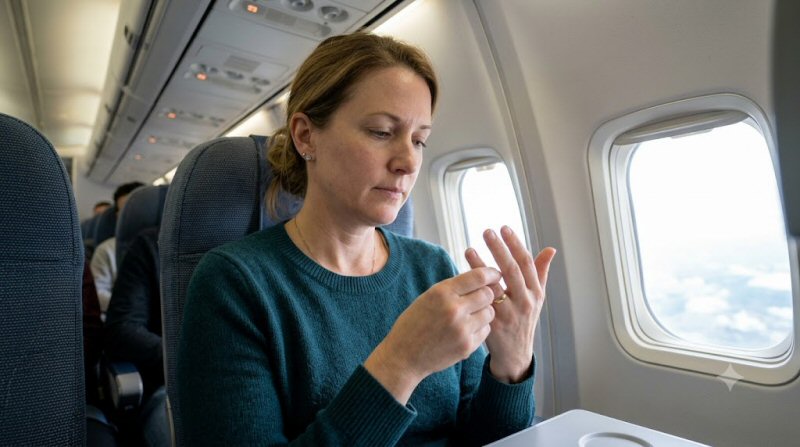
You board with rings that spin. Two hours later they feel welded on. Your fingers look sausage-soft, the backs of your hands are a little shiny, and your watch leaves a dent. The person in the next seat is doing the same discreet tug at a band. Cabin air feels dry. The tray table is down. Nothing hurts. It still looks wrong.
For most healthy adults, swollen hands on a plane are a temporary fluid-shift problem, not a hand clot and not instant heart failure. The same sitting that can puff ankles can puff fingers—especially in a cabin that is cooler, drier, and slightly lower in oxygen than the ground.
What This Symptom Feels Like
Typical plane-hand swelling is:
- Mild puffiness on the backs of the hands and around the knuckles
- Rings, watches, or fitness bands that suddenly feel tight
- Skin that looks a little shiny or leaves a brief dent after you press it
- Fingers that feel stiff when you make a fist, then loosen after you walk the aisle
- Both hands, or the hand that has been hanging still against the armrest
It usually builds over hours, not minutes. It is often worse after a long-haul night flight, a salty meal, alcohol, or a window seat that never quite lets you stand. It should fade over the rest of the arrival day once you walk, elevate, and drink ordinary water.
It is a cousin of the late-day puffiness people notice after sitting at a desk. The same Starling balance of capillary pressure and lymph return is at work. The cabin just stacks extra nudges on top.
Why Cabin Air Makes Hands Hold Water
A commercial cabin is typically pressurized to the equivalent of about 6,000 to 8,000 feet. That is not mountaineering, but it is not sea level either. Partial pressure of oxygen falls a little. Small vessels in the skin respond. Fluid can shift out of the bloodstream into the soft tissue of the hands and feet.
Researchers who study in-flight physiology, including work associated with John West on altitude and with groups that measure cabin humidity, have long noted that cabins are also very dry—often in the 10–20% relative humidity range. Dry air does not “suck water out of your hands” in the cartoon sense. It does increase insensible water loss from breath and skin, which can leave you a little volume-depleted even while your fingers look swollen. The swelling is local pooling, not proof you drank too much water.
Sitting does the rest. Muscle pumps in the calves and, to a lesser extent, in the forearms and hands help push venous blood and lymph back toward the heart. John Homans and later venous researchers such as Andrew Nicolaides described how still limbs let pressure rise in dependent veins. On a plane your hands often rest below heart level on an armrest or in your lap for hours. Gravity plus a quiet pump is enough.
Cool cabin temperature adds a third nudge. Cool skin constricts surface vessels. Blood and fluid can redistribute. Combined with a salty snack, a cocktail, and a tight sleeve, the ring that fit at the gate may not at cruising altitude.
Common Causes on Ordinary Flights
Most puffy-plane-hand stories stack a few ordinary factors:
- Hours without standing. The calf pump and even small fist-and-wrist motions go quiet. Dependent edema shows up in feet first for many people, and in hands for others—especially if the arms hang still.
- Salty food and alcohol. Cabin meals and tomato juice are not shy with sodium. Alcohol is a mild diuretic and a vasodilator. You can lose free water and still hold salt in the tissues of the hands.
- Low cabin humidity. You feel dry-mouthed and still look puffy. Those two facts can live together.
- Mild cabin altitude. The modest drop in oxygen tension and the pressure environment of the cabin change how fluid sits in soft tissue.
- Tight jewelry and cuffs. A ring does not cause the fluid. It advertises it. A tight watch band or jacket cuff can also slow local drainage.
- Sleeping with hands hanging. A nap against the window with wrists dropped over the armrest is a classic setup.
- The menstrual cycle, heat, or a long connection. Hormonal fluid retention and a warm terminal already raise baseline puffiness before you ever leave the ground.
People who already notice swollen fingers in hot weather or ankle puffiness after sitting are often the same people who swell on flights. The plane is a compressed version of a long still day.
Less Common but More Serious Patterns
Hand swelling alone, on both sides, that fades after landing is rarely a clot in the hand. Deep-vein thrombosis of the arm exists, but it is far less common than clot in the calf, and it usually announces itself with one-sided pain, warmth, color change, or visible veins—not a matching pair of tight rings.
Take swelling more seriously when it comes with:
- Sudden swelling of one arm or hand, especially with pain, heat, or redness
- Chest pain, unexplained shortness of breath, or coughing blood after a flight
- Facial swelling, lip swelling, or trouble breathing (possible allergy or angioedema)
- Swelling that does not improve over a day or two on the ground
- Known heart, kidney, or liver disease, or a new medication that causes edema
- Numbness that does not recover when you move, or a hand that looks pale and cold
John Scurr and other flight-thrombosis researchers focused public attention on the calf and on long-haul immobility, not on puffy fingers. Do not ignore one-sided arm symptoms. Do not treat two slightly plump hands as an emergency either.
Hidden Triggers You Can Change Before the Next Trip
A few extras make cabin puffiness worse than it has to be:
- Sliding a ring on after a salty airport meal instead of before security
- Sleeping the entire long-haul with both wrists dangling
- Compression socks on the legs with zero movement of the arms (socks help feet; they do not drain hands)
- Cabin cocktails plus coffee plus almost no water
- A jacket you never take off, with elastic cuffs
- Crossing your arms for the whole film
- A window seat plus a sleeping neighbor, so you never stand
None of these are moral failings. They are just a still, salty, dry, slightly hypoxic afternoon at 35,000 feet.
Myths vs Facts
Myth: Swollen hands on a plane mean you are getting a blood clot in your fingers.
Fact: Clots that matter after flights are usually in the deep veins of the legs. Symmetric, painless hand puffiness that eases with walking is edema, not a typical hand DVT.
Myth: You should stop drinking water so you swell less.
Fact: Dehydration from dry cabin air and alcohol can sit right next to local swelling. Sipping water is still reasonable. The issue is salt, stillness, and position, not a glass of water.
Myth: If your rings fit on the ground they should fit in the air.
Fact: Soft tissue volume changes with posture, heat, salt, and cabin altitude. Jewelers have heard this story for decades.
Myth: Swollen hands mean your heart is failing in mid-air.
Fact: Heart-related edema is usually more about the legs, breathlessness, and weight gain over days to weeks. Isolated in-flight finger puffiness in an otherwise well person is a different pattern.
Myth: Aisle walking only helps the feet.
Fact: Standing and moving the arms helps venous and lymph return in the hands too. Even opening and closing fists on a timer helps a little.
How to Manage Swollen Hands in the Air
You do not need a medical kit. You need motion, position, and a little restraint with salt.
- Take rings off before you board if they already feel snug, and store them where you will not lose them.
- Every hour, stand if the seat-belt sign allows. Walk to the galley. Roll your shoulders. Open and close both fists for 30 seconds. Circle the wrists.
- Keep hands closer to heart level when you can. A pillow on your lap beats a dead hang off the armrest for a long nap.
- Loosen watch bands and cuffs.
- Go easy on the sodium and the second drink. Water or sparkling water is boring and useful.
- On arrival, walk the terminal instead of sitting at the belt. Elevate your hands on a bag for a few minutes if they still feel tight.
- If you use compression for your legs on long-haul flights, keep using it for the calves. Add hand motion rather than inventing tight gloves.
People who already get heavy legs after sitting often do best when they treat the whole trip as a movement problem, not a hand problem.
When to See a Doctor
Book ordinary care after you land if:
- Swelling is clearly one-sided and painful
- The hand stays puffy for more than a day or two on the ground
- You have new shortness of breath, chest pain, or calf swelling as well
- Rings have been getting tighter for weeks, not just on flights
- You are pregnant, on hormones, or have a clotting history and the pattern is new and dramatic
Seek urgent care for sudden one-arm swelling with pain, for facial or throat swelling, or for chest symptoms after a long flight. Those are different scripts from tight rings at hour three of a red-eye.
FAQs
Is it normal for only one hand to swell on a plane?
A little asymmetry is common if one arm hung off the rest or wore a tighter watch. Marked one-sided swelling with pain or color change is not the usual cabin pattern and deserves a look.
Should I take my rings off before every flight?
If they already feel snug on hot days or after salt, yes. Losing a ring in a seat pocket is annoying. A ring that cannot come off at altitude is worse.
Do compression gloves help?
Light gloves are optional and unproven as a must. Fist pumps, wrist circles, and not hanging the hands for six hours do more for most people.
Why do my feet swell more than my hands, or the other way around?
Gravity. Feet are farther below the heart. Hands swell more when they hang still or when a cuff or ring advertises a small volume change you would otherwise ignore.
Will this keep happening on every long flight?
It often does if the recipe stays the same: salt, alcohol, no walking, dangling wrists. Change two of those and many people notice less puffiness.
Can cabin pressure permanently stretch my rings or fingers?
No. Soft tissue volume goes up and down. Fingers are not being permanently inflated by the cabin.
Conclusion
Puffy hands on a plane are a very human response to sitting still in dry, slightly thin air with salt and jewelry in the mix. The fluid is local. It is usually gone after you walk the arrival hall. Move your arms, stand when you can, ease up on the tomato juice, and give the rings a rest if they already fight you on the ground. Save the alarm for one-sided pain, breathlessness, or swelling that refuses to leave once you are back at ordinary altitude.
That tight ring at cruising altitude is often just your hands asking for a walk.