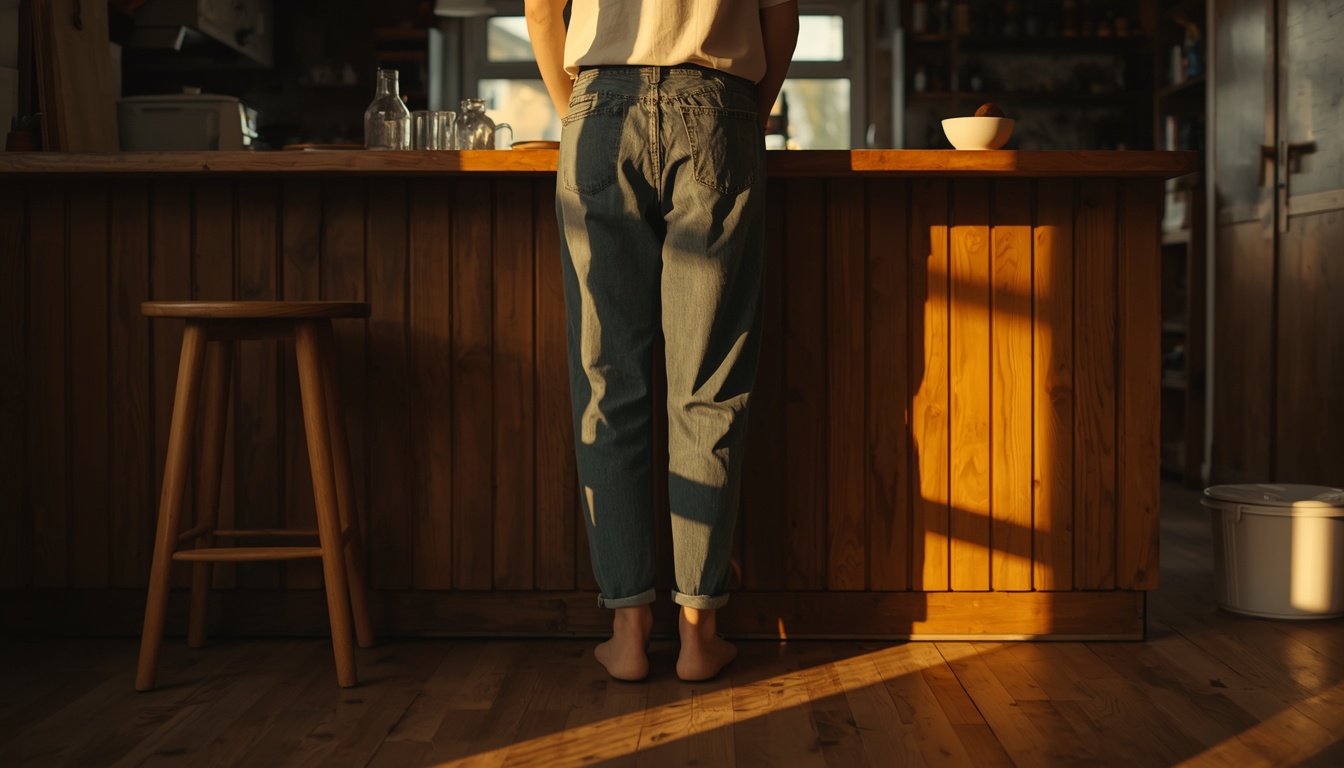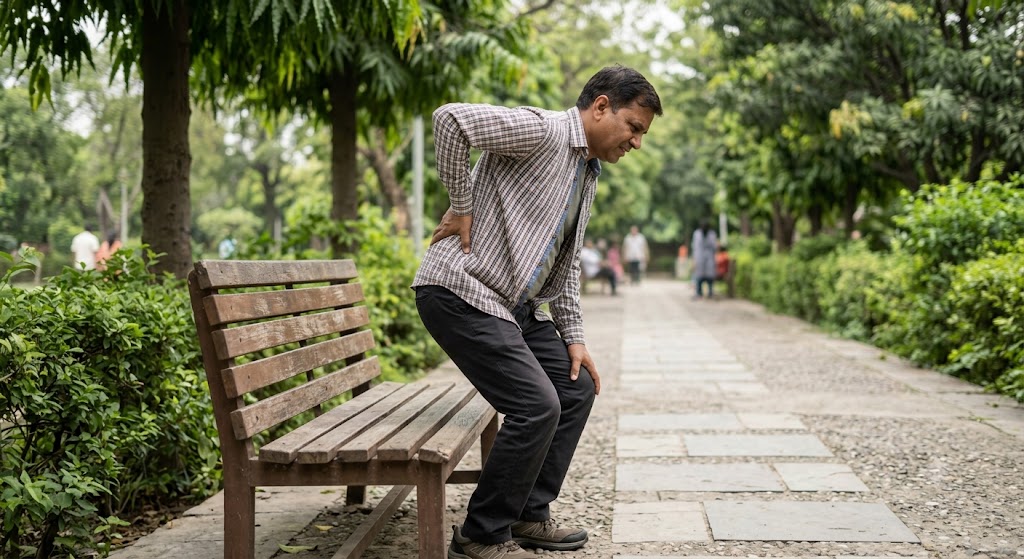
Front-of-knee ache after gardening, flooring, or prayer is often pressure on the prepatellar bursa and fat pad — not automatically cartilage damage. Learn why kneeling hurts, when to worry, and how to kneel with less cost.
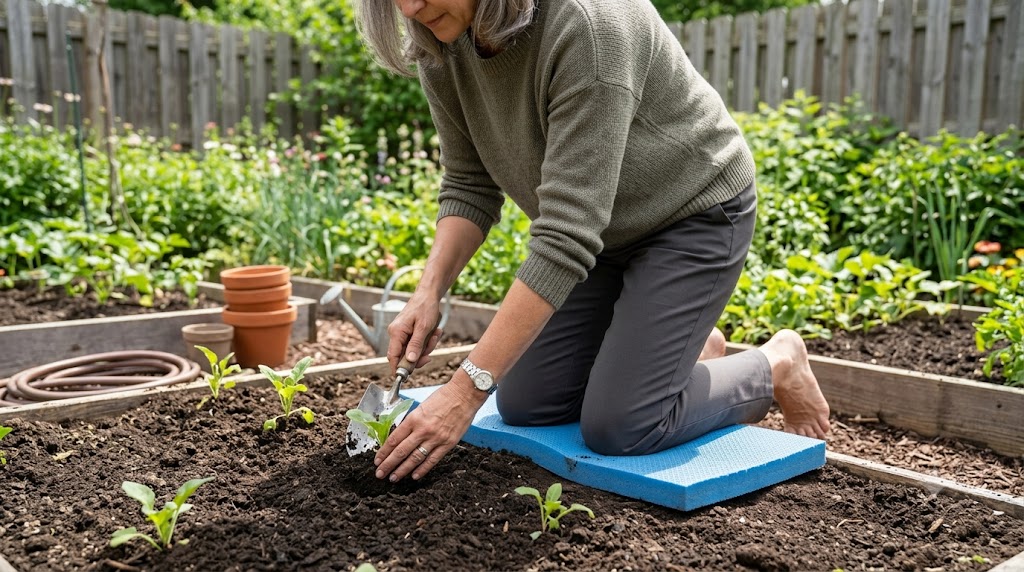
You finish a stretch of weeding, tiling, playing on the floor, or sitting back on your heels, and the front of one or both knees feels bruised. Standing up is stiff. The first few steps are cautious. The kneecap area is tender if you press it. An hour later, or by the next morning, it is often quieter — until the next long kneel.
Ache after kneeling is one of the most common “I used my knees the way they were designed, and they complained anyway” sensations in modern life. Most of the time it is not a torn meniscus or worn-out cartilage announcing itself. It is concentrated pressure on a small fluid sac, a fat pad, and skin that did not spend the rest of the week practicing that load. What matters is whether the ache fades, whether the kneecap area swells into a distinct puff, and whether the joint locks, gives way, or stays hot.
What This Ache Feels Like
A typical benign post-kneeling pattern is:
- A dull, bruised, or “bone-on-floor” feeling over the front of the kneecap
- Worse right after you stand up from a long kneel
- Tender to touch over the soft tissue in front of the patella
- Easier after walking, ice, or a few hours off the knees
- Louder on a hard floor than on a pad or carpet
- Not a sharp catch inside the joint, not a knee that locks or gives way
The front of the knee is a sandwich. Skin, a thin prepatellar bursa, the patella itself, and a fat pad sit between you and the floor. When you kneel, body weight is focused through a small contact patch instead of being shared across the whole foot. That is a different demand from walking, sitting, or going down stairs.
Stair-descent ache under the kneecap is a different load — eccentric quadriceps and patellofemoral compression — covered in Is It Normal for Your Knees to Ache Going Down Stairs?. Ache after sitting in a chair with bent knees is the theater-sign pattern in Is It Normal for Your Knee to Ache After Sitting?. A painless pop when you stand is usually cavitation, described in Is It Normal for Your Knees to Crack When You Stand Up?.
Why Kneeling Concentrates Load on a Small Patch
Bursae exist so tissue can glide. The prepatellar bursa sits in front of the kneecap so skin can slide over bone when you kneel and crawl. Juan Canoso and earlier bursal anatomists described these sacs as friction-reducing, not load-bearing pillows. They tolerate brief pressure. They protest sustained, unpadded, repeated pressure.
Classic occupational names tell the story. Housemaid’s knee, clergyman’s knee, miner’s knee — different bursae, same idea. Long minutes with the front of the knee on a hard surface inflame the sac. Fluid accumulates. The front of the knee looks and feels puffy. That is prepatellar bursitis when it is frank. Milder versions never get a name. They just ache after Saturday in the garden.
Scott Dye’s work on the “envelope of function” is useful here. A joint has a range of load it can absorb and recover from. Kneeling for two hours on tile after months of only sitting and walking can exceed that envelope even if the cartilage is healthy. The complaint is often the bursa and fat pad, not the joint surface.
The infrapatellar fat pad (Hoffa’s fat pad) can also be pinched when the knee is fully flexed. John Fulkerson and others who mapped anterior knee pain noted that fat-pad irritation can feel like a deep bruise just below the kneecap, especially after deep kneeling or sitting on the heels.
Cartilage itself has no pain fibers. What you feel is synovium, bursa, fat pad, retinaculum, and bone under the kneecap. That is why a “clean” MRI and a sore kneeling knee can coexist.
Hard Floors, Thin Padding, and Knees That Rarely Practice
Modern kneeling is often sudden and unpadded. You drop onto kitchen tile to wipe a spill. You spend a weekend laying flooring. You play with a child on a living-room rug that is thinner than it looks. You garden on packed soil after a year of barely kneeling at all.
Common amplifiers include:
- Hard tile, concrete, or packed earth with no pad
- Thin skin and less fat over the kneecap with age or low body fat
- A recent increase in kneeling after a long quiet stretch
- Already irritable patellofemoral joints from sitting and stair descent
- Tight quadriceps that press the patella more firmly against the floor when you sit back on the heels
- Previous swelling that left the bursa a little thicker than baseline
Occupations and hobbies that kneel daily — flooring, plumbing, childcare, certain prayer postures, martial arts — usually adapt if the load is gradual and padded. The weekend warrior on tile does not get that adaptation.
Hard-floor standing loads the heel fat pad instead of the kneecap. That pattern is covered in Is It Normal for Your Heels to Hurt After Standing on Hard Floors?. Varied terrain still matters for the rest of the knee’s week, as in Why Your Knees Still Expect Varied Terrain.
Hidden Triggers That Make Kneeling Louder
The same hour of weeding can feel fine in April and sore in October. Quiet contributors include:
- Cooler weather and stiffer morning tissues before you start
- A recent growth in body weight that raises the force on the contact patch
- Kneeling with the feet tucked and the full weight sitting on fully flexed knees
- Twisting while kneeling, which adds shear the bursa did not sign up for
- A slightly swollen knee from a prior twist that has less room to spare
- Thin trousers or bare skin on a rough surface
- Rushing to stand from a deep kneel without using the hands
Bursae also remember the last insult. A mildly inflamed prepatellar bursa can look almost normal by Tuesday and flare again the next time you kneel on Saturday.
When to Worry
Most post-kneeling ache is mechanical and settles. Get prompt care if you have:
- Rapid, marked swelling over the front of the kneecap that looks like a distinct fluid pouch
- Redness, warmth, fever, or a break in the skin over the kneecap — septic bursitis is uncommon but serious
- A knee that locks, will not fully straighten, or gives way
- Pain after a fall or twist, not only after quiet kneeling
- Night pain that wakes you, or ache that is worse at rest than after kneeling
- Swelling that does not ease over several days, or that spreads through the whole joint
- Numbness, calf swelling, or inability to bear weight
A red, hot, rapidly swollen prepatellar bursa after kneeling on broken skin needs same-day assessment. Ordinary next-day bruise-soreness does not.
Myths vs Facts
Myth: If kneeling hurts, the cartilage is already gone. Fact: Cartilage has no pain nerves. Front-of-knee pain after kneeling is far more often bursa, fat pad, and bone pressure.
Myth: You should never kneel if you want healthy knees. Fact: Kneeling is a normal human posture. The problem is usually dose, surface, and a week of no practice — not the posture itself.
Myth: A puffy kneecap after flooring work means you need surgery. Fact: Most prepatellar bursitis is treated with rest from kneeling, padding, and time. Surgery is reserved for persistent or infected cases.
Myth: Knee pads are only for professionals. Fact: A cheap foam pad changes the contact pressure more than most supplements will.
Myth: If it only hurts when you kneel, it cannot be important. Fact: That is actually the reassuring pattern. Pain only under that specific load is usually local tissue, not a hidden systemic disease.
How to Kneel With Less Aftermath
You do not have to give up the garden or the floor. You have to change the contact.
- Use a kneeling pad, folded towel, or garden kneeler every time the surface is hard.
- Switch sides and stand up on a schedule — every 10–15 minutes on a long job.
- Alternate kneeling with a low stool or a squat so one contact patch is not on duty all afternoon.
- Stand up using your hands and hips rather than yanking the knees straight from end-range flexion.
- After a long kneel, walk for a few minutes instead of collapsing into a chair.
- Ice the front of the kneecap for 10 minutes if it feels bruised that evening.
- Keep quadriceps and hips strong with sit-to-stands and step-downs on other days so the knee is not only loaded when you suddenly kneel.
- If one bursa is already puffy, skip kneeling on that side until the extra fluid recedes.
The meniscus still expects twist and load in walking, not a weekend of end-range kneel plus twist. That broader story is in Why Your Menisci Still Expect Twist and Load. Cartilage still expects compression and glide, covered in Why Your Articular Cartilage Still Expects Compression and Glide.
When to See a Doctor
See a clinician if kneeling pain lasts more than a couple of weeks despite padding and rest from the posture, if a distinct fluid sac sits in front of the kneecap, if the skin is red or broken, or if the joint itself swells, locks, or gives way. Bring the story: how long you knelt, on what surface, whether you twisted, and whether the swelling is in front of the bone or inside the joint. That distinction changes the exam.
A physical therapist can check whether tight quads, an irritable fat pad, or a habit of sitting back onto fully flexed knees is keeping the same tissue angry. Imaging is not the first step for a classic post-kneeling bruise pattern.
FAQs
Why does only one knee hurt after I kneel on both? Most people load one side more, twist toward a dominant hand, or already have a slightly thicker bursa on that side. Asymmetry after a shared task is common.
Is the swelling in front of my kneecap the same as water on the knee? Not usually. A distinct pancake of fluid over the kneecap is often the prepatellar bursa. Whole-joint swelling that makes the kneecap float is inside the joint and needs a different look.
Can I keep gardening if my knees ache afterward? Yes, if you pad, time-limit, and the ache settles by the next day. Change the surface before you change the hobby.
Does this mean I am getting arthritis? Not by itself. Osteoarthritis can make kneeling louder, but isolated post-kneeling bruise-soreness in a joint that walks and stairs reasonably well is not a diagnosis of worn cartilage.
Should I wear knee pads all day? Wear them for the task that loads the front of the knee. All-day straps can irritate skin. Use them when you kneel, not as fashion.
Why did kneeling used to feel fine and now it does not? Dose plus surface plus a quieter week of practice. Tissue capacity drops when the posture disappears from daily life, then complains when it returns all at once on tile.
Conclusion
Knees were built to fold. They were not built to pin a small bursal sac against kitchen tile for an hour after months of only chairs. Ache after kneeling is usually that concentrated pressure speaking — bursa, fat pad, and skin — not an automatic verdict on cartilage. Pad the contact, interrupt the minutes, stand up with your hips, and give the front of the knee a quieter next day. If the kneecap turns into a red, hot pouch, if the joint locks, or if the bruise-soreness refuses to fade, get it checked. Otherwise, the floor is still allowed. It just wants a cushion.