Knees evolved for hills, turns, and uneven ground — not eight hours of sitting plus a flat treadmill. Here is why modern surfaces change how the joint loads, and how to give cartilage and ligaments the variety they still expect.
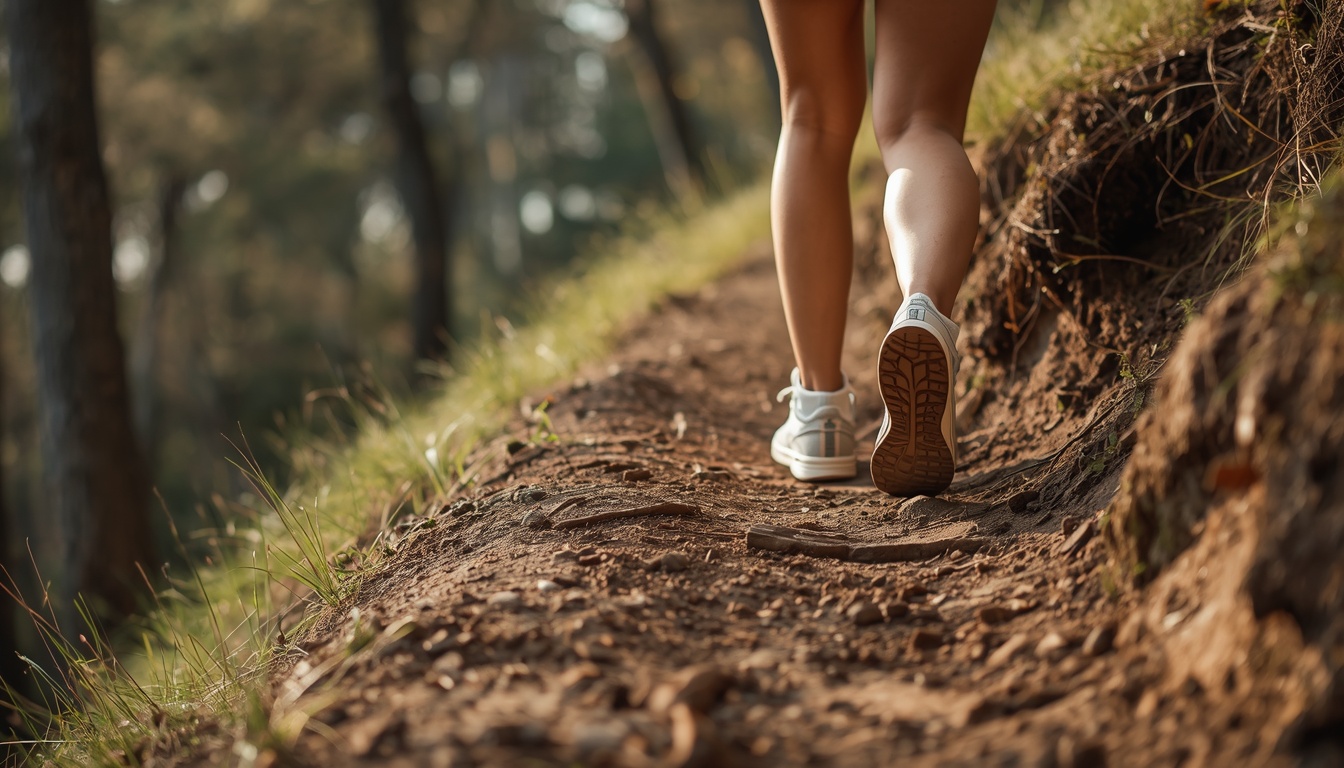
A knee is not a hinge that only bends and straightens on a factory floor. It is a living joint that spent most of human history negotiating dirt, roots, slopes, sand, and sudden changes of direction. Cartilage, menisci, ligaments, and the small muscles around the kneecap learned that world.
Then we paved it. We sat. We walked the same corridor. We ran the same treadmill belt. When the knee later aches on stairs or after a weekend hike, it can feel like the joint “wore out.” Often it is something quieter: a joint that is under-varied for years, then suddenly asked to remember terrain.
What This Mismatch Feels Like
People describe a dull ache under or around the kneecap after sitting, a catch on the first flight of stairs, stiffness that eases after a few minutes of walking, or a sharp protest the day after an unusual hill or a game of chase with a child.
Swelling after a twist is a different story. A knee that locks, gives way, or balloons after a pop needs a clinician. The everyday pattern this article is about is milder and more common: a joint that feels fine on flat ground and then complains when life becomes three-dimensional again.
How a Knee Was Meant to Be Loaded
The human knee evolved under walking, carrying, squatting, climbing, and turning. Researchers who study hunter-gatherer and traditional farming populations consistently find high daily step counts on irregular surfaces, frequent deep knee bends, and far less of the modern “sit all day, then load in a straight line” pattern.
That matters because cartilage and the menisci are living tissues. They get nutrition from cyclic loading and unloading of synovial fluid — the same principle described in work on why joints expect motion rather than rest. Variety changes the direction of that load. A slope loads the joint differently than a sidewalk. A turn asks the ligaments and the vastus medialis to stabilize a slightly rotated tibia. Soft ground asks the foot and hip to share the shock so the knee is not the only shock absorber.
Flat, predictable surfaces are not evil. They are incomplete. The joint still expects a week that includes some up, some down, some side, and some give under the foot — the same logic as feet that still expect uneven ground.
What Modern Life Changed
Chairs removed the squat. Deep knee flexion used to be a resting posture as well as a work posture. Hours of 90-degree sitting with the knees hanging still is a different mechanical diet.
Pavement removed texture. Concrete and indoor flooring send a similar impact through the same part of the joint, step after step. The small stabilizing muscles get less surprise work. The menisci see fewer changing contact patterns.
The “save your knees” instinct often removed hills. People with early ache avoid stairs and slopes. Avoidance can calm a flare. Used as a permanent plan, it shrinks the joint’s tolerance for the very loads it was built to handle.
Weekend terrain on weekday legs is a classic spike. Five days of sitting plus elevator rides, then a Saturday hike, is a load jump the cartilage and tendons notice.
None of this means you must live off-grid. It means the knee is still calibrated for a mixed mechanical week.
Common Causes of Everyday Knee Protest
- Sudden increase in hills, stairs, or running volume
- Long sitting, then standing up into a stiff first step
- Weak or underused hip and calf muscles, so the knee does extra work
- Very worn or very cushioned shoes that change how the foot shares load
- Weight gain that increases compressive load without a matching rise in muscle support
- Past sprain that was rested completely instead of gradually reloaded
Age is not the whole story. Plenty of older adults hike comfortably. Plenty of young adults ache after a month of only desk and treadmill. Capacity follows recent loading more closely than the calendar.
Hidden Triggers
Some knee complaints start away from the knee.
- A stiff ankle that no longer bends well, so the knee takes the extra motion
- A hip that does not extend, so the stride becomes a knee-dominant push
- Always walking the same direction around the same track
- Deep squats in a gym after months of never bending past a chair
- Hard court sports after a winter of only cycling
- Heeled shoes that keep the calf short and change patellar tracking
The inner ear and feet also belong in this picture. Balance on varied ground is a whole-limb skill, not a kneecap skill. When the vestibular system gets little natural motion, people stiffen the knee as a brace. Stiff knees on rough ground take more of a beating.
Less Common but Serious
Seek prompt care rather than another stretch video if you have:
- A pop at the moment of injury, followed by rapid swelling
- The knee locking so you cannot straighten it
- Giving way that makes you distrust the leg on stairs
- Redness, heat, and fever
- Pain that wakes you every night or a lump you can feel
- Calf swelling and sudden breathlessness after a long flight — that is a circulation emergency, not a joint day
Those patterns are not “varied terrain deficiency.” They are reasons to be examined.
When to Worry
Worry less about a short ache after a new hill that settles in two or three days. Worry more about pain that is worsening week by week, swelling that stays, or a knee that no longer trusts itself. Night pain, fever, or inability to bear weight are not training problems.
If you already have a diagnosis such as osteoarthritis, the same principle still applies in a quieter form: joints generally do better with consistent, varied, tolerable loading than with total rest. The dose changes. The need for motion does not disappear.
Myths vs Facts
Myth: Running always ruins knees.
Fact: Large observational studies often find recreational runners with similar or better knee health than inactive peers. Sudden spikes, very high mileage on only hard surfaces, and running on an unprepared joint are the usual problems — not running as a human activity.
Myth: You should never bend the knee past 90 degrees.
Fact: Deep flexion is a normal human range. Painful pinching deserves assessment. Avoiding all deep bends forever is how range disappears.
Myth: Cartilage cannot adapt.
Fact: Adult cartilage is slow, not frozen. Cyclic loading helps fluid exchange. Strength around the joint changes how much force the cartilage sees. Adaptation is measured in months, not one heroic hike.
Myth: A brace is the long-term solution.
Fact: A brace can help a flare or a return-to-sport plan. Living in one without rebuilding hip, foot, and calf capacity leaves the joint dependent.
How to Give Knees the Terrain They Expect
Think of variety as nutrition for the joint, not as punishment.
Walk somewhere that is not perfectly flat a few times a week. A gentle park path, a mild hill, a grassy field, or a flight of stairs you take on purpose is enough. Start with minutes, not a mountain.
Keep a daily squat in the repertoire. Sit to a low stool, pick something up from the floor with heels down, or use a supported squat while you wait for the kettle. Your hips and pelvic floor still expect this fold as well.
Strengthen the neighbors. Calf raises, hip hinges, side steps, and slow sit-to-stands do more for most aching knees than endless quad machines in isolation. The calf pump also helps venous return on long desk days.
Change direction. Figure-eights on a quiet path, stepping over a low curb, walking backward for a few careful steps in a safe space — these remind ligaments they have a job besides straight-ahead walking.
Progress one variable at a time. If you add hills, do not also add speed and a new pair of minimal shoes the same week.
Use softness as a tool, not a hiding place. Grass and dirt reduce peak impact. They also demand more balance. Alternate them with the pavement you actually live on so the joint stays honest about real life.
When to See a Doctor
See a clinician if pain lasts more than a few weeks, swelling persists, the joint locks or gives way, or you cannot walk a normal distance without a limp. Imaging is not always the first step; a good exam often is. People with known inflammatory arthritis, recent surgery, or a history of blood clots should not self-progress through pain that is clearly different from muscle fatigue.
FAQs
Is walking on a treadmill enough variety?
It is honest movement and better than sitting. It is still a belt in a straight line. Add a slight incline some days and get outdoors on others if you can.
Do I need special “barefoot” shoes?
No. Some people do well in less-cushioned shoes after a slow transition. Others do better with moderate cushioning. The terrain and the muscles matter more than the brand.
What if I already have osteoarthritis?
Many people with imaging changes still hike and climb stairs. Work with a clinician or physiotherapist on a tolerable dose. Complete rest is rarely the long-term plan.
Are lunges bad for knees?
A controlled lunge is a useful pattern if it does not pinch or swell the joint. Depth and forward-knee position can be adjusted. Pain that lingers into the next day means the dose was too high, not that the pattern is forbidden forever.
Should kids avoid sports to protect their knees?
Kids need varied play more than adults do. Over-specializing in one cutting sport year-round is a different risk than free play on mixed ground. Growth-plate pain deserves a sports-medicine look, not a lifetime of the couch.
Why do my knees hurt more after sitting?
Stillness reduces synovial fluid movement. The first steps after a movie ask a cooled joint to load again. Stand, walk, or do a few sit-to-stands in the middle of long sits.
Conclusion
Your knees were not designed for a museum of perfect pavement, and they were not designed to be wrapped in cotton. They were designed for a week that includes flat and sloped, straight and turning, hard and a little soft.
You do not have to recreate a foraging life. You have to stop feeding the joint only one sentence of movement and then wondering why it stumbles on a paragraph. A few honest hills, a daily fold, stronger hips and calves, and patience with progression are how a modern knee stays on speaking terms with the terrain it still remembers.