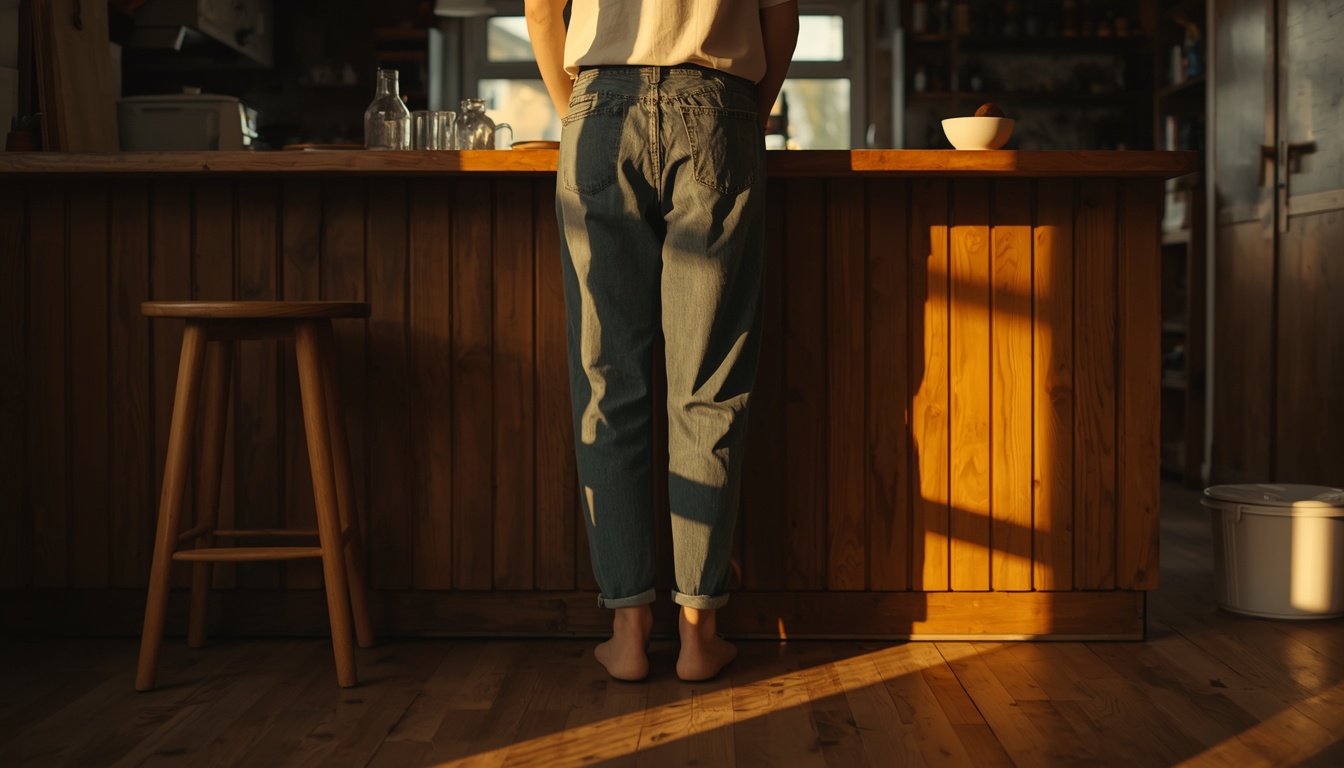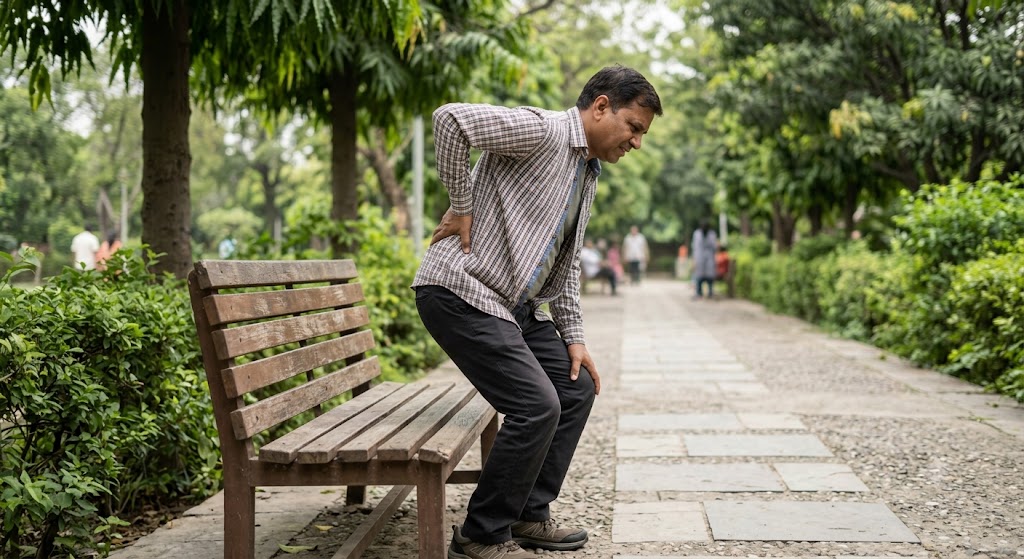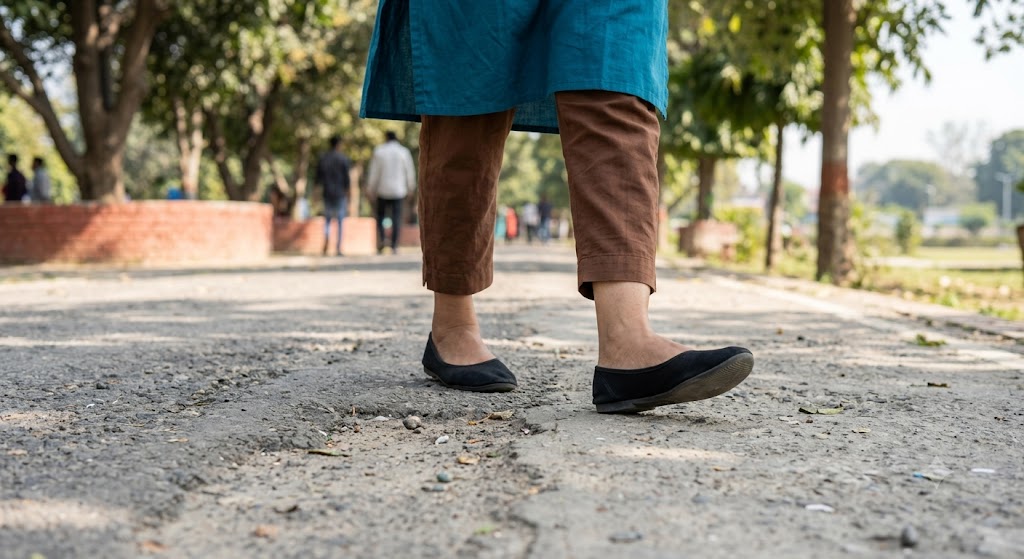
Heel pain after a shift on tile, concrete, or kitchen floors is often fat-pad compression and quiet shock absorption — not instant plantar fasciitis. Learn why hard floors load the heel, when pain is a red flag, and how to recover.
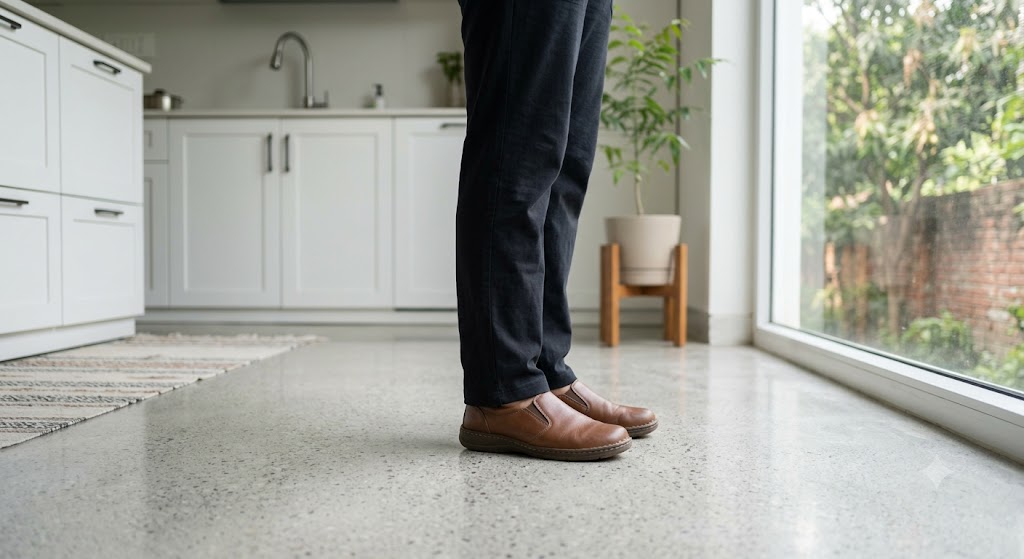
You finish a kitchen shift, a museum day, or three hours on warehouse concrete and the first step toward the door feels like you landed on a bruise. The pain sits under the back of the heel, not always in the classic first-step arch of plantar fasciitis. Shoes that felt fine at 9 a.m. feel thin. Sitting for a few minutes helps. The question is whether the floor damaged something, or whether a hard surface simply asked a small fat pad to work as a shock absorber for longer than it likes.
Heel pain after standing on tile, linoleum, polished concrete, or packed pavement is extremely common. The calcaneal fat pad under the heel is a honeycomb of fat chambers wrapped in elastic septa. It is built to spread impact when you walk. It is less happy holding a near-static load on a surface that does not give. For most people the result is a reversible bruise-like ache, not a cracked bone or a torn fascia. What matters is whether the pain is under the heel or in the arch, how fast it settles overnight, and whether one heel stays hot, numb, or unable to take weight.
What This Ache Feels Like
A typical benign hard-floor heel ache is:
- A deep bruise or “stone bruise” under the center or outer edge of the heel
- Worse after standing still than after easy walking
- Easier after sitting, kicking the shoes off, or walking on a softer surface
- Present in both heels after a long shift, or louder on the side that takes more weight
- Not accompanied by redness, fever, or an inability to hop lightly the next morning
Some people feel a sharp poke the moment the heel hits the floor after a break. Others feel a dull grind that builds through the afternoon. The ache can travel a little into the Achilles insertion without meaning the tendon is torn. A true plantar-fascia story often starts at the front inside corner of the heel and shouts on the first step out of bed. A fat-pad story is more central under the heel and louder after standing still than after the first morning step.
The same workday can also leave the calves tight, which is why standing-shift muscle fatigue is covered separately in Is It Normal for Your Calves to Ache After Standing All Day?. Heel pain is the landing gear. Calf ache is the pump that never quite gets to walk.
Why Hard Floors Load the Heel Pad
Under the heel bone sits a specialized fat pad. Anatomists including Michael Jahss described it as a closed-cell structure: fat packed into compartments by tough septa that run from skin to periosteum. When you land, the chambers bulge sideways and the peak pressure drops. When you stand still on a floor that does not yield, the same pad is asked to hold a column of body weight with almost no bounce and almost no change in angle.
Keith Rome and colleagues who study heel-pad mechanics have shown that the pad thins and stiffens with age, with repeated high load, and after some steroid injections. A thinner pad means the calcaneus sits closer to the floor. Tile and concrete do not share the job. Every extra kilogram and every extra hour goes into a smaller cushion.
Benno Nigg’s work on impact and “cushioning” is useful here without turning a kitchen shift into a running-shoe seminar. Softer surfaces and well-timed midsoles can lower the peak you feel. They do not remove the load. A very soft shoe on a hard floor can also let the heel sink until the pad is working at end range all afternoon. The goal is a little give, not a marshmallow.
Scott Wearing and others who image the plantar tissues under load have shown that standing and walking are different mechanical events. Walking cycles compression and release. Standing is a long isometric press. Blood flow through the pad is modest. A four-hour museum shuffle with stops in front of paintings is closer to standing than to a walk in the park.
Hard Floors, Thin Shoes, and a Quiet Foot Core
Modern indoor life is a hard-floor habitat. Kitchens, hospitals, airports, classrooms, and open-plan offices chose surfaces that clean easily. Those surfaces return almost all of the force you put into them. Grass, packed earth, and even worn wood give a few millimeters. That few millimeters is what the heel pad evolved next to.
Footwear changes the story. A worn flat with a paper-thin heel seat puts the pad almost on the tile. A stiff dress shoe with a hard counter can focus pressure on one zone of the pad. A cushioned trainer helps some people and bothers others if the heel counter is sloppy and the pad slides inside the shoe. Related first-step and flat-shoe patterns are covered in Is It Normal for Your Feet to Ache After Walking in Flat Shoes? and in Why Your Plantar Fascia Still Expects a Springy First Step. Fat-pad pain and fascia pain can live in the same foot. They are not the same tissue.
Steven Robbins argued for years that the sole of the foot is a sensory organ, not only a bumper. A dead-flat hard floor plus a thick unfeeling midsole can leave the small muscles of the foot under-informed. The foot core does less micro-adjustment. More of the load stays under the heel instead of spreading across the forefoot during a shift of weight.
Weight distribution matters. People who lock the knees and rest back on the heels load the pad more than people who keep a soft knee and a little weight through the midfoot. A high-impact job with sudden stops — kitchen, warehouse, retail during a rush — adds repeated heel strikes on a surface that does not absorb.
Hidden Triggers That Make Hard Floors Worse
The same tile can feel fine on Tuesday and brutal on Saturday. Common amplifiers include:
- A sudden jump in standing hours after a week at a desk
- New unpadded shoes, or old shoes whose midsole has packed out
- A recent spike in body weight, pregnancy, or a backpack worn all day
- Hard floors plus a hard heel counter that focuses one sore spot
- Standing still at a counter instead of shifting and taking small steps
- Cold tile in the morning, which makes the pad and Achilles feel stiffer
- A prior ankle sprain that leaves one heel taking more of the day
- Walking barefoot on kitchen tile right after a long shod shift
Age and past treatment matter more than people expect. The heel pad loses some spring over decades. Repeated local steroid shots, used carefully for other heel problems, can thin the pad further in some patients — a caution Rome and others have noted. That does not mean every injection is a mistake. It means a bruise-like heel after standing deserves a different plan than a classic fascia spike.
When the Ache Is Usually Harmless
Reassuring features:
- The pain started during or after a long stand on a hard surface
- It is under the heel rather than shooting into the toes
- It eases with sitting, a softer shoe, or a day off the floor
- Both heels can be sore after the same shift
- You can still walk, even if the first minutes are careful
- There is no fever, spreading redness, or night pain that wakes you for hours
A bruise-like heel that is gone or nearly gone the next morning, then returns only on the next long shift, is the usual occupational pattern. It is a load-and-recovery story.
Less Common but Serious Causes
Most hard-floor heel pain is mechanical. A smaller list needs a clinician:
- Plantar fasciitis that has moved from first-step arch pain into a mixed heel ache
- Fat-pad atrophy that no longer recovers overnight
- A calcaneal stress reaction or fracture after a sudden jump in standing or running
- Insertional Achilles tendinopathy at the back of the heel, worse in shoes that rub
- Baxter’s nerve irritation on the inner heel, with burning or tingling
- Inflammatory arthritis that makes both heels stiff in the morning for weeks
- Infection or a wound under a callus in someone with diabetes or numb feet
- Referred pain from S1 nerve irritation, usually with back or leg symptoms
A stress injury tends to keep growing with continued load and hurts even in a cushioned shoe. Infection and inflammatory disease add heat, swelling, or other joints. Those are not “walk it off on concrete” problems.
Myths vs Facts
Myth: Heel pain after standing is always plantar fasciitis.
Fact: Fascia pain is usually worse with the first morning step and sits toward the front inside of the heel. Fat-pad pain is more central under the heel and worse after standing still.
Myth: You need maximal cushion forever.
Fact: A little give helps on hard floors. A huge unstable midsole can let the heel slide and work the pad at a bad angle all day.
Myth: If an X-ray is normal, nothing is wrong.
Fact: Fat-pad overload and early fascia irritation do not show on a plain film. Normal bone is reassuring, not proof the pad is happy.
Myth: Barefoot on tile will toughen the heel faster.
Fact: Short indoor doses can train foot muscles. All-day barefoot on kitchen tile after a shod shift often just bruises the pad.
Myth: Pain means you must stop all standing.
Fact: Most people do better with shorter bouts, a slight change of surface or insole, and walking breaks, not with total rest that deconditions the foot.
How to Manage a Hard-Floor Heel Day
You do not need a new identity as someone with “bad heels.” You need to change the dose and the surface.
- Break standing into shorter blocks. Even ninety seconds of walking every half hour changes the load on the pad.
- Soften the floor where you live or work: an anti-fatigue mat in the kitchen, a rug in the spot you always stand.
- Check the heel seat of the shoe. If you can feel the floor as a sharp point, the midsole is done.
- A simple cushioned heel cup or a thin poron-style pad can unload a sore fat pad without a bulky orthotic.
- Keep a soft knee. Locked knees dump weight backward onto the heels.
- After the shift, walk on a slightly softer surface before you sit for the evening. Then elevate if the heels feel hot.
- Ice a true bruise-like flare for ten minutes, not an hour. The pad still needs blood flow.
- Do not jump from all-day tile into a long barefoot tiled kitchen evening.
Calf and foot-core work help the next week more than the next hour. Slow heel raises, short-foot holds, and a few minutes of standing on a firm but not brutal surface retrain the small muscles that share load with the pad. If first-step arch pain is part of the picture, treat that as fascia load and add the usual morning-walk warm-up rather than stretching the fascia hard on a cold heel.
When to See a Doctor
Book a visit if:
- One heel stays sharply painful at rest or at night
- You cannot take body weight through the heel the next morning
- Swelling, heat, or redness is spreading
- Numbness, burning, or weakness travels into the foot
- Morning stiffness lasts hours and other joints are involved
- You have diabetes, known nerve damage, or an open spot under a callus
- The same pain has lasted more than two or three weeks despite softer shoes and shorter stands
A good exam can often tell fat-pad pain from fascia pain from Achilles insertion pain without an immediate MRI. Imaging is for red flags, trauma, or pain that refuses to follow a mechanical script.
FAQs
Is standing on concrete worse than standing on tile?
Both are unforgiving. Concrete in warehouses and loading docks often comes with more heel-strike walking. Kitchen tile often comes with long still stands. The pad dislikes both. A mat and a walking break help more than arguing about which hard surface wins.
Why do my heels hurt more than my arches?
Because you may be loading the fat pad, not the fascia. Standing still on a hard heel seat compresses the pad. Walking in a flexible shoe with a sudden first-step spike is more of a fascia pattern. Many people have a mix.
Can weight gain alone cause this?
Extra load raises pressure under the heel. Pregnancy and a rapid weight change are classic triggers. The pad did not fail as a moral event. It was asked to cushion more kilograms on the same tile.
Do gel heel cups fix it?
They often help a sore fat pad for standing work. They can annoy a true insertional Achilles problem if they lift and rub the back of the heel. If the pain is on the back of the heel rather than the bottom, skip the cup and look at the shoe counter.
Should I switch to maximalist running shoes for a retail shift?
A cushioned trainer with a stable heel is reasonable. A giant rocker that the foot cannot control can create new hot spots. Try the shoe for an hour on a similar floor before you buy a work pair.
Will this turn into a heel spur?
A spur on X-ray is common and often unrelated to the day’s pain. Treating the load on the pad and fascia matters more than chasing a small bone prominence that may have been there for years.
Conclusion
A heel that complains after a day on tile or concrete is usually a fat pad that spent hours as a bumper on a surface that does not share the job. The honeycomb under the calcaneus is good at spreading a step. It is less good at holding still on a kitchen floor until closing time. Soften the standing spot, change shoes before the midsole dies, take walking breaks, and give the pad a night to rebound. If one heel stays hot, numb, or unable to take weight, get it checked. For everyone else, the floor is hard. Your heel is allowed to say so.