Puffy hands on a walk are usually heat, hanging arms, and a skin blood-flow shift, not a failing heart. Rings get tight, then ease after you stop.
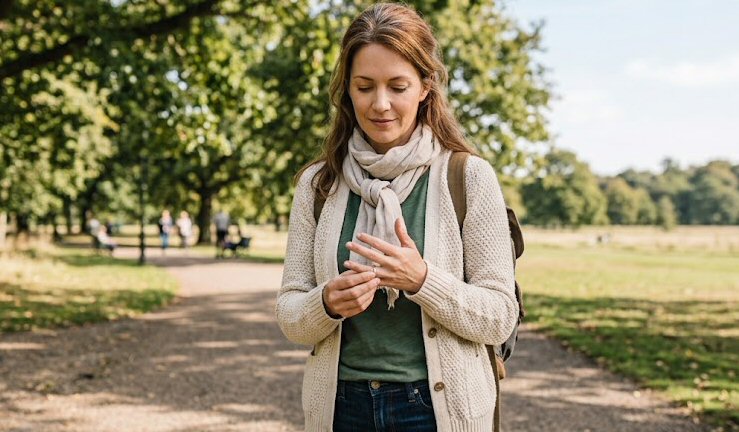
You are twenty minutes into an ordinary walk, not a race, and your rings start to bite. The fingers look smoother. Knuckles feel thick. A fist does not close the way it did at the door. It is annoying, a little alarming, and very common. Healthy people get puffy hands on warm walks, hikes, and even brisk laps around the block. The swelling is usually fluid that has stepped out of tiny vessels into the soft tissue of the hand, then steps back in once the walk ends and the arms are up.
That is not the same as a hand that balloons on one side, turns red and hot, or stays swollen overnight. Those need a different explanation. The walk-day version is mostly circulation doing a heat job while the hands hang.
What This Swelling Feels Like
The change is often equal on both sides, or nearly so. Rings feel tight before the hand looks obviously different. Skin over the back of the hand may look a little shiny. Finger creases flatten. Grip feels clumsy, as if the tendons are moving through a thicker glove. There is rarely sharp pain. A mild ache or a sense of fullness is more typical.
It tends to show up after the body has warmed, not in the first minute. Hot weather, a sunny path, a fast pace, and a long downhill with the arms loose at the sides all make it more likely. Cool air, a slower pace, and hands that swing or open and close often keep it milder. When you stop, raise the hands, and cool off, the rings usually loosen within minutes to an hour or two. By the next morning the hands are their usual size.
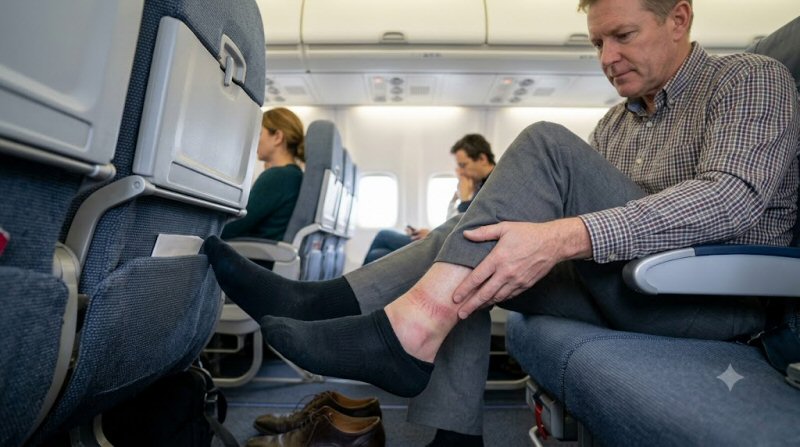
People sometimes notice the same fullness on a long flight or in heavy heat without walking. Those are related fluid shifts, covered in pieces on hands swelling on a plane and fingers swelling in the heat. The walking version has an extra ingredient: exercise blood flow.
Why Hands Puff Up on a Walk
Walking asks large leg muscles for more blood. At the same time the body has to dump the heat those muscles make. Skin is the radiator. Physiologists John M. Johnson and Craig G. Crandall spent decades mapping how skin blood flow rises in the heat and during exercise, and how that flow is controlled by both local warming and nerve signals. Loring B. Rowell described the larger bargain: during upright work, the heart and vessels must feed muscle and skin at once, while gravity still pulls blood toward the legs.
Hands are part of that skin radiator. Vessels in the fingers and palms open. Capillary pressure rises a little. A small amount of plasma water filters into the tissue between cells. That is ordinary Starling exchange, not a leak from injury. The hands have loose skin and many small vessels, so a modest fluid shift shows up as puffiness before it would be obvious in a calf.
Arm position matters. If the hands hang still, the veins above them have less help returning blood. Forearm muscles are a small pump, the way the calf is a larger one for the leg. A still, dangling hand is a dependent hand. Filtration wins for a while. Swing the arms, or open and close the fists, and the muscle pump narrows that gap. Andrew N. Nicolaides and colleagues made the calf-pump idea famous in venous research. The same physics, on a smaller scale, applies to a forearm that is actually moving.
Heat stacks the effect. A warm day opens skin vessels further. A backpack strap or a tight watch can add a little local congestion, but the usual pattern is both hands, not a strap mark alone. Saltier meals and a lot of fluid can add a small amount of extra volume, yet many people swell on a walk even when they have not overdone salt. The main drivers are vasodilation, gravity, and time.
Michael J. Joyner’s work on exercise blood-flow control is a useful reminder that this is coordinated, not chaotic. The vessels are following temperature and muscle demand. They are not “failing” because a ring got tight.
Common Triggers
Warm or humid air is the classic setting. So is a first long walk of the season, before you are used to the heat. A pace that makes you sweat, even if you can still talk, is enough. Downhill stretches let the arms dangle while the legs brake. Holding hiking poles can go either way: a fixed grip may reduce natural swing, while an active pole plant can work the forearm pump. Pockets are a quiet culprit. Hands buried and still stay dependent and uncompressed by motion.
Tight rings, watches, and wristbands do not cause the fluid shift, but they report it early and can leave a dent. Hormonal shifts, including the days before a period or pregnancy, make soft tissue hold fluid more readily, so the same walk looks puffier. Some blood-pressure medicines, especially calcium-channel blockers, and some anti-inflammatory drugs increase ankle or hand edema in daily life. A walk can make that baseline more obvious. That is a reason to mention it to a clinician if it is new after a prescription change, not a reason to stop a medicine on your own.
Low shoulder swing from stiffness or a habit of guarding one arm can make that side a little fuller. True one-sided sudden swelling is a different story, covered below.
Less Common but Serious Causes
Most walk-day hand swelling is benign. A few patterns are not.
Sudden swelling of one arm or hand, especially with pain, warmth, or a bluish color, can be a deep vein clot in the arm, sometimes after a catheter, cancer treatment, or heavy repetitive arm effort. That is not “I got puffy on a hot loop.” Chest pain, breathlessness, or fainting with swelling needs urgent care. New swelling of both hands that also includes the face, lips, or tongue, or that comes with hives and wheeze, can be allergy or angioedema.
Swelling that is worse in the morning, leaves deep dents, and involves legs, belly, or breathlessness at rest can reflect heart, kidney, liver, or thyroid disease. Exercise may reveal it, but the walk is not the cause. Inflammatory arthritis can puff knuckles, yet it usually brings stiffness lasting more than an hour, warmth, and a pattern that is not limited to walking days. Infection is local: one area red, hot, and tender, sometimes with a streak or fever.
Numbness that rides with the swelling can be a tight compartment of soft tissue pressing a nerve, or a separate nerve irritation at the wrist. Position-related tingling is discussed in pieces on desk-edge and sleep postures. Swelling plus true weakness, or swelling that does not ease overnight, deserves a clinical look rather than another loop around the park.
Hidden Triggers People Miss
Air conditioning at the office, then a hot sidewalk, is a rapid vascular switch. The hands open for heat just as they start hanging. A salty lunch plus a water bottle you finish in one go can raise volume a little on top of that. Caffeine and a fast pace raise skin blood flow in some people without being the root cause.
Gloves that are waterproof and non-breathable trap heat around the hand even on a cool day. Conversely, very cold hands at the start, then a warm-up, can rebound-flush and look briefly puffy. A shoulder bag that stops one arm from swinging is an easy fix people rarely connect to the tighter ring on that side.
Altitude hikes add another layer. Lower oxygen and effort both increase blood flow, and some people notice hand fullness more on mountain days than on the same distance at home. That can still be ordinary, especially if it leaves when you descend and rest. Headache, confusion, or breathlessness out of proportion to the climb are the altitude warnings, not the rings alone.
When to Worry
Worry less when both hands puff on warm walks, rings loosen after you elevate and cool down, and the hands are normal by morning. Worry more, and get urgent care, if one arm swells suddenly, the skin turns dusky or very red, you have chest pain or trouble breathing, or the face and tongue swell.
Book a routine visit if both hands stay swollen off the trail, if you dent deeply and the dent lingers, if swelling began after a new medicine, if you also have unexplained weight gain, foamy urine, or shortness of breath on flat ground, or if knuckle swelling comes with prolonged morning stiffness. Pregnancy-related hand swelling that arrives with headache, vision change, or upper abdominal pain needs same-day obstetric advice, because those can travel with blood-pressure disease of pregnancy rather than a simple walk effect.
Myths vs Facts
Myth: puffy walking hands mean your heart is weak. Fact: a weak heart more often shows resting swelling, breathlessness, and fatigue, not rings that only bite on a warm loop and recover after. Myth: you should stop drinking water on walks. Fact: severe under-drinking does not prevent this, and on long hot walks it creates a different problem. Over-drinking plain water far beyond thirst on very long efforts is its own risk. Matching thirst is enough for an ordinary walk.
Myth: compression gloves are mandatory. Fact: they can feel good and limit tissue stretch, but swing, fist pumps, and cooler skin solve most cases. Myth: salt is always the villain. Fact: a very salty pattern can add fluid, yet vasodilation and dangling hands explain the timing better. Myth: if it happens once, the vessels are damaged. Fact: filtration during heat and dependency is reversible physiology, the same family of events Johnson and Crandall described in skin circulation research.
How to Keep Hands Smaller on a Walk
Take rings off before a long or hot walk if they have ever gotten stuck. A ring that cannot pass a knuckle is a problem you do not want mid-trail. Let the arms swing. Every few minutes, open and close the hands, spread the fingers, and circle the wrists. That is the forearm pump. Holding poles with a relaxed grip, and switching which hand leads, beats a clenched fist.
If you feel the puff start, raise the hands overhead for half a minute, or rest them on your head while you walk a short stretch. Cool water on the wrists at a fountain helps skin vessels stand down. Loosen watch straps. Empty pockets so the arms can move. On a hot day, a slower first ten minutes lets heat dissipation catch up without a big early fluid shift.
Afterward, sit and prop the hands on a cushion above heart level for a few minutes. A cool rinse finishes the job for most people. You do not need a diuretic, a detox drink, or a tight bandage. If ankles also balloon on sitting days, the same muscle-pump idea shows up in heavy legs after sitting. Walking itself is still good for leg veins. The hand issue is about what the arms are doing during that walk, not a reason to quit walking.
Strength in the grip and forearm is a side benefit, not a cure. Brief hangs from a bar, or carrying a light bag that you switch sides, keep the hands used to load. They will still puff on a hot day. They will recover faster if you treat the recovery as part of the walk.
When to See a Doctor
See a clinician if the swelling is one-sided, painful, or persistent overnight, if it comes with breathlessness, chest pain, or fainting, or if it is new alongside a medicine change. Mention pregnancy blood-pressure symptoms the same day. Describe the pattern: both hands, only on warm walks, gone by morning. That history is often enough to separate radiator physiology from disease. Tests are for the second group, not for every tight ring.
FAQs
Why do my rings get tight only on walks, not at my desk?
At a desk the hands are often near heart height and the skin is not dumping exercise heat. On a walk the vessels open and the hands hang. Filtration rises. The desk can still cause numbness from a wrist edge, which is pressure on a nerve, not the same fluid shift.
Should I worry if only my left hand swells?
A small difference is common if one arm swings less or holds a phone or leash. Sudden, obvious one-sided swelling, especially with color change or pain, should be checked. Do not wait for the next walk to see if it matches.
Does this mean I am dehydrated?
Usually no. Dehydration does not puff the hands. Heat, open skin vessels, and dependency do. Drink to thirst on ordinary walks. On very long hot efforts, include some salt with fluid if you are a heavy sweater, rather than gallons of plain water.
Will compression gloves stop it?
They can limit how far the tissue stretches and some people like the feel. They are optional. Arm swing and brief elevation do more for the vein pump. Gloves that are too tight can leave their own dents.
Is it the same as arthritis?
Walking puffiness that fades after you cool down is not inflammatory arthritis. Arthritis stiffness usually lasts longer in the morning, involves specific joints, and is not limited to exercise in the heat. New knuckle swelling with prolonged stiffness still deserves a medical visit.
Can kids get this on a hike?
Yes. Warm dependent hands puff in children too, and the rings or wristbands tell the story. The same red flags apply: one arm, pain, color change, breathing trouble, or swelling that does not settle with rest and elevation.
Conclusion
Puffy hands on a walk are usually a heat-and-gravity side effect of normal skin blood flow. Johnson, Crandall, and Rowell mapped the circulation that makes it happen. Joyner’s exercise work fits the same picture: vessels are serving muscle and temperature, not announcing a crisis. Swing the arms, lose the tight rings before you start, cool and elevate when you stop, and the fingers come back. Keep the urgent symptoms in mind, then go walk again. The hands are reporting the radiator, not a reason to sit still.