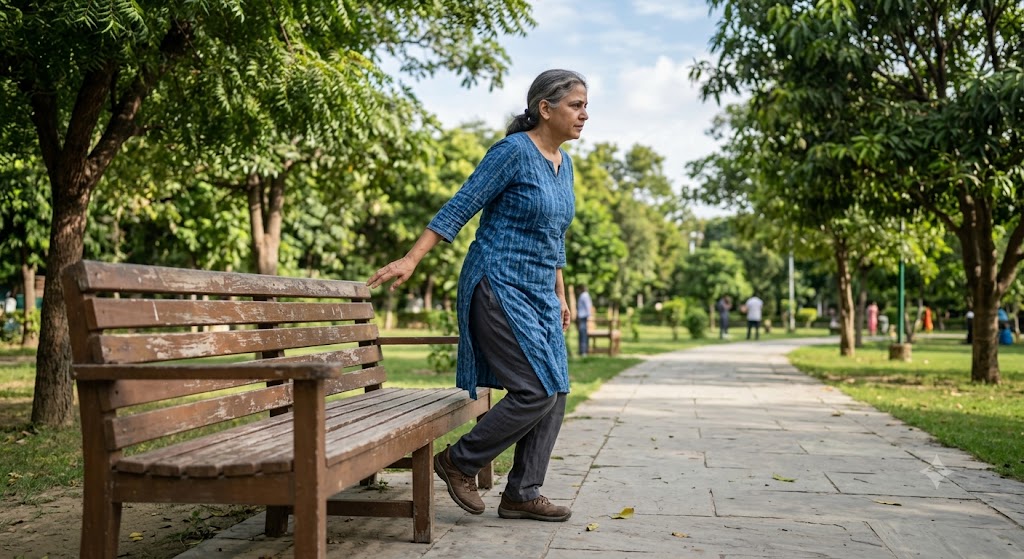
Heavy, leaden legs after a long sit are usually quiet calf pumps, pooled blood and a delayed muscle wake-up — not automatically a blocked vein.
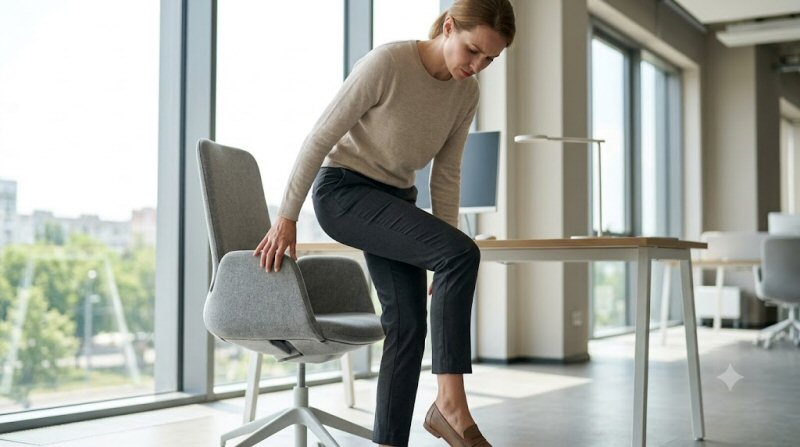
You stand up from the desk, the sofa, or a long car seat and your legs do not feel like they belong to a person who was just sitting. They feel leaden. The first few steps are dull, thick, and slightly clumsy, as if someone poured wet sand into your calves and thighs. A minute of walking usually thins the feeling out. By the time you reach the kitchen it is often gone.
That heavy-after-sitting sensation is extremely common. It is usually the cost of leaving the calf muscle pump and the veins of the lower limb on pause, not a sign that something is suddenly blocked. The body is allowed to feel slow when the plumbing that was designed for walking has been asked to sit still.
What This Sensation Feels Like
People describe it in similar language:
- Legs that feel full, thick, or “asleep without being numb”
- A dull ache or tightness in the calves that eases after a short walk
- Heaviness that is worse in the evening than in the morning
- Shoes that feel slightly tighter after a long sit
- A brief need to stamp, march in place, or shake the legs before they feel normal
It is not the same as the sharp pins-and-needles of a nerve that was compressed against a chair edge. Nerve compression is electric and patchy. Venous and muscle-pump heaviness is more like wearing wet boots.
Why Sitting Makes Legs Feel Heavy
Blood that leaves the heart has to come back from the feet against gravity. Below the knee, that return depends less on the heart and more on a mechanical pump that Andrew Nicolaides and other venous physiologists mapped in detail: the calf muscle pump.
When you walk, the soleus and gastrocnemius squeeze the deep veins. One-way valves, described in the classic work of John Homans and later quantified by teams following Rudolf Virchow’s triad of stasis, keep the blood from dropping straight back down. Each step is a small, automatic lift.
Sit still and three things happen at once:
- The pump stops. No squeeze means no lift.
- Blood and tissue fluid pool in the dependent veins and the spaces around them. Volume in the lower limb can rise by a few hundred milliliters over an hour of quiet sitting — enough for the tissues to feel full.
- The muscles themselves go quiet. Motor units that have not been asked to fire become slower to recruit. When you stand, they wake in a slightly uncoordinated wave. That delay is part of why the first steps feel clumsy as well as heavy.
Warm rooms, tight waistbands, long flights, and an afternoon of crossing one knee over the other all amplify the same pattern. Heat widens skin veins. Crossing a knee can kink a superficial vein. None of this requires disease. It requires stillness plus gravity.
The same family of mechanics explains why ankles can puff after a long sit and why your veins still expect the calf pump to fire all day rather than twice on the way to the coffee machine.
Common, Usually Harmless Triggers
Most heavy-leg evenings have a boring list behind them:
- Desk work, driving, or gaming for more than an hour without standing
- A warm office or a hot car
- High-salt lunch that pulls extra water into the tissues
- Compression from skinny jeans, knee-high socks with a tight band, or a wallet in a back pocket
- Dehydration, which makes residual blood a little thicker and the veins a little less lively
- The late afternoon, when you have already been upright-then-seated for hours and residual swelling has had time to accumulate
People who stand all day can get a different but related ache — the isometric soleus burn described in occupational studies by Antle, Côté, Tüchsen and Krijnen. Sitting heaviness is the cousin of that standing ache: both are what happens when the calf is asked to do one job (hold still) instead of the job it evolved for (pump).
Hidden Triggers
A few less obvious habits make the same physiology louder:
- “I stand up, but I shuffle.” A few steps that never let the heel drop and the calf shorten-and-lengthen do not empty the veins well. A genuine walk to the far printer is more useful than hovering over the chair.
- Evening alcohol. Alcohol widens veins and makes pooling easier.
- Hormonal weeks. Many people notice heavier legs in the few days before a period, when progesterone and fluid retention are both a little higher.
- Long-haul sitting after a hard gym session. Damaged muscle holds extra fluid; sitting on top of that can feel dramatic even if the veins are fine.
- Sleeping in a chair or with the feet below the heart on a long journey. Overnight the same pump is offline for hours.
When Heaviness Is Not Just Sitting
Most post-sit heaviness fades in minutes of walking. Pay attention when it does not, or when it arrives with company:
- One leg only, especially if that calf is also swollen, warm, or tender
- Sudden swelling that does not go down overnight
- Heaviness plus chest pain, unexplained breathlessness, or coughing blood
- Skin that is stained brown around the ankles, new varicose veins that ache, or wounds that are slow to heal
- Numbness, foot drop, or pain that shoots from the back into the leg (that pattern is more nerve than vein)
- Heaviness that is new after surgery, a long flight, or a period of bed rest, particularly if you have a personal or family history of clots
Unilateral painful swelling after stillness is how deep-vein thrombosis can present. That is not the typical “both legs feel like sand after Zoom.” It is the exception you do not wait out.
Myths vs Facts
Myth: Heavy legs after sitting mean your circulation is “bad.” Fact: Sitting circulation is usually normal circulation asked to work without its pump. Walking restores the numbers in most healthy people.
Myth: If your legs feel heavy you should elevate them and stay still. Fact: Elevation helps residual fluid drain. Stillness without a later walk just restarts the pooling. Short walks beat extra sitting.
Myth: Compression socks are only for older people or flights. Fact: Light graduated compression can reduce dependent swelling in anyone who sits or stands for work. They are a tool, not a diagnosis.
Myth: Tingling and heaviness are the same problem. Fact: Tingling after a crossed leg is usually a compressed nerve (often the peroneal nerve at the fibular head). Heaviness without pins and needles is more often fluid and quiet muscle.
How to Make Legs Feel Like Legs Again
You do not need a new identity as an athlete. You need the pump to fire on a human schedule.
Break the sit before the heaviness starts. A two-minute walk every 30–45 minutes is more effective than one heroic stretch at 6 p.m. Heel drops, calf raises at the kitchen counter, and a flight of stairs all count.
Stand up like you mean it. When you leave the chair, take ten real steps before you lean on a counter. Let the heel drop. That is the stroke the soleus was built for.
Uncross the knees. Crossing one thigh over the other is a reliable way to add a kink to an already slow circuit.
Use heat and salt with some awareness. A very warm room plus a salty lunch is a predictable heavy-leg afternoon. Water and a cooler walk even the ledger.
Try light compression on long sit days. Knee-high socks that are snug at the ankle and easier at the calf, put on in the morning, reduce how much volume can pool. Take them off at night.
Sleep with the feet roughly level with the heart. A small lift under the mattress foot can help overnight clearance if evenings are consistently puffy. Do not pile pillows into a sharp bend at the groin.
The same logic lives in why calves ache after a day of standing: the muscle wants a rhythm of load and release, not a single frozen posture.
When to See a Doctor
Book a visit if heaviness is new, one-sided, or paired with swelling that lasts overnight. Go urgently if one calf is suddenly bigger, hot, or painful, or if leg symptoms arrive with chest pain or breathlessness. Mention recent flights, surgery, hormones, pregnancy, or a family clot history — those details change how seriously a clinician treats a first episode.
A clinician can look for venous reflux, a clot, or a nerve problem, and can decide whether a duplex ultrasound is useful. Most people who feel heavy after a normal workday will not need that test. The ones who might are the ones whose story does not sound like “both legs, after sitting, better with walking.”
FAQs
Why do my legs feel heavier at night than in the morning? Gravity has had all day to pool fluid in the lower limbs. Overnight, lying flat lets some of that volume return to the central circulation, which is why mornings often feel lighter until you sit again.
Is this the same as restless legs? No. Restless legs are an urge to move, often with crawling or aching that is worse at rest in the evening and better the moment you walk. Sitting heaviness is a dull fullness that eases with walking but does not usually come with that compulsive need to fidget.
Can dehydration make legs feel heavier? Yes. Less water in the bloodstream makes remaining blood a little more viscous and can leave tissues feeling sludgy. It is not the main driver, but it is an easy one to fix.
Do I need to stop crossing my legs forever? You do not need a new personality. Uncrossing during the longest sit of the day is enough for most people. The occasional crossed knee at dinner is not a vascular emergency.
Will walking on a treadmill at lunch fix the whole afternoon? A lunch walk helps, but the pump is a short-term machine. By mid-afternoon the veins have had time to refill. Brief standing breaks still matter even if you exercised at noon.
When is heaviness after sitting a clot? Think clot when the change is sudden, clearly worse in one leg, and joined by swelling, warmth, or tenderness — especially after travel, surgery, or bed rest. Symmetric evening heaviness that walks off is a different story.
Conclusion
Legs that feel like sand after a long sit are usually doing what legs do when the calf pump is on pause. Gravity fills the veins. Quiet muscle wakes slowly. A few honest steps empty the system and the heaviness thins.
That pattern is a reminder, not a verdict. The lower limb was built for a day with walking in it, not a day with a single commute and a chair. Give the pump a reason to fire, and the legs you stand up on will feel more like the ones you sat down with.