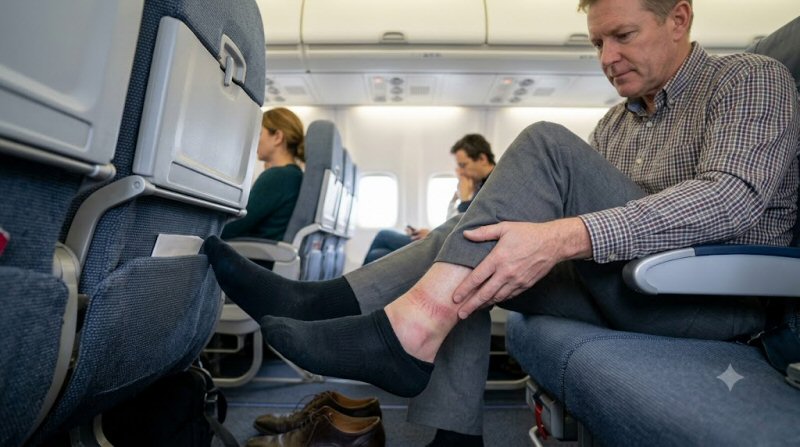
Bilateral sock-line ankle swelling after a long flight is usually calf-pump stasis and mild cabin fluid shift, not a clot; one hot leg needs urgent care.

You step off a long flight and your shoes feel tighter. When you pull off the socks, a pale line marks where the elastic sat, and the skin above the ankles looks a little puffy. Both sides match. The sensation is familiar to frequent flyers and usually fades within a day of walking. It is rarely the start of a clot.
The calf muscle is the main pump that returns blood from the lower legs. When you sit still for hours, that pump idles. Fluid that would normally be pushed upward seeps into the soft tissue around the ankles. Cabin air pressure is lower than at sea level, which slightly favors fluid leaving the vessels. The combination produces the classic bilateral, sock-line swelling of traveler’s edema.
Herbert Landgraf and colleagues documented the rise in lower-leg volume during long-haul flights, even in healthy people. The increase is modest and symmetric. Wolfgang Schobersberger later measured the same pattern and noted that it resolves once people walk. John Scurr’s work on compression stockings showed that graduated pressure reduces the volume change, confirming that the swelling is largely dependent on venous stasis rather than inflammation or injury.
The risk of deep-vein thrombosis is real but small for most travelers. Frits Rosendaal and Suzanne Cannegieter quantified the absolute risk: roughly one in a few thousand long-haul passengers without additional risk factors. Gianni Belcaro and Maria Cesarone studied compression and found it lowered both measurable swelling and the rarer thrombotic events in higher-risk groups. The everyday bilateral ankle puffiness, however, is the fluid-shift side of the same physiology, not the clot side.
One-sided heat, redness, or pain that does not ease with walking is a different story. That pattern needs prompt medical attention. Bilateral sock-line swelling that fades after landing is the expected response of a calf pump that has been idle for hours.
What This Symptom Feels Like
Mild tightness in both ankles or the tops of the feet. A visible sock line that was not there at takeoff. Shoes that fit easily in the morning and feel snug at the gate. The skin may look slightly shiny but is not hot or red. Pressing with a finger leaves a brief dent that fills in within seconds. Both legs match. Walking through the terminal usually starts the improvement.
Common Causes
Hours of immobility that silence the calf pump. Mild hypobaric conditions in the cabin that favor fluid leaving the capillaries. A full bladder or modest salt intake that expands plasma volume. Tight shoes or socks that leave a mark once tissue fluid increases. These factors combine in almost every long flight; the swelling is the visible result.
Why This Happens
Veins in the lower leg rely on the soleus and gastrocnemius to compress them with each step. Without that compression, venous pressure rises and fluid filters into the interstitial space. The lower cabin pressure reduces the opposing force that normally keeps fluid inside the vessels. Landgraf’s volume measurements and Schobersberger’s follow-up studies show the net gain is a few hundred milliliters distributed across both legs—enough to notice, not enough to signal disease in an otherwise healthy person.
Less Common but Serious
A clot produces one hot, swollen, tender leg, often with calf pain that worsens when the foot is flexed upward. Sudden shortness of breath or chest pain after a flight is an emergency. Persistent swelling that never settles after several days of normal walking, or swelling that appears with no travel, needs evaluation. These patterns are uncommon compared with ordinary bilateral traveler’s edema.
Hidden Triggers
Window seats that discourage aisle walks. Tight waistbands that raise abdominal pressure. Dehydration that concentrates the blood. Recent surgery, pregnancy, or oral contraceptives that raise clotting risk. Long-haul flights greater than four hours amplify the idle-pump effect. Scurr and Belcaro noted that people who already have mild venous insufficiency notice the swelling sooner.
When to Worry
Seek care the same day if one leg is markedly hotter, redder, or more painful than the other. Go to emergency care for chest pain, sudden breathlessness, or coughing blood. Call a doctor if bilateral swelling lasts more than a few days after you resume normal walking, or if you develop fever or a new rash. For the typical symmetric sock-line pattern that improves with walking, reassurance and movement are sufficient.
Myths vs Facts
Myth: Any ankle swelling after a flight means a blood clot.
Fact: Bilateral, symmetric, sock-line swelling is the usual fluid response; Rosendaal and Cannegieter showed clots are far less common and usually one-sided.
Myth: Drinking extra water prevents the swelling.
Fact: Hydration is sensible, but the main driver is an idle calf pump; movement and compression matter more, as Scurr demonstrated.
Myth: Only older people or those with heart disease get it.
Fact: Landgraf measured volume increases in healthy volunteers of various ages; the physiology is general.
How to Manage
Stand and walk the aisle every hour or two. Perform seated calf raises—lift the heels while keeping the toes on the floor—several times each hour. Wear graduated compression stockings if you fly often or have mild venous issues; Belcaro and Cesarone found them effective. Keep the feet elevated on a bag or tray table when possible. Avoid crossing the legs for long periods. After landing, a brisk walk and elevation at the hotel complete the recovery for most people.
When to See a Doctor
If the swelling is one-sided and painful, if it fails to improve after two or three days of normal activity, or if you have known clotting risk factors and new symptoms, arrange a medical review. Ultrasound can distinguish ordinary edema from a clot when the clinical picture is unclear.
FAQs
Is bilateral ankle swelling after a flight normal?
Yes. Landgraf, Schobersberger, and others documented it as a common, reversible response to prolonged sitting and mild cabin pressure change.
How long should it last?
Most people notice improvement within a few hours of walking and full resolution by the next day. Persistent swelling beyond that warrants a check.
Do compression socks help?
Yes. Scurr, Belcaro, and Cesarone showed graduated compression reduces lower-leg volume increase and may lower clot risk in susceptible travelers.
Does one swollen ankle mean a clot?
Not always, but one hot, painful, or rapidly enlarging leg needs prompt evaluation. Bilateral matching swelling is far more often simple edema.
Can I prevent it entirely?
Frequent calf-pump activity and compression make a clear difference. Complete prevention is hard on a very long flight, but the swelling stays milder and shorter-lived.
Conclusion
Your ankles swell on a long flight because the calf pump that normally returns fluid has been quiet and cabin pressure has eased fluid out of the vessels. Bilateral sock-line swelling that fades with walking is the expected result, not a clot. One hot leg is the pattern that needs urgent care. Aisle walks, seated heel raises, and compression keep the system closer to the motion it still expects. The pump resumes as soon as you stand and step.