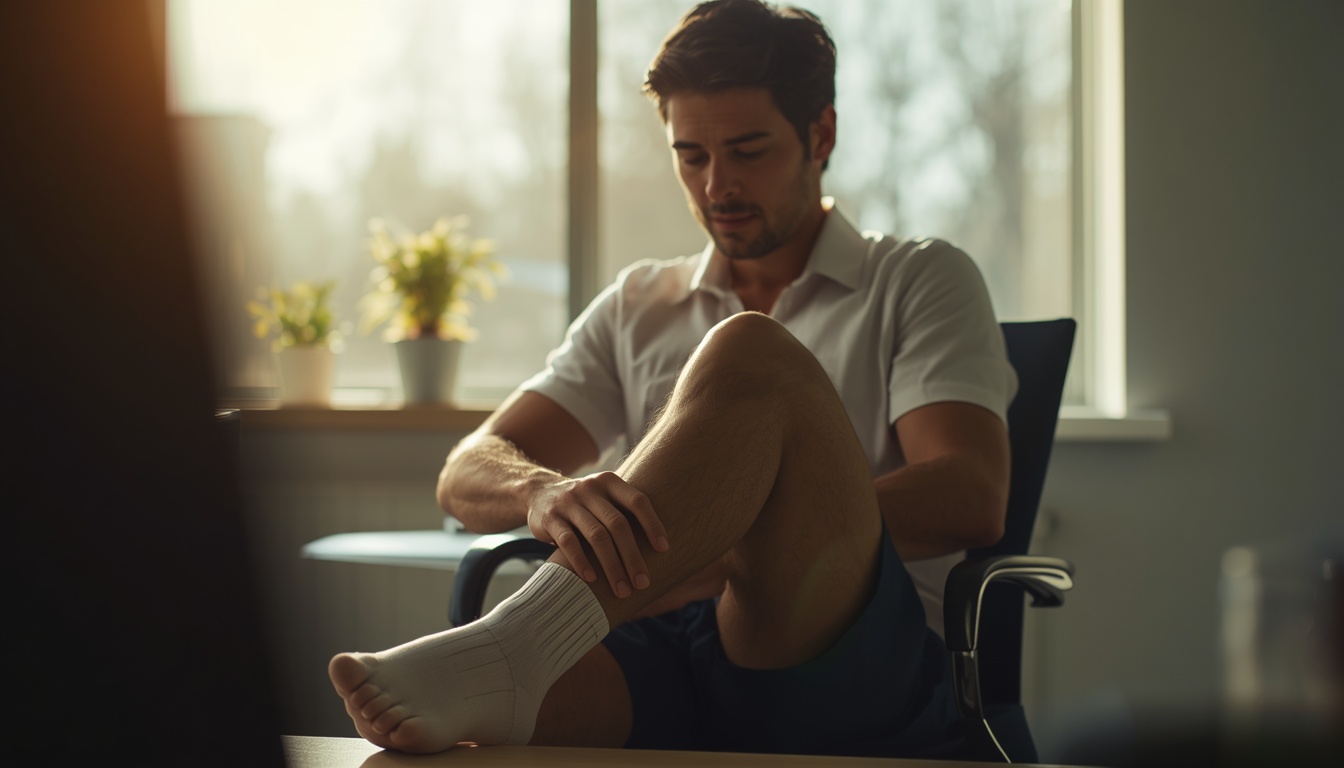
You stand up after a long meeting, a movie, or a flight, and your socks have left a neat ridge. Shoes that slid on in the morning feel tight. The ankles look a little shiny. By evening on the couch the puffiness is obvious; by morning it is mostly gone.
That pattern is common. It is usually not a sudden failure of the heart or kidneys. It is fluid that gravity parked in the lowest, quietest part of the circuit while the calf muscle pump took the afternoon off.
What This Swelling Feels Like
Typical sitting-related foot and ankle swelling is:
- Mild to moderate, worse on both sides by late day
- Soft and pitting — a brief thumb press leaves a shallow dent
- Worse after heat, salty meals, long flights, or crossing the legs
- Better after walking, lying down with the feet up, or a night in bed
- Accompanied by tightness of socks or shoes rather than sharp pain
It is different from a hot, red, one-sided calf; from swelling that climbs the legs overnight and does not recede; and from sudden puffiness of the face, lips, or tongue.
Yes — Dependent Edema Is a Real, Everyday Pattern
Fluid in the tissues follows Starling forces: the balance of blood pressure pushing water out of capillaries and proteins pulling it back in. When you sit still, venous pressure in the feet rises because the column of blood from the heart to the ankle is no longer being emptied by walking.
Physiologist Ernest Henry Starling described that filtration balance more than a century ago. Later work on the calf muscle pump — including studies by A. N. Nicolaides and colleagues on venous hemodynamics — showed how each step compresses the deep veins of the lower leg, opens one-way valves, and sends blood toward the heart. Sit still and that pump idles. Capillary pressure stays high. A little extra fluid leaks into the subcutaneous space of the ankles and the tops of the feet.
Airline and occupational studies make the same point in daily life. Surgeon John Scurr and colleagues, in a well-known 2001 Lancet trial of long-haul passengers, found that symptomless clotting was more common in people who sat still for hours, and that graduated compression stockings reduced that risk. Even without a clot, many travelers notice ankle swelling after the same still, cabin-dry, slightly lower-pressure hours. Desk workers see a milder version of the same physics.
The lymphatic system helps clear that leaked fluid, but lymph also needs movement. Quiet sitting leaves both the venous pump and the lymph pump under-used — the same walking-and-muscle story covered in why your lymph still expects you to walk.
Why Sitting Pools Fluid in the Feet
Several ordinary factors stack:
- Gravity and a quiet calf pump. Standing or sitting with the feet down raises hydrostatic pressure in the veins of the lower leg. Walking empties those veins. Sitting does not.
- Heat. Warm rooms and long pants dilate skin vessels. More volume sits in the legs.
- Salt and carbohydrate-heavy meals. Extra sodium holds water. A big lunch plus an afternoon at a desk is a classic pairing.
- Hormones. Some people notice more puffiness in the days before a period, in pregnancy, or with certain medicines (calcium-channel blockers, some pain relievers, steroids).
- Tight edges. Knee-high socks with a firm band, crossing the legs, or a seat edge that presses the back of the thigh can slow return a little more.
None of that requires a diseased heart. It requires a circulatory design that assumes you will stand and walk between sits — the same design described in why your veins still expect the calf pump.
Hidden Triggers That Look Mysterious
Swelling that “came out of nowhere” often has a quiet cause:
- A first very long travel day after months of short commutes
- A new desk chair that lets the thighs press the seat edge
- Switching to a standing-then-sitting hybrid day without calf motion in either mode
- A hot office, a salty delivery lunch, and carbonated drinks
- Compression from skinny jeans or boots worn all day
- An evening of screens on the sofa with feet on the floor, not the ottoman
A related morning issue — stiffness after a still night — is a joint-and-fluid story of its own in why you wake up stiff every morning. Overnight, gravity is no longer pooling in the feet, which is why many people look slimmer at the ankle at 7 a.m. than at 7 p.m.
When Swelling Is Not “Just Sitting”
Most late-day, two-sided, pitting ankle puffiness that fades overnight is benign. Get prompt medical care if you notice:
- Swelling that is sudden, painful, and clearly one-sided, especially with calf tightness or warmth
- Shortness of breath, chest pain, or coughing blood
- Swelling of the face, lips, or tongue, or difficulty breathing
- Rapid weight gain of several pounds in a day or two, plus shortness of breath when lying flat
- Skin that is red, hot, and spreading, or an open wound on a swollen leg
- Swelling that does not improve after a night with the feet up, or that is new after starting a medicine
One-sided painful swelling raises concern for deep-vein thrombosis. Overnight facial puffiness plus breathlessness belongs in a heart-or-kidney conversation, not a “desk day” conversation. Those are the exceptions, not the usual sock-ridge story.
Myths vs Facts
Myth: Puffy ankles after sitting always mean heart failure.
Fact: Heart failure can cause leg swelling, but so can hours of quiet sitting in a healthy person. Timing, symmetry, overnight improvement, and the absence of breathlessness help separate the two.
Myth: Drinking less water will deflate the feet.
Fact: Severe restriction can backfire through hormones that hold salt and water. Ordinary thirst-led drinking is safer than a dry-out plan.
Myth: Crossing the legs “ruins veins.”
Fact: Brief crossing is ordinary. Hours of crossing plus no walking is just more stillness. Motion matters more than a single posture.
Myth: If the skin pits, something is seriously wrong.
Fact: Pitting simply means mobile fluid in the tissue. Mild evening pits after sitting are common.
Myth: Compression socks are only for hospital patients.
Fact: Well-fitted graduated stockings are a standard tool for long travel and for people whose jobs keep them seated. They are not a diagnosis.
How to Manage Ordinary Desk-and-Flight Swelling
You do not need a perfect routine. Small returns of the calf pump help.
- Stand or walk two to three minutes each half hour when you can. Ankle circles and heel raises at the desk count.
- Uncross the legs. Keep the seat edge from digging into the back of the thighs.
- On flights, aisle walks and seated calf pumps beat remaining still for the whole movie.
- If you use compression, choose graduated socks that are snug at the ankle and easier up the calf, put on in the morning, and sized to you.
- Elevate the feet above heart level for 15 to 20 minutes in the evening if they feel tight.
- Watch the obvious amplifiers: a very salty lunch, a hot room, and alcohol on a long sit.
- Shoes with a little room in the afternoon beat forcing a morning fit over a puffy instep.
Walking after meals helps more than the ankles. It is also one of the simplest ways to blunt a blood-sugar spike, as in why your blood sugar still expects a walk after meals. One short loop can serve both systems.
When to See a Doctor
Book a regular visit if swelling is new, one-sided, painful, or no longer gone in the morning; if you are pregnant and the puffiness is sudden; or if you have known heart, kidney, or liver disease and the ankles change quickly. Seek urgent care for sudden one-sided calf swelling with pain, or for swelling plus chest symptoms or facial swelling.
Bring a simple timeline: when it started, whether both sides are involved, which medicines you take, how much you sit, and whether it recedes overnight. That history is often more useful than a single afternoon photo of a sock mark.
Frequently Asked Questions
Is it normal for only one foot to swell a little more than the other?
A small difference is common if you cross one leg more, drive with one foot on a pedal, or had an old sprain. A sudden, painful, clearly one-sided change is not something to wait out.
Do I need blood tests if my socks leave marks every workday?
Not automatically. Recurring late-day marks that fade by morning in an otherwise well person are often mechanical. Tests become more relevant when swelling is new, persistent, or paired with other symptoms.
Will standing all day fix it?
Standing without walking still leaves a high venous column. Motion — steps, heel raises, shifting — is the useful part. All-day standing on a hard floor can swell feet too.
Are bananas or extra potassium a treatment?
If a diuretic or a low-potassium diet is involved, a clinician may talk about electrolytes. For ordinary sitting edema, the calf pump and less stillness matter more than a single fruit.
Can I fly if my ankles always puff?
Many people with mild dependent edema fly safely with walks, hydration, and fitted compression. Anyone with a recent clot, active cancer, or a strong clotting history should get individualized advice before a long haul.
Why are my feet worse in summer?
Heat widens skin vessels. More blood volume sits in the legs, and more fluid can filter into the tissue. The same desk day looks puffier in a warm month.
Conclusion
Feet that swell after sitting are usually doing what gravity and a paused calf pump predict. The leak is small, the overnight reset is real, and walking is still the original pump. Treat the pattern as a reminder to move the lower legs, not as a verdict on your organs — and save the urgent pathway for swelling that is sudden, one-sided, painful, or paired with breath or face changes.