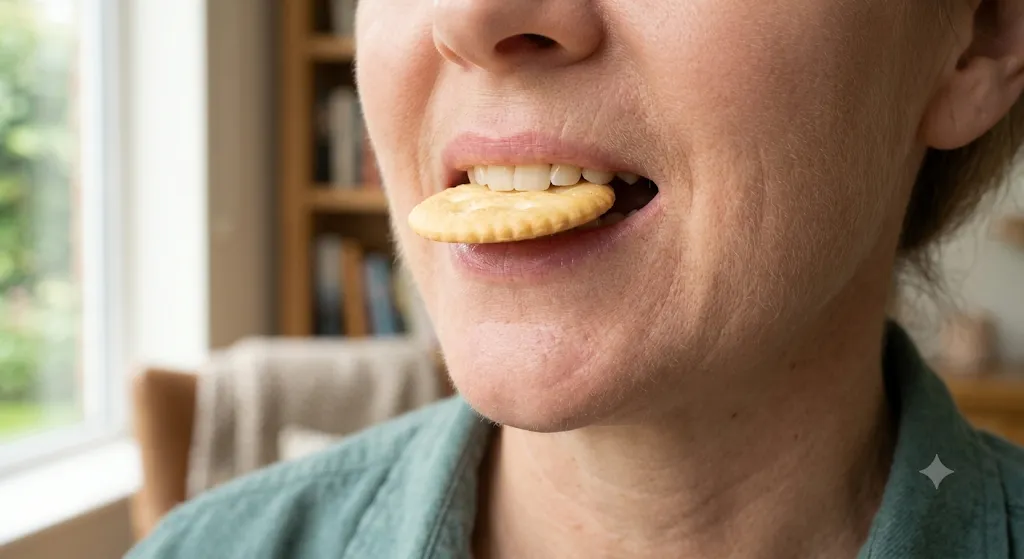
Modern soft foods give teeth less of the firm chewing their structure still expects. Learn the science of jaw development, common crowding issues, and simple ways to support healthier biting without overdoing it.

You finish a meal of soft bread, yogurt, or a smoothie and notice your teeth never really had to work. Later you might feel a faint tightness in the jaw or simply realize how rarely you bite into anything that pushes back. That quiet mismatch is common. Human teeth and the jaws that hold them developed under diets that required repeated firm chewing, and many of those signals are missing from everyday eating today.
What Your Teeth Were Built For
Teeth are not just passive tools. The forces from biting and grinding help shape the bone around them during growth and keep the supporting structures active later in life. Hunter-gatherer groups and earlier agricultural populations regularly chewed tougher, less processed foods. Those loads stimulated wider jaw growth and produced more even wear patterns. Research on skeletal collections by Noreen von Cramon-Taubadel and others has shown that people from societies eating harder diets tend to have larger jaws relative to tooth size, with lower rates of crowding.
When diets shifted toward softer, more processed foods after the rise of farming and again after industrialization, the amount of chewing force dropped. Daniel Lieberman and colleagues demonstrated in animal studies that softer diets reduce facial growth where chewing strains are highest. The same pattern appears in human remains: modern jaws are often shorter and narrower than the teeth they contain. The result is a higher chance of overlapping teeth, reduced arch space, and bites that no longer meet in the older edge-to-edge pattern.
How Soft Modern Eating Changes the Picture
Ultra-processed and finely milled foods require far fewer chewing cycles and lower peak forces. Studies comparing pre-industrial and industrial-era dental wear, including work by Silvester, Kullmer, and Hillson, show a clear shift toward less transverse jaw movement and altered occlusal contacts. Children who grow up on mostly soft or semi-liquid diets often develop narrower dental arches, leaving less room for permanent teeth to erupt in alignment. Carolyn Rando and other bioarchaeologists have noted that the acceleration of malocclusion tracks closely with the spread of heavily processed diets.
The teeth themselves still respond to load. Firm contact helps maintain the periodontal ligament and the surrounding bone. When those contacts are rare, some people notice more sensitivity, uneven wear on the few hard items they do bite, or a sense that the bite feels “off” after long periods of soft eating. This is different from the immediate muscle fatigue described in pieces on the masseter or the gums; here the focus is on the teeth and the bone that anchors them.
Common Everyday Effects
Most people simply adapt. Crowded lower front teeth, a slight overbite that persists into adulthood, or the need for orthodontic work are widespread in industrialized populations. Some notice that biting into a raw carrot or apple feels surprisingly strenuous after weeks of soft meals. Others find that one or two teeth take more of the load and wear faster. These changes develop slowly and are usually not painful on their own.
Occasional hard biting also stimulates saliva and the sensory nerves in the periodontal ligament. When that input is missing for long stretches, some people report a vague sense that their bite is less stable or that food particles are harder to clear. These sensations are usually mild and improve once firmer foods return to the routine.
When to Pay Closer Attention
See a dentist or orthodontist if you develop sudden tooth pain, a bite that feels dramatically shifted, loose teeth, or swelling around a tooth. Persistent jaw locking, severe headaches linked to biting, or rapid changes in tooth alignment also warrant evaluation. Gradual crowding or a preference for soft foods is common and not an emergency, but professional assessment can rule out other causes such as grinding, missing teeth, or joint issues.
Children whose diets stay very soft for years may benefit from early dental checks focused on arch development. Adults who have had extensive dental work or who avoid hard foods because of pain should discuss safe ways to reintroduce texture rather than forcing bites.
Myths Versus Facts
Myth: Soft food is always better for teeth because it reduces wear.
Fact: Moderate wear from natural chewing was normal. Excessive soft diets are linked to underdeveloped jaws and higher rates of crowding, not healthier alignment.
Myth: Once adult teeth are in, chewing force no longer matters.
Fact: Bone and ligament around teeth continue to respond to load throughout life. Completely avoiding firm contact can leave some teeth under-stimulated.
Myth: Only genetics determine whether teeth crowd.
Fact: Genetics set the potential, but dietary consistency during growth strongly influences how much of that potential is realized. Anthropological comparisons show clear diet-related differences within similar genetic groups.
Practical Ways to Meet the Expectation
You do not need to return to a fully ancestral diet. Small, regular additions of firmer foods supply the missing signal:
- Include raw vegetables, nuts, or firm fruits several times a week.
- Choose whole grains or less refined options when practical instead of only soft baked goods.
- Chew thoroughly on both sides rather than rushing soft meals.
- If you have dental work or sensitivity, start with milder textures (steamed vegetables that still have some resistance, or apples cut into wedges) and increase gradually.
- Stay consistent with dental hygiene; firmer foods do not replace brushing and flossing.
People who already have significant crowding or joint pain should check with a dentist before adding very hard items such as ice or uncooked nuts. The goal is occasional firm contact, not constant high force.
Frequently Asked Questions
Does eating soft food cause crooked teeth?
It contributes. Softer diets during childhood and adolescence are associated with narrower jaws and higher rates of malocclusion in both skeletal studies and modern observations. Genetics and other factors also play roles, but the dietary signal is well documented.
Can adults still benefit from harder chewing?
Yes, to a degree. While major jaw growth has finished, the bone and ligaments around teeth respond to load at any age. Adding occasional firm foods can support those tissues and improve the sense of bite stability for many people.
Is it harmful to bite hard things if I have crowns or fillings?
It depends on the restoration. Most modern dental work handles normal chewing well, but very hard items (ice, hard candy, bones) can crack teeth or restorations. A dentist can advise which textures are safe for your specific situation.
Why do some populations have fewer crowding problems?
Groups that still eat tougher, less processed diets tend to show larger jaws and lower rates of malocclusion. The difference appears early and tracks with the mechanical demands of chewing rather than with tooth size alone.
Should I chew gum to make up for soft meals?
Sugar-free gum can increase saliva and give the jaw muscles light work, but it does not fully replace the varied forces of real food. It can be a useful addition if it does not cause jaw fatigue; stop if you notice pain or clicking.
Conclusion
Your teeth still carry the structural expectation of occasional hard biting that shaped human jaws for most of our history. Soft modern foods have reduced those loads, contributing to narrower arches and more common crowding. Adding a few firmer textures each week, chewing more thoroughly, and checking in with a dentist when alignment or pain changes are practical ways to meet that expectation without dramatic lifestyle shifts. The mismatch is real, but it is also adjustable in everyday meals.