
The masseter still expects brief hard bites on real food, then rest. Soft meals and screen clenching leave the jaw closer unused, then sore.
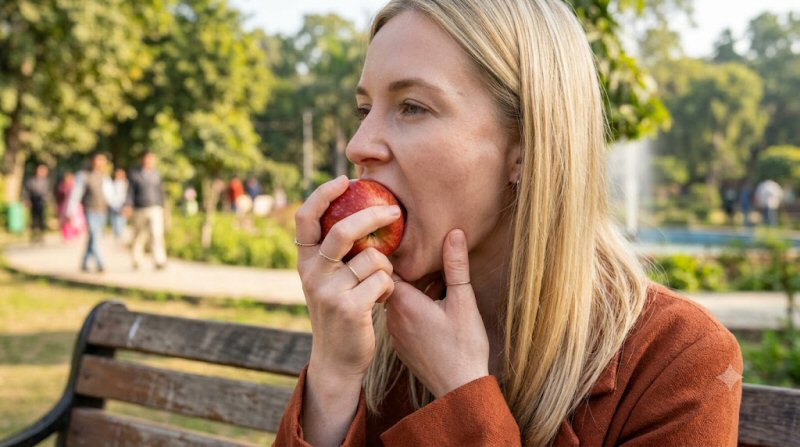
The ache shows up at the angle of the jaw, not in the tooth you blame. You have been at a screen since lunch, meals were soft, and now the muscle that should have worked in short bursts is tired from doing almost nothing on purpose and a little too much by accident. Chewing a crust on the walk home can feel better than the hours of still contact that came before it. That pattern is the masseter’s modern mismatch.
The masseter is the thick closer on the side of the face, from the cheekbone down to the angle of the lower jaw. It is built for force, not for endurance holding. Ancestral meals asked it to fracture roots, meat, and seeds, then stop. A day of yogurt, sandwiches that barely need a bite, and teeth lightly together while you concentrate asks for the opposite.
What This Ache Feels Like
People describe a dull tiredness at the back corner of the jaw, sometimes spreading into the cheek or up toward the temple. It is worse late in a desk day, after a long call, or the morning after a night of clenching. Biting one side of a bagel can light it up. So can yawning wide after hours of a small open-mouth posture. Resting the chin in the hand makes the same spot complain.
It is easy to confuse with neighbors. Temple ache that tracks a one-sided chew is often the temporalis that still expects a side chew. A click in front of the ear when you open is the joint disc, covered in jaw clicking when you chew. Tooth pain that is sharp with cold is the tooth, not the muscle. Masseter fatigue sits in the belly you can pinch if you clench gently: a slab just in front of the ear and above the jaw angle.
Both sides can ache after a soft-food week. One side is louder if you always chew there, or if you rest that cheek on a hand. The useful clue is timing. Real chewing soreness warms and settles. All-day light contact builds through the afternoon and is still there when you notice your teeth are together.
What the Masseter Was Built to Do
The muscle is multipennate. Short fibers pack into a large cross-section, so it produces high force over a short distance. Geert-Jan van Eijden’s architectural work put the masseter among the force specialists of the head: a lot of contractile tissue, little excursion. The temporalis and medial pterygoid share the close. The lateral pterygoid helps control the disc and the open. The masseter is the power closer.
William Hylander’s bone-strain and EMG studies in primates showed why molar chewing is not a gentle squeeze. Working-side and balancing-side masseter both fire as the bite fractures food. The lower jaw is a lever. Tough items need a brief peak, not a marathon. Once the piece yields, the muscle should unload. John Basmajian’s EMG recordings had already shown jaw closers quiet at rest when the teeth are apart.
A foraging day was many of those peaks. Roots, fibrous plants, dried meat, and unprocessed seeds asked for fracture. Daniel Lieberman has argued that cooking and food processing cut the daily mechanical demand on this system and changed the face that grew around it. Robert Corruccini’s comparisons of industrialized and non-industrialized occlusion point the same way: softer diets track more crowding. The muscle did not retire. The job did.
Stavros Kiliaridis and colleagues showed the training effect directly. Soft-diet feeding in growing animals reduced masseter thickness and altered jaw growth. Human ultrasound work from the same line of research links a thicker masseter with higher bite force. The closer still expects load if it is going to keep its size. Hundreds of newtons at the molars are available in a healthy young adult. Most modern bites never ask for them.
Why Soft Meals and Screens Retire the Real Job
Two modern habits pull in opposite directions, and both miss the old pattern.
The first is the soft diet. Yogurt, mashed meals, protein shakes, white bread, and meat cut so fine a fork finishes the work never recruit the peak. Peter Lucas’s work on food fracture mechanics makes the point plainly: if the food yields at a low force, the closer never reaches the load it was shaped for. Weeks of that are detraining. The mouth built for chewing tough food loses more than muscle. The periodontal ligament, the tongue’s side shove, and the growing jaw in children all expected that work.
The second habit is light tooth contact. Teeth should rest apart, lips closed, tongue up, a few millimeters of freeway space. Alan Glaros and others found that people with facial pain touch their teeth far more often through the day than people without it. Computer work, driving, and concentration raise that low-grade masseter activity. It is not a useful chew. It is an isometric hold at short length, the job the muscle is bad at. Mauro Farella’s chewing studies show the other side of the same coin: a long gum session can fatigue the closer too. Endless soft chewing is not the ancestral pattern either. Brief hard bites, then stop, is.
Sleep adds a third layer. Gilles Lavigne’s work separates sleep bruxism from daytime clenching. Rhythmic grinding at night is a sleep event, often in lighter stages, not simply “stress you took to bed.” Morning masseter soreness can be either. The daytime screen clench and the night grind are different problems that happen to share a muscle.
Hidden Triggers
A few ordinary details make the mismatch louder.
Chewing only on one side, often to spare a sensitive tooth, overloads that masseter and lets the other shrink. A new filling that hits early does the same. Gum “for focus” turns a brief closer into an endurance muscle. A headset that presses the jaw angle, or a hand propped under the chin, compresses the belly for an hour. Caffeine and a deadline raise the chance you will find your teeth together. Cold air and a forward head posture do not cause masseter pain by themselves, but a jutting chin changes the rest position and makes contact more likely.
Mouth breathing belongs on the list. If the lips are open, the jaw often hangs, then snaps into a clench when you refocus. Nasal breathing with lips together is the rest the closer expected between bites.
When to Worry
Most masseter ache from soft food and screen contact is mechanical and settles when the pattern changes. Some signs are not that story.
Jaw opening that is getting smaller over days, or a lock that does not release with a small wiggle, needs a dental or oral-medicine look. Swelling, fever, or pain with a sore tooth can be infection. Numbness of the lip or chin, a changing bite you cannot explain, or pain with ear discharge is not a training issue. Trauma, a fall, or a punch to the jaw needs an exam even if the teeth look fine. Chest pain, sweating, or pain into the arm that you are calling “jaw ache” is an emergency until someone proves it is not the heart. Night pain with marked morning opening limitation, especially if one side, can be joint inflammation rather than a tired closer.
A tender muscle that eases with a day of apart-teeth rest and a few real chews is the common version.
Myths vs Facts
Myth: A bigger jaw muscle means you should clench to “keep it strong.” Fact: The masseter expects brief fracture forces, then rest. All-day contact is the load it handles badly.
Myth: Soft food is easier on the jaw, so it is always kinder. Fact: A sore joint may need a short softer phase. A healthy closer that never meets resistance gets smaller and more complaint-prone when a real bite finally arrives. Kiliaridis’s diet studies are the clean version of that.
Myth: Jaw muscle pain means the joint is damaged. Fact: Muscle soreness and disc clicking are different. Many people have one without the other. Okeson’s clinical distinction still holds: muscle pain is local, load-related, and often bilateral; joint locking is a separate exam.
Myth: Gum all afternoon replaces ancestral chewing. Fact: Prolonged gum is endurance work. Ancestral chews were short and hard. A carrot, a crust, or a few bites of meat do the job better than an hour of gum.
How to Give It the Chew It Expected
Start with rest position. Lips together, teeth apart, tongue on the palate, jaw heavy. Check it when email loads. That single change removes the isometric hold.
Put texture back in one meal, not every snack. An apple, a carrot, a piece of crusty bread, or meat that needs a real bite gives the peak Hylander’s recordings were about. Chew on both sides across the week. Stop before the muscle shakes. If a tooth hurts, fix the tooth rather than avoiding that side for months.
Skip the all-day gum experiment. If you like gum, keep it to a few minutes after a meal. Do not use it as a focus tool.
On long calls, set a reminder to drop the jaw. Do not park your chin in your palm. A headset that presses the masseter should move. If you wake with sore closers and a partner hears grinding, a dentist can look for wear and decide whether a night guard is useful. A guard does not retrain the daytime rest position. You still have to do that.
For children, the same logic is growth, not fitness. Foods that need chewing are part of how the jaw meets the demand Corruccini and Lieberman described. It is not a cure for crowding. It is the load the closer still expects while the face is being built.
When to See a Doctor
See a dentist or doctor if opening is shrinking, the jaw locks, a tooth is tender to bite, swelling appears, or morning pain is worsening over weeks. Mention chest symptoms the same day, as an emergency. A physiotherapist who knows the jaw can help with load and rest position once dental causes are checked. Imaging is for locking, trauma, or pain that does not follow the muscle story, not for ordinary afternoon ache.
FAQs
Why does my jaw ache even though I barely chew?
Because the masseter’s common modern load is not chewing. It is light tooth contact while you concentrate. That hold fatigues a force muscle. Soft meals then leave it detrained for the next real bite.
Is a tough chew safe if my jaw already clicks?
A normal click with full opening is often compatible with ordinary food. A lock, a sudden bite change, or pain that stops you opening needs an exam first. Build texture slowly, both sides, and stop if opening shrinks.
Can the masseter actually shrink from soft food?
Yes, in the studies that measured it. Soft-diet experiments and ultrasound comparisons link lower daily demand with a thinner closer and lower bite force. The change is use-dependent. It is not instant, and it is not permanent if load returns.
Does jaw clenching mean I have a joint disease?
Not by itself. Daytime contact and sleep bruxism are muscle and sleep behaviors. Joint disease is a different exam: locking, swelling, or a bite that has shifted. Many people clench with a healthy joint.
How is this different from temporalis ache?
Temporalis sits on the temple and often tracks one-sided chewing or a forward head. Masseter sits at the jaw angle and the cheek. Both are closers. Screen contact can fire both. The pinch test while you clench gently tells them apart.
Conclusion
The masseter still expects a short, hard bite and a long rest with the teeth apart. Soft meals remove the bite. Screens sneak in the hold. Neither is the job van Eijden’s architecture or Hylander’s chew recordings describe. A few real textures, both sides, and a jaw that hangs between them is the old pattern, small enough to fit in a modern day.


