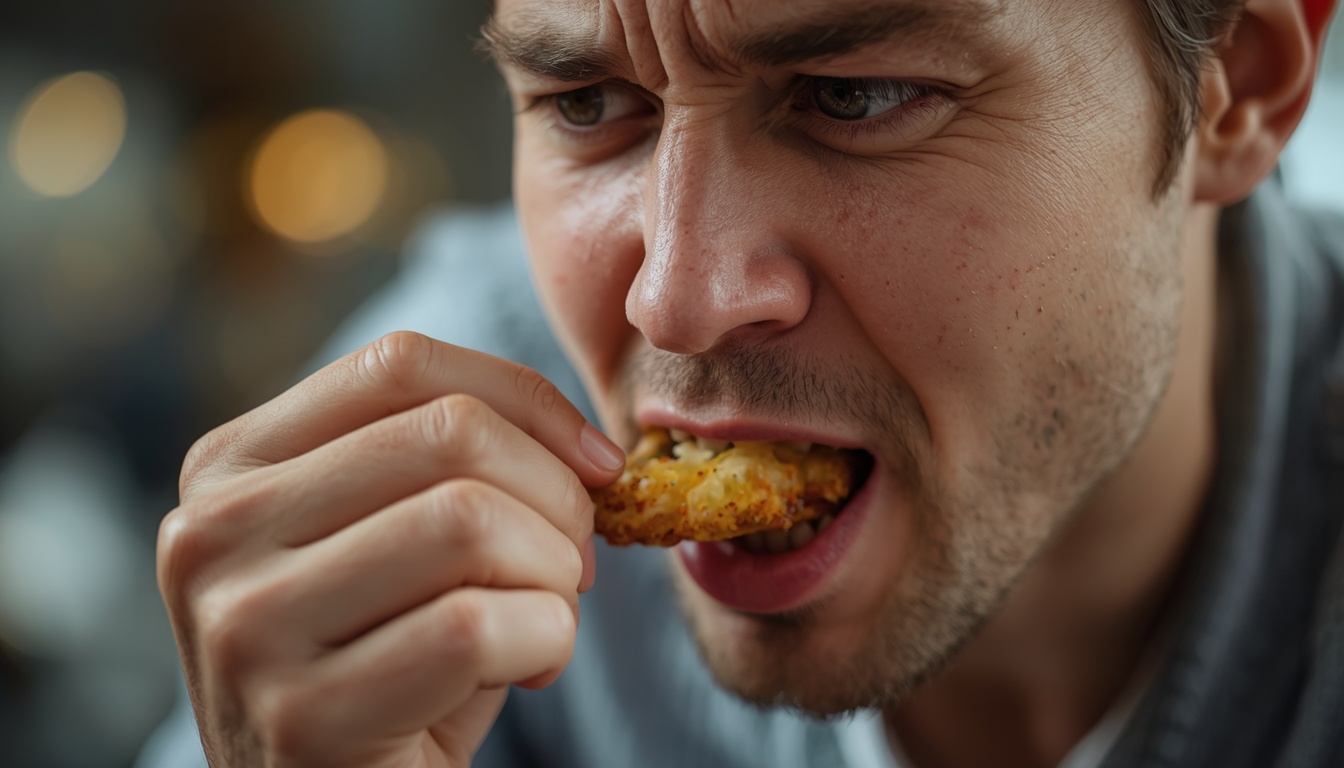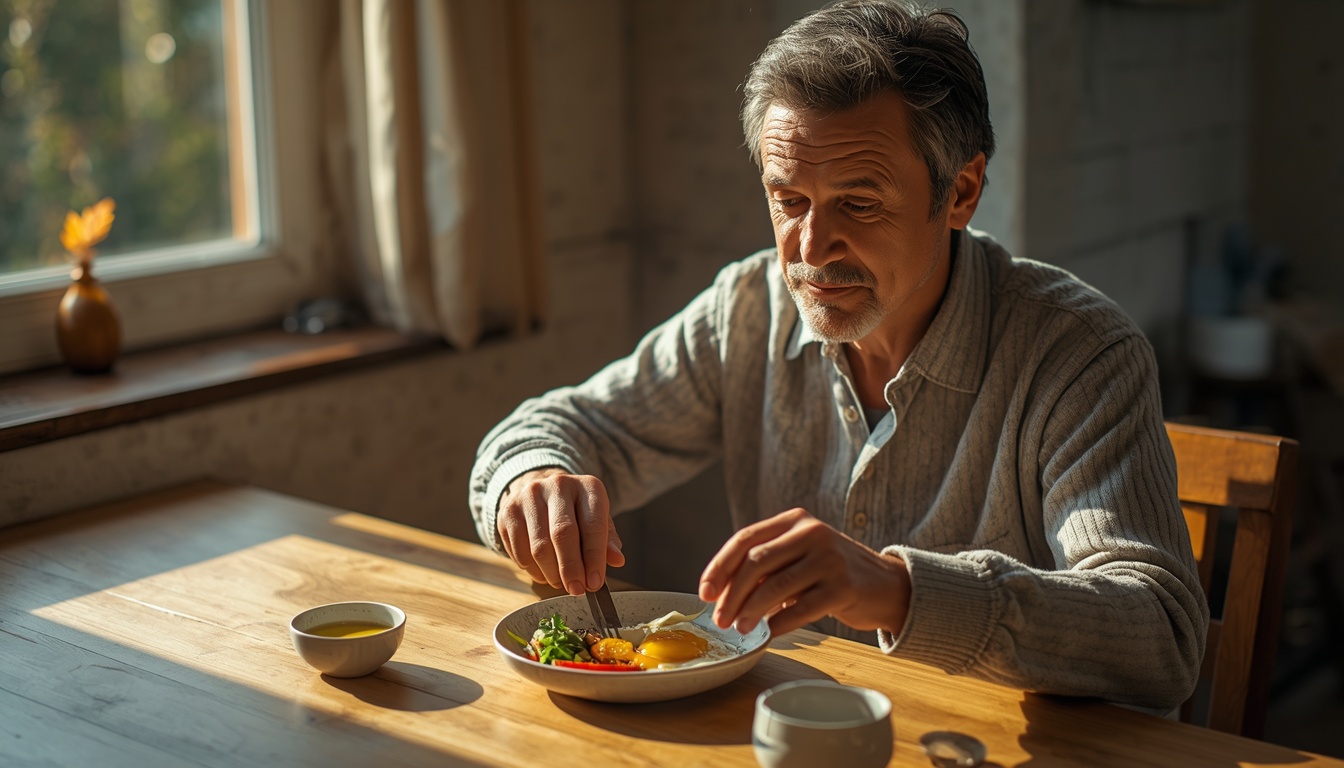
Your liver makes bile all day. Your gallbladder is the holding tank — a small muscular pouch under the right ribs that concentrates that bile overnight and then squeezes most of it into the small intestine when fat and protein arrive. That squeeze is not optional decoration. It is how a hunter-gatherer gut handled a real meal after a real gap.
Modern eating often deletes the meal and keeps the gap, or deletes the fat and keeps the grazing. Coffee and a pastry at ten. A salad with almost no oil at one. Snacks that never quite count. The pouch still fills. It just does not empty on the schedule it was built for.
What This Mismatch Feels Like
Most of the time it feels like nothing. Silent stones are common. When the system does complain, the pattern is often:
- A dull or squeezing ache under the right ribcage or between the shoulder blades after a richer meal
- Nausea that tracks with fried or creamy food, not with every bite
- Bloating or a “heavy” right upper abdomen a half hour to a few hours after eating
- Intolerance that seemed to appear after a crash diet, pregnancy, or a long stretch of very low-fat eating
- No pain at all — only an ultrasound that later mentions sludge or stones
The ache is not “fat being evil.” It is a muscular pouch trying to empty concentrated bile through a narrow duct.
How the Gallbladder Was Supposed to Work
Bile is a detergent mix: bile acids, phospholipids, cholesterol, and bilirubin. Between meals the gallbladder stores most of the bile-acid pool and pulls water out of it, concentrating the mix several-fold. Gastroenterologist Piero Portincasa and colleagues have described this as a coordinated gut–liver motor program, not a passive sack.
When chyme containing fat and protein reaches the duodenum, I-cells release cholecystokinin (CCK). Work by Rodger Liddle and later motility studies showed that physiological CCK, acting largely through nerves as well as receptors on the gallbladder wall, makes the pouch contract and helps the sphincter of Oddi relax. In healthy people a standard fat-containing meal can empty a large fraction of fasting gallbladder volume.
Bile then emulsifies fat so enzymes can work. Downstream, bile acids are reabsorbed in the ileum. That return signal, involving the farnesoid X receptor and the hormone FGF19, tells the liver to slow new bile-acid production and helps the gallbladder refill for the next meal. Eat, squeeze, digest, refill. Repeat.
Why Fasting Bile Gets More “Stone-Friendly”
During a long fast the enterohepatic circulation of bile acids is partly parked in the unemptied gallbladder. Cholesterol secretion from the liver does not drop in perfect lockstep. Classic work by Allan Metzger and colleagues in the 1970s showed that fasting hepatic bile is more lithogenic — more cholesterol-saturated — than bile sampled during feeding. H. M. Bloch later found that cholesterol saturation of gallbladder bile rose after a 15-hour fast compared with a 10-hour fast in healthy women.
C. N. Williams and colleagues reported that among women without stones, the share with cholesterol-saturated bile jumped from a small minority after about nine hours of fasting to more than half after sixteen hours. The pouch is doing its job: concentrating. The chemistry just becomes less forgiving the longer the mix sits.
That is why very low-calorie crash diets, total parenteral nutrition, and long postoperative fasts have a well-known association with sludge. The tank is full. The CCK signal is weak or absent.
The Modern Meal That Never Quite Arrives
Ancestral days were not three square restaurant courses. They were irregular, but when food came it usually included enough fat and protein to matter. The gallbladder is built for pulses, not for a day of near-zero fat punctuated by late-night grazing.
Several modern patterns under-dose that pulse:
- Skipping breakfast and pushing the first real meal late, which lengthens overnight stasis. Population analyses using NHANES-style data have linked later first meals and longer overnight fasts with higher gallstone prevalence.
- All-day grazing on small, low-fat snacks. Frequent nibbles can twitch the pouch without a full empty-and-refill cycle. One latent-class analysis of temporal eating patterns found that unstructured “grazing” was not protective compared with a more conventional meal rhythm.
- Very low-fat diets that never release much CCK. The pouch concentrates and waits.
- Rapid weight loss, which floods bile with extra cholesterol while emptying stays sluggish.
David Q-H Wang’s group showed the motility piece in mice lacking CCK: enlarged fasting gallbladders, poor emptying after a fatty meal, faster cholesterol crystallization, and far more stones on a lithogenic diet. Eldon Shaffer’s work on gallbladder stasis in ground squirrels made a similar point — keep the pouch still and crystals arrive sooner, even when bile chemistry is not the whole story.
None of this means you must eat a steak at dawn. It means the organ expects some genuine emptying signal on most days.
Hidden Triggers
A few extra loads stack on the same biology:
- Pregnancy, when hormones relax smooth muscle and the growing uterus changes mechanics
- Estrogen-containing contraceptives or high estrogen states, which can raise biliary cholesterol
- Very rapid weight loss after bariatric surgery or crash dieting
- Long gaps with only black coffee — fluid without the fat-and-protein CCK cue
- A first rich meal after days of restriction, which asks a deconditioned pouch to empty suddenly
- Conditions that slow gut motility more generally, from prolonged sitting after meals to some medications
The same between-meal biology that produces an ordinary stomach growl also times bile. An empty gut that rumbles at noon and a gallbladder that has not squeezed since last night are often the same clock.
Myths vs Facts
Myth: Fat causes gallstones, so the safest plate is always fat-free.
Fact: Excess refined carbohydrate, rapid weight loss, and too little gallbladder emptying are major players. A moderate amount of fat at regular meals is the physiologic emptying signal.
Myth: If you have no pain, your gallbladder is fine.
Fact: Many cholesterol stones are silent. Pain starts when a stone or sludge temporarily blocks a duct during a contraction.
Myth: Grazing all day keeps bile moving and prevents stones.
Fact: Tiny snacks may not empty the pouch well. Irregular grazing has not shown a clear protective pattern in recent eating-pattern studies.
Myth: Removing the gallbladder is no big deal because bile still flows.
Fact: People live well without a gallbladder. Bile then drips more continuously instead of arriving as a meal-timed bolus, which can mean looser stools after rich food. The reservoir is gone; the liver is not.
Myth: Only fried fast food is the problem.
Fact: A pastry-and-coffee morning plus a huge late dinner can stall the pouch even if the food looks “light.”
How to Work With the Design
You do not need a paleo reconstruction. You need periodic, honest emptying.
- Eat a real first meal most days — enough protein and some fat that CCK has something to notice. Eggs, yogurt, nuts, leftover dinner, olive oil on vegetables all count.
- Avoid stretching the overnight fast into the afternoon as a default, especially if you already have sludge, a family history, or you are dieting hard.
- If you prefer time-restricted eating, keep the eating window early enough that the first meal is not mid-afternoon, and include fat in that first plate.
- Lose weight slowly when you need to. Crash cuts raise biliary cholesterol while the pouch sits quiet.
- After a very low-fat stretch, reintroduce mixed meals gradually rather than with one celebratory fry-up.
- Walk after meals. Movement supports the same digestive timing that coffee can wake in the colon and that a squat helps at the other end of the gut.
Fiber and a less ultra-processed plate help the rest of the bile-acid story — the pool that returns through the ileum — which is part of why a scarcity-calibrated taste system overfed on refined starch is not only an appetite problem.
When to See a Doctor
Get prompt care for:
- Severe, steady right-upper-quadrant or shoulder-blade pain lasting more than a few hours
- Pain with fever, chills, or jaundice (yellow skin or eyes, dark urine)
- Repeated vomiting, or pain that wakes you and does not ease
- New pain after a very rich meal that feels different from ordinary indigestion
Those can mark a blocked duct or an inflamed gallbladder. Silent stones found on a scan are a conversation with a clinician, not an automatic operation. This article cannot diagnose biliary disease.
Frequently Asked Questions
Does skipping breakfast cause gallstones?
It is one risk-shaped habit, not a sentence. Longer overnight fasts raise the chance that bile sits concentrated and cholesterol-saturated. A real morning meal is a cheap emptying cue for many people.
Can a low-fat diet protect my gallbladder?
Very low fat can do the opposite by removing the CCK squeeze. Moderate fat at regular meals is closer to the design. After stones or surgery, a clinician may still ask you to limit large fat loads while you adapt.
Why do crash diets trigger attacks?
Rapid weight loss dumps extra cholesterol into bile and often means fewer real meals. Sludge can form in weeks. Slow, fed weight loss is kinder to the pouch.
Is coffee bad for the gallbladder?
Coffee is not a meal, but some observational work has associated regular coffee with lower gallstone risk, perhaps via motility or bile-acid effects. It does not replace fat-and-protein CCK.
If my gallbladder is removed, do I still need meal structure?
Yes, for the rest of digestion and for stool consistency. Without a reservoir, a huge late fat load can overflow into the colon. Smaller mixed meals often feel better.
Are silent stones dangerous?
Many never cause trouble. Risk rises if they start blocking ducts. Follow the plan you and your clinician set rather than treating every ultrasound line as an emergency.
Conclusion
The gallbladder is a meal-timed pump. It concentrates bile while you fast and expects a genuine CCK signal when you eat. Days of late first meals, fat-free grazing, and sudden starvation diets leave that pump full and still — the same biology Allan Metzger, Rodger Liddle, Piero Portincasa, and others mapped in bile chemistry and motility.
Give it a real meal on a regular clock. That is not a food trend. It is the emptying cycle the pouch still runs.