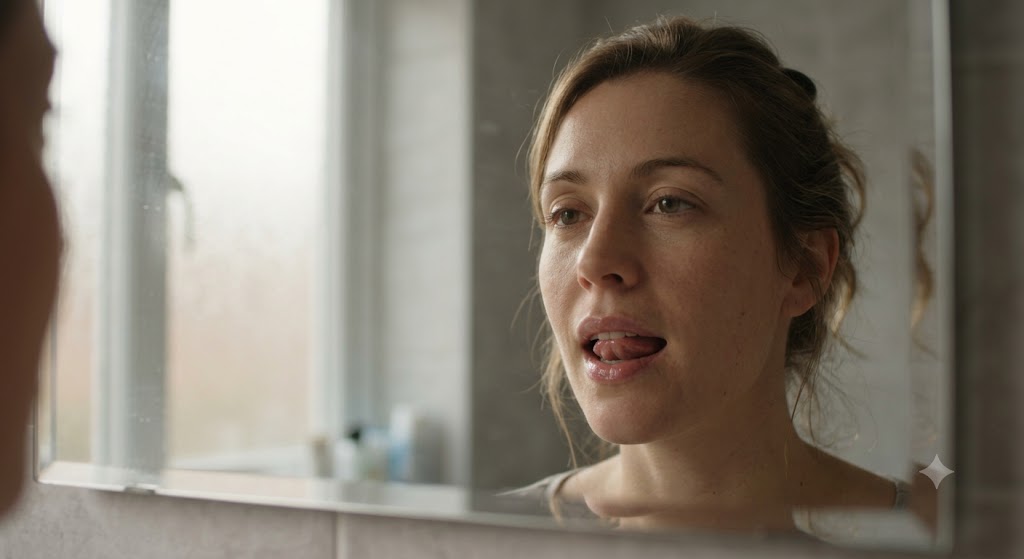
Saliva is not just moisture. Chewing still briefs flow, bicarbonate, enzymes and immune proteins in a way sipping and soft food never quite replace.
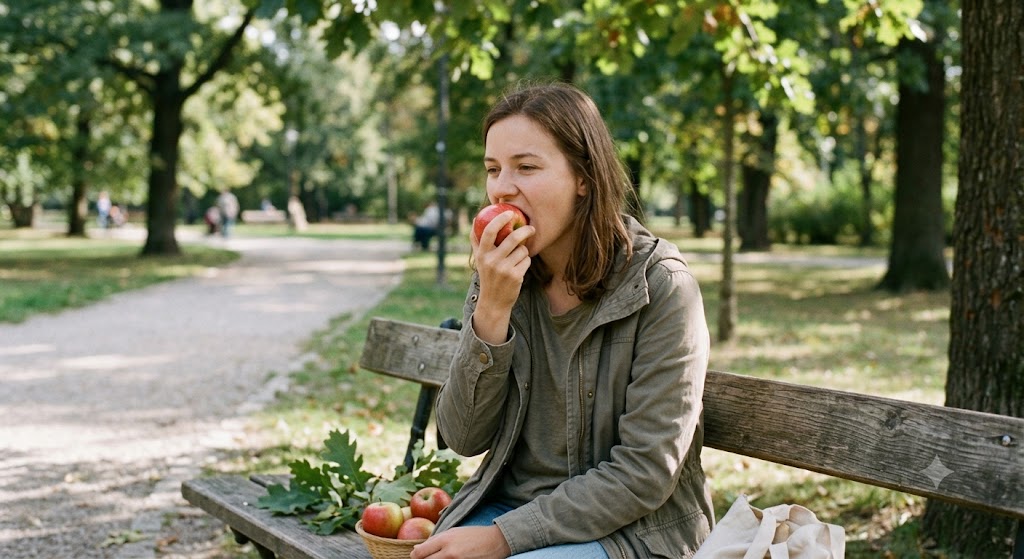
A sip of a smoothie does not feel like a meal in your mouth, and that is not a marketing problem. It is a gland problem.
Saliva is not generic wetness. It is a timed secretion from three major pairs of glands and dozens of minor ones, mixed on demand as you chew. The mixture changes with the job: watery and enzyme-rich when you work on starch, thicker and more lubricating when you need to swallow a dry bolus, more alkaline when acid arrives, more antimicrobial when the mouth is under threat. Those shifts still expect mechanical work — teeth meeting resistance, the tongue rolling a bolus, jaw muscles sending a briefing to the parotid and submandibular glands.
Modern eating often skips the briefing. Soft food, liquid calories, constant sipping and long stretches of mouth breathing leave the glands under-cued. The mouth still works. It just works on a thinner, less buffered, less informative stream than the one it evolved to make.
What Under-Cued Saliva Feels Like
The mismatch is rarely dramatic. It is a cluster of ordinary complaints that people treat as separate:
- A mouth that feels pasty by mid-afternoon even after drinking water
- Food that sticks to the palate or needs a wash of liquid to go down
- A sudden sour or metallic taste after coffee, wine or a long meeting
- More plaque at the gumline despite brushing
- A dry, clicking swallow first thing in the morning
- The sense that a blended meal “doesn’t count” until something crunchy follows it
None of those is proof of disease. Together they often mean the glands are making a resting trickle when the day asked for a working stream.
The Glands Still Run Two Speeds
Unstimulated saliva is a quiet background film. Colin Dawes, who spent decades measuring flow in Toronto and later in Manitoba, put resting output in the range of about 0.3 to 0.4 millilitres per minute in healthy adults — enough to keep the mucosa wet, not enough to rinse a meal. Chewing, sour taste and the thought of food can raise that several-fold. Parotid glands, which sit in front of the ears, contribute a larger share of the stimulated, watery, amylase-rich fluid. Submandibular and sublingual glands dominate the resting mix with more mucin.
Gordon Proctor and Guy Carpenter at King’s College London mapped how that mix is not just volume. Stimulated saliva carries more bicarbonate, which buffers dietary acid. It carries more amylase and lipase to start starch and fat digestion before the bolus even reaches the stomach. It carries mucins that coat enamel and mucosa. It carries secretory IgA, histatins, cystatins and lysozyme — a first-line immune film that Anne Marie Lynge Pedersen and others have described as part of oral host defence, not a cosmetic rinse.
Ivan Pavlov’s dogs made the cephalic point a century earlier: sight and smell of food start the glands before the first bite. Chewing finishes the job. A straw and a blender skip both ends of that briefing.
Why Chewing Is the Missing Signal
Periodontal mechanoreceptors and muscle spindles in the masseter and temporalis tell the brainstem that work is happening. Taste buds, especially sour and umami, add a chemical push. The result is a reflex arc through the salivatory nuclei that is older than cooked porridge.
Tough, fibrous, mixed-texture food keeps that arc busy for minutes. A smoothie is gone in seconds. Ultra-soft industrial textures need almost no grind. Carbonated or sweet drinks trigger a brief watery burst, then leave sugar sitting in a thin film. The glands did what they were asked. The ask was too short.
This sits next to a larger oral story. The jaw and face still expect resistance during growth and daily use. Saliva is the wet half of that same design. Soft diets that under-load bone and muscle also under-load the glands.
What the Stream Is For
A working salivary film does several jobs at once:
- Clearance. Volume and swallowing sweep sugar and acid off enamel. Dawes showed that clearance time after a sip of a sugary drink is much longer than people assume if flow is low.
- Buffering. Bicarbonate and phosphate raise pH after an acid challenge. Cheese or a fibrous food after fruit is an old practical version of this.
- Remineralization. Calcium and phosphate in saliva, guided by proteins such as statherin, can put mineral back into early enamel lesions if the film stays intact.
- Bolus formation. Mucins let you swallow bread without a chaser. When mucin is thin, people reach for water with every bite and call it “dry mouth.”
- Early digestion. Salivary amylase starts starch breakdown. That is one reason a chewed potato and a gulped potato shake do not brief the gut the same way. The pancreas still expects that oral preview before glucose arrives.
- Antimicrobial tone. Histatins limit Candida overgrowth. IgA tags familiar microbes. A chronically dry mouth is not just uncomfortable; it is a different ecology.
When the stream is thin, people notice thirst, stickiness, more cavities at the gumline and a sour taste after anything acidic. They often drink more and chew less, which does not close the loop.
Hidden Modern Triggers
Several ordinary habits shrink the cue without shrinking appetite:
- Liquid calories and “meal replacement” drinks that never require a grind
- Ultra-soft breads, yogurts and pouches eaten with almost no jaw travel
- All-day sipping of sweetened coffee or flavoured water, which bathes enamel in a low-flow sugar film
- Mouth breathing during focused screen work, which evaporates the resting film
- Antihistamines, some antidepressants and blood-pressure medicines that reduce output as a side effect
- Chronic nasal blockage that forces an open-mouth posture
- Fast eating that swallows before the glands have caught up
- Evening alcohol and dry indoor air that leave the morning film even thinner
Morning dryness has its own mechanics. Overnight flow falls and mouth breathing finishes the job. The first chew of breakfast is often the first real gland cue of the day.
When Thin Saliva Is Not Just a Habit
Most afternoon pastiness is under-use plus air plus caffeine. A few patterns deserve a clinician, not another bottle of water:
- Sudden, severe dryness with swollen glands or dry eyes (Sjögren’s pattern and related autoimmune disease)
- Difficulty swallowing dry food, not just annoyance
- Rapid new cavities at the gumline or on root surfaces
- Persistent white patches, burning tongue or unexplained taste loss
- Dryness that began the week a new medicine was added
- Painful swelling at mealtime under the jaw or in front of the ear (possible stone or duct blockage)
- Unexplained weight loss with oral dryness
Those are not “drink more.” They are reasons to examine glands, medicines and mucosa.
Myths vs Facts
Myth: If you drink enough water, saliva will take care of itself.
Fact: Water hydrates the body. Gland output still needs a neural cue. A well-hydrated person who only sips can still have a thin oral film.
Myth: Dry mouth always means you are dehydrated.
Fact: Dehydration can lower flow, but medicines, mouth breathing and missing chew cues are common in people who are not volume-depleted.
Myth: Chewing gum is a gimmick.
Fact: Sugar-free gum is one of the few modern tools that reliably raises stimulated flow and bicarbonate. It is not a meal, but it is a real mechanical cue.
Myth: Smoothies are just as “oral” as the same foods chewed.
Fact: Blending changes particle size and transit time. The glands and the gut see less work and a faster sugar arrival.
Myth: More saliva always means better digestion.
Fact: Excess drooling is a different problem, often posture or swallow timing. The useful state is a meal-timed rise, not a constant flood.
How to Give the Glands the Cue They Still Expect
You do not need to abandon soft food. You need some daily minutes of real work.
- Put something that requires chewing in every meal: raw fruit with skin, a handful of nuts, a salad with actual leaves, meat or beans you have to cut, crusty bread instead of a pouch.
- Pause the straw for foods that can be eaten. Taste and jaw travel are part of the briefing.
- If you use a blended meal, follow it with something crisp so the glands still fire.
- Chew sugar-free gum or a few nuts after an acidic drink instead of grazing on more sweetness.
- Breathe through the nose during desk work. An open mouth evaporates the resting film faster than any snack can replace it.
- Slow the first two minutes of a meal. Pavlov’s point still holds: sight, smell and the first chews start acid and saliva before the stomach is full.
- Review drying medicines with a clinician if the film never recovers.
- Keep indoor air from going desert-dry, especially at night, so morning flow is not starting from zero.
The point is not nostalgia for tough roots. It is matching a living secretion to the job it still does best when teeth meet resistance.
When to See a Doctor or Dentist
See someone sooner if dryness is new and severe, if cavities appear quickly, if a gland swells at mealtimes, if dry eyes travel with a dry mouth, or if swallowing dry food has become a project. A dentist can see the enamel and film consequences early. A physician can sort medicines, autoimmune disease and duct problems. Persistent burning, numbness or a changing patch on the tongue or cheek is not a hydration tip.
FAQs
Does chewing more actually make more saliva?
Yes. Mechanical work and taste raise flow within seconds. That is why a dry cracker eventually becomes swallowable and why sugar-free gum works as a short-term cue.Can I fix dry mouth by drinking more water?
Water helps the body and can rinse debris, but it does not replace mucins, bicarbonate or the immune proteins glands add. Chewing plus nasal breathing usually changes the film more than another glass alone.Is it bad to eat smoothies every day?
Not automatically. They are a problem when they replace all chewing and arrive as a fast sugar load. Pair them with something that needs teeth.Why is my mouth drier after coffee?
Coffee is acidic and mildly diuretic, and many people sip it for hours. The first burst of saliva fades; the acid and the open-mouth desk posture remain.Does age ruin saliva?
Healthy ageing reduces flow less than medicines, mouth breathing and soft diets do. Many older adults who still chew mixed-texture food keep a useful film.Is a dry mouth at night a separate issue?
Often yes. Overnight unstimulated flow is already low. An open mouth or a dry room strips the film further. Morning chewing and nasal breathing are the first repair, not a midnight chug of water.Conclusion
Saliva still expects a job that most modern meals no longer assign: minutes of real chewing, mixed textures and a closed-mouth rest between bites. The glands can make a thin film on almost nothing. They make a useful one when teeth, tongue and taste tell them work has started. Give them something to work on, and the mouth stops feeling like a desert that only another sip can fix.