
Ancestral diets required heavy chewing, which shaped jaw development, dental arches, and airway space. Soft modern foods lead to narrower jaws, crowded teeth, and higher rates of sleep-disordered breathing.
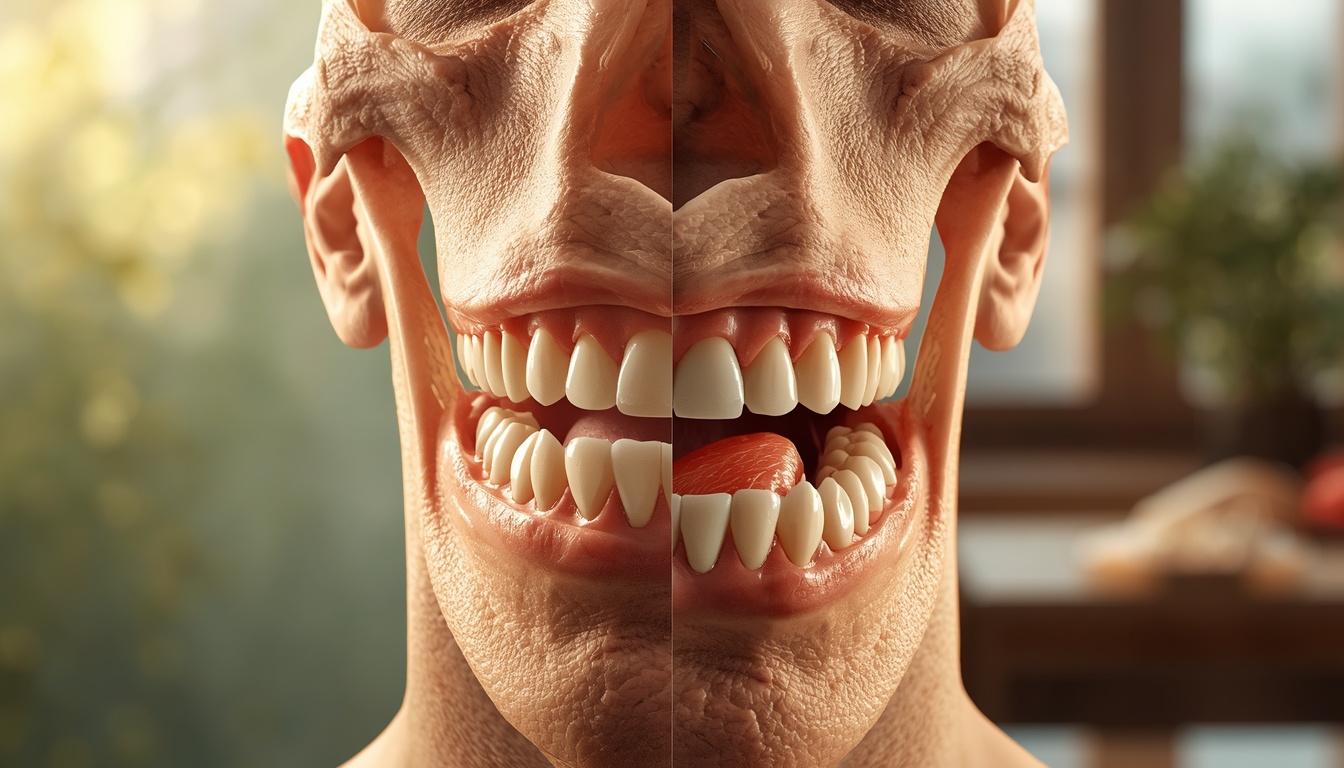
For most of human history, every meal was a workout for the jaws. Tough roots, fibrous plants, sinewy meat, and unprocessed foods demanded prolonged, forceful chewing. That mechanical work did more than break down food. It sent repeated signals to the growing bones of the face, encouraging wider dental arches, stronger jaw muscles, and enough space for a full set of teeth—including the wisdom teeth.
Today most children grow up on soft, processed, or easily chewed foods. The jaws receive far less of the loading they evolved to expect during the critical years of facial growth. The result is a widespread pattern of narrower arches, crowded teeth, impacted wisdom teeth, and, in many cases, reduced airway space that contributes to breathing and sleep problems.
Orthodontic issues and some forms of sleep-disordered breathing are often treated as purely genetic or inevitable. A growing body of evidence suggests they are also the predictable outcome of a diet our mouths never evolved to process.
What the Modern Pattern Often Looks Like
Many people experience the consequences without connecting them to diet. Crowded or crooked teeth appear in childhood. Wisdom teeth become impacted and require extraction. Orthodontic treatment becomes common. Some children and adults develop mouth breathing, snoring, or restless sleep linked to a smaller upper airway.
These features cluster together more often than chance would predict. Narrow dental arches leave less room for the tongue and can reduce the volume of the nasal and oral airway. When the jaws do not grow fully forward and wide, the entire craniofacial complex develops differently. The changes are visible in the face and measurable in the airway.
How Ancestral Chewing Shaped the Face
Hunter-gatherer and many traditional populations consistently show broad dental arches, well-aligned teeth, and room for all permanent teeth. Anthropological studies comparing mandibles across subsistence strategies find clear differences: groups that relied on tougher, less processed foods developed longer and differently shaped jaws than agricultural populations eating softer diets.
The mechanism is developmental, not primarily genetic. Bone responds to mechanical stress (a principle known as Wolff’s law). Forceful, prolonged chewing generates strain that stimulates growth in the maxilla and mandible during childhood and adolescence. Soft diets reduce that strain. The jaws simply receive a weaker growth signal at the time when growth is most responsive.
The speed of the change supports this view. Significant shifts in jaw size and shape appear within a few generations after populations adopt refined, soft diets—far too rapid for natural selection to be the main driver. Classic observations by early researchers and modern craniofacial studies both point to reduced masticatory demand as a key environmental factor.
Soft Food and the Modern Jaw
Industrial and ultra-processed diets require minimal chewing. Many foods are pre-softened, pureed, or so refined that they need little more than a few gentle bites. Bottle feeding and early weaning onto soft purees further reduce the muscular work of infancy and early childhood.
Without sufficient mechanical loading:
- The dental arches tend to develop more narrowly.
- There is often insufficient space for the full dentition, leading to crowding and impaction.
- The forward and lateral growth of the midface can be reduced.
- The resting posture of the tongue and jaws may shift, reinforcing a narrower growth pattern.
These changes are most consequential during the years of active facial growth. Once the sutures of the skull begin to fuse, expansion becomes more difficult and often requires clinical intervention.
The Airway Connection
A narrower upper jaw and a more posterior or downward growth pattern can reduce the space available for the nasal airway and the oral cavity. The tongue has less room to rest against the palate. Mouth breathing becomes more common, and mouth breathing itself can further influence facial growth in a feedback loop.
Sleep-disordered breathing—including snoring and obstructive patterns—occurs more frequently when airway volume is restricted. Widening the palate in children with constricted arches has been shown in clinical studies to improve certain breathing and sleep parameters, supporting the structural link between jaw form and airway function.
Not every person with a narrow jaw develops significant breathing problems, and not every breathing issue stems from jaw size. Yet the association is strong enough that airway-focused orthodontics and myofunctional approaches have become active areas of clinical attention.
Common Drivers and Hidden Triggers
Several modern patterns reduce the chewing stimulus the jaws expect:
- Diets dominated by soft, processed, or ultra-processed foods
- Prolonged bottle feeding or early transition to purees instead of textured foods
- Limited exposure to tough, fibrous, or chewy whole foods during childhood
- Habitual mouth breathing (from allergies, congestion, or posture) that alters resting oral posture
- Reduced overall time spent chewing compared with ancestral eating patterns
Less obvious contributors include the loss of cultural habits of thorough mastication and the replacement of tough traditional foods with convenient soft alternatives even in otherwise “healthy” diets.
When to Pay Closer Attention
Consider the role of jaw development and chewing if you notice:
- Crowded teeth, crossbites, or early orthodontic recommendations in children
- Impacted or missing space for wisdom teeth
- Chronic mouth breathing, open-mouth posture, or noisy breathing during sleep
- A narrow facial appearance or high-arched palate
- Snoring, restless sleep, or daytime fatigue that may relate to airway restriction
- A family pattern of heavy orthodontic need that tracks with dietary westernization
Early recognition matters most in growing children, when the jaws are still responsive to environmental influences.
Myths vs Facts
Myth: Crowded teeth and narrow jaws are almost entirely genetic.
Fact: Genetics influence baseline form, but the rapid rise in malocclusion and the consistent differences between tough-diet and soft-diet populations show that mechanical loading during growth is a major environmental factor.
Myth: Once the jaws have finished growing, nothing can be done.
Fact: While prevention is most effective during growth, adults can still improve oral posture, strengthen orofacial muscles, and in some cases benefit from expansion or surgical approaches guided by airway considerations.
Myth: Soft food is safer and better for children’s teeth.
Fact: Soft diets reduce caries risk from some sticky foods but simultaneously remove the growth stimulus jaws need. A balance of nutritious foods that still require chewing supports both dental health and facial development.
Myth: Wisdom teeth are evolutionary leftovers that no longer fit.
Fact: In populations with robust jaw development, wisdom teeth usually erupt into adequate space. Impaction rates rise sharply where jaws are narrower.
Myth: Breathing problems are unrelated to dental development.
Fact: Jaw width and forward growth directly influence airway volume. Constricted arches are repeatedly associated with higher resistance to nasal airflow and greater likelihood of sleep-disordered breathing.
Practical Ways to Support Healthier Jaw Development
The most powerful window is childhood, but supportive habits help at any age.
- Offer children foods that require real chewing as soon as they are developmentally ready—firm fruits and vegetables, properly prepared meats, and textured whole foods rather than prolonged purees.
- Encourage thorough chewing rather than rushing meals or washing food down with liquids.
- Address chronic nasal congestion or mouth breathing early; nasal breathing supports better resting oral posture and jaw growth.
- Limit ultra-processed soft foods that displace chewier options.
- For older children and adults, orofacial myofunctional exercises can improve tongue posture, lip seal, and muscle tone that support the airway and remaining growth potential.
- When orthodontic treatment is needed, discuss approaches that consider airway volume and jaw development rather than focusing solely on tooth alignment.
These steps do not replace professional care when problems already exist, but they align daily habits with the mechanical environment jaws evolved to expect.
When to See a Professional
Children with crowded teeth, mouth breathing, snoring, or narrow palates benefit from early evaluation by a pediatric dentist, orthodontist, or airway-aware clinician. Adults with persistent sleep issues, jaw pain, or significant malocclusion may need coordinated care that includes dental, medical, and sometimes sleep-specialist perspectives. Expansion techniques, myofunctional therapy, and, in selected cases, surgical options can address structural limitations that soft diets helped create.
Frequently Asked Questions
Is this only a problem for people who eat ultra-processed food?
The effect is strongest with consistently soft diets, but even relatively healthy modern diets are often far softer and less demanding than ancestral ones. Degree of chewing stimulus matters across the spectrum.
Can adults still improve their jaw posture or airway?
Bone growth is largely complete, yet muscle tone, tongue posture, and nasal breathing habits remain modifiable. Some adults also pursue orthopedic or surgical expansion when airway compromise is significant.
Do all hunter-gatherers have perfect teeth?
No population is free of all dental variation, but the prevalence of crowding, malocclusion, and impacted wisdom teeth is dramatically lower in groups with high masticatory demand compared with industrialized populations.
Should every child be given tough foods to prevent braces?
Not every child will avoid orthodontic need, and safety (choking risk, developmental readiness) always comes first. The goal is appropriate mechanical stimulus within a nutritious diet, not extreme chewing challenges.
Is breastfeeding relevant to jaw development?
Yes. The muscular work of breastfeeding differs from bottle feeding and contributes to early oral-motor development. Combined with later textured foods, it forms part of the overall growth stimulus.
Conclusion
The human mouth and face developed under conditions that demanded real, sustained chewing. That mechanical work shaped wider jaws, better-aligned teeth, and more spacious airways. Soft modern diets remove much of the signal the growing face expects, producing the narrower arches, crowding, and airway restrictions now common enough to seem normal.
Recognizing the mismatch does not mean rejecting all convenience or modern food. It means understanding that orthodontic problems and some breathing difficulties are not solely written in our genes. They are also written in the consistency of what we feed growing children and the chewing demands we no longer place on our jaws. Restoring more of that ancestral mechanical environment—especially during the years of facial growth—remains one of the most direct ways to support the faces and airways our biology still expects.