Tooth enamel still expects meals, then hours of saliva to clear acid and reharden the surface. All-day sipping keeps the mouth in a demineralizing window.

The bottle stays on the desk. A sip of coffee at 9, a flavored seltzer at 10, a sports drink through the workout, juice with lunch, another coffee in the afternoon. None of it feels like a meal. To enamel it is a meal that never ends. The hard outer shell of a tooth was built for short acid challenges followed by long stretches of saliva. Modern sipping removes the stretch.
Enamel cannot grow back the way skin or bone can. The cells that built it, ameloblasts, finish their work before the tooth erupts and then disappear. What saliva can do is slower and quieter: wash sugar away, buffer acid, and return calcium and phosphate to a softened surface. That repair only works if the mouth is allowed to rest.
What Enamel Was Built to Do
Enamel is the most mineralized tissue in the body, mostly hydroxyapatite crystals packed so tightly that the layer is brittle, translucent, and almost cell-free. It has no blood supply and no way to patch a chip from the inside. Its defense is chemistry at the surface.
Resting saliva is slightly alkaline to neutral and already loaded with calcium and phosphate. Proteins such as statherin keep those minerals from precipitating in the duct, then release them where the tooth needs them. Bicarbonate is the main buffer once flow rises. Mucins coat the surface. Together they hold a thin film that is less a bath and more a controlled mineral solution.
John Featherstone described the practical result as a caries balance. Acid and fermentable carbohydrate pull mineral out. Saliva, calcium, phosphate, and fluoride, when it is present, push mineral back. The tooth is not a finished statue. It is a surface in a daily argument, and saliva is supposed to win most hours of the day.
The Pattern Teeth Still Expect
Ancestral eating was clumped. A forage, a cook, a chew, then hours of nothing in the mouth except saliva and the occasional drink of water. Fibrous food also scraped the tooth and asked the glands for a real flow. Colin Dawes spent decades measuring that flow: unstimulated saliva is a slow trickle, often around a third of a milliliter a minute, while chewing can raise it several-fold and flood the mouth with bicarbonate.
That is the schedule enamel still expects. A challenge, then clearance. Real chewing is part of the brief, because flow, not a mint, is what resets the surface. Soft sipping never sends that brief.
What All-Day Sipping Does
Robert Stephan mapped the curve that still carries his name. After a sugar exposure, plaque pH falls within minutes as bacteria ferment carbohydrate to acid. It can stay below the enamel danger zone, often cited near pH 5.5, for half an hour or longer, then climb as saliva clears the substrate and bicarbonate neutralizes the acid. Dentin, if the root is exposed, starts to lose mineral at a higher pH than enamel, which is why receding gums change the math.
One curve is ordinary. Sipping redraws it as a staircase that never reaches the landing. Each new mouthful arrives before the last recovery finishes. Dawes showed that clearance depends on how fast saliva is flowing and how often the mouth is emptied by swallowing. A slow sip every few minutes keeps the concentration from falling. The total sugar in the bottle can matter less than how many times the curve is restarted.
Plain water is the exception that proves the design. It dilutes, it does not ferment, and it does not bring a strong acid of its own. The mismatch is the flavored, sweetened, or acidic drink treated as a companion for the whole morning.
Caries and Erosion Are Not the Same Lesson
Philip Marsh’s ecological plaque hypothesis is the clean way to separate the two injuries. Caries is a bacterial story. Frequent fermentable carbohydrate favors acid-producing species in the biofilm. The plaque becomes a tiny acid factory parked on the tooth. Smooth-surface white spots near the gum line are the usual early mark.
Erosion is a chemistry story that does not need bacteria. Dietary acid dissolves mineral directly. Adrian Lussi and Domenick Zero spent years ranking drinks by pH and, more importantly, by titratable acidity — how much buffer the drink can consume before the mouth wins. Colas, citrus juices, sports drinks, fruit-flavored waters, and vinegar tonics sit high on that list. Sparkling water is acidic from carbonic acid, but its titratable acidity is low unless citrus is added, so it is a milder challenge than orange juice or soda. “Sugar-free” does not mean “enamel-neutral” if the bottle is still sour.
Both injuries love frequency. A glass of juice with breakfast is a different exposure from the same juice nursed for two hours.
Hidden Triggers That Keep the Curve Down
Some of the quietest risks are not the obvious soda.
Sipping coffee or tea with sugar or syrup through a morning of meetings restarts the Stephan curve without ever feeling like a second breakfast. Citrus in the water bottle lowers pH for the whole commute. Sports drinks are built to be acidic and sweet so they taste good when you are already panting. Sour candies and gummy vitamins sit on enamel far longer than a bite of fruit. Wine with a long dinner is an acid exposure with low flow if alcohol is drying the mouth.
Dry mouth multiplies every one of those. Antihistamines, some antidepressants, dehydration, mouth breathing, and a very dry office all cut the bicarbonate supply that is supposed to end the curve. People who wake with a dry mouth already start the day with a thinner mineral film.
Reflux is the internal version of the same problem. Acid that reaches the teeth at night, when flow is lowest, etches from the tongue side of the upper teeth. That pattern is a reason to mention heartburn to a dentist, not only a physician.
When the Surface Is Already Losing
Early enamel loss is easy to miss. The tooth can look shiny while the outer crystals are softening. Later signs are more honest: chalky white spots that do not wipe off, yellowing as thinner enamel shows dentin beneath, cupped chewing surfaces, notches near the gum line, and edges that look translucent or chipped without a memorable injury.
Sensitivity to cold is common once dentin is closer to the outside. A brief zing from ice water can be ordinary exposed dentin, the pattern Brännström described, and it is covered separately in why cold foods hurt teeth. Pain that lingers, wakes you, or arrives with sweets and stays is a different message. So is a sharp notch that catches floss, swelling of the gum beside one tooth, or a bite that suddenly feels high.
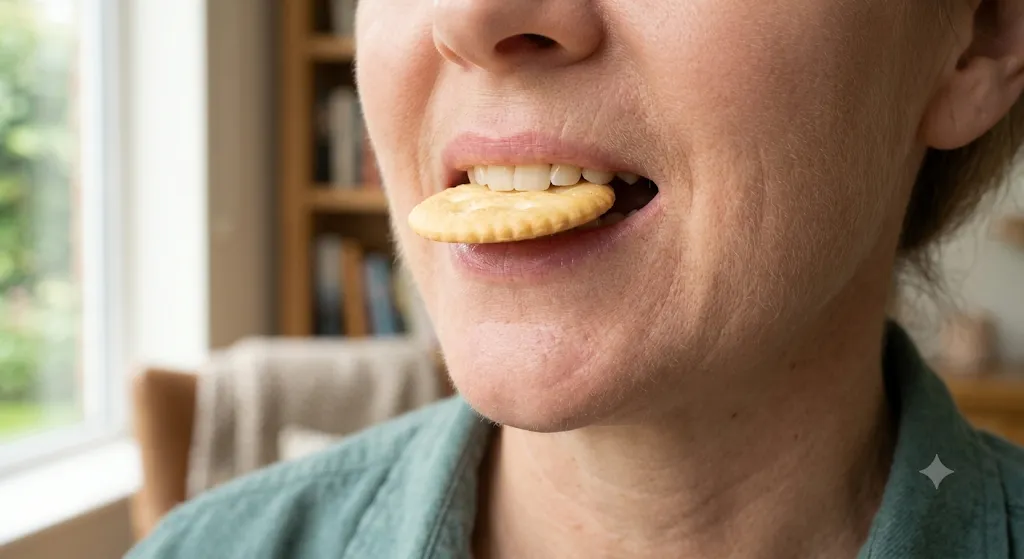
See a dentist sooner if several teeth change color or shape over months, if the tongue-side surfaces of the upper front teeth are thinning, or if dryness is severe enough that you need water to swallow a cracker. Those patterns point to erosion, reflux, or salivary failure more than to one careless afternoon.
Myths vs Facts
Myth: Enamel grows back if you take a mineral supplement. Fact: ameloblasts are gone after eruption. Saliva and fluoride can reharden a softened surface. They cannot rebuild a missing chunk.
Myth: Only sugar hurts teeth. Fact: sugar feeds caries bacteria. Acid erodes enamel with no sugar at all. Frequency matters for both.
Myth: Brushing right after a sour drink cleans the damage. Fact: acid-softened enamel abrades more easily. Thomas Attin and other erosion researchers have shown that waiting about half an hour, and rinsing with plain water first, is kinder than scrubbing the softened layer immediately.
Myth: If it is sugar-free it is safe to sip all day. Fact: sugar-free acidic drinks can still erode. Sugar-free gum is different, because chewing raises flow without a fermentable substrate.
Myth: A little sensitivity means the root is dying. Fact: brief cold zings are often exposed dentin or a thin enamel shell. Lingering or spontaneous pain deserves a look, but the everyday zing is not automatically an abscess.
Giving Enamel the Rest It Expects
You do not need a perfect ancestral diet. You need gaps.
Drink acidic and sweet drinks with meals, when flow is already high, instead of nursing them between meals. Keep plain water as the desk bottle. If you want flavor, add it at the meal, not to a bottle you will sip for three hours. Use a straw for the occasional sour drink so less acid washes the front teeth, then chase it with water. Do not swish soda or juice as if it were mouthwash.
Chew a piece of sugar-free gum for a few minutes after a meal if your jaw tolerates it. Edgar and Dawes both showed that stimulated flow speeds clearance. Cheese or a few nuts at the end of a meal add calcium and fat and cut the acid tail. Leave the sour gummy for a rare dessert, not a commute.
Wait before brushing after an acidic exposure. Use a soft brush and a fluoride toothpaste twice a day anyway. Fluoride does not invent new enamel. Ten Cate’s work on remineralization showed that it favors a harder, less soluble crystal when saliva is already doing the repair. A pea-sized amount, spit, and no aggressive rinse is enough for most adults. A dentist may suggest a higher-fluoride paste if white spots or dry mouth are already present.
If medicines dry your mouth, say so at the next dental visit. The fix is sometimes a timing change, a saliva substitute, or extra fluoride, not willpower. If heartburn is etching the tongue-side surfaces, treating the reflux matters more than another whitening paste.
A Short Daily Version
Breakfast, then water. Coffee finished in a sitting, not carried until noon. Lunch, then a rinse or a few minutes of sugar-free gum. The afternoon bottle is plain water. Sports drink only while you are actually training, then water. No sour candy in the car. Brush later in the evening with fluoride, not in the minute after the orange.
That schedule is close to what the surface evolved for: challenges with edges, and saliva in the long middle.
FAQs
Is sparkling water enough to damage enamel?
Plain carbonated water is a mild acid with low titratable acidity, so it is far less aggressive than cola, juice, or citrus-flavored seltzer. Sipped all day it is still not the same as still water. Keep flavored sour versions with meals.
Does drinking through a straw protect teeth?
A straw can reduce how much acid hits the front surfaces. It does not cancel a sweet drink in the rest of the mouth, and it does nothing if you still sip for hours. Useful, not magical.
Can saliva actually reharden a white spot?
Early white spots are porous mineral, not a cavity hole. Saliva, reduced sugar frequency, and fluoride can reharden many of them. Once the surface has caved in, a filling or other repair is what replaces the missing bulk.
Is chewing gum worth it if I already drink water?
After a meal, sugar-free gum raises flow more than a single sip of water, which speeds clearance of the Stephan curve. Water remains the right between-meal drink. Gum is the short boost, not the all-day plan. Stop if your jaw aches.
Why are my teeth more sensitive if I graze instead of eating meals?
Grazing and sipping keep plaque pH from recovering. The outer enamel stays softened for more of the day, so cold and sweet reach the dentin more easily. Clumping food and drinks into meals gives the surface its expected pause.
When should I stop watching and book a visit?
Book soon for brown or black spots, a hole that catches food, pain that lingers after cold or sweet, nighttime pain, swelling, or front teeth that look thinner and more yellow over a few months. Mention reflux and dry-mouth medicines when you go.
The Quiet Repair
Enamel’s weakness is also its instruction. It cannot heal a hole, so it depends on a rhythm older than bottles: eat, buffer, wait. Sipping feels harmless because nothing hurts in the moment. The cost shows up later, as a softer surface and a curve that never got to finish. Saliva is still the repair crew. It only needs the shift to end.