
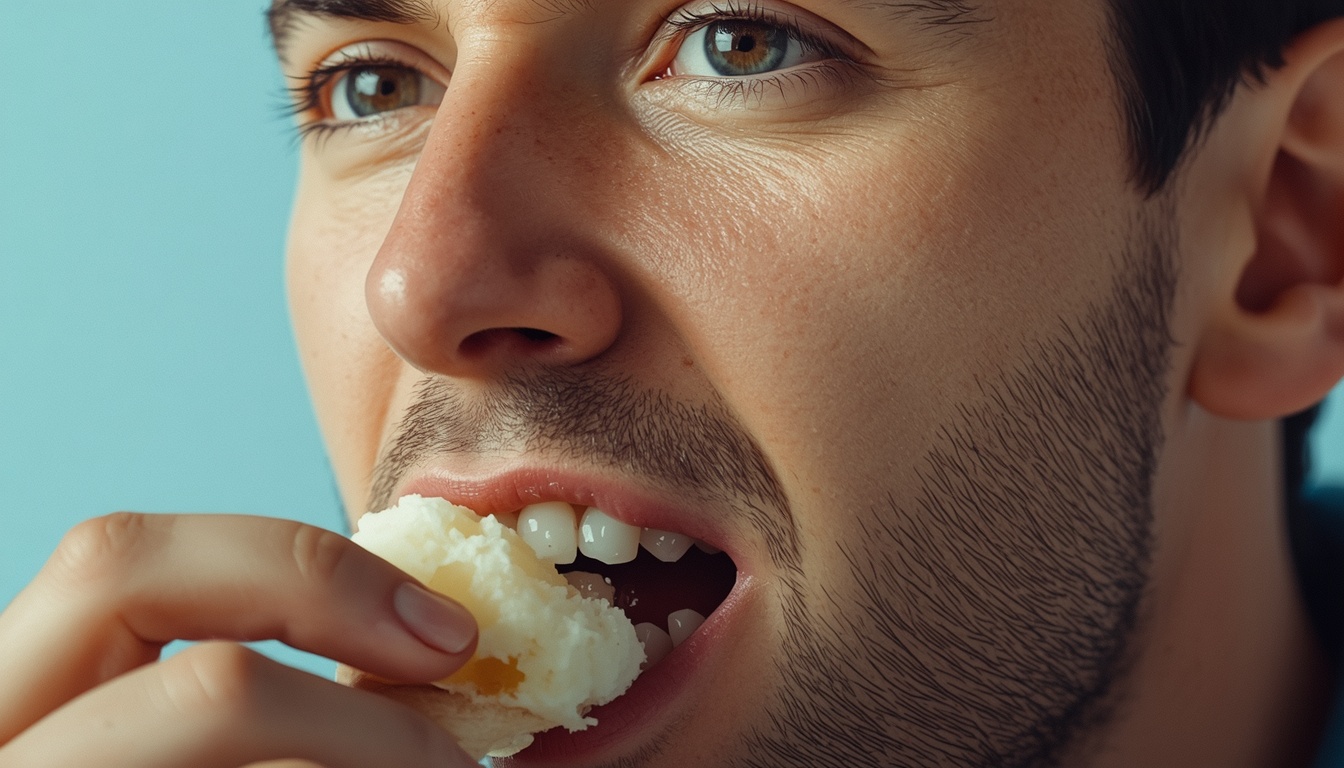
The spoon hits ice cream, a sip of iced water lands, or winter air crosses an open mouth, and one tooth — or a band of them — answers with a short, bright electric stab. It is gone in a second or two. You tap the same tooth with a finger and feel nothing. You chew warm food and feel nothing. Then cold returns and the jolt is back.
That pattern has a name: dentin hypersensitivity. It is one of the most common reasons people think a tooth is “dying” when the tooth is usually intact, vital, and simply uncovered in a small place. The pain is real. The mechanism is not a frozen nerve. It is a tiny column of fluid inside dentin that twitches when temperature or air changes, and a cluster of nerve endings at the inner end of that column that treat the twitch as an alarm.
What This Symptom Feels Like
Cold-triggered tooth pain is short and specific.
- A sharp, well-localized stab that starts the instant cold, air, or sweetness hits a particular tooth or cervical (gum-line) area
- Duration of one to a few seconds after the stimulus stops — not a lingering throb
- Triggers that are thermal (ice cream, iced drinks, cold air), evaporative (a dentist’s air syringe, winter wind), tactile (a fingernail or toothbrush on an exposed root), or osmotic (sugar, sometimes acid)
- Little or no pain with gentle pressure on the chewing surface, and no spontaneous night pain
- Often worse on the side you brush hardest, after a cleaning, or in a gap where gum has receded
Pulpitis — inflammation inside the tooth — feels different. It lingers after the cold is gone, can start on its own, may wake you at night, and can become a dull throb rather than a flash. Cracked-tooth pain often appears on release of a bite. Those patterns deserve a dentist. A one-second ice-cream zap that you can map with a cold drink is usually the hydrodynamic story below.
Common Causes
Enamel is the body’s hardest tissue. It has no tubules and almost no sensation. Dentin, the layer underneath, is full of microscopic tubes — dentinal tubules — that run from the enamel-dentin junction or the root surface inward to the pulp. Each tubule contains a thin process of an odontoblast and a column of fluid. Near the pulp, A-delta nerve fibers sit close enough to feel movement of that fluid.
Anything that removes enamel or cementum, or that opens the mouths of those tubules, can create a cold-sensitive patch:
- Gum recession that exposes root cementum, which wears off easily
- Acid erosion from frequent citrus, soda, wine, sports drinks, or reflux, thinning enamel at the necks of teeth
- Abrasive brushing, especially a hard brush and a horizontal scrub at the gum line
- Recent scaling, bleaching, or restorative work that temporarily opens tubules
- A chip, wear facet, or leaking filling edge that lets stimulus reach dentin
Martin Addy and colleagues at Bristol spent decades showing that recession plus acid plus abrasion is a typical modern combination. The Canadian Advisory Board on Dentin Hypersensitivity, in a widely used 2003 consensus, defined the condition as short, sharp pain from exposed dentin in response to stimuli that cannot be attributed to another dental defect. That definition still holds: the diagnosis is partly a diagnosis of exclusion, and partly a map of open tubules.
Why This Happens
In the 1960s the Swedish researcher Martin Brännström proposed the hydrodynamic theory that still organizes this field. Cold, air, or a hypertonic sugar solution makes tubular fluid move outward. Heat can drive a slower inward flow. The odontoblast process and nearby A-delta fibers register that shear as pain. The nerve is not “frozen.” It is mechanically tickled by liquid moving in a confined tube.
David H. Pashley later measured how open those tubes really are. Conductance through dentin rises when the smear layer — the thin plug of debris left by cutting or brushing — is removed by acid. E. S. Absi, working with Addy and D. Adams, used scanning electron microscopy to show that sensitive cervical dentin has more patent tubules, and wider ones, than non-sensitive dentin in the same mouth. Robin Orchardson and Nicola West reviewed the same anatomy in clinical language: more open tubes, more fluid movement, more A-delta firing.
Why cold more than heat? Cold produces a rapid outward flux. A-delta fibers, which carry sharp, well-localized pain, are especially good at reporting that. Heat-driven inward flow is slower and more often involves C fibers, which feel duller. That is why ice cream is a better unmasker than soup.
The same mouth can be quiet for years and then become theatrical after one change: a new acidic habit, a winter of mouth breathing, a bleaching tray, or a cleaning that stripped a smear layer the tubules had been hiding behind. Saliva normally supplies calcium and phosphate that can reseal some openings. When flow is low — dry mouth, many medications, mouth breathing at night — that repair is slower. The glands still expect chewing and a real bolus, a theme we laid out in why saliva still expects you to chew; sipping only iced drinks does not give them the same briefing.
Less Common but Serious
Not every cold jolt is hypersensitivity.
Reversible pulpitis can mimic it early on, then start lingering. Irreversible pulpitis and an abscess add spontaneous pain, swelling, or a tooth that feels high. A vertical crack can give a flash on cold and a worse flash on bite-release. Recent trauma, a large filling close to the pulp, or pain that localizes poorly and wakes you at night is not a “sensitive neck” problem.
Sinus pressure can make upper back teeth ache in cold weather without a dental cause. Referred pain from a jaw muscle — common in people who clench — can feel like a tooth. Night grinding loads enamel and can both chip edges and inflame the periodontal ligament; the grinding pattern itself is covered in whether night grinding is normal. Jaw clicking without pain is often a disc issue rather than a cold-tubule issue, as in jaw clicking when you chew.
A single dark, silent tooth that suddenly becomes exquisitely cold-sensitive after a knock deserves prompt assessment. So does swelling, fever, or pain that no longer needs a cold trigger.
Hidden Triggers
Several ordinary habits keep tubules open.
- Brushing right after fruit, juice, wine, or soda. Softened enamel and exposed dentin abrade faster for a short window after acid.
- A hard brush and whitening pastes with high abrasivity used at the gum line.
- At-home bleaching trays on already receded roots.
- Swishing acidic drinks instead of swallowing, or holding iced drinks against one tooth.
- Mouth breathing in dry bedrooms, which desiccates the gum line and reduces salivary film.
- Reflux or frequent vomiting, which bathes lower palatal and upper palatal enamel in acid.
- A new gap from gum recession after orthodontics or periodontal treatment, suddenly putting root dentin in the air stream.
Winter air is an evaporative stimulus — the same physics as the dentist’s air syringe. People who run with an open mouth often discover a “new” sensitive tooth that was only waiting for dry cold flow.
When to Worry
Seek dental care rather than only changing toothpaste if:
- Pain lingers more than a few seconds after the cold is gone
- The tooth hurts on its own, at night, or when you lie down
- There is swelling, a bad taste, a bump on the gum, or a tooth that feels raised
- Pain explodes when you bite and then release
- One tooth has darkened after a hit
- Sensitivity is new, severe, and spreading across many teeth after bleaching or illness
- You cannot eat or drink comfortably for days
Widespread mild zaps that you can point to at the gum line, with a healthy response to a dental exam, are the common, manageable pattern.
Myths vs Facts
Myth: If a tooth hurts with ice cream, the nerve is dying and the tooth needs a root canal.
Fact: Most short, stimulus-locked flashes are open tubules in living dentin. Pulp tests and an exam separate that from pulpitis.
Myth: Sensitivity means you have a cavity.
Fact: Cavities can cause sensitivity, but recession and erosion do it without a hole you can see.
Myth: Whitening toothpaste will fix it because “white is healthy.”
Fact: Many whitening pastes are more abrasive. Desensitizing pastes work by different chemistry — potassium nitrate on nerves, or stannous fluoride, arginine-calcium, or bioactive glasses that help occlude tubules.
Myth: You should brush harder to “toughen” the area.
Fact: Hard horizontal scrubbing is a classic way to open more root dentin.
Myth: The pain is in your head if the X-ray looks fine.
Fact: Open tubules do not show on a standard radiograph. The diagnosis is clinical.
How to Manage It
You cannot close enamel that is already gone, but you can reduce flow in the tubes and stop making more of them.
Use a soft brush and a pea-sized amount of a desensitizing paste twice a day. Potassium nitrate does not plug tubules well; it appears to reduce nerve excitability inside the pulp end of the tube. Stannous fluoride, arginine with calcium carbonate, strontium salts, and some calcium-phosphate glasses leave deposits that narrow the openings. Brännström’s physics predicts both strategies: less fluid movement, or a less twitchy nerve.
Do not rinse the paste off immediately. Spit, leave a film. Some people get extra benefit from smearing a small amount on the sensitive neck at night.
Wait 20–30 minutes after acidic food or drink before brushing. Rinse with water or milk first if you need to clean the mouth. Cut the frequency of long acidic sips. Through-the-day citrus water is a reliable way to keep the smear layer off.
A night guard is worth discussing if you clench. Occlusal load does not create tubules, but it chips enamel and can inflame the ligament so that cold feels louder.
Professional options include varnishes, glutaraldehyde-containing sealers, bonded adhesives over the neck, and, for a recessional defect, a gum graft that covers the root. Those are targeted tools, not a first step for every ice-cream wince.
When to See a Doctor
See a dentist when the pain pattern changes from a one-second zap to a lingering ache, when one tooth becomes the obvious source, or when home desensitizers do nothing after two to four weeks of faithful use. See someone sooner for swelling, trauma, a cracked-tooth bite pattern, or pain that wakes you.
A physician belongs in the story if reflux, an eating disorder, chronic dry mouth from medication, or sinus disease is driving the acid or the dryness. The tooth is often the messenger.
FAQs
Why does only one tooth react?
Because only one patch of dentin is open enough. Neighbors can be covered by enamel, a smear layer, or intact cementum. Mapping with a cold stimulus at a dental visit is more useful than assuming the whole arch is failing.
Why is it worse after a cleaning?
Scaling removes plaque and often a smear layer that had been plugging tubules. The surge is usually temporary as saliva and paste rebuild a seal.
Can sensitive teeth get better without a filling?
Yes. Many cervical patches quiet with occlusion of tubules and gentler habits. A filling is for a hole, a defect that traps plaque, or a case that will not seal.
Does chewing gum help?
Sugar-free gum can raise saliva, which supplies minerals and buffers acid. It will not close a wide open tube by itself, but it supports the environment those tubes live in.
Is cold air on a winter run the same as ice cream?
Yes in mechanism — evaporative and thermal outward flow — and often worse because the stimulus lasts for minutes with the mouth open.
Should I avoid all cold drinks?
You do not have to live on lukewarm water. Use a straw away from the sensitive neck, let ice melt less against one tooth, and treat the exposed dentin rather than only avoiding the trigger.
Conclusion
A flash of pain from ice cream or cold air is usually not a verdict on the life of the tooth. It is dentin doing what Brännström said it would do when its tubules are open: move fluid, tug on A-delta endings, and send a short, accurate alarm. Modern diets, brushing style, bleaching, dry indoor air, and receding gums give those tubules more opportunities than they had when enamel and a salivary film covered them all day.
Treat the physics. Soften the brush, close the tubes with the right paste or a professional seal, give saliva a chance, and let a dentist sort the rare case that is pulp, crack, or decay. The goal is not a life without cold food. It is a mouth that can meet winter and dessert without mistaking a fluid twitch for an emergency.