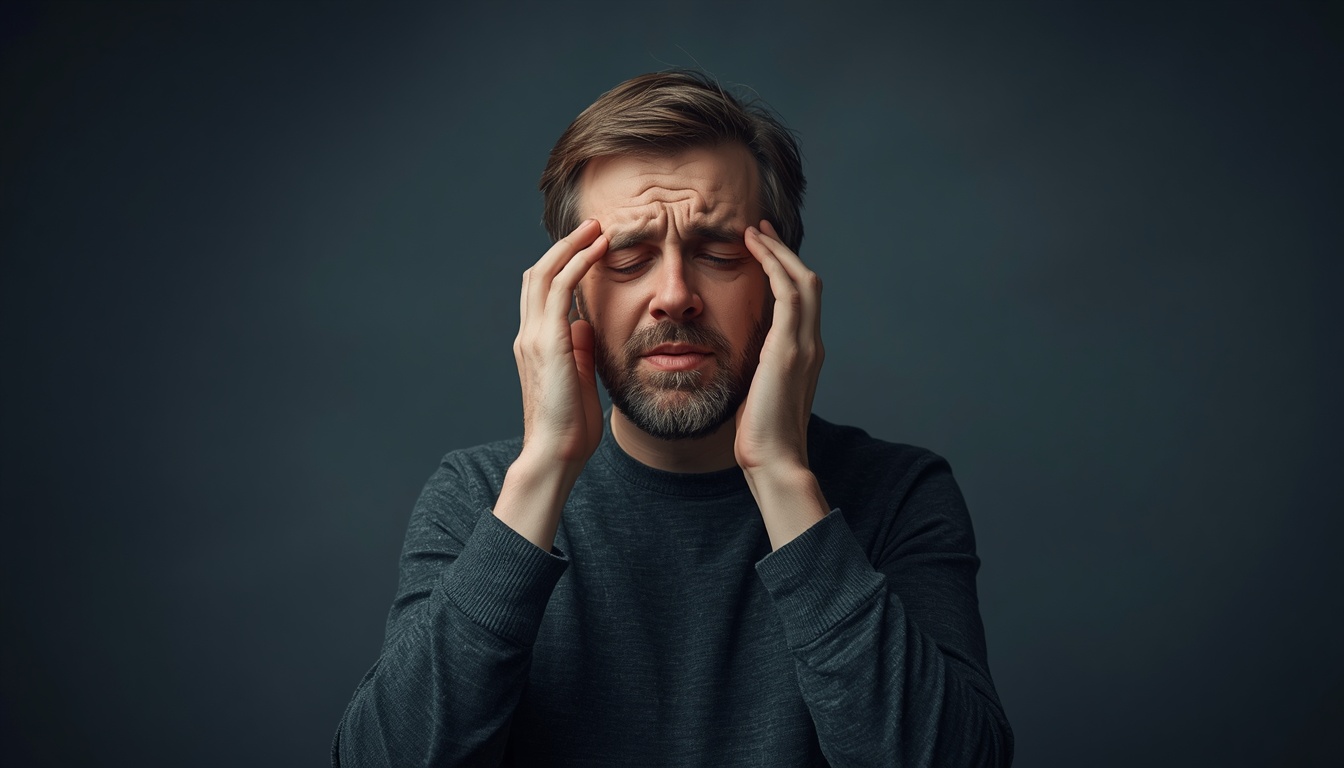
A tight ponytail, bun, or headband can pull on scalp nerves and trigger a real external-traction headache. The ache is usually mild, sits where the hair is gathered, and fades after you let the hair down — not a sign that something is wrong with your brain.
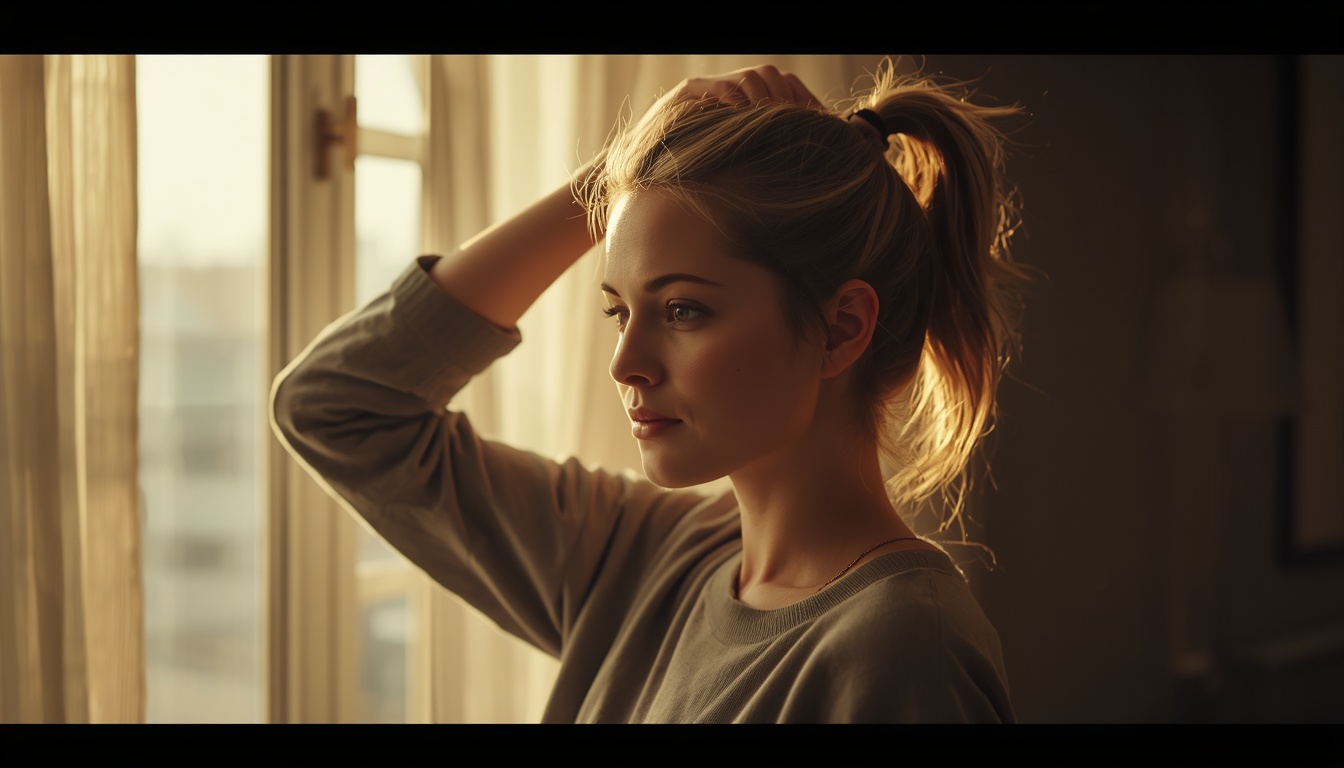
You pull your hair back for work, a workout, or a windy walk. An hour later a dull band sits at the elastic. It can crawl toward the temples or the top of the skull. Taking the tie out does more than a painkiller. The ache fades, and you wonder whether the hairstyle is “just annoying” or a real headache.
Yes — it is normal. The International Headache Society gives the pattern its own name: external-traction headache, previously called ponytail headache. A cousin, external-compression headache, covers tight hats, helmets, goggles, and headbands. Both sit under external-pressure headache. The stimulus is mechanical. The tissue is not damaged. The nerves of the scalp simply notice the pull.
What the Ache Feels Like
People describe a tight cluster of sensations:
- A pressing or pulling pain under the elastic, clip, bun, or braid
- Spread forward to the crown, temples, or forehead after the style has been in for a while
- Tenderness when you press the scalp or run a comb through the gathered hair
- Onset during wear, often within an hour of a high, tight gather
- Relief within minutes to an hour after the traction stops
- More notice on days when you already have a tension-type or migraine background
It is not a sudden thunderclap. It is not usually throbbing like a classic migraine unless you already live with migraine and the pull becomes one more trigger. Neurologist J. N. Blau documented the pattern in 2004 among women who wore ponytails: many felt pain at the tie that then marched toward the vertex. Letting the hair down ended the episode.
How Scalp Nerves Turn Pull Into Pain
Hair itself has no pain fibers. The follicle and the surrounding scalp do. Branches of the trigeminal nerve and the upper cervical nerves supply the skin and connective tissue of the scalp. Sustained traction stretches those endings. At first the signal is “tight.” If the pull holds, the same endings can fire as pain — a form of mechanical allodynia, in which a normally harmless stimulus starts to hurt.
Wade Cooper, director of the University of Michigan Headache and Neuropathic Pain Clinic, describes the build-up plainly: scalp nerves tolerate a brief tug. As duration increases, the same traction is read as pain and the signal is sent into the brainstem. Kiran Rajneesh at The Ohio State University Wexner Medical Center frames ponytail pain as allodynia of those superficial nerves. Deena Kuruvilla, then at Yale School of Medicine, has made the same point: we do not expect a hairstyle to hurt, yet sensitive scalp endings can turn pull into a headache.
Ole Hensel and Torsten Kraya, in a 2025 narrative review in Brain and Behavior, summarized the International Classification of Headache Disorders picture. External-traction headache is maximal at the site of pull and usually gone within an hour of release. External-compression headache is the pressing version from a band or helmet. Intensity is typically mild to moderate. Women are reported more often, in part because long hair and certain professional or cultural head coverings create more opportunities for sustained traction — not because the nerves are uniquely female.
Why Tight, High, and Long Styles Hurt More
The physics is simple. A high, sleek ponytail or ballet bun concentrates force on a small patch of scalp. A thick elastic or metal clip adds a focal pinch. Fine hair can slip, so people pull harder. Thick or heavy hair adds more weight at the same anchor point. Wet hair is heavier still.
Time matters as much as tightness. ICHD-3 criteria for external-traction headache require sustained pull. A five-minute tidy-up rarely bothers anyone. An afternoon of “just one more tug” does. Helmets, swimming goggles, virtual-reality headsets, and tight hijabs or scarves use compression instead of traction, but they land on the same pericranial tissues.
Migraine and tension-type backgrounds lower the threshold. A 2020 study of people who wore a ponytail for an hour found that those with a migraine history were more likely to meet migraine criteria during the pull. That does not mean the ponytail created a new disease. It means a scalp that is already wound up notices traction sooner — the same kind of extra sensitivity that can turn a long screen day into a screen-day headache, or stack onto a forehead ache after crying.
Jaw clenching can join the chorus. A high bun lifts the scalp and often invites a slight lift of the brows and a set jaw. Night grinding already loads the same neighborhood of nerves, which is why a tight morning style can feel worse after a night of sleep bruxism.
Hats, Helmets, Headbands, and Goggles
The same chapter of the headache classification covers the pressing cousins:
- A tight baseball cap or visor band
- A bicycle or construction helmet worn all shift
- Swim goggles that leave a ring around the orbits
- A rigid headband or VR strap
- A tightly wrapped scarf or hijab
Hensel and Kraya note that helmet and hijab headaches show up in workplace and cultural studies for the same mechanical reason. The pain is maximal under the contact line. Loosening the strap or taking a short break is the treatment. If the gear cannot come off, padding the contact points and changing the strap height often drops the intensity enough to finish the task.
What It Is Not
A ponytail headache that starts at the elastic and fades after you let the hair down is not:
- Proof of a brain tumor or “pressure building inside the skull”
- A sinus infection, even if it sits near the forehead
- Damage to the hair follicle from one ordinary day of wear
- Automatically a migraine, unless you already have migraine and the episode matches your usual attacks
- A reason to stop wearing your hair up forever
Traction alopecia is a different problem. That is gradual hair-line thinning from years of very tight, daily styles, especially when combined with chemical processing. A one-off headache does not equal hair loss. Repeated extreme tension can contribute to both. They are still separate stories.
Hidden Triggers That Make the Same Style Worse
The elastic may be the obvious culprit. Other factors lower the bar:
- A high, sleek gather after a poor night of sleep
- Caffeine withdrawal stacked onto scalp traction
- A windy outdoor day that makes you yank the tie tighter
- A hat over an already-tight bun
- Dehydration and a long afternoon without a stretch
- A weather-sensitive day, when barometric change already has the head a little tender — the pattern described in weather-change headaches
- Freshly washed, still-damp hair that weighs more at the anchor
None of these mean the style is forbidden. They explain why Tuesday’s bun was fine and Thursday’s was not.
Myths vs Facts
Myth: If a ponytail hurts, you have an unusually thin or “weak” scalp.
Fact: Scalp nerves are supposed to notice sustained pull. Sensitivity varies. The mechanism is ordinary.
Myth: The pain means the hair is being ripped out.
Fact: Ordinary ponytail traction stretches skin and follicle endings. It does not equal acute hair loss. Chronic extreme tension is a separate risk.
Myth: Only women get this.
Fact: Blau’s early case series was in women because that group wore ponytails. Men get the same headache from man-buns, tight caps, and helmets.
Myth: If it spreads to the temples it must be a migraine.
Fact: ICHD-3 notes that traction pain often extends beyond the anchor site. Spread alone does not diagnose migraine.
Myth: You should take a triptan for a ponytail headache.
Fact: The first treatment is to release the traction. Medicine is for residual pain or a separate migraine that the pull happened to trigger.
How to Wear Hair Up With Less Ache
Small mechanical changes do most of the work:
- Drop the gather an inch or two from the crown. High and sleek concentrates force.
- Use a fabric-covered elastic or a spiral coil instead of a thin, tight band.
- Leave a little slack. “Firm enough to stay” is enough.
- Switch the part or the height through the week so the same patch of scalp is not the daily anchor.
- For workouts, a braid or a low wrap spreads load better than a tiny high knot.
- Take the style down during lunch or a commute when you can.
- If you wear a helmet over a bun, flatten the bun or use a low wrap so the shell does not press on a lump of hair.
- Pad goggle or headset straps where they cross the forehead.
If you already live with migraine, treat the ponytail as you would bright light or skipped meals: optional on tender days, fine on quiet ones.
When to Worry
See a clinician promptly if:
- The headache does not ease within an hour of taking the hair down
- Pain is sudden, explosive, or the worst of your life
- You have fever, a stiff neck, confusion, weakness, or a change in vision or speech
- A new, daily headache arrived with a new tight style and does not track with wearing it
- You notice progressive hair-line thinning from years of very tight styling
- Helmet or goggle pain continues even after you loosen every strap and still need the gear for work
Those patterns are uncommon. They are how you separate a mechanical scalp ache from something that needs a different look.
When to See a Doctor
A familiar, location-locked ache that vanishes after you undo the elastic does not need imaging. Bring it up at a routine visit if it limits work, sport, or a required head covering, or if you are unsure whether some episodes are migraine instead. A headache clinician can sort external-traction pain from tension-type and migraine overlap and help you keep the styles you actually need.
Frequently Asked Questions
Is a ponytail headache dangerous?
Not when it matches the pattern: starts at the pull, stays mild to moderate, and fades after you let the hair down. Danger signs are sudden severe pain, neurological changes, or pain that ignores release of the traction.
Why does it start an hour later instead of immediately?
Scalp endings adapt for a while. Sustained stretch recruits more fibers and can recruit central sensitization if you already have a headache tendency. Time is part of the diagnosis.
Can children get this from tight braids or buns?
Yes. The same nerves exist at every age. Looser styles and rotating the part are the same fixes.
Will cutting my hair short stop it?
Shorter hair removes the lever arm. Many people still get compression headaches from hats and headsets. Length is only one variable.
Is it the same as a tension-type headache?
They can overlap. Tension-type pain is a bilateral pressing ache from muscle and central sensitization. Traction pain is anchored to a mechanical site. You can have both on the same afternoon.
Do I need to stop wearing a hijab, helmet, or bun for work?
Usually no. Change height, padding, and tightness first. If a required covering still triggers daily pain, a clinician who knows external-pressure headache can help you adjust the gear rather than abandon the role.
Conclusion
A ponytail, bun, braid, or tight band can give you a real headache because scalp nerves are built to notice stretch and pressure. The International Headache Society classified that pattern so it would not be dismissed as vanity or “just stress.” Loosen the gather, lower the knot, pad the strap, and give the scalp a break. When the ache follows the elastic and leaves with it, your nervous system is doing its job — not sending a warning about your brain.