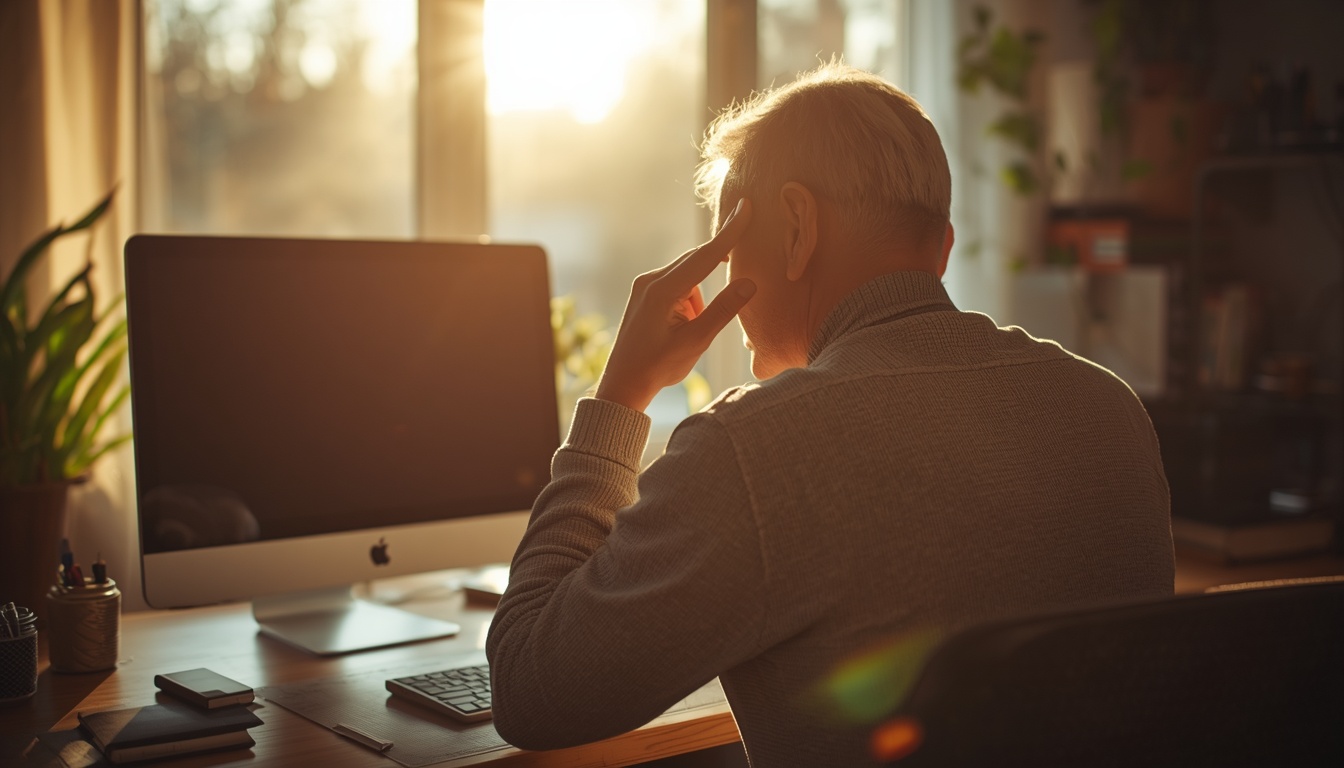
The work is done. The tabs are still open. A dull band sits behind the eyes or wraps the temples. Sometimes it is a one-sided throb. Sometimes it is just a heavy, foggy pressure that makes the next hour feel longer than it is.
Screen-day headaches are not a personal failing and not always “just stress.” They are what happens when a visual system built for a moving, distant world spends hours locked on a glowing rectangle at arm’s length — often with a bent neck, dry air, and too little water.
What This Headache Feels Like
People usually notice it in the afternoon. The pain sits around the eyes, forehead, or the base of the skull. Brightness feels sharper. Focusing on small text takes more effort. Standing up can make the room feel briefly swimmy.
It is different from a sudden “worst headache of your life,” a headache with a stiff neck and fever, or a new pattern after a head injury. Those need urgent care. A repeating end-of-screen-day ache that eases with rest, outdoor light, and a neck reset is a common modern pattern.
Why Screens Are a Perfect Storm
Several ordinary systems get taxed at once.
The focusing muscles of the eyes stay in a near-work clutch. Distance vision gets almost no turns. Blink rate often drops when you stare, so the tear film thins and the surface of the eye dries. Dry, strained eyes refer discomfort into the temples and brow.
The neck spends the day looking slightly down or craned forward. Joints and muscles at the base of the skull can refer pain into the head — a classic cervicogenic pattern. Your neck still expects a horizon more than a laptop hinge.
Light from screens is close, high-contrast, and often blue-enriched in the evening. The brain’s visual cortex works hard. Flicker that you do not consciously notice can still cost energy. Meanwhile the room may be dimmer than the screen, so the pupils keep negotiating two brightness worlds.
Breathing and posture get shallow. A collapsed chest and a jaw that clenches over email raise muscle tension around the temples.
Hydration and meals slip. Coffee replaces water. Lunch is late or skipped. Blood volume and blood sugar both influence how fragile the head feels by 3 p.m.
None of this requires a dramatic diagnosis. It is stacked small loads.
Common Causes You Can Work With
- Long unbroken near focus without a far-gaze break
- Screen brighter than the room, or the reverse
- A monitor too low, so the neck flexes for hours
- Contact lenses plus air-conditioning, a dry-eye pair
- Skipped water and a large afternoon caffeine jump
- Jaw clenching during concentration
- Already being a person who gets migraine — screens then act as a reliable trigger rather than the only cause
Migraine biology is real. Screens do not invent it. They can still be the match that lights a brain that was already primed by sleep loss, a skipped meal, or a change in hormones.
Hidden Triggers
Some screen headaches hide in the setup rather than the hours:
- An uncorrected small prescription, or glasses that are only right for driving
- A second screen off to one side, so the neck never faces forward
- Fragrance-heavy indoor air or very dry heating that worsens ocular surface dryness
- Headphones that press the temples for long calls
- Weekend catch-up binges after a relatively screen-light week
- Alcohol the night before, which already dehydrates and fragments sleep
Kids and teens get the same pattern, often later in the evening, when homework screens meet dim rooms and delayed sleep.
When a Screen Headache Is Not Ordinary
Get urgent help if a headache is sudden and severe, follows a blow to the head, or comes with:
- Fever, a stiff neck, confusion, or a rash
- Weakness, trouble speaking, a drooping face, or vision loss in one eye
- A new headache in pregnancy that feels unlike your usual ones
- Vomiting that will not stop, or a headache that wakes you from sleep and keeps worsening
Book a regular appointment if headaches are increasing, if painkillers are needed most days, or if you need stronger and stronger doses to get through work. Daily tablets can themselves cause rebound headache.
Myths vs Facts
Myth: Blue-light glasses fix screen headaches for everyone.
Fact: Evening blue light can affect sleep timing. Daytime headaches more often come from focus strain, blink rate, neck angle, glare, and dehydration. Glasses help some people; they are not a complete setup change.
Myth: If your eyes test as “fine,” the headache cannot be visual.
Fact: Distance acuity can be normal while near endurance and dry-eye comfort are not. An eye exam that includes how you work is more useful than a driving-chart-only check.
Myth: You should push through and the tissues will adapt.
Fact: Brief, frequent breaks work better than heroic endurance. The focusing system likes variety, the same way joints like motion rather than a locked posture.
Myth: Only people with migraine get screen headaches.
Fact: Tension-type and cervicogenic patterns are common in desk work. Migraine can coexist. The first-aid still starts with light, neck, blinks, and meals.
How to Make a Screen Day Easier on Your Head
- Look far every 20 minutes. A window, a corridor, a tree. Let the focusing system change distance. Twenty seconds is enough to count.
- Match screen and room light. Avoid a bright panel in a cave. Soft room light plus a screen that is not blasting white is easier than either extreme.
- Raise the top of the monitor toward eye height so the neck can stay closer to a horizon. Laptops want a stand and a separate keyboard when the day is long.
- Blink on purpose during long reading. A drop of preservative-free lubricant can help if the air is dry — ask a pharmacist or clinician if you use drops often.
- Stand and walk a few minutes between blocks. Blood sugar, neck circulation, and the afternoon slump all respond to the same short walk that helps after meals.
- Drink water with the first coffee, not instead of it. Eat something with protein earlier than your first headache usually arrives.
- Unclench. Drop the tongue from the roof of the mouth, let the teeth separate, soften the shoulders on an exhale.
- Protect the evening. A dimmer, smaller-screen wind-down helps both sleep and the next day’s threshold.
If you already live with migraine, keep your usual plan from your clinician. These steps reduce trigger load. They do not replace prescribed treatment when you need it.
When to See a Doctor
See an optometrist or ophthalmologist if headaches cluster around visual work, if one eye waters or blurs, or if you have not had a working-distance exam in years. See a GP if headaches are frequent, if you take pain relief more than a couple of days a week, or if neck pain and head pain travel together.
A headache diary for two weeks — start time, screens, meals, sleep, and what helped — is more useful than a vague “I get them a lot.”
FAQs
Is this the same as eye strain?
Eye strain is often part of it. Neck, light contrast, and hydration usually share the bill.
Do children get this too?
Yes. Homework on tablets in dim rooms is a classic setup. Outdoor daylight, bigger text, and earlier screens-off help more than scolding.
Will a darker theme fix it?
Some people prefer it. Others find high contrast on dark mode just as tiring. Comfort beats fashion. Glare and font size often matter more than theme color.
Can dehydration alone do this?
Yes, especially with coffee, dry air, and a late lunch. Water is not a cure-all, but it is a cheap first test.
How fast should this improve?
Many people feel a lighter afternoon within a few days of breaks, monitor height, and actual meals. If nothing changes in two weeks, get the eyes and the headache pattern checked rather than stacking tablets.
Conclusion
A screen-day headache is usually a stack: near focus, fewer blinks, a neck that never sees the horizon, harsh contrast, and a body that skipped water and movement. You do not have to abandon screens. You have to interrupt them the way a human visual system expects — far gaze, upright neck, real light, a walk, a meal. Treat the afternoon ache as feedback from a setup, not as proof that your head is fragile.