
A tight, heavy head after a hard cry is common. Tears drain into the nose, facial muscles clench, breathing changes, and stress chemistry can leave a short tension-type ache — not a sign that crying is dangerous.
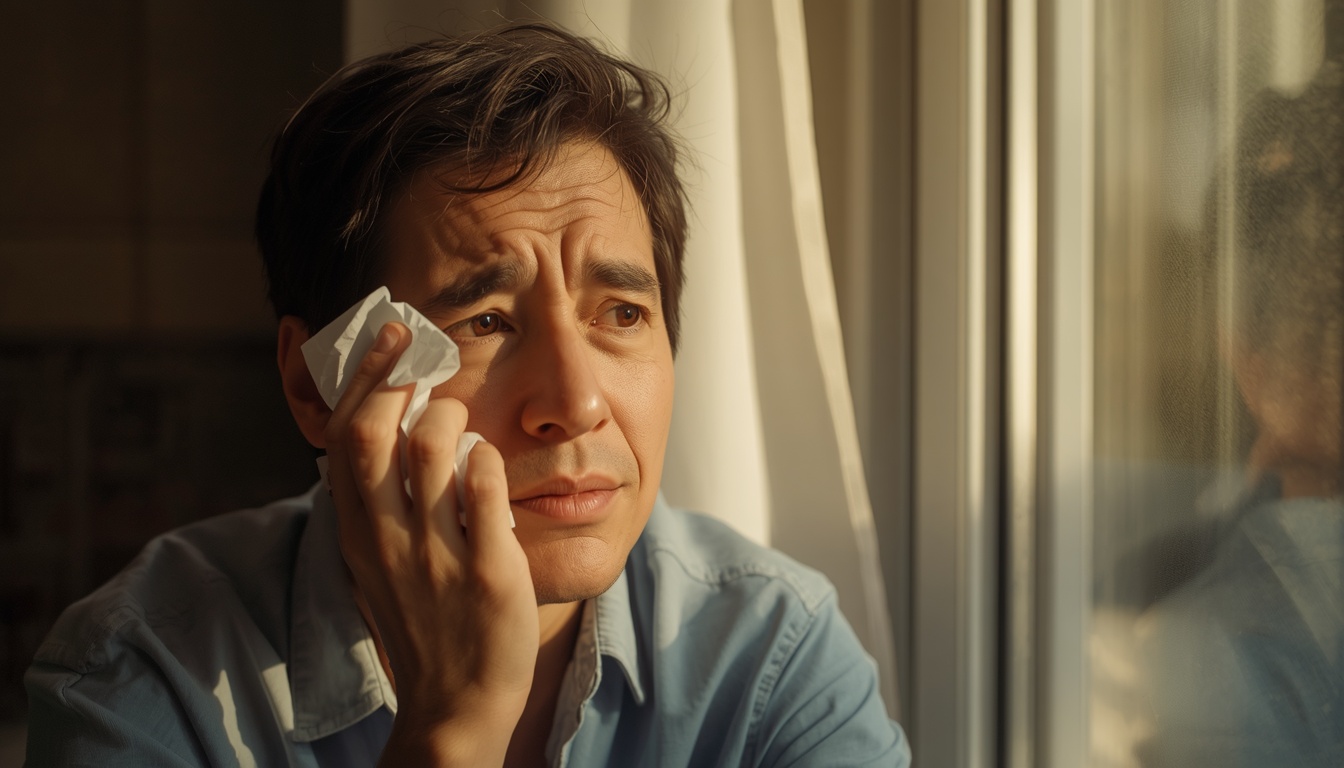
The crying slows. Your face feels puffy, your nose is running, and a dull band has settled across the forehead or behind the eyes. It is not a migraine lightning bolt. It is a heavy, tight, slightly congested ache that arrives with the last sniffle.
Yes — it is normal. A hard cry is not only water on the cheeks. It is a full-body event: extra tears flooding the nose, clenched facial and neck muscles, changed breathing, and a brief spike of stress chemistry. The leftover headache is usually a short tension-type or pressure-type ache, not proof that crying “damaged” your head.
What a Post-Cry Headache Feels Like
The pattern is familiar once you look for it:
- A tight band across the forehead, temples, or the back of the head
- Pressure behind the eyes or over the cheeks, worse when you bend forward
- Puffy lids, a stuffed or runny nose, and a raw, tired face
- Tenderness if you press the scalp, brow, or the muscles beside the jaw
- A heavy, foggy feeling rather than a sharp stab
- An ache that fades over minutes to a few hours as congestion and muscle tension ease
A few quiet tears rarely do this. The headache tends to follow longer, louder crying — the kind that scrunches the whole face and leaves you blowing your nose.
Why Tears End Up in Your Nose
Emotional tears are made by the lacrimal glands under the outer brow. Excess fluid drains through tiny openings at the inner corners of the lids (the puncta), down the nasolacrimal ducts, and into the nasal cavity. That plumbing is why a good cry almost always comes with a runny nose.
When tear volume overwhelms the drain, fluid mixes with mucus in the nose and nearby sinus spaces. The lining swells. Pressure builds across the brow, the bridge of the nose, and the cheeks. The brain reads that pressure as a sinus-style headache even though there is usually no infection. The same overflow explains why you need tissues after crying — a point covered from another angle in why yawns can make the eyes water.
Biochemist William H. Frey II, who studied the composition of emotional tears, helped establish that crying is a coordinated secretory event, not just overflow from a sad thought. More fluid in a small drainage path is enough to change how the mid-face feels.
Muscle Clench and Tension-Type Pain
Crying is athletic in a small way. The orbicularis oculi squeezes around the eyes. The brow knits. The jaw and floor of the mouth tighten. The neck and upper shoulders often rise with the sob. Hold that pattern for ten or twenty minutes and the pericranial muscles — the ones that wrap the skull — become tender.
Tension-type headache is the most common primary headache in the world. Neurologist Lars Bendtsen and colleagues at the Danish Headache Center have shown that people with these headaches often have increased tenderness in the muscles of the scalp, jaw, and neck. Crying is a brief, intense version of that same squeeze. The International Headache Society describes episodic tension-type pain as a bilateral, pressing or tightening quality of mild to moderate intensity — exactly the “band” many people report after they stop crying.
The older idea that these headaches are only “muscle contraction” is incomplete. Pain sensitivity in the head and neck can rise during emotional arousal even when the muscles are not in a full cramp. Crying supplies both the squeeze and the arousal.
Breathing, Blood Flow, and Stress Chemistry
A hard cry changes how you breathe. Sobs come in irregular bursts. Some people hold their breath; others hyperventilate between waves. Fast breathing blows off carbon dioxide. Cerebral blood vessels respond to that drop by narrowing slightly, which can add a lightheaded, tight-headed feeling on top of the facial pressure.
The same episode activates the stress axis. Adrenaline and cortisol rise with distress, then fall as the crying spends itself. Psychologist Ad Vingerhoets, who has spent decades studying crying as a human behavior, describes it as a mix of physiological discharge and social signal. The discharge is useful. The leftover vascular and muscular after-effects are why the head can throb for a while after the tears stop.
People who already live with migraine are more likely to notice a pounding one-sided pain, light sensitivity, or nausea after intense emotion. Crying did not create the migraine tendency. It is one more trigger in a sensitive system, the way weather shifts can be for some people — a pattern explored in why barometric changes give some heads a headache.
Hidden Triggers That Make the Ache Worse
The cry is the obvious cause. A few background factors turn a mild pressure into a longer ache:
- Already-dry air or a stuffy room, so nasal lining is primed to swell
- Dehydration from a long day, salt-heavy meals, or alcohol
- Jaw clenching or overnight grinding, so the temples start the evening tired
- A screen-heavy day that already loaded the neck and brow
- Skipping food or caffeine around the emotional event
- Crying while hunched over a phone, which parks the neck in flexion
- A migraine history, so vascular and sensory pathways start closer to threshold
The emotional content matters less than the physical package. Happy tears that last thirty seconds rarely hurt. A long, breathless sob in a dry room often does.
When to Take the Headache Seriously
A fading band after crying is ordinary. Get prompt care if any of the following appear:
- Sudden “worst ever” pain that peaks in seconds (thunderclap pattern)
- A new headache with fever, a stiff neck, confusion, or a rash
- Weakness, slurred speech, a drooping face, or vision loss
- A headache after a head injury
- Pain that keeps worsening over days instead of easing after the cry
- A new one-sided throbbing pattern with vomiting or light intolerance that is unlike your usual post-cry ache
- Headaches that now follow almost every mild emotion and disrupt daily life
Those patterns are about the headache itself, not about whether you were “allowed” to cry.
Myths vs Facts
Myth: A headache after crying means you cried “too much” and harmed your brain.
Fact: The ache is from muscles, tear drainage, breathing, and stress chemistry. The brain is not bruised by tears.
Myth: Only sad crying causes it; happy tears are different plumbing.
Fact: The lacrimal drain does not check your motive. Duration and intensity of the facial and respiratory effort matter more than the story.
Myth: The pain is always a sinus infection.
Fact: Tear overflow mimics sinus pressure. True sinus infection usually brings fever, colored discharge lasting days, and facial pain that does not start and stop with one cry.
Myth: If you get a headache, you should stop yourself from crying.
Fact: Suppressing every cry to spare a forehead is not a health strategy. Soften the physical extras — breathing, posture, water, a cool cloth — instead of policing the emotion.
Myth: Post-cry pain is always a migraine.
Fact: Most post-cry aches are tension-type or pressure-type. Migraine is more likely if you already have that diagnosis and the episode adds throbbing, nausea, or light sensitivity.
How to Ease the Ache After You Cry
You do not need to “fix” crying. You can make the landing softer:
- Blow the nose gently, one side at a time, so tear-mixed mucus can leave
- Splash cool water on the face or rest a cool cloth over closed lids
- Sit or lie with the head slightly elevated rather than hanging forward
- Take slow nasal breaths to restore a steadier carbon-dioxide level
- Drink a glass of water; tears and a stuffed nose both feel worse when you are dry
- Unclench the jaw, drop the shoulders, and roll the neck through an easy range
- Dim bright screens for twenty minutes while the eyes deflate
- If you use a simple pain reliever you already tolerate, take it as labeled rather than waiting until the band is roaring
The same body that puts a lump in the throat when you are anxious — described in the globus pattern of anxious swallowing — is allowed to put pressure in the brow after a cry. Both are temporary muscle-and-nerve events, not character flaws.
When to See a Doctor
See a clinician if post-cry headaches are new and severe, if they now last all day, if they come with neurologic warning signs, or if crying has become so frequent that the physical after-effects are crowding out sleep and work. A headache specialist can sort tension-type pain from migraine and from sinus disease. A mental-health clinician can help if the crying itself feels stuck, not because tears are dangerous but because support is useful.
Bring notes: how long you cried, where the pain sat, how long it lasted, and whether light, sound, or nausea joined in. Those details prevent the visit from becoming a vague “I get headaches when I am upset.”
Frequently Asked Questions
Is a headache after crying dangerous?
Almost never, when it is a dull band that fades over a few hours and you feel otherwise well. Danger signs are sudden peak pain, fever with a stiff neck, neurologic changes, or a headache that keeps escalating.
Why does my nose run when I cry?
Tears drain into the nasal cavity through the nasolacrimal ducts. Extra volume mixes with mucus and you need tissues. That extra fluid is also part of the facial-pressure headache.
Can happy crying cause the same ache?
Yes, if the episode is long and physically intense. The drain and the facial muscles do not require sadness.
Should I take pain medicine every time I cry?
Not automatically. Water, gentle nose-blowing, a cool cloth, and slower breathing handle many short aches. Use a labeled over-the-counter option when the band is strong or you already know it helps your tension-type pain.
Why do I get a migraine after I cry if other people only get a tight band?
Migraine brains are more reactive to stress chemistry, sleep loss, and vascular change. Crying is a trigger, not the root diagnosis. Treating the migraine tendency usually shrinks the post-cry episodes too.
Will blocking tears prevent the headache?
Holding the face rigid often increases jaw and neck tension, which can make a tension-type ache more likely. Better to let the cry finish and then reset breathing, posture, and hydration.
Conclusion
A headache after crying is the body closing the loop on a loud, wet, muscular event. Tears took a shortcut through the nose. The face clenched. Breathing went ragged. Stress hormones rose and fell. What remains is usually a short, explainable ache — not a verdict on your feelings and not a reason to fear the next honest cry. Blow your nose, cool the lids, drink some water, and let the band loosen. The plumbing is working as designed.