Stomach gurgles after a meal are usually normal digestive sounds from gas and fluid moving through the intestines. Learn why it happens, common triggers, and when the noise might signal something else.
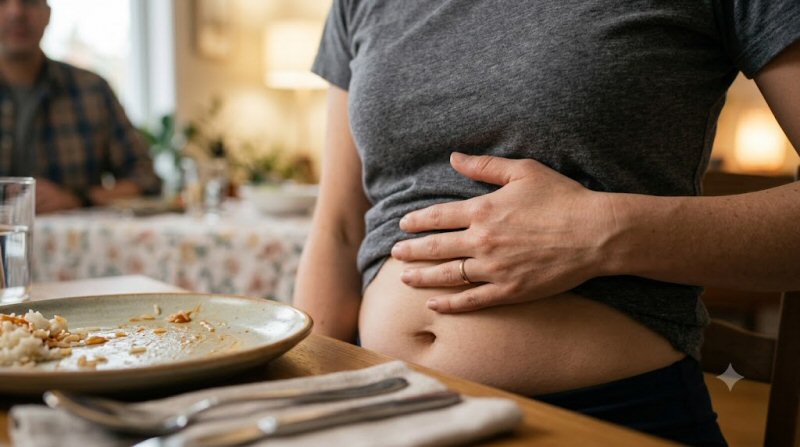
You finish lunch, sit back, and a low rumble starts somewhere under your ribs. It can be a soft gurgle or a longer series of bubbles. In a quiet room it feels loud. Most of the time this is simply your gut doing ordinary work—moving food, liquid, and gas forward. The medical name for these sounds is borborygmi. They are common after eating and rarely mean anything is wrong.
What This Symptom Feels Like
Post-meal stomach gurgles are the sounds of fluid and gas being pushed along the small and large intestine. They can feel like bubbling, clicking, or a low rolling noise that travels across the abdomen. The sensation is usually painless. You may notice it more when you are sitting still after a meal, or when the room is quiet. The noise often comes and goes for minutes rather than staying constant.
People describe it as the gut “waking up” once food arrives. It is different from the sharper, hungrier growls that can happen when the stomach has been empty for several hours. Those empty-stomach sounds are also normal, but they follow a different pattern of gut contractions.
Common Causes
Several ordinary things produce the sound after you eat:
- Peristalsis after a meal. Once food leaves the stomach, rhythmic contractions in the small intestine mix and move the contents. Gas and liquid create the noise as they pass through.
- Swallowed air. Talking while eating, drinking through a straw, chewing gum, or eating quickly can increase the amount of air that reaches the gut. That extra gas makes the movement louder.
- Certain foods and drinks. Carbonated beverages, beans, onions, broccoli, and high-fiber meals can add more gas. Sugar alcohols in some sugar-free products do the same for many people.
- The gastrocolic reflex. Eating, especially a larger meal, can trigger stronger contractions lower in the colon. This is the same reflex that makes some people need the bathroom after breakfast.
These are normal digestive responses. The gut is a long muscular tube that is never completely silent; eating simply makes its activity more noticeable.
Why This Happens
Between meals the small intestine shows a pattern called the migrating motor complex. This is a series of sweeping contractions that clear leftover material. After you eat, that pattern is interrupted and replaced by the fed-state motility—gentler mixing and propulsive waves. Fluid and gas trapped in the folds of the intestine are pushed along, and the walls of the gut vibrate enough to produce sound. Researchers who study intestinal motility have mapped these patterns for decades; the sounds themselves are simply the acoustic result of normal movement.
Stomach acid and digestive enzymes also begin working as soon as food arrives. The chemical changes in the meal, combined with the mechanical squeezing, increase the amount of gas that can form or be released. For a deeper look at how the stomach prepares for food, see why your stomach still expects acid before the meal.
The same process that produces the gurgle is related to the empty-stomach growling many people notice when they skip a meal. That version is covered in is it normal for your stomach to growl.
Less Common but Serious Causes
Persistent loud gurgling accompanied by other symptoms is less common but worth noticing. These can include:
- Partial bowel obstruction—usually with pain, bloating, vomiting, or inability to pass gas.
- Significant malabsorption or conditions that produce excess gas, such as untreated celiac disease or lactose intolerance that is more than mild.
- Infection or inflammation that speeds transit and increases fluid in the gut.
Isolated gurgles without pain, change in stool, or weight loss are almost always benign. The presence of additional symptoms is what raises concern, not the sound itself.
Hidden Triggers
A few less obvious factors can make post-meal sounds louder:
- Eating too fast or while distracted, which increases air swallowing.
- High-volume drinks with meals, especially fizzy ones.
- Artificial sweeteners and sugar alcohols that are poorly absorbed.
- Stress, which can alter gut motility and make contractions more noticeable.
- A sudden increase in fiber or a new probiotic that the gut is still adjusting to.
Many people also notice the sounds more after larger or richer meals simply because more material is moving through.
When to Worry
Seek medical advice if the gurgling is accompanied by any of the following:
- Abdominal pain that is severe or worsening
- Persistent bloating, vomiting, or inability to keep food down
- Unexplained weight loss
- Blood in the stool or black, tarry stools
- Fever or signs of dehydration
- A sudden change in bowel habits that lasts more than a couple of weeks
Occasional loud gurgles after meals, especially if you feel fine otherwise, do not require urgent evaluation.
Myths vs Facts
Myth: Stomach noises always mean you are hungry or have poor digestion.
Fact: Noises after eating are usually a sign that digestion is underway, not that something is failing.
Myth: You should try to stop the sounds with antacids or by avoiding all fiber.
Fact: Most gurgles are harmless. Restricting fiber long-term can reduce the beneficial effects of a varied diet. Occasional use of simethicone for gas is reasonable if it helps comfort, but it is rarely necessary.
Myth: Only people with irritable bowel syndrome hear their gut.
Fact: Everyone produces borborygmi. People with IBS may notice them more because of heightened gut sensitivity or altered motility, but the sounds themselves are not diagnostic.
How to Manage
Most of the time no treatment is needed. Simple habits can reduce the volume if the noise bothers you:
- Eat more slowly and chew thoroughly. This reduces swallowed air.
- Limit carbonated drinks and sugar-free products with sugar alcohols if they clearly increase gas.
- Stay upright for 20–30 minutes after larger meals rather than lying down immediately.
- A short walk after eating can help move gas along more comfortably. This is the same gentle movement that can reduce the post-meal sleepiness some people notice; more on that is in is it normal to get sleepy after a meal.
- If certain foods reliably trigger excess gas and discomfort, reduce those items temporarily and reintroduce them later to test tolerance.
These steps address the mechanical and dietary factors that make normal gut sounds louder. They do not “fix” a broken system; they simply lower the volume of ordinary activity.
When to See a Doctor
See a clinician if the gurgles are new, frequent, and paired with pain, diarrhea, constipation, bloating that does not resolve, or any of the red-flag symptoms listed earlier. Mention how long it has been happening and whether specific foods or situations make it worse. Most evaluations for isolated gut noises are reassuring; tests are usually reserved for cases with additional concerning features.
FAQs
Is it normal for your stomach to gurgle right after every meal?
Yes. Many people notice it after most meals. The intensity varies with what you ate, how quickly you ate, and how much air was swallowed. Consistent mild gurgles without other symptoms are ordinary.
Why is the noise sometimes louder on one side?
Gas and fluid move through different segments of the intestine at different times. The sound can seem to start on the right (near the small intestine) and travel leftward or downward as contents reach the colon. This shifting location is normal.
Can anxiety make stomach gurgles worse?
Yes. Stress and anxiety can speed or alter gut contractions and heighten awareness of normal sensations. The sounds themselves remain mechanical, but you may notice them more when you are tense.
Does drinking water stop the gurgling?
A small amount of water can sometimes help move a pocket of gas along, but large volumes with meals may increase the fluid that contributes to the sound. Sipping rather than gulping is usually more comfortable.
Are post-meal gurgles different from hunger growls?
They are related but not identical. Hunger growls often occur when the stomach and small intestine are relatively empty and the migrating motor complex is active. Post-meal gurgles happen during the fed-state motility that mixes and propels the meal. Both are normal patterns of gut movement.
Should I avoid fiber if my stomach gurgles a lot?
Not necessarily. Fiber is beneficial for most people. If a sudden large increase in fiber is causing excess gas and noise, reduce it temporarily and increase more gradually. Long-term avoidance is rarely needed unless a specific intolerance has been identified.
Conclusion
Stomach gurgles after you eat are one of the most ordinary sounds the body makes. They reflect the normal work of moving food, fluid, and gas through a long, muscular tube. In the absence of pain, weight loss, or lasting changes in bowel habits, they are not a warning sign. Simple adjustments to eating pace and drink choices can lower the volume when it feels distracting. The gut has been producing these sounds for as long as humans have been eating; hearing them is usually just evidence that digestion is underway.