A runny nose from hot soup or steamy meals is usually a harmless nerve reflex called gustatory rhinitis, not an allergy or cold.
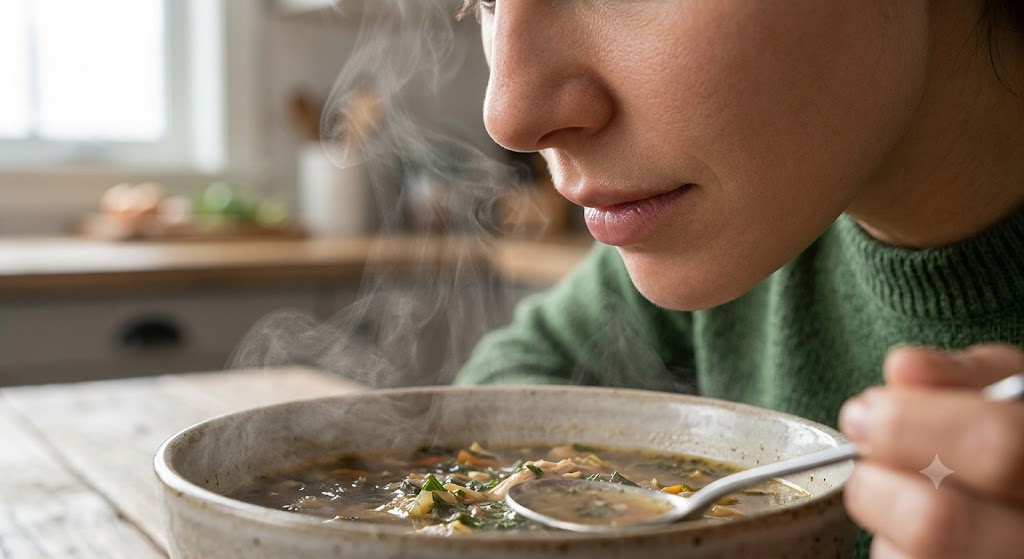
You lift a spoonful of hot soup and within seconds your nose starts to drip. No cold, no allergy season, just a clear watery run that appears only while you eat and fades once the bowl is empty. It can feel embarrassing at a shared table, yet it is one of the more ordinary ways the nose responds to temperature and steam.
What This Symptom Feels Like
The discharge is typically thin and clear rather than thick or colored. It may start within a minute or two of the first hot bites or sips and can be accompanied by mild stuffiness, a trickle down the back of the throat, or watery eyes. Once the meal ends and the steam dissipates, the drip usually settles. People notice it most with soups, stews, hot tea, or any food served steaming, even when the dish contains no chili or strong spices.
Common Causes
The main explanation is gustatory rhinitis, a form of non-allergic rhinitis. Heat and steam from the food stimulate sensory nerves in the mouth and nasal passages. Those nerves trigger a reflex that tells the nasal glands to release watery mucus. The same pathway can be activated by spicy compounds, but temperature alone is enough for many people. Steam itself also moistens existing mucus and can make a drip more noticeable.
This reaction sits in the same family as the runny nose that appears in cold air or during exercise. In each case the nose is responding to a stimulus that the trigeminal nerve registers as a change in temperature or mild irritation, then recruiting the parasympathetic system to increase secretion. A similar experience with spicy dishes is covered in our article on getting a runny nose from spicy food.
Why This Happens
Sensory fibers in the oral and nasal mucosa carry receptors that respond to heat. One well-studied receptor is TRPV1, the same channel that opens when temperature rises or when capsaicin from chili peppers binds to it. When hot food or steam activates these fibers, signals travel via the trigeminal nerve and a short reflex arc involving the sphenopalatine ganglion. Parasympathetic fibers then release acetylcholine onto the seromucinous glands lining the nose, prompting a rapid outpouring of thin mucus.
The system is not trying to fight an infection or flush an allergen. It is simply cross-talk between temperature sensing and glandular control. In most people the threshold is low enough that ordinary hot soup produces a noticeable drip; in others the reflex is quieter. Aging can lower that threshold further, which is why the phenomenon sometimes becomes more obvious later in life. The same acetylcholine-driven mechanism explains why an anticholinergic nasal spray can reduce the drip in people who find it bothersome.
Less Common but Serious Causes
True food allergy is unlikely when the only symptom is a clear drip that starts and stops with the meal and never includes hives, swelling of the lips or throat, or breathing difficulty. A cerebrospinal fluid leak can rarely produce a watery nasal discharge, but it is usually unilateral, may taste salty or metallic, and often worsens with leaning forward rather than specifically with hot food. Post-viral or post-surgical nerve changes can occasionally exaggerate the reflex, yet the discharge remains clear and meal-linked. Colored mucus, facial pain, or fever point toward infection rather than a simple temperature reflex.
Hidden Triggers
Very hot beverages, steamy bowls held close to the face, and dishes that combine heat with mild irritants such as onion, garlic, or vinegar tend to produce a stronger response. Alcohol can amplify nasal gland activity for some people. Eating while already congested from a mild cold or dry indoor air may make the drip feel more pronounced simply because the nose is already producing more mucus. Rapid temperature swings—moving from a cold room straight to a hot meal—can also heighten the sensation.
When to Worry
Seek care if the discharge is thick, yellow, green, or bloody, if it occurs without any relation to meals, or if it is accompanied by facial swelling, difficulty swallowing, or shortness of breath. A drip that is strictly one-sided and persists between meals, especially after head injury or nasal surgery, deserves evaluation to rule out rarer causes. Persistent congestion or post-nasal drip that interferes with sleep or daily life is also worth discussing, even if the trigger is clearly hot food.
Myths vs Facts
Myth: A runny nose while eating hot food means you are allergic to that food.
Fact: The reaction is neurological, not immune-mediated. Antihistamines rarely help because histamine is not the main driver.
Myth: The mucus is the body “flushing toxins” from the food.
Fact: The glands are simply responding to a nerve signal; the fluid is ordinary watery nasal secretion.
Myth: Only spicy food causes this.
Fact: Temperature and steam alone are sufficient for many people, which is why plain hot broth can trigger the same drip as a chili-laden stew.
How to Manage It
Letting the food cool slightly or sipping rather than gulping hot liquids often reduces the intensity. Keeping the bowl a little farther from the face lessens direct steam exposure. A saline nasal rinse before a meal can clear residual mucus so the reflex feels less dramatic. For people who find the drip consistently disruptive, a clinician may suggest a prescription anticholinergic nasal spray used shortly before eating; studies have shown it can substantially reduce hot-soup-induced rhinorrhea by blocking the acetylcholine signal at the glands.
Simple environmental steps help too: staying well hydrated, managing indoor humidity, and avoiding other nasal irritants around meal times. The watery eyes that sometimes accompany the drip share related nerve pathways and are discussed in our piece on eyes watering with spicy food.
When to See a Doctor
Most people never need medical attention for a meal-related clear drip. Contact a clinician if the pattern changes—new one-sided discharge, blood, thick colored mucus, or symptoms that continue long after the meal ends—or if the reflex becomes so strong that it interferes with eating or social meals. An ear, nose, and throat evaluation can distinguish the ordinary reflex from less common structural or post-infectious issues and discuss targeted options if needed.
FAQs
Is a runny nose from hot soup the same as a cold?
No. A cold produces thicker mucus, often with other symptoms such as sore throat or fatigue, and lasts days rather than stopping when the meal ends.
Why does steam make it worse?
Steam both activates temperature-sensitive nerve endings and adds moisture that loosens existing nasal secretions, so more fluid becomes noticeable.
Can antihistamines stop it?
They usually do not, because the mechanism is a parasympathetic nerve reflex rather than histamine release. Anticholinergic sprays are more directly effective when treatment is wanted.
Does this get worse with age?
Many people notice the reflex more clearly later in life as nasal nerve thresholds change, but it remains a benign response.
Is it related to the runny nose I get in cold weather?
Yes, both involve temperature-sensitive pathways and parasympathetic gland activation. Our article on a runny nose in the cold covers the outdoor version of the same basic reflex.
Conclusion
A clear drip that appears with hot soup or steamy meals is almost always a normal nerve reflex—gustatory rhinitis—driven by temperature-sensitive receptors and parasympathetic signals to the nasal glands. It is not an allergy, not a sign of illness, and it resolves once the meal is finished. Cooling the food a little, managing steam exposure, and, if needed, discussing a targeted nasal spray with a clinician are usually enough to keep the symptom from interrupting the meal. The nose is simply doing what its wiring has always done when it senses sudden heat.