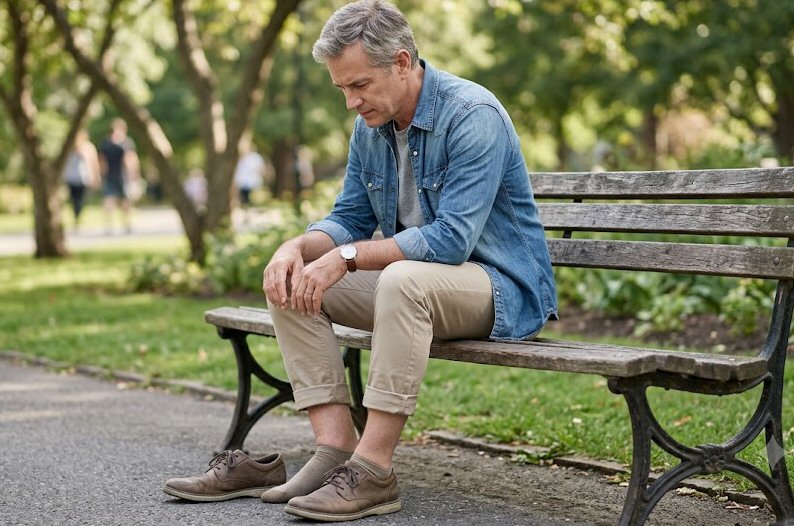
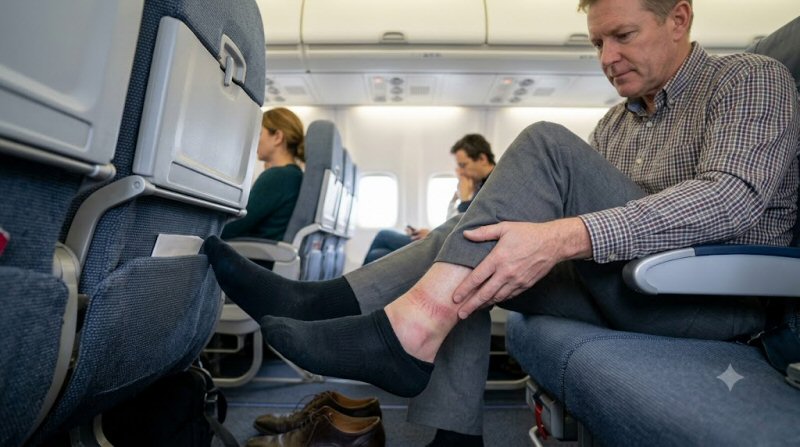
A heavy, dragging feeling in your legs after hours on your feet is common. It usually comes from blood pooling when the calf pump is not working, not from serious disease.
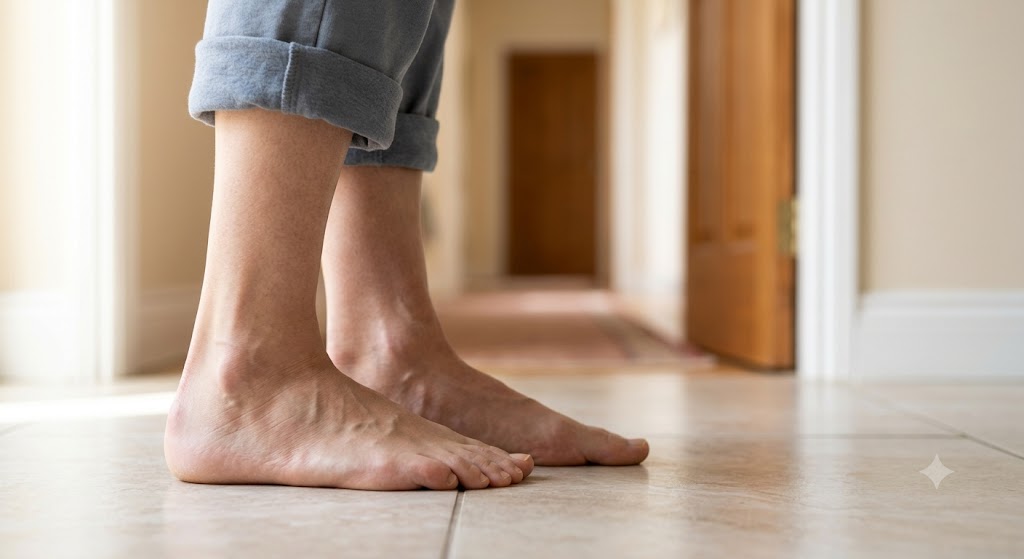
You finish a long shift on your feet and your legs feel like they are filled with wet sand. The heaviness is worse by evening, eases when you sit with your feet up, and is usually gone by morning. That pattern is familiar to teachers, retail workers, nurses, and anyone who stands for hours. In most cases it is a normal response to gravity and still veins, not a sign that something is seriously wrong.
What This Symptom Feels Like
People describe a dull weight in the calves and thighs, a dragging sensation when they walk, or a feeling that the legs are “full.” Shoes can feel tighter by the end of the day. Mild ankle swelling is common. The discomfort is usually both legs, builds gradually, and improves with elevation or a short walk. Sharp pain, sudden swelling in only one leg, or skin color changes are different and need attention.
Common Causes
The main everyday cause is venous pooling. While you stand still, the one-way valves in the leg veins rely on the calf muscles to push blood upward. Without regular contraction, blood and fluid collect in the lower legs. Muscle fatigue from prolonged standing adds to the tired feeling. Heat, tight clothing around the waist or thighs, and mild dehydration can make the sensation more noticeable. Pregnancy and higher body weight increase the load on the same system.
Why This Happens
Venous pressure in the foot jumps from about 5–10 mmHg when you lie down to 75–90 mmHg when you stand, as measured in classic work by Stranden. The calf muscle pump and foot pump normally clear that column of blood with each step. Studies by Wall and colleagues showed that several hours of standing produce measurable lower-leg swelling and muscle fatigue, while the same time spent walking does not. Junge and others have linked workplace standing to rapid increases in leg volume and discomfort. When the pump is quiet for long stretches, the valves and veins simply hold more blood against gravity until you move or elevate the legs.
This is closely related to the everyday mechanics covered in why your veins still expect the calf pump and the ache many people notice in calves that ache after standing all day.
Less Common but Serious Causes
Chronic venous insufficiency can produce the same heaviness when valves are permanently weakened. Deep-vein thrombosis is rare but urgent when swelling, warmth, and pain appear suddenly in one leg. Heart or kidney conditions can cause swelling, but they usually bring other clear symptoms. Peripheral artery disease typically causes cramping that starts with walking and eases with rest, not a heavy feeling that builds only with standing. Most day-long standing heaviness does not fall into these categories.
Hidden Triggers
Standing on hard floors without cushioned shoes, staying in one spot rather than shifting weight, high indoor temperatures, high-sodium meals, and long periods without a short walk all amplify the pooling. Crossing the legs or wearing tight socks that leave marks can add local pressure. Some people notice it more after travel or during the second half of the menstrual cycle when fluid retention is higher.
When to Worry
Seek prompt care if one leg becomes suddenly swollen, red, warm, or painful; if you have chest pain or shortness of breath; if skin around the ankles turns brown, itchy, or breaks down into sores; or if the heaviness is accompanied by true weakness, numbness, or symptoms that do not improve with elevation and rest. Persistent symptoms that limit walking or keep worsening over weeks also deserve a medical check.
Myths vs Facts
Myth: Heavy legs after standing mean you are out of shape.
Fact: Even fit people experience venous pooling when the calf pump is idle for hours. Walking usually clears it.
Myth: You should avoid standing completely.
Fact: Brief periods of standing are fine; the problem is prolonged still standing. Short walks or calf raises reverse the effect.
Myth: Compression socks are only for people with varicose veins.
Fact: Light graduated compression can reduce the end-of-day heaviness for many healthy people who stand at work, as shown in occupational studies.
How to Manage
Move every 30–60 minutes. A one-minute walk or a set of calf raises empties the veins. When you can sit, elevate the legs above heart level for 10–15 minutes. Supportive shoes with a slight heel-to-toe drop and cushioned soles reduce impact. Staying hydrated and moderating salt help some people. If you stand for work, consider light compression socks (15–20 mmHg) after checking with a clinician. Evening elevation and a short walk before bed usually leave the legs lighter by morning. Related evening swelling is discussed in ankles that swell by evening.
When to See a Doctor
See a physician or vascular specialist if the heaviness is new, one-sided, accompanied by visible vein changes, skin discoloration, or sores, or if it does not improve with simple measures after a couple of weeks. They can check for reflux with ultrasound if needed. Most people with ordinary end-of-day heaviness never require further testing.
FAQs
Why do my legs feel fine in the morning but heavy by evening?
Overnight elevation and the absence of gravity load allow the veins to empty. Standing all day lets fluid and blood re-accumulate until you rest with the legs up.
Does walking help or make it worse?
Walking usually helps. The calf pump clears pooled blood. Standing still is the main trigger.
Can this happen even if I don’t have varicose veins?
Yes. Temporary pooling occurs in healthy veins when the muscle pump is inactive. Visible varicose veins are not required.
Are compression socks useful if I’m otherwise healthy?
Many people who stand for work find light graduated compression reduces end-of-day heaviness and mild swelling. They are not a cure for underlying valve problems but can be practical for daily comfort.
Should I worry about blood clots?
Ordinary bilateral heaviness that builds slowly and improves with elevation is not typical of a clot. Sudden one-sided swelling, pain, warmth, or redness needs urgent evaluation.
Conclusion
A heavy feeling in the legs after a long day of standing is usually the straightforward result of gravity, quiet calf muscles, and temporary venous pooling. Short walks, calf raises, elevation, and supportive footwear address the mechanism directly for most people. The sensation is common, reversible with rest, and rarely a sign of serious disease when both legs are affected and the pattern is familiar. Paying attention to movement breaks during the day keeps the legs lighter by evening.