Mild morning hand puffiness is usually normal overnight fluid redistribution that fades with movement. Learn why it happens and when to check further.
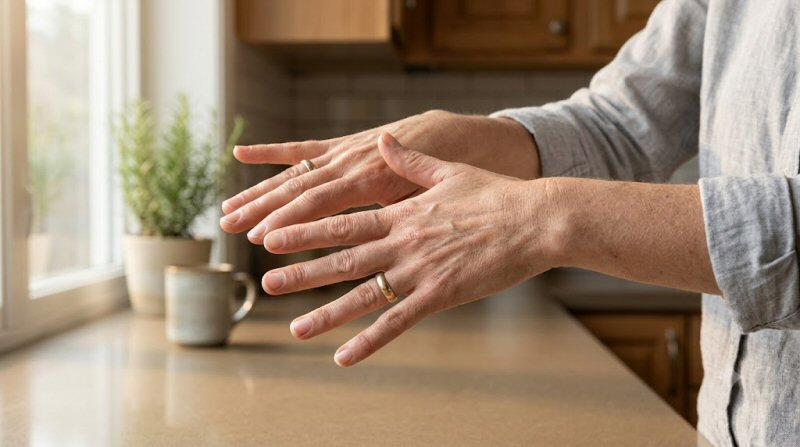
You wake up, reach for your phone or a glass of water, and your rings feel tighter than they did the night before. Your fingers look a little fuller, the skin a bit snug. By mid-morning the feeling has usually eased. This pattern is common enough that many people notice it only when it is more pronounced than usual.
What This Symptom Feels Like
The sensation is typically bilateral and mild. Fingers may feel stiff for the first few minutes of the day, rings may slide on less easily, and the skin over the knuckles can look slightly smoother. There is rarely pain or redness with the ordinary version. The change is most noticeable right after getting out of bed and tends to recede once you have been upright and using your hands for half an hour to a couple of hours.
Common Causes
The main driver is a normal overnight redistribution of fluid. During the day, gravity and the calf-muscle pump keep a portion of circulating volume in the lower legs. When you lie flat for several hours, that fluid moves upward (a process researchers call rostral fluid shift). Some of it ends up in the soft tissues of the hands and fingers, which have relatively little space to accommodate the extra volume.
A prospective study of healthy volunteers without hand disease, published in the Journal of Hand Surgery, measured hand volume at 8 a.m., 2 p.m., and 8 p.m. across three days. Hand volume was highest in the morning—roughly 4.5 % greater than later in the day—and declined significantly between morning and early afternoon. Demographic factors such as age, sex, and body-mass index did not change the pattern. The authors (Warrender and colleagues) concluded that physiological nocturnal hand swelling occurs in people with no hand pathology.
Additional everyday factors amplify the effect:
- A high-sodium evening meal or alcohol increases total body fluid overnight.
- Sleeping with the hands below heart level (for example, hanging over the side of the bed) lets gravity pool fluid in the fingers.
- Reduced muscle activity while asleep means the venous and lymphatic pumps are quieter, so fluid returns more slowly.
Related daytime pooling is discussed in articles on why your veins still expect the calf pump and why your feet swell after sitting.
Why This Happens
Fluid constantly moves between blood vessels and the interstitial space. When you are upright, hydrostatic pressure is higher in the legs; the muscle pump (especially the soleus and gastrocnemius) and one-way venous valves return that fluid toward the heart. In the horizontal position the pressure gradient changes, and a measurable volume shifts rostrally. Circulating hormones such as vasopressin also rise during sleep, favoring fluid retention. The hands, being distal and relatively dependent if the arms are relaxed, collect some of the redistributed fluid. Once you stand and begin using your arms, the muscle pump resumes, gravity pulls fluid downward again, and hand volume falls.
Less Common but Serious Causes
Persistent or progressive hand swelling can reflect other conditions. Inflammatory arthritis (for example rheumatoid arthritis) classically produces morning stiffness lasting more than 30–60 minutes together with joint swelling and pain. Hypothyroidism, kidney disease, heart failure, and certain medications (calcium-channel blockers, some non-steroidal anti-inflammatory drugs, corticosteroids) can cause fluid retention that does not resolve with upright activity. Lymphedema or local venous obstruction is usually asymmetric. These are less common than simple overnight redistribution, but they are the reason a prolonged or symptomatic pattern should be evaluated.
Hidden Triggers
- High salt or alcohol the evening before.
- Side-sleeping with one or both hands hanging low.
- Dehydration paradoxically can promote fluid retention the next day.
- Heat or a warm room that dilates superficial vessels.
- Pregnancy or the pre-menstrual phase, when total body fluid is higher.
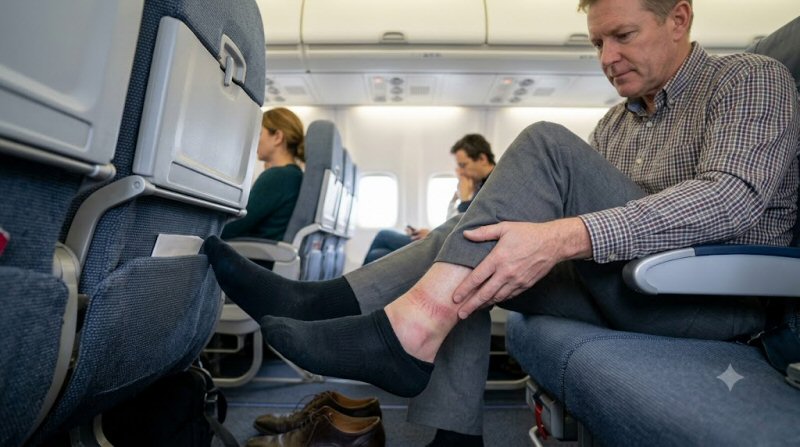
- Prolonged immobility (long flights or bed rest) that exaggerates the same fluid-shift mechanism seen after ordinary sleep.
When to Worry
Seek medical advice if:
- Swelling lasts well beyond the first few hours of the day or is still present in the evening.
- Morning stiffness exceeds 30–60 minutes or is accompanied by joint pain, redness, or warmth.
- Swelling is markedly asymmetric.
- You also notice shortness of breath, rapid weight gain, reduced urine output, foamy urine, or swelling of the face or ankles that does not follow the usual daily pattern.
- The change appeared suddenly after starting a new medication.
Myths vs Facts
Myth: Morning hand puffiness always means kidney or heart disease.
Fact: In the absence of other symptoms it is most often a normal fluid shift that reverses with upright activity.
Myth: You should drink less water to reduce morning swelling.
Fact: Adequate hydration usually helps the body regulate fluid better; extreme restriction can worsen retention.
Myth: If rings feel tight you must have arthritis.
Fact: Transient volume change from fluid can tighten rings without any joint inflammation.
How to Manage It
- Get up and move; even light arm swings or making fists helps the muscle pump clear fluid.
- Elevate the hands briefly if they feel especially full, or sleep with a slightly higher pillow if facial and hand puffiness are both bothersome.
- Keep evening sodium moderate and avoid large amounts of alcohol close to bedtime.
- Stay consistently hydrated during the day.
- If rings are tight in the morning, wait until mid-morning before forcing them off; most people find they fit normally again by then.
- Gentle hand and wrist movement while still in bed can start the process earlier.
When to See a Doctor
See a clinician if the puffiness is new, persistent beyond the morning, painful, or accompanied by systemic symptoms listed above. Early evaluation is especially useful if morning stiffness is prolonged, because inflammatory arthritis responds better when treatment begins promptly.
FAQs
Why do my rings feel tighter only in the morning?
Overnight fluid redistribution increases hand volume by several percent in healthy people. Once you are upright and using your hands, the extra fluid moves on and the rings usually fit again.
Is it worse after a salty dinner?
Yes. Higher sodium intake increases total body water overnight, so the same rostral shift deposits more fluid in the hands.
Does sleeping position matter?
Hands that hang below heart level collect more fluid. Keeping the arms roughly level with the torso or slightly elevated can reduce the effect for some people.
Can this be a sign of carpal tunnel?
Carpal tunnel more often produces numbness or tingling, especially at night. Isolated morning puffiness without sensory changes is usually fluid, not nerve compression.
Should I be concerned if only one hand is puffy?
Asymmetry is less typical of simple overnight redistribution and is worth mentioning to a clinician, particularly if it persists.
Conclusion
Mild morning hand puffiness that fades with ordinary upright activity is a normal consequence of overnight fluid redistribution. Studies of healthy volunteers confirm that hand volume rises during sleep and declines again by early afternoon. Paying attention to salt, alcohol, sleep position, and simple movement usually keeps the sensation minor. Persistent swelling, prolonged stiffness, pain, or other systemic signs deserve a medical look so that less common causes can be ruled out.