Mild foot and ankle swelling after hours on your feet is common. Learn why gravity and a quiet calf pump cause it, what makes it worse, and when to get checked.
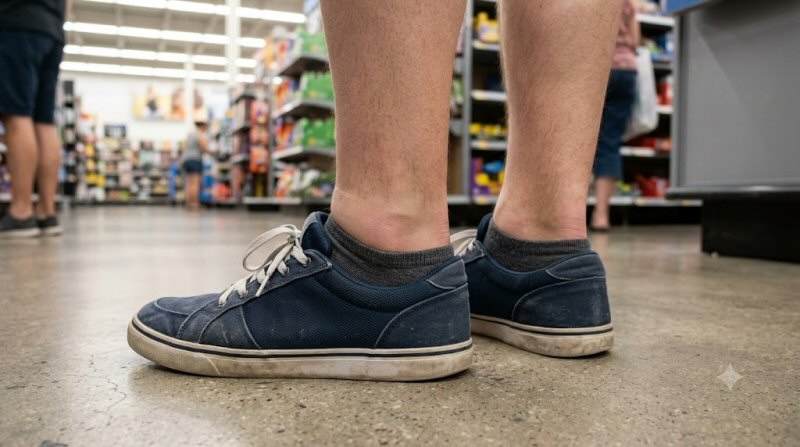
You finish a long shift, take off your shoes, and notice your feet and ankles look fuller than they did this morning. Rings of sock marks stay visible, and your shoes feel tighter. For most people this is a normal, temporary response to gravity and stillness rather than a sign of disease.
What This Symptom Feels Like
The swelling is usually soft and puffy, more noticeable around the ankles and the tops of the feet. It builds gradually through the day and is often worse in the evening. You may feel a mild heaviness or tightness in the shoes, but the skin is not typically red, hot, or painful unless something else is going on. Pressing a finger into the area can leave a shallow dent that fills back in within seconds (pitting edema). By the next morning, after a night of lying flat, the feet usually look normal again.
Common Causes
The main driver is simply being upright for many hours. When you stand still or move very little, blood and fluid are pulled downward by gravity. The small vessels in the feet and lower legs experience higher hydrostatic pressure, so a bit of fluid filters out into the surrounding tissue. The calf muscles, which normally help push blood back toward the heart, stay relatively quiet if you are locked in one position.
Other everyday factors that amplify the same process include heat, high salt intake earlier in the day, tight socks or shoes, and pregnancy or the premenstrual phase when hormones relax vessel walls. Standing on hard floors for hours can also irritate the soft tissues enough to add a local component to the swelling.
Why This Happens
Capillary fluid exchange follows Starling forces: the balance between hydrostatic pressure pushing fluid out and oncotic pressure (from proteins) pulling fluid back in. In the upright position the hydrostatic column from heart to foot raises venous pressure substantially. Studies using strain-gauge plethysmography, including work by Stick and colleagues in the 1980s, showed that quiet standing produces a slow, continuous rise in calf volume from this filtration—roughly 0.1–0.2 % per minute in healthy people.
The calf muscle pump normally counters this. When the gastrocnemius and soleus contract during walking, they squeeze the deep veins and open the valves so blood moves upward; when the muscle relaxes, the veins refill from the superficial system. During motionless standing that pump is largely idle, so pressure stays high and filtration continues. Lymphatic vessels eventually increase their flow once a certain interstitial volume accumulates, which is why the swelling rarely becomes extreme in a healthy person over a single day.
This pattern is related to the same mechanisms discussed in pieces on feet swelling after sitting and calves aching after standing all day. The difference is mainly how much the pump is used versus how long the legs stay dependent.
Less Common but Serious Causes
One-sided swelling, especially if it appears suddenly and is accompanied by pain, redness, or warmth, can indicate a deep-vein thrombosis. Bilateral swelling that is persistent, worsens over days, or comes with shortness of breath, chest discomfort, or sudden weight gain may point to heart, kidney, or liver issues that impair fluid balance. Certain medications (some calcium-channel blockers, hormones, steroids) and chronic venous insufficiency with leaky valves can also produce more noticeable dependent edema. These are less common than simple gravitational swelling, but they are the reasons the “when to worry” section exists.
Hidden Triggers
A salty lunch or dinner increases extracellular fluid volume and makes the same hydrostatic leak more obvious by evening. Warm environments dilate skin vessels and raise capillary pressure. Standing in one spot for long stretches (cashier, line cook, nurse at a station) keeps the pump off more than intermittent walking. Tight calf muscles or shoes that restrict ankle motion further limit the pump’s effectiveness. Even mild dehydration can paradoxically worsen the sensation because the body holds onto sodium and water.
When to Worry
Seek prompt medical care if the swelling is sudden and one-sided, painful, or associated with shortness of breath, chest pain, or fainting. Also get checked if it does not improve overnight, keeps worsening, appears with fever, or is accompanied by skin color changes that do not fade. Gradual, symmetric, soft swelling that clears by morning is almost always benign.
Myths vs Facts
Myth: Any foot swelling means heart failure.
Fact: Mild end-of-day dependent edema is extremely common in healthy people who stand for work; heart-failure edema is usually more persistent and often accompanied by other symptoms.
Myth: You should stay completely still to “rest” swollen feet.
Fact: Gentle walking or ankle pumps actually activate the calf pump and help clear fluid faster than pure rest.
Myth: Compression socks are only for people with disease.
Fact: Light graduated compression can reduce the hydrostatic load during long standing and is used by many healthy workers.
How to Manage It
Move every 30–60 minutes if your job allows: a short walk, heel raises, or ankle circles re-engage the pump. Elevate the feet above heart level for 15–20 minutes when you get home. Stay reasonably hydrated and moderate very salty meals on long standing days. Supportive shoes with a bit of room in the toe box reduce local pressure. If the pattern is predictable, light compression socks (15–20 mmHg) worn during the shift can limit the volume increase. Cooling the legs briefly after work can also feel soothing as vessels constrict.
These steps overlap with strategies that help the soleus and calf pump stay effective in modern upright life.
When to See a Doctor
See a clinician if the swelling is new, asymmetric, painful, persistent after elevation and overnight rest, or accompanied by other symptoms such as breathlessness or unexplained weight gain. A simple history and exam usually distinguish gravitational edema from conditions that need further testing.
FAQs
Why are my feet worse in the evening than in the morning?
Gravity acts all day while you are upright. Overnight, lying flat removes the hydrostatic column and lets lymphatics and veins clear the accumulated fluid, so the feet look normal again by morning.
Does walking actually reduce the swelling?
Yes. Rhythmic calf contractions lower venous pressure and increase lymphatic flow. Studies measuring calf volume show that quiet standing increases volume while cycling or walking tends to decrease or stabilize it.
Can heat make standing swelling worse?
Heat dilates blood vessels and raises capillary pressure, so the same duration of standing produces more filtration on a hot day or in a warm workplace.
Is pitting (a dent when you press) a bad sign?
Mild, rapidly resolving pitting is common with simple dependent edema. Deep, persistent pitting or pitting with other symptoms warrants evaluation.
Should I worry if only one foot swells?
One-sided swelling deserves attention, especially if sudden or painful, because it raises the possibility of a local vein problem. Symmetric swelling is far more often gravitational.
Will compression socks prevent it completely?
They usually reduce the amount of swelling by supporting the veins and lowering effective capillary pressure, but they do not eliminate the effect of hours of standing. Combining them with movement works best.
Conclusion
Soft, symmetric foot and ankle swelling that appears after a long day on your feet and fades overnight is a normal consequence of gravity and a quiet calf muscle pump. Understanding the simple physiology—higher hydrostatic pressure and reduced venous return—makes the symptom less alarming and points to practical fixes: brief movement, elevation, modest salt awareness, and optional light compression. If the pattern changes, becomes one-sided, or arrives with other symptoms, a medical check is the right next step. For most people, though, the feet simply reflect a day spent upright.