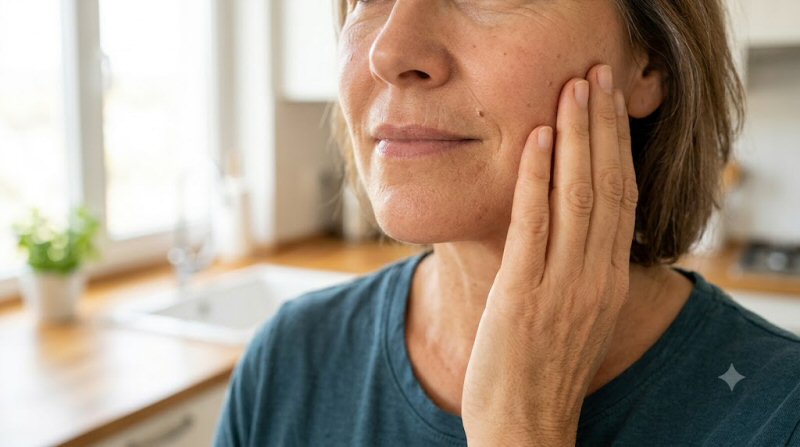
A brief chest catch in cold air is usually airway drying and a reflex tighten, not a heart attack. Nasal breathing and a slower start often ease it.

You step outside and the first breath feels smaller than it should. The air is sharp. There is a band across the upper chest, a catch when you inhale, sometimes a dry cough a minute later. You slow down, pull your scarf over your mouth, and the feeling eases. It is common on the first cold morning of the season, and it is easy to wonder whether the heart is complaining.
Most of the time the heart is not the organ that noticed the weather. Cold, dry air asks the airways to warm and wet every liter you breathe. When you mouth-breathe, walk fast, or have not been outside much, that job gets ahead of the lining. A short tighten is the airway protecting itself. It is unpleasant, usually brief, and usually different from pressure that builds with effort and does not let go.
What This Sensation Feels Like
People describe a few familiar versions.
The first is a catch on the first few breaths outdoors, more a stiffness than a pain, that fades after a minute of slower walking. The second is tightness that shows up partway through a cold jog or a brisk walk into the wind, sometimes with a dry cough or a wheeze you can hear only if you listen. The third arrives after you stop: you feel fine while moving, then tight five to fifteen minutes later while you stand still.
You can often change it. Breathing through the nose, covering the mouth with a scarf, or dropping the pace usually softens an airway catch. Pain that ignores those changes, spreads into the jaw or arm, or arrives with sweat and nausea is a different story.
What it usually is not: a stab under one rib that hurts more when you press it, a feverish chest infection, or pressure that is identical in a warm room and a cold one.
Common Causes
The ordinary explanations sit in the airway, not the coronary arteries.
Cold air is dry air. Even when the outdoor humidity looks reasonable, the absolute amount of water the air can hold is low. Each breath has to be brought close to body temperature and nearly full humidity before it reaches the small airways. The nose is built for that job. Mouth breathing on a cold walk skips most of the conditioning, so cooler, drier air lands farther down.
A second ordinary cause is the first outing after weeks indoors. Airways that have not met winter air are more reactive for a few sessions. The same walk feels easier by the third cold morning if you keep the pace modest.
A third is effort. Walking uphill, carrying bags, or talking while you climb raises how much air you move per minute. Past a point, the nose cannot condition all of it. That is why the tightness often appears on the hill and not on the flat.
A fourth is a background of sensitive airways: asthma, a recent cold, hay fever, or exercise-induced narrowing that only declares itself in cold air. You do not need a formal diagnosis for a cold morning to feel tighter than a warm one. You do need one if the tighten keeps returning, limits ordinary walking, or wakes you at night.
Why This Happens
Two research lines explain the same sensation from slightly different angles, and both are probably right at once.
The drying story comes from work by Sandra Anderson and colleagues, later extended with Pascale Kippelen. Hard breathing pulls water off the thin fluid that coats the airway. The remaining fluid becomes more concentrated. That osmotic shift can make mast cells in the lining release histamine and other mediators, and the smooth muscle around the airway narrows. Cold air speeds the water loss because it holds so little vapor. Anderson’s point was that the trigger is often dehydration of the airway surface, not cold as a temperature alone. The same narrowing can be provoked in a lab with dry air even when the air is not freezing.
The cooling story comes from E. R. McFadden Jr., E. Chandler Deal Jr., Roland Ingram Jr., and colleagues. They measured how much heat the airway loses during exercise in cold air, and they showed that rewarming afterward can engorge the small vessels in the bronchial wall. The lining swells, the tube gets narrower, and the tight feeling peaks after you stop, not at the hardest minute. That matches the person who feels fine on the hill and tight in the doorway.
Cold-sensitive nerve endings add a faster layer. The same family of receptors that makes the nose run in winter air can fire in the lower airway and nudge a brief reflex tighten before any swelling has time to build. That is the catch on the first breath, the one that settles once the air in the airway has warmed.
The lungs were not designed for unconditioned air at a sprint. They were designed for air that had already passed a nose, at a pace you could keep while walking and talking. Modern life adds a mismatch on both sides: long hours in dry heated rooms, then a sudden step into winter wind with the mouth open. The related piece on why your lungs still expect moving outdoor air is about stale indoor air. This one is the opposite edge of the same system: outdoor air that arrives too cold and too dry for the pace you are using.
Ilkka Helenius and Tari Haahtela described how often endurance athletes meet this in cold venues. You do not have to be an athlete. A fast walk to the train in January uses the same physics at a smaller scale.
Less Common but Serious Causes
Cold raises the work of the heart as well as the work of the airway. Skin vessels narrow, blood pressure can rise, and the heart muscle asks for more oxygen. In someone with narrowed coronary arteries, that extra demand can show up as pressure, not a brief catch. The airway version usually eases when you slow down, breathe through the nose, and get the air a little warmer. The heart version often builds with effort, may spread to the arm, neck, or jaw, and may come with sweat, nausea, or a sense of dread. It can also appear in cold air more readily than in a warm room, which is why the setting alone does not prove the cause.
A panic surge can tighten the chest in the cold too, especially if a previous scare taught the body to watch the first breath. The breathing is usually faster and shallower, and the tightness rides with fear rather than with the hill.
Infection, a blood clot in the lung, and a collapsed small airway are uncommon explanations for a catch that only appears in cold air and leaves when you warm up. They become more plausible if the tightness is new, one-sided, paired with fever, coughing blood, a swollen calf, or breathlessness at rest in a warm room.
Hidden Triggers
A few ordinary habits make a cold morning worse than the temperature alone would predict.
Mouth breathing is the biggest. A scarf or a high collar that lets you inhale through the nose, or at least through fabric, gives the air a head start. The same physics explains a runny nose in the cold: the lining is pouring out fluid to condition what you breathe. If the nose is blocked, all of that job falls on the chest.
Talking while you climb forces mouth breathing. So does a tight scarf that makes you gasp, or starting at full pace from the door.
Dry indoor air the night before leaves the lining less ready. So does a recent cold, smoke, strong fragrance on the walk, or skipping a warm-up. Beta-blocker medicines and some cold remedies can make airway narrowing more noticeable. Very cold drinks just before you go out do not cause this, but a big icy gulp can trigger a separate diaphragm hitch that people sometimes lump in with chest tightness.
When to Worry
Get urgent help if chest pressure is heavy, crushing, or spreading to the arm, neck, jaw, or back, especially with sweating, nausea, faintness, or breathlessness that does not ease within a few minutes of rest. Cold air is a known setting for angina. Do not walk it off to prove it is only the weather.
Seek prompt care if tightness comes with coughing blood, a swollen painful calf, one-sided chest pain and sudden breathlessness, blue lips, or confusion. Those are not winter-air catches.
Book a routine visit if cold-air tightness keeps returning, limits a walk you used to manage, wakes you, or arrives with wheeze on most cold days. Exercise-related airway narrowing is common and treatable. It is worth naming rather than avoiding winter altogether.
A single brief catch that fades with nasal breathing and a slower pace, with no pain spreading elsewhere, is the pattern this article is about.
Myths vs Facts
Myth: Chest tightness in the cold always means the heart.
Fact: A short catch that eases with a scarf and a slower pace is usually airway drying and a reflex narrow. Heart pain is more often pressure that builds with effort and ignores those changes. Both deserve respect. The pattern tells them apart better than the weather does.
Myth: You have to be asthmatic for cold air to tighten the chest.
Fact: Sensitive airways make it more likely, and Anderson’s work showed the same water-loss trigger in people with and without a prior asthma label. A recent cold or a sudden jump in pace is enough for one tight morning.
Myth: The tighten should be worst at the coldest minute of the walk.
Fact: McFadden’s rewarming work explains why many people feel it most in the first minutes after they stop. If it peaks on the doorstep, that still fits an airway story.
Myth: Breathing through your mouth warms you up faster.
Fact: Mouth breathing skips the nose, the organ that was already warming and wetting the air. It usually makes the chest catch sooner, not later.
How to Manage It
Start slower than the pace you want. Give the airway two or three minutes of easy walking before the hill or the hurry.
Breathe through your nose when you can. A light scarf, collar, or mask warms the air a little and holds moisture in front of the face. You are not trying to seal the airway. You are giving the next breath a warmer room to come from.
Keep winter indoor air from becoming desert-dry if your chest is reactive. A humidifier in the room where you sleep, and less mouth breathing at night, leaves the lining less brittle in the morning. The seated-breathing piece on why quiet indoor breathing underuses the diaphragm is a useful companion if cold air also makes you gasp high in the chest.
If you already use an inhaler prescribed for exercise or cold air, the usual plan is to take it as directed before the outing, not after the tighten has peaked. Do not borrow someone else’s inhaler.
Skip the hard session on the morning after a chest cold. The lining is more reactive for days to weeks. A shorter walk still counts.
If the feeling is clearly an airway catch, a warm drink afterward and a few minutes indoors usually finish the job. Pressing on the chest, panicking into faster breathing, or pushing the pace to “break through it” tends to prolong it.
When to See a Doctor
See a clinician if cold-air tightness is new after age forty, if you have heart disease, diabetes, or smoking history, or if you cannot tell an airway catch from pressure. A simple history often sorts them. Lung function before and after exercise, or after a cold-air challenge, can confirm exercise-induced narrowing when the story is unclear.
Mention night wheeze, hay fever, a family pattern of asthma, and any medicine that might be tightening the story, including beta blockers. Mention whether a scarf and a slower start actually help. That detail is more useful than a vague note that winter bothers you.
Seek emergency care for the red-flag pattern above. A tight chest plus sweating and arm pain is not a scarf problem.
FAQs
Why does my chest feel tight only on the first cold day?
The lining has not met dry winter air for months, and the first fast breaths pull water off it before blood flow and mucus have caught up. Later outings the same week are often easier if you start slower and use your nose.
Is it normal to cough after the tightness fades?
A short dry cough is common. The same mediators that narrow the airway irritate cough sensors. A cough that brings colored mucus, blood, or fever is not the ordinary cold-air pattern.
Does a scarf actually help, or is that a habit?
It helps. Fabric holds a pocket of warmer, wetter air in front of the mouth and nose, so the airway spends less water conditioning each breath. Nose breathing does the same job with anatomy instead of cloth.
Can cold air cause this if I do not have asthma?
Yes. A brief reflex catch can happen in ordinary airways. Repeated wheeze, night symptoms, or tightness that stops you walking are reasons to ask whether the airways are more reactive than you thought, not proof that you imagined it.
Why is it worse after I stop walking than while I am moving?
Rewarming can engorge the vessels in the airway wall once the cold airflow stops, which is the pattern McFadden and colleagues described. Slowing down gradually, instead of stopping dead in the wind, often blunts that peak.
When should I treat it as a heart symptom?
If the feeling is pressure rather than a catch, if it spreads to the arm, neck, or jaw, if you sweat or feel sick, or if rest does not ease it within a few minutes, treat it as urgent. Cold air can unmask angina. A scarf is not the test for that pattern.
Conclusion
A brief chest catch in cold air is usually the airway meeting dry winter air faster than the nose can condition it. Drying, a short reflex narrow, and sometimes a rewarming swell after you stop are enough to explain the ordinary version. Nasal breathing, a scarf, and a slower start fix most of those mornings.
The pattern that should not be walked off is pressure that builds, spreads, and arrives with sweat or nausea. Cold air stresses the heart too. Knowing which story you are in is the useful skill, and it is usually clearer than the first sharp breath suggests.