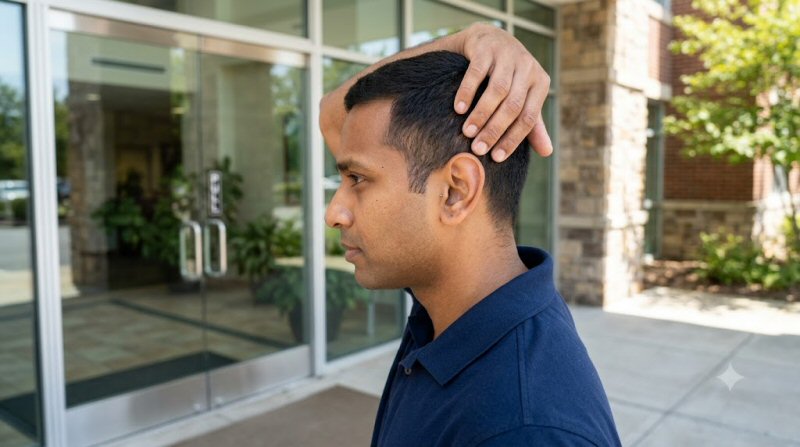
Aching outer ears in cold wind are usually thin skin and cartilage losing heat fast, not an ear infection. Cover the pinna and know when pain should be checked.

The first cold gust off a street corner can make the outer ear complain before the fingers do. A sharp ache, a surface burn, or a deep throb settles into the pinna — the part of the ear you can see — and sometimes into the opening of the canal. It is a familiar winter-commute sensation: uncovered ears on a walk, a bike ride, a ski-lift line, or the gap between a warm office and a windy parking lot.
For most people that ache is a heat-loss problem, not an infection starting in the wind. The outer ear is built like a small radiator. Skin is thin, fat is almost absent, and cartilage underneath conducts cold well. Wind strips heat faster than still air. The ache usually fades within minutes of getting out of the gust. Pain that stays, swells, drains, or arrives with a real drop in hearing is a different story.
What This Ache Feels Like
Cold-wind ear pain is usually outside the eardrum. People describe a sting on the rim, a dull ache through the whole pinna, or a raw feeling at the canal entrance. The windward ear often hurts first. Both ears can ache if the gust is head-on. Talking, chewing, or a hat band pressing the cold cartilage can make it sharper for a moment.
The pain tends to peak while you are still outside, then throb or tingle as the ear rewarms indoors. Pink color returns. Hearing stays ordinary. There is no spinning, no fluid, and no fever. If you cup a bare hand over the ear, the ache often eases before you even get inside, which is a useful clue that the problem is surface cooling.
That pattern is different from pressure fullness, the blocked feeling some people get when the weather changes or after a flight. Fullness sits deeper and changes with swallowing. Wind ache sits on the outer ear and tracks the gust.
Why the Outer Ear Loses Heat So Fast
The pinna sticks out into moving air with a large surface and very little insulation. Arteries from the superficial temporal and posterior auricular vessels feed a thin skin envelope over elastic cartilage. There is no thick fat pad the way there is on the cheek or scalp. In still cold air the ear already runs cooler than the chest. Add wind and convective loss rises sharply.
Randall Osczevski and Maurice Bluestein, working on the modern wind-chill model, showed how moving air increases heat loss from exposed skin even when the thermometer has not changed. The ear is one of the first places that math shows up in real life. A hat that stops above the pinna leaves the radiator uncovered. A hood that flaps open does the same on the windward side.
Thomas Lewis, studying skin vessels in the early twentieth century, described how cold triggers strong vasoconstriction, with a later oscillating “hunting” rewarming in fingers. Ear skin constricts too. Less warm blood reaches an already exposed surface, nerve endings sit close to the air, and the result is ache or burn rather than a quiet chill. The great auricular nerve, the auriculotemporal nerve, and the auricular branch of the vagus — sometimes called Arnold’s nerve — all supply parts of the outer ear, which is why a small area can feel disproportionately sore.
The canal entrance can join in. Cold, dry wind pulls moisture from the thin canal skin. Wax is not a winter coat. Microscopic dryness stings, especially if earbuds or hearing aids have already irritated the entrance. That sting is still a surface problem. It is not the same as a middle-ear infection.
Cold Water Over Years Is a Different Story
A single windy walk does not grow bone in the ear canal. Repeated cold-water exposure can. Joseph DiBartolomeo described bony exostoses of the external canal in people who spent years in cold water. David Kroon and colleagues later found these “surfer’s ear” bumps more often in cold-water surfers than in warm-water surfers. The bumps narrow the canal slowly. They can trap water and wax, and they are a long-exposure finding, not the ache you feel on a Tuesday commute.
That distinction matters. Aching pinnae in a winter wind are common and reversible with cover and warmth. Gradual blockage, repeated swimmer’s infections, and a canal that a clinician can see narrowing are the cold-water pattern. Recreational swimming in cold water a few times does not equal a career in the surf, but it is the exposure DiBartolomeo and Kroon were mapping, not a breezy sidewalk.
Common Reasons It Shows Up Now
Modern winter days are a series of warm rooms and short, harsh outsides. Ears adapt poorly to that contrast. Typical setups:
- A commute on foot or by bike with a hat that covers hair and misses the pinna
- Wet hair, a recent shower, or sweat under a hood, then wind
- Earbuds that leave the outer ear bare while blocking a little of the canal’s own warm air
- Running or brisk walking, which increases airflow over the ear even on a mild day
- A scarf wrapped at the neck with the ears still in the open
- Desk work in dry heated air, then a door that opens onto a crosswind
The same cold air often makes the nose run. That drip is a separate reflex, covered in why the nose runs in the cold. Wind can also make the eyes water by cooling the corneal surface, which is a different nerve story from the ear, described in why eyes water in the wind. If the ear feels blocked rather than sore on the outside when the barometer shifts, that is closer to ear fullness when the weather changes.
Less Common but Worth Separating
Most wind ache is benign. A few neighbors look similar at first and should not be filed under “just the weather.”
Otitis externa, the canal-skin infection Peter Roland and others have described in detail, brings pain when the ear is tugged, moisture history, and sometimes discharge or a muffled feeling. Wind can irritate an already dry canal, but pus, swelling, and pain that worsens over a day are not simple cooling.
Perichondritis is infection of the tissue around ear cartilage, often after a piercing, trauma, or a burn. The pinna swells, reddens, and stays hot after you are indoors. That needs prompt care, because cartilage does not have a generous blood supply.
True frostnip or frostbite is numbness, waxy white or gray skin, and poor rewarming, usually in harder cold than a city gust. An ache that pinks up in a warm room is not frostbite. A pinna that stays white and wooden is.
Referred pain can fool people. A clenched jaw in the cold, a dental problem, or throat irritation sharing Arnold’s nerve can ache near the ear. The clue is pain that does not track the wind and does not ease when the ear is covered. Vesicles, facial weakness, or a burning rash around one ear are urgent and are not a wind story.
Hidden Triggers
A few habits make an ordinary cold day feel worse.
A headband that is too tight presses cold cartilage and sore skin at the same time. Cotton earbuds left in after a workout hold moisture at the entrance, then wind finishes the irritation. Headphones that clamp the pinna on a winter run do the same. Sleeping on a newly cold ear is not the cause, but a canal already itchy from dry air will complain more outdoors. One ear may hurt more after an old piercing, a previous canal infection, or simply because that side faced the street.
Sunglasses or a mask strap sitting on the upper ear can add a pressure point once the skin is chilled. None of these create an infection by themselves. They lower the threshold for ache.
When to Worry
Cover the ear and get out of the wind. Most ache should fade as color returns. Seek care the same day if:
- The pinna stays white, hard, or numb after rewarming
- The whole outer ear swells, reddens, or feels hot indoors
- There is discharge, bleeding, or a foul smell
- Hearing drops, or sound becomes sharply muffled
- You have spinning, facial weakness, a rash, blisters, or fever
- Pain keeps building for hours after you are warm
- A new piercing or an injury sits under the sore spot
A brief throb as the ear reheats, with normal hearing and no drainage, can be watched. Pain plus a clear hearing change should not be waited out over a weekend.
Myths vs Facts
Myth: Cold wind gives you a middle-ear infection.
Fact: Wind cools the outer ear. Middle-ear infections are usually a viral or bacterial sequence behind the eardrum, not a gust. Canal infections prefer moisture and damaged skin.
Myth: If it aches, the eardrum is inflamed.
Fact: Pinna pain that stops when you cover the ear is almost always in front of the eardrum. Tugging the ear worsens canal pain more than middle-ear pain.
Myth: Earplugs are the best winter fix.
Fact: A hat or band over the pinna stops the radiator effect. Deep plugs do not warm the outer ear and can trap moisture if worn all day.
Myth: Aching in the wind means surfer’s ear.
Fact: Exostoses are slow bony growths from repeated cold water, as DiBartolomeo and Kroon described. One windy walk does not build them.
Myth: Rubbing a numb ear hard is the fastest way to save it.
Fact: If skin is truly numb and white, hard rubbing can injure it. Gentle covering and gradual warmth are safer. An aching, still-pink ear can be cupped with a dry hand.
How to Manage It
Treat the outer ear as exposed skin that happens to hear.
Wear a cover that actually includes the pinna: a beanie pulled down, a fleece band, or a hood that stays forward in a crosswind. Cyclists and runners lose heat fastest because speed adds wind. A thin band under a helmet often does more than a warmer jacket.
Rewarm gradually. Cupped dry hands, a warm room, or a scarf are enough for ordinary ache. Skip hot water bottles pressed on a numb ear, and skip pouring hot water into the canal. Do not put cotton swabs, oils, or alcohol down the canal to “warm it up.”
Keep the canal entrance dry if you are prone to sting. Dry the outer ear after showers. Give earbuds a break on the coldest days if the entrance is already itchy. If you need sound, over-ear muffs that cover the pinna warm better than in-canal tips.
On very cold, windy days, shorten the uncovered stretch. The same Osczevski-style convective loss that makes a short walk bite will ease as soon as airflow drops. A building entryway is a reasonable treatment.
If cold, dry air leaves the canal itchy for days, that is a skin-barrier issue more than a wind injury. A clinician can suggest appropriate outer-ear care. Do not start steroid or antibiotic drops on a guess.
People who surf, swim, or kayak in cold water for years are in the exposure group Kroon studied. Ear plugs designed for water, and time out of cold water, are the relevant prevention there. They are optional for a sidewalk, not required.
When to See a Doctor
Make an ordinary appointment if wind ache keeps returning with discharge, if the canal feels blocked between cold days, or if jaw pain and ear pain travel together. Go sooner for swelling of the pinna, a piercing that will not settle, hearing loss, spinning, facial weakness, or skin that will not rewarm. Those are not hat problems.
Tell the clinician whether the pain is on the outer ear, whether wind starts it, and whether hearing changes. That history separates Lewis-style surface cooling from canal infection, pressure trouble, and the rare cold-water exostosis.
FAQs
Why does only one ear ache?
The windward ear loses heat faster. A strap, an old piercing, or a slightly drier canal on that side can add to it. One-sided pain with hearing loss or drainage still deserves a look.
Is the throb indoors a sign of damage?
Usually it is blood flow returning to cold skin, the same rewarming Lewis described in chilled skin vessels. It should settle as the ear pinks up. Throbbing with swelling or fever is not simple rewarming.
Can a windy day cause swimmer’s ear?
Wind alone rarely does. Otitis externa prefers moisture plus irritated canal skin. Wind can sting a canal that is already dry or recently wet. Discharge and pain when the ear is pulled are the infection clues Roland’s work helped clinicians recognize.
Should I sleep in earplugs after a cold walk?
No. Ordinary wind ache does not need overnight plugs. Plugs can hold moisture in. Cover the ear outdoors next time, and leave the canal open once you are warm.
Does this mean I am getting frostbite?
An ache with pink skin that recovers indoors is heat loss, not frostbite. Frostnip and frostbite involve numbness and color that does not return promptly. That needs care, not another lap around the block.
When is a hat not enough?
If covering the pinna does not change the pain, think beyond wind: canal infection, jaw referral, pressure fullness, or a skin problem on the ear. Pain with hearing change, drainage, swelling, or facial weakness should be checked whether or not it is cold outside.
Conclusion
Aching ears in cold wind are usually the pinna doing what its shape predicts: losing heat fast through thin skin and cartilage while nerve endings report the chill. Lewis’s cold vessel response, everyday wind chill, and a hat that stops too high explain most winter commutes. DiBartolomeo and Kroon’s cold-water bone growth is a separate, slower story. Cover the outer ear, rewarm gently, and keep drops and swabs out of the canal. If color, hearing, or the shape of the ear change, treat that as more than weather.