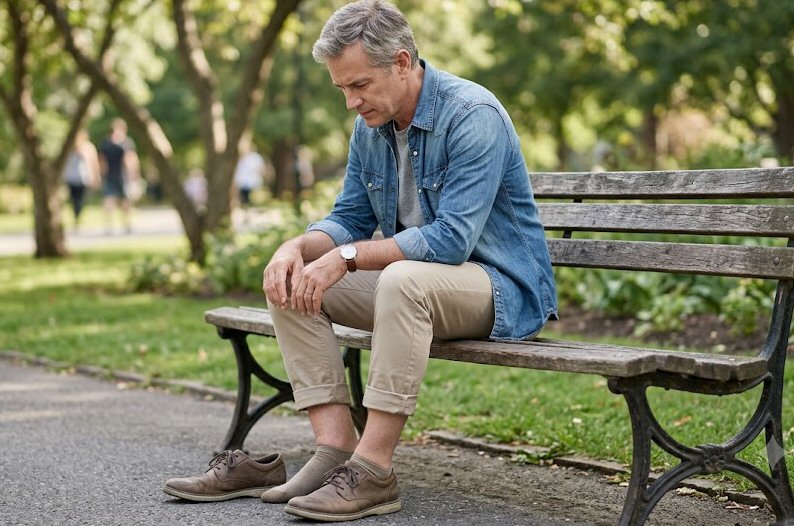
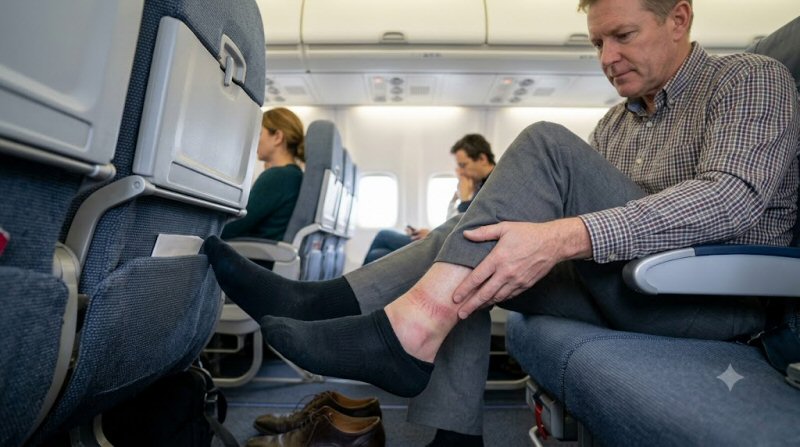
Mild ankle swelling after a long walk is common. It usually comes from fluid pooling when the calf muscle pump works hard then rests. Here is why it happens and when it is worth checking.
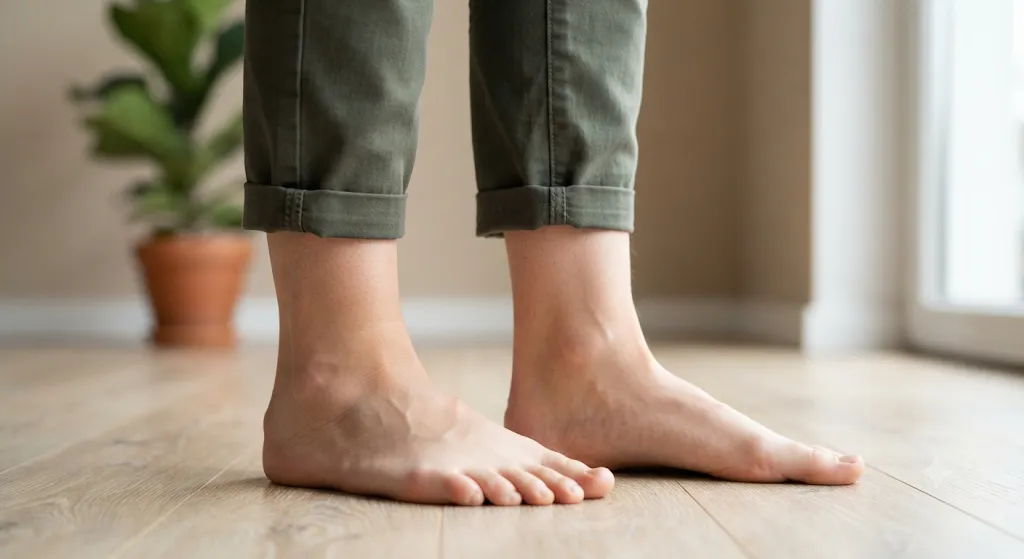
You finish a longer walk than usual and notice your ankles look a little fuller, your socks leave deeper marks, or your shoes feel tighter than when you started. The skin over the ankle bone can look smoother or slightly puffy. For most people this is ordinary dependent edema: fluid that collected in the lower legs while the muscles were working and then settled once you stopped moving. It is rarely a sign of trouble on its own, especially if it fades after a few hours of rest and elevation.
What This Symptom Feels Like
The swelling is usually bilateral (both ankles), soft, and painless. You may see indentations from sock elastic that take longer than usual to disappear. The puffiness is most obvious around the malleoli (the bony bumps on either side of the ankle) and can extend a short way up the lower shin. It often appears only after the walk ends, not during it. Some people also feel a mild sense of heaviness or tightness in the lower legs. Unlike sudden one-sided swelling, this version tends to even out once you lie down or prop your feet up.
Common Causes
The most frequent reason is simple gravity and temporary fluid shifts. During a long walk the calf muscles repeatedly squeeze the deep veins, helping push blood back toward the heart. When you stop, that muscle pump slows. Capillary pressure in the lower legs remains a little higher for a while, so a small amount of fluid leaks into the surrounding tissues. Warm weather, salty food earlier in the day, tight socks, or shoes that constrict the ankle can make the effect more noticeable. Mild dehydration followed by drinking a larger volume of water can also shift fluid into the interstitial space. Hormonal changes around the menstrual cycle sometimes amplify the same process in women.
Why This Happens
Venous return from the feet depends heavily on the calf muscle pump, sometimes called the peripheral heart. Each step compresses the veins against the fascia and forces blood upward through one-way valves. Between steps the valves close so blood cannot fall back. After prolonged walking the veins and surrounding tissues are slightly more compliant, and a modest amount of plasma ultrafiltrate has already left the capillaries. Once you sit or stand still, the pump is less active and that fluid pools. Research on traveler’s edema and occupational standing (work by researchers such as J. Scurr and M. Landgraf) shows the same mechanism: reduced calf activity allows measurable increases in lower-leg volume. The swelling after a walk is usually smaller and shorter-lived than the swelling after hours of uninterrupted sitting.
Less Common but Serious Causes
One-sided swelling, rapid onset, or swelling accompanied by pain, redness, warmth, or shortness of breath needs prompt attention. Deep-vein thrombosis can produce unilateral calf or ankle swelling. Heart failure, kidney disease, or severe venous insufficiency can cause more persistent bilateral edema that does not resolve with simple elevation. These are uncommon explanations for swelling that appears only after a single long walk and then fades. A history of blood clots, recent surgery, or known heart or kidney problems raises the likelihood that the same walk would produce more significant swelling.
Hidden Triggers
Several everyday factors magnify the ordinary fluid shift. A walk on hot pavement increases vasodilation in the skin and can raise capillary filtration. Eating a salty meal beforehand expands plasma volume slightly. Shoes with a rigid collar or tight elastic socks act as a tourniquet just above the ankle, trapping fluid distal to the constriction. Standing still for a long time immediately after the walk (for example, talking on the phone) lets more fluid settle. Certain medications—calcium-channel blockers, some NSAIDs, or hormonal therapies—can also predispose to dependent edema even after modest activity.
When to Worry
See a clinician if the swelling is only on one side, appears suddenly without a clear activity trigger, is painful or red, or is accompanied by chest pain or breathlessness. Persistent swelling that does not improve overnight, progressive enlargement of the ankles over weeks, or swelling that reaches the knees also deserves evaluation. People with known heart, kidney, or liver disease should mention even modest new ankle swelling to their doctor. For otherwise healthy adults, mild bilateral puffiness that resolves with rest and elevation after a longer walk is usually benign.
Myths vs Facts
- Myth: Ankle swelling after walking always means poor circulation. Fact: Temporary dependent edema is common in people with normal arteries and veins; it reflects a brief mismatch between capillary filtration and lymphatic/venous clearance once the muscle pump slows.
- Myth: You should avoid long walks if your ankles swell. Fact: Regular walking strengthens the calf pump and usually reduces day-to-day swelling over time. The temporary puffiness after an unusually long outing is not a reason to stop.
- Myth: Compression socks are only for flights or medical conditions. Fact: Light compression can reduce post-walk fluid accumulation for people who notice the effect often, though it is not required for occasional mild swelling.
How to Manage It
Elevate both legs above heart level for 15–20 minutes after the walk; the fluid returns to the circulation quickly. Gentle ankle pumps and calf raises while sitting also reactivate the muscle pump. Loosen or remove constricting socks. Cool water on the lower legs or a brief contrast shower can reduce local vasodilation. Staying reasonably hydrated and moderating very salty meals on days you plan longer walks helps. If the pattern repeats, a pair of light graduated compression socks worn during the walk often keeps the ankles slimmer. Related articles on the site cover ankle swelling on a flight and feet that swell after sitting, both of which share the same underlying fluid mechanics.
When to See a Doctor
Schedule a visit if swelling becomes frequent even after short walks, fails to resolve overnight, is accompanied by new shortness of breath or fatigue, or if you have risk factors for venous or cardiac disease. A simple examination and, when indicated, ultrasound or blood work can rule out the uncommon serious causes. Most people never need more than the self-care steps above.
FAQs
How long should the swelling last?
For most healthy adults it begins to recede within one to three hours of elevation or overnight rest and is gone by the next morning. Swelling that is still obvious the following afternoon warrants a check.
Does walking more make the swelling worse?
An unusually long or intense walk can produce temporary swelling the first few times. Consistent moderate walking tends to improve venous return and reduce the tendency over weeks. The calf muscles become more efficient at clearing fluid.
Are compression socks helpful for post-walk swelling?
Yes for many people. Light (15–20 mmHg) graduated compression worn during the walk reduces capillary filtration and supports the muscle pump. They are optional for occasional mild swelling.
Can heat or humidity make it more noticeable?
Yes. Heat dilates skin vessels and increases fluid leakage. A long walk on a hot day often produces more visible ankle fullness than the same distance in cooler weather.
Is one ankle swelling more than the other normal?
A small difference can occur if one leg works harder or if a sock is tighter on one side. Marked asymmetry, especially with pain or color change, should be evaluated promptly to exclude a clot or other local problem.
Should I stop walking if my ankles swell?
No. Occasional mild bilateral swelling that resolves is not a reason to reduce activity. Walking remains one of the best ways to keep the calf pump and lymphatic clearance working well. Articles such as why your lymph still expects you to walk explain the longer-term benefit.
Conclusion
Mild ankle swelling after a long walk is a common, usually harmless result of fluid shifts once the calf muscle pump slows down. Elevation, gentle movement, and avoiding tight footwear clear it for most people. Persistent, one-sided, or symptomatic swelling deserves medical attention, but the ordinary post-walk puffiness that fades with rest is simply the body adjusting after using its lower-leg circulation hard. Regular walking, in fact, tends to make the same swelling less likely over time.