Your gut has its own nervous system — millions of neurons that still expect walking to pace motility, the migrating motor complex, and after-meal transit. Sitting after every plate leaves that second brain under-cued.
You can sit perfectly still after lunch and still feel the gut working. That is not an illusion. The intestine has its own nervous system — a mesh of millions of neurons in the wall, able to run peristalsis, secretion and local reflexes even if the vagus is cut. Michael Gershon called it the second brain for a reason. It is not a metaphor for mood. It is anatomy: sensory cells, interneurons, motor neurons, and pacemaker cells that keep a tube moving food, fluid and gas on a schedule older than chairs.
That schedule still assumes you will stand and walk. Not a marathon. Ordinary locomotion. Walking changes intra-abdominal pressure, shears the mesentery, increases colonic propagating contractions, and shortens the time a meal spends in the small bowel. When every plate is followed by a screen and a seat, the enteric circuits still fire — they just fire into a quieter mechanical world than the one that trained them.
This is not an argument that sitting after a meal is a medical emergency. It is a reminder that motility is a partnership between wall nerves and a body that used to change posture many times an hour.
What This System Was Built to Do
The enteric nervous system lives in two plexuses. Auerbach’s myenteric plexus sits between the circular and longitudinal muscle and runs the motor program. Meissner’s submucosal plexus sits closer to the lining and runs secretion and local blood flow. Together they contain on the order of a hundred million neurons in a human — more than the spinal cord. John Furness, Marcello Costa and colleagues mapped the chemical codes: some cells release acetylcholine and drive contraction, some release nitric oxide or VIP and open the tube ahead of a bolus, some sense stretch, some sense nutrients.
Bayliss and Starling described the law of the intestine in 1899: pinch or distend a segment and the gut contracts above the spot and relaxes below it. That descending inhibition is how a bolus is handed downstream instead of squeezed in place. The program does not need a thought. It needs a wall that can stretch and muscle that can answer.
Between meals a different program takes over. Charles Code, John Szurszewski and later David Wingate characterized the migrating motor complex — the MMC — a slow housekeeping wave that travels from stomach through small intestine during fasting, sweeping residue and bacteria onward. Phase III of the MMC is the housekeeper. It is one reason an overnight gap still matters for the small bowel. A constant graze never quite lets the broom finish.
Pacemaker cells sit in the wall as well. Jan Huizinga and Kenton Sanders spent careers on interstitial cells of Cajal — ICC — the network that sets slow-wave frequency so smooth muscle can fire in an organized rhythm rather than a twitchy chaos. Damage or silence that network and you get the disordered transit of gastroparesis or some chronic constipation, not just “stress.”
The Ancestral Briefing
A foraging day was not eight hours of chair and one scheduled walk. It was standing, squatting, carrying, pausing, walking again. The gut rode inside a trunk that changed shape. Each step raised intra-abdominal pressure a little, moved the mesentery, and gave the colon a mechanical nudge that laboratory motility traces still capture.
Holdstock, Misiewicz and colleagues showed decades ago that even modest physical activity increases colonic propulsive activity. Walking after a meal speeds gastric emptying and small-bowel transit compared with lying or sitting still — work associated with names such as Keeling, Oettlé and Satish Rao’s motility groups. The effect is not magic. Upright posture plus rhythmic trunk motion gives the enteric program the same kind of assist a calf pump gives veins.
The squat toilet story is the same family of mechanics. Sitting on a modern commode keeps the puborectalis kinked; a squat or a footstool opens the anorectal angle. The nerves can push harder into a better geometry. That is why why your bowels still expect a squat is not folklore. It is the distal end of the same partnership.
Fiber and bulk still matter. Burkitt’s old observation that high-residue stools move more easily is still true. The enteric system expects a bolus with volume, not only a puree. Walking does not replace why your colon still expects fiber and bulk. It completes it. A formed stool in a walking trunk is what the motor program was written for.
The Modern Mismatch
The mismatch is quiet. You eat at a desk. You stay at the desk. The cephalic briefing — smell, sight, chewing — may have been short. The meal may have been soft and fast. Then the body that should have stood stays folded at the hips for two more hours. Gastric emptying still happens. The MMC still tries to run if you leave a gap. But propagating colonic contractions are fewer. Gas that would have moved on a walk pools and stretches the wall. Stretch is read as discomfort. The second brain is not broken. It is under-cued.
Afternoon bloating often has this shape: a large or fast lunch, little walking, a carbonated drink, and a gut that is doing its job in a still abdomen. The same hours also blunt the after-meal glucose sink that working muscle provides, which is why why your blood sugar still expects a walk after meals is not a separate religion. Muscle and gut share the walk.
Late-night eating adds a second insult. The MMC prefers an empty night. A snack at 11 p.m. restarts fed motor patterns when the small bowel would rather sweep. Combine that with a day of sitting and you have a tube that was asked to digest almost continuously in a trunk that barely moved.
What You Actually Feel
Under-cued motility does not announce itself as a diagnosis. It announces itself as tightness under the ribs after lunch, a need to unbutton, a gurgle that seems louder when you finally lie down, a bowel habit that works on weekends when you walk and stalls on desk weeks. Some people feel better the moment they walk around the block. That is not placebo in the insulting sense. It is the mechanical assist arriving.
Coffee can still trigger the gastrocolic reflex — a real enteric and vagal surge after a meal or a mug — which is why the bathroom trip after breakfast is common even in sitters. The reflex is not the problem. The missing walk is the missing second half of the script.
When the Nerves Are Not Just Under-Cued
Not every bloated afternoon is a chair problem. Diabetic autonomic neuropathy can silence the MMC and slow the stomach. Parkinson disease and other synucleinopathies often start with constipation because enteric neurons are affected early. Post-infectious IBS can leave the wall hypersensitive after a bout of gastroenteritis. Opioids clamp the myenteric plexus. Severe hypothyroidism slows the whole tube. A sudden change in caliber of stool, blood, nocturnal pain that wakes you, unexplained weight loss, or vomiting that will not stop is not a walking prescription. It is a reason to be examined.
The point of the mismatch frame is narrower. In a person whose endoscopy is quiet and whose blood work is ordinary, the most common missing inputs are fiber, an overnight gap, unhurried chewing, and locomotion. Those are the ancestral briefing. They are still legal.
Myths vs Facts
Myth: The second brain means your mood is “all in the gut.”
Fact: The enteric nervous system is real motor and sensory hardware. It talks to the brain through the vagus and spinal afferents, and mood can change motility. That does not make every worry a microbiome plot. Gershon’s phrase was about autonomy of the wall, not a slogan.
Myth: You must walk immediately or the meal “just sits there.”
Fact: The stomach will empty sitting down. Walking speeds the timetable and helps the colon. It does not restart digestion from zero.
Myth: Any movement is the same as a walk.
Fact: Fidgeting helps a little. A ten-minute easy walk after a meal is the dose most motility studies actually used. A later punishing workout is a different stimulus and can feel worse if you are already stretched with gas.
Myth: Bloating always means too much bacteria.
Fact: Sometimes it does. Often it means ordinary gas in a still, folded abdomen plus a fast or large meal. Treat the mechanics before you treat the culture.
How to Give the Gut the Walk It Expects
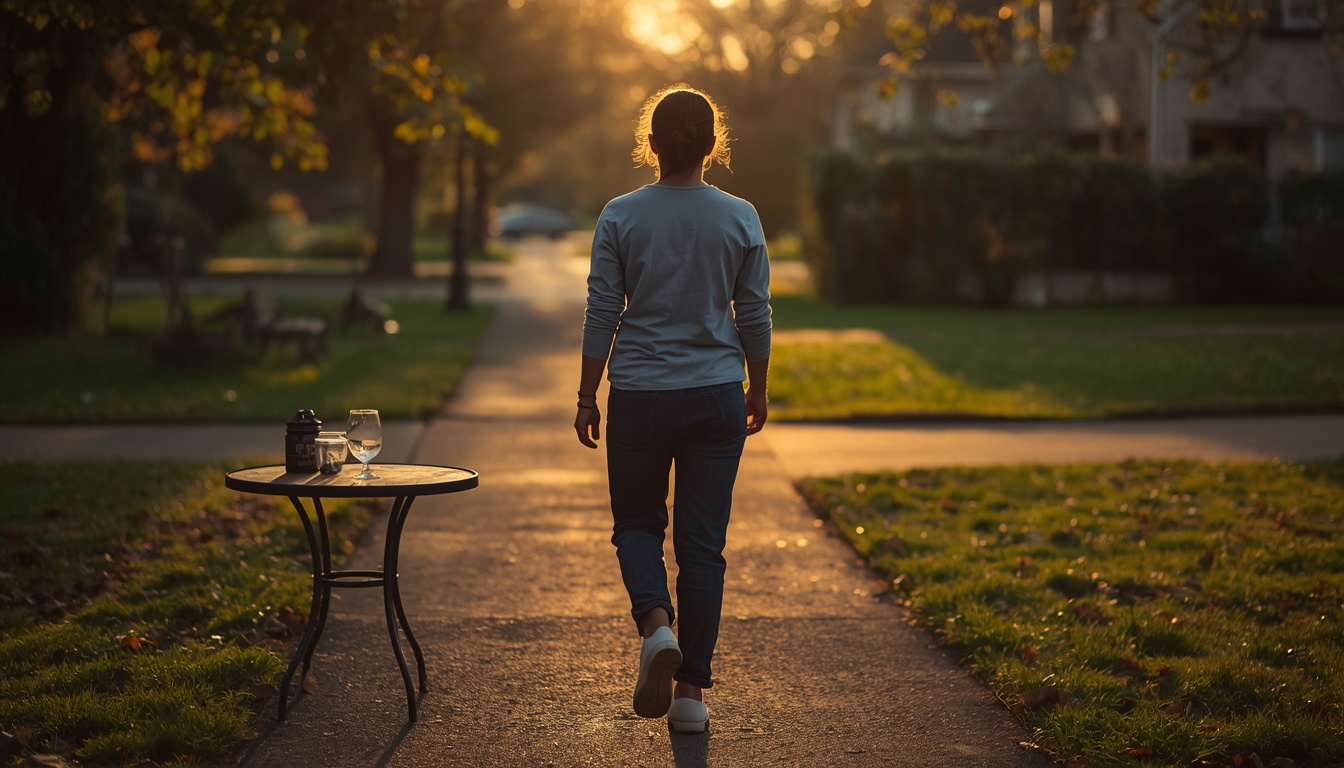
Stand up when the plate is empty. Two to ten minutes of easy walking is the practical unit — a corridor, a block, a kettle and back. You do not need athletic clothes. You need a change of trunk shape while the meal is still in the upper gut.
Keep an overnight gap most days so the MMC can run a housekeeper wave. That is the same logic as why your liver still expects an overnight fast, told from the bowel’s side.
Chew. Soft diets and hurried swallows give the enteric sensors a smear instead of a bolus. The wall reads stretch. A real chew creates stretch worth answering.
Put fiber back in a form the colon can ferment and bulk. Walking on an empty, low-residue tube is better than no walking. Walking on a reasonable stool is the original design.
If work chains you to a seat, break the chain on a timer you will actually obey. Motility does not require a gym. It requires the abdomen to stop being a still box for hours.
When to See a Doctor
See a clinician if bloating or constipation is new and persistent, if pain wakes you, if there is blood, black stool, fever, vomiting, or weight loss, if diarrhea and constipation swing in a way that is new for you, or if you have diabetes with erratic emptying. Red-flag motility is not a lifestyle essay. The walking advice is for the large middle of the curve: a gut that still works and a life that forgot to move it.
FAQs
Does walking after every meal really change digestion?
Yes, modestly and reliably in the studies that measured emptying and transit. The change is minutes to an hour on the clock, not a personality transplant. For many people that is the difference between tightness and comfort.
Is the enteric nervous system the same as the vagus nerve?
No. The vagus is the long cable from brainstem to gut. The enteric system is the local network in the wall. Cut the vagus and much of peristalsis still runs. The two systems talk constantly. They are not the same organ.
Can I replace the walk with a stretching session on the floor?
Gentle movement helps. Upright walking has the best evidence for speeding transit because it combines posture, gravity and rhythmic trunk motion. Floor stretching is a good extra, not a full substitute.
Why do I feel more bloated at a desk than on a travel day when I walk more?
Because the desk day is the mismatch in pure form: fed motor patterns, little propagating colonic activity, and a folded hip angle for hours. Travel walking is closer to the briefing, even if the food is worse.
Does this mean I have IBS if I feel better after a walk?
No. Feeling better after a walk is what a working enteric system does when you finally give it mechanics. IBS is a separate diagnosis built on recurrent pain and a change in bowel habit. Do not self-assign it from one good block.
How soon after eating should I walk if I reflux?
Stay upright, but keep the first minutes easy. Bending and belts are worse than a slow corridor walk. If reflux is frequent after dinner, the meal size and the hour may need changing as much as the walk.
Conclusion
Your gut does not need you to become a gastroenterologist. It needs a bolus, a gap, and a body that stands up. The enteric nervous system Bayliss, Starling, Code, Szurszewski, Furness, Gershon, Huizinga and Sanders spent careers describing is still in the wall, still running local programs, still able to housekeep if you let the night go empty. What it cannot do is invent locomotion. That part was always yours. Ten minutes after the plate is not a wellness trend. It is the missing half of a motor pattern that never learned how to live in a chair.