Pale or blotchy fingers in the cold can be ordinary heat-saving vasoconstriction — or a Raynaud attack. How Raynaud, Lewis, Flavahan and Daanen mapped the difference, and which color changes deserve a closer look.
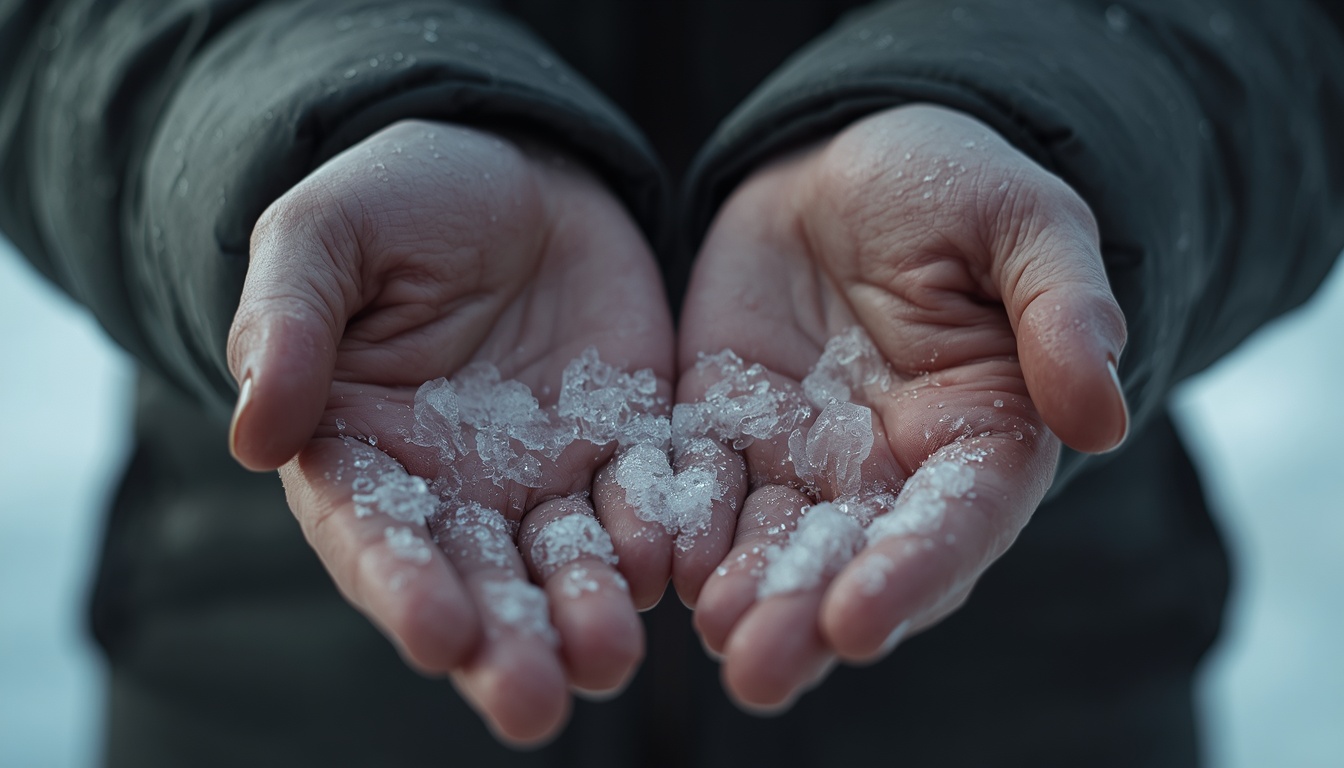
You come in from a cold walk, a refrigerated aisle, or an air-conditioned office, and two or three fingertips look oddly pale. They feel numb, slightly wooden, and slower to pink up than the rest of the hand. A minute later they sting as blood returns. The change can look dramatic on light skin and more like a dull, cooler patch on darker skin — either way, it is easy to wonder whether the vessels themselves have gone wrong.
Often they have not. Fingertips are among the most tightly regulated heat valves in the body. They are built to dump heat when you are warm and to shut down flow when you are cold. That shutdown can look like a brief white or blotchy phase. What is not ordinary is a sharp, well-bordered attack that marches through white, then blue, then an angry flush, especially if it is triggered by mild cold or stress and lasts long enough to hurt. That pattern has a name, a history, and a molecular explanation that is more interesting than “poor circulation.”
What This Symptom Feels Like
Ordinary cold fingers feel uniformly cool. The skin may look a little paler or mottled. Dexterity drops. Fine buttons become clumsy. Warmth returns fairly evenly once you are indoors, rub your hands, or put them under a jacket.
A Raynaud-type attack is more theatrical. One or more digits — often the index, middle, and ring fingers, often matching on both hands in the primary form — blanch in a clear line. The fingertip can look waxy. Sensation dulls. After a few minutes the same area may turn dusky or bluish as leftover blood sits and gives up oxygen. When the spasm lets go, the digit flushes red, throbs, and may tingle or swell for a short stretch. Ears, nose, and toes can join the pattern. Stress alone, without a temperature drop, can start it in some people.
On darker skin the classic “white–blue–red” sequence is easier to miss. Coolness, numbness, a grayish or ashen patch, and a delayed, throbbing rewarm are the more reliable clues.
Common Causes
The everyday explanation is cold-induced cutaneous vasoconstriction. Skin in the fingers, toes, ears, and nose is rich in arteriovenous anastomoses — short-circuit vessels that can open to dump heat or close to spare it. When skin and core temperature fall, sympathetic nerves tighten those vessels and the small arteries feeding them. Blood is redirected toward the trunk. Fingertip temperature drops fast. That is a feature, not a bug: it is how a hairless primate keeps a viable core in weather that would otherwise bleed heat from ten thin digits.
A few minutes of local cold can then trigger a second, almost contradictory event. In 1930 the Welsh cardiologist Thomas Lewis described cyclic rewarming of a finger left in ice water. After an initial plunge in temperature, the fingertip suddenly warmed, then cooled, then warmed again. He called the oscillation the hunting reaction. Modern work — especially from Hein Daanen and colleagues mapping cold-induced vasodilation — treats it as a local protective rhythm. Arteriovenous anastomoses briefly open, blood floods the tip, tissue temperature rises a few degrees, and frostbite risk falls. Then constriction returns. Most people show some version of this if a finger is held in cold water long enough. It is one reason a numb fingertip can suddenly sting and pink without you having done anything clever.
The other common explanation is primary Raynaud phenomenon: an exaggerated version of the same machinery, usually starting in teens or young adulthood, more often in women, often running in families, and not attached to another disease. Attacks are typically symmetric, brief, and free of sores. Between episodes the hands look and work normally.
Why This Happens
In 1862 Maurice Raynaud described episodic digital pallor and cyanosis and blamed an overactive sympathetic nervous system. Lewis later argued for a “local fault” in the digital arteries themselves: he could still provoke spasm after warming the body, and even after numbing or cutting sympathetic supply. Both were partly right.
Nicholas Flavahan’s laboratory work in the 2000s stitched the two ideas together at the receptor level. Cooling does not only fire nerves. It also changes how vascular smooth muscle hears those nerves. In the small arteries of human fingers, α2C-adrenoceptors — a subtype that is relatively quiet at normal temperature — move from inside the cell toward the membrane when the vessel is cooled. Once on the surface they amplify the constrictor signal from norepinephrine. RhoA/Rho-kinase helps lock the contractile machinery. The result is a local gain knob: the same sympathetic burst that would only cool a warm finger can shut a cold one almost closed.
That is why a refrigerated can, a steering wheel on a winter morning, or an air-conditioned supermarket can look out of proportion to the air temperature. The vessel is not merely following a brain command. It is locally hypersensitive to cold. Emotional stress adds a second sympathetic volley and can start an attack even in a mild room — a reminder that the same pathway that gives some people sweaty palms before a hard conversation can also clamp digital arteries.
Normal hunting-reaction vasodilation is thought to involve those same anastomoses briefly escaping the clamp — from cold-paralysis of smooth muscle, a burst of local dilator chemicals, an axon reflex, or a drop in neurotransmitter release. The debate is not settled. What is settled is the job description: keep the fingertip from becoming a heat radiator when you need a core, then briefly feed it so it does not freeze.
Less Common but Serious
Secondary Raynaud phenomenon is the version that should change the calendar, not just the gloves. It appears later — often after 30 or 40 — may hit one hand harder than the other, can be painful enough to wake someone, and is attached to another process: systemic sclerosis and mixed connective-tissue disease most classically, also lupus, Sjögren syndrome, rheumatoid arthritis, vasculitis, hypothyroidism, blood-viscosity disorders, frostbite damage, or vibration injury from tools. Some medicines (non-selective beta blockers, some migraine drugs, some chemotherapy agents) and smoking tighten the same vessels.
The worry is not the color itself. It is ischemia that lasts. Painful sores on fingertips, pitted scars, a finger that stays white after warming, or nailfold capillaries that look dilated and dropout-ridden under magnification are the language of secondary disease. Fredrick Wigley and others have spent decades teaching clinicians to treat that pattern as a vascular emergency of the small arteries, not a cosmetic nuisance.
Hidden Triggers
Air conditioning is a modern specialist at this reflex. The room feels comfortable to the trunk while the hands sit in moving cool air. Holding a cold drink, gripping a frozen steering wheel, or typing in a chilly office can cool digits faster than the rest of you notices.
Caffeine, nicotine, and decongestants add constrictor tone. A sudden emotional spike — email, argument, stage — can start an attack without a temperature change. Occupations that vibrate the hands (jackhammers, some power tools) injure small vessels over years. Repetitive strain and prior frostbite leave a local memory. Low body-fat people and those who already run cool peripherally simply reach the hunting-reaction threshold sooner.
The opposite problem — fingers that swell and trap rings in heat — is the same vascular bed pointed the other way. Both are stories about anastomoses that modern indoor life keeps flipping between idle and overdrive.
When to Worry
Worry less about a fingertip that looks pale after a genuine cold exposure and pinks up within minutes of warmth.
Worry more when:
- Color change is sharply demarcated and marches through white then blue then a painful flush after mild cold or stress
- Attacks start after age 30, hit one side, or keep getting worse
- Fingertips develop sores, pits, or scars
- The same months bring stiff skin, joint swelling, unusual fatigue, mouth dryness, or a positive autoimmune blood test you already know about
- A digit stays pale or dusky after you have warmed it
- You use vibrating tools or smoke and the attacks are new
Those features do not diagnose a systemic disease by themselves. They are the reason to let a clinician look at nailfold capillaries and decide whether labs are worth drawing.
Myths vs Facts
Myth: White fingers in the cold always mean Raynaud’s disease.
Fact: Ordinary vasoconstriction and a brief hunting-reaction flush are common. Raynaud is a specific, exaggerated, often triphasic attack pattern.
Myth: It is just “poor circulation” from the heart.
Fact: This is a local arterial and anastomotic response. Central pulse and blood pressure are usually fine. That is why warming the hands and the trunk works better than “improving circulation” in the vague sense.
Myth: If you can still move the finger, the vessels are fine.
Fact: Raynaud spasm can empty a fingertip of useful flow while tendons still work. Color, temperature, and pain are better guides than motion.
Myth: Only pale-skinned people get this.
Fact: The physiology is the same. The palette is harder to read on darker skin, so numbness and delayed rewarming matter more than a textbook photograph.
Myth: You should soak the hands in very hot water to “open the vessels.”
Fact: Gentle warmth is the treatment. Scalding a numb digit is an easy way to burn skin that cannot yet feel the heat.
How to Manage It
Keep the whole body warm, not just the hands. A hat and a layer on the trunk reduce the sympathetic drive that clamps digits. Gloves before you are cold beat gloves after. Lined mittens trap more heat than thin fashion gloves. Touching metal and cold drinks with a sleeve or a cloth removes a classic local trigger.
During an attack, get out of the draft, swing the arms in wide circles to throw blood into the hands, tuck fingers into armpits, and wiggle them. Do not smoke through it. If stress is the spark, the same down-regulation that helps other sympathetic symptoms — slower exhalations, leaving the triggering room — shortens many attacks.
Avoid sudden swings when you can. The skin circulation still prefers sensible temperature contrast over an iced office after a hot car. If you have true primary Raynaud and simple measures fail, a clinician may discuss a dihydropyridine calcium-channel blocker or, in tougher cases, other vasodilator strategies. Those are prescriptions, not first steps.
When to See a Doctor
See someone if attacks are new in midlife, one-sided, ulcerating, or paired with systemic clues. Bring photos if you can catch a color change; many attacks are gone by the time you sit in a warm waiting room. Mention vibrating tools, smoking, and every medicine, including migraine tablets and decongestants.
Urgent care is for a finger that will not rewarm, a new dark blister or ulcer on a fingertip, or color change plus chest pain, one-sided weakness, or other signs that this is not a digital-artery story.
FAQs
Is it normal for only some fingers to go pale?
Yes. Ordinary cold often hits the most exposed digits first. Primary Raynaud commonly skips the thumb and still looks roughly symmetric over time. A single finger that always stays white, especially with a sore, is a different problem and deserves an exam.
Can stress do this without cold?
Yes, in people with a Raynaud-type response. Sympathetic outflow is a real trigger. The attack still lives in the digital arteries; the emotion is only the spark.
Why do my fingers sting when they warm up?
Rewarming opens the same vessels that were clamped. Fresh blood meets cold, briefly ischemic tissue. Sensory nerves fire. The sting is usually the hunting reaction or the end of an attack, not damage — unless it happens after a long, painful white phase and leaves a sore.
Does this mean I will get frostbite easily?
People with strong spasm lose the usual warming pulse at the tip and can be more vulnerable in real cold. Gloves, dry socks, and not lingering with wet hands in wind matter more for you than for someone whose hunting reaction is brisk.
Should I take a baby aspirin or a “circulation” supplement?
Not as a home diagnosis. Primary Raynaud is a reversible spasm, not a platelet clog. Unsupervised blood thinners and herbal vasodilators add risk without treating the α2C-cold story Flavahan described. Ask a clinician before adding pills.
Will it go away?
Primary Raynaud often softens with age, warmer habits, and stopping nicotine. Secondary Raynaud follows the disease underneath. Neither is a character flaw, and neither is a reason to avoid winter — only a reason to treat fingers as the precision heat valves they are.
Conclusion
Pale fingertips in the cold are usually the old mammalian bargain: sacrifice a little digital comfort to keep the core. Lewis’s hunting reaction is the same bargain trying not to freeze the tip. Raynaud’s pattern is that bargain turned up too far, sometimes as a benign family trait and sometimes as a clue that small arteries are under a different kind of siege.
Warm the trunk, glove the hands before they numb, treat sharp one-sided or ulcerating attacks as information rather than a personality quirk, and the color change becomes a readable signal instead of a scare. Your fingers were never meant to be marble. They were meant to open and close on purpose.