Morning breath is usually overnight sulfur gases from a quiet tongue and almost no saliva, not a failed tooth. Water, a brush, and breakfast often clear it.
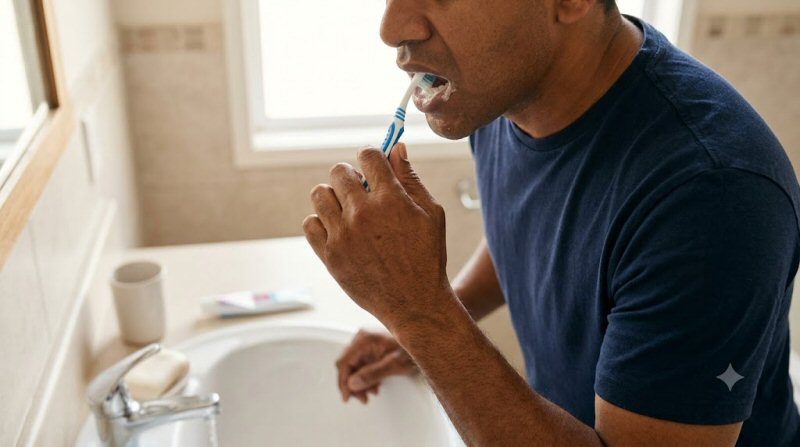
You wake up, you yawn, and the air that comes back is not the air you would offer a conversation. It can taste metallic, stale, or faintly like a coin left in a pocket. A partner may notice it before you do. The odd part is that the same mouth can smell ordinary by the time the kettle boils. That pattern is so common it has a name in the research: morning breath, the physiologic peak of oral odor.
It is not a verdict on last night’s brushing, and it is not proof that something is rotting. Sleep turns the mouth into a still, dry room. Bacteria that live on the back of the tongue keep working. The gases they make are what you smell. Most of that clears once saliva returns and the coating is disturbed.
What Morning Breath Feels Like
The smell is strongest in the first minutes after waking, before water, coffee, or food. People describe it as stale, sulfurous, eggy, or metallic rather than sweet. The tongue can look coated, especially toward the back, the same thin film described in why the tongue looks white in the morning. The mouth often feels sticky. Taste can be dull until the first sip.
It should fade after brushing, tongue cleaning, and breakfast. A brief return after coffee is common, because coffee itself is aromatic and can dry the mouth. The smell that matters clinically is the one that is still there at noon, after ordinary cleaning, or the one other people mention through the day. A single bad morning is not that pattern.
Why Sleep Makes the Mouth Smell
Daytime saliva is a rinse. Unstimulated flow in a waking adult is often around a few tenths of a milliliter a minute. Colin Dawes measured how that flow falls when the mouth is at rest, and how sleep takes it close to a stop. Swallowing also slows. Food debris and shed cells are no longer washed toward the throat. The tongue dorsum, with its papillae, holds a biofilm that would have been thinned by talking, chewing, and sipping.
Joseph Tonzetich spent decades showing that the main odors in breath are volatile sulfur compounds: hydrogen sulfide, methyl mercaptan, and dimethyl sulfide. Gram-negative anaerobes on the tongue and in gum crevices make them from cysteine and methionine in proteins. Ken Yaegaki and colleagues later tied the worst of that load to the posterior tongue coating, not to the front teeth people scrub most carefully. Mel Rosenberg’s work with organoleptic scoring and sulfide monitors found the same morning peak: odor is higher on waking than later in the day in people with no dental disease.
Israel Kleinberg described the mouth’s pH and nitrogen story in a way that fits this. When saliva is flowing and carbohydrate is being cleared, the ecology leans one way. Overnight, with almost no flow and a protein film, the sulfur-producing side has the quieter room. Philip Marsh’s ecological plaque hypothesis makes the same point without drama: the species were already there. The conditions changed.
Mouth breathing stacks the effect. Nasal congestion, a dry bedroom, alcohol, and a late salty meal all reduce the thin fluid film that normally traps and dilutes those gases. That is the same overnight dryness behind waking thirsty. The thirst and the smell are cousins.
Common Causes and Hidden Triggers
A coated tongue is the usual reservoir. Skipping the back of the tongue, or rushing a brush while half asleep, leaves it in place. Gum inflammation adds a second source: bleeding or puffy margins hold protein the sulfur bacteria can use. Walter Loesche and others linked a share of lasting bad breath to periodontal pockets, but pockets are not required for a morning smell.
Late garlic, onion, or spices do not only sit on the teeth. Some of their oils enter the blood and return through the lungs for hours. Alcohol dries the lining and can leave its own residue. Smoking coats the tongue and slows healing at the gum line. A new medicine that lists dry mouth, including some antihistamines, antidepressants, and blood-pressure drugs, can turn a mild morning smell into an all-day one. Dentures or retainers left in overnight grow their own film.
Postnasal drip feeds the back of the tongue with protein. Reflux can sour the morning taste even when the classic heartburn is missing. Tonsil stones are less common and more specific: a small pale lump in a tonsil crypt, a foul taste when it loosens, and a smell that tongue cleaning only partly fixes. None of these cancel the basic sleep story. They add a load the morning rinse cannot finish.
When It Is Not Just Morning Breath
Worry less about the first yawn and more about what remains after cleaning and breakfast. A smell that partners notice all day, gums that bleed on a gentle brush, loose teeth, or a persistent bad taste deserves a dental look. One-sided facial pain with foul nasal discharge can be a sinus source, not the tongue. A new ulcer, a white patch that does not wipe off, or a lump are not coating.
A few breath smells point away from the mouth. A fruity or acetone odor with thirst, frequent urination, and feeling unwell can be a high ketone state and needs urgent care, especially in someone with diabetes. A chronic fishy smell unrelated to food is rare and is a metabolic question, not a brushing question. Michael Scully’s clinical reviews of halitosis make the practical split: most cases are oral, a minority are ear-nose-throat, reflux, or systemic, and the history usually sorts them before any exotic test.
Children can have morning breath too, often from mouth breathing, a coated tongue, or a dripping nose. A sweet, persistently odd smell in a sick child is a reason to call, not a reason to buy a stronger rinse.
Myths vs Facts
Myth: Morning breath means you did not brush. Fact: Brushing the night before still leaves hours of near-zero saliva. The gases are made while you sleep.
Myth: Mint mouthwash fixes the cause. Fact: Many rinses mask odor for a short time. Alcohol-heavy ones can dry the lining and bring the smell back. Mechanical cleaning of the tongue does more of the real work.
Myth: The stomach is the usual source. Fact: The esophagus is closed most of the night. Rosenberg and later clinical series found the tongue and gums account for the large majority of measurable bad breath. Reflux is real, but it is not the default.
Myth: If you cannot smell it, it is not there. Fact: The nose adapts to its own odors. A partner, or the simple test of licking the wrist, letting it dry, and sniffing, is more honest than a self-check in the moment.
How to Clear It Without a Campaign
Drink water before coffee. Overnight the mouth is dry, and the first rinse dilutes what accumulated. Brush the teeth, then gently clean the back of the tongue with a scraper or a soft brush. Gagging means you went too far too fast. A few strokes are enough. Floss or use an interdental cleaner if food sat between teeth. Breakfast, especially something you chew, restarts the saliva the glands were waiting for, the same cue described in why saliva still expects a real chew.
If the bedroom air is very dry, a little humidity helps the nose stay open so you are less likely to mouth-breathe. Treat a stuffy nose rather than sleeping with the mouth open all season. Skip the late garlic if the morning matters. Keep retainers and dentures out of the mouth at night and clean them. A non-alcohol rinse can be a finish, not the whole plan.
If gums bleed, the next step is a cleaning and a look at the pockets, not a stronger mint. If a medicine is drying the mouth, the prescriber can sometimes adjust timing or the drug. Do not stop a prescribed medicine because of breath.
When to See a Dentist or a Doctor
See a dentist if the smell survives breakfast most days, if gums bleed, if there is pain on chewing, or if a retainer smells foul within hours. See a clinician sooner for foul one-sided nasal discharge, trouble swallowing, a patch that does not wipe away, or breath that smells fruity alongside thirst and illness. A morning-only smell that leaves after a brush and a meal is the ordinary version.
FAQs
Is morning breath a sign of gum disease?
Not by itself. Gum disease can add odor that lasts past noon, often with bleeding or tenderness. A smell that is gone after brushing and breakfast is the sleep-and-saliva pattern Tonzetich and Rosenberg described in people with healthy mouths.
Why does my partner notice it and I do not?
Olfactory adaptation. Your nose stops reporting a constant odor from your own airway. That is why a wrist-lick test or another person is a fairer check than sniffing your own breath.
Does coffee cause it or only cover it?
Coffee has its own aroma and can dry the mouth, so it may seem to worsen breath for a while. It does not create the overnight sulfur load. Water and tongue cleaning before coffee do more than a second cup.
Can tongue scraping damage the tongue?
Gentle scraping of the coating does not remove the papillae. Bleeding, vigorous scrubbing, or a scraper used like a blade can irritate the surface. A soft pass each morning is the version used in breath studies.
Why is it worse after alcohol or a cold?
Alcohol reduces the fluid film and leaves residue. A cold blocks the nose, so you mouth-breathe, and drip adds protein to the tongue. Both stretch the same dry-mouth window that sleep already opened.
Should children use mouthwash for morning breath?
Usually no. A drink of water, a brush, and a gentle tongue clean are enough for the ordinary morning smell. Persistent odor, mouth breathing, or a sick sweet smell is a reason to ask a clinician, not to add an adult rinse.
Conclusion
Waking up with bad breath is what a still, dry mouth does with a night of bacterial housekeeping. The gases are real. The failure is usually not. Saliva returns, the tongue coating is lifted, and breakfast finishes a job brushing alone cannot do at midnight. The version to take seriously is the smell that stays after that ordinary reset, or the one that arrives with bleeding gums, a foul sinus, or a sick fruity odor. The first yawn of the day is allowed to be unflattering.