A dull, band-like headache that eases after water is a common response to modest fluid loss. Blau, Wöber and Spigt mapped how volume, vessels and attention turn thirst into pain — and when it is not just dehydration.
You skip water through a meeting, a flight or a hot afternoon. By mid-afternoon a dull band sits across the forehead or at the base of the skull. The mouth is dry. Standing feels slightly heavier. You drink a glass of water and, if this is the ordinary version of the story, the ache fades over the next half hour to two hours.
That pattern is common enough that headache specialists treat “dehydration headache” as a real, reversible trigger rather than a folk diagnosis. It is not a separate disease with its own scan finding. It is a homoeostatic ache: the brain noticing that circulating volume, plasma osmolality and the membranes around it have drifted, then amplifying that signal until you drink. J. N. Blau, Christian Wöber and the trialists who tested water as a headache intervention described the same loop from different angles. The pain is usually honest. It is not always the whole story.
What This Headache Usually Feels Like
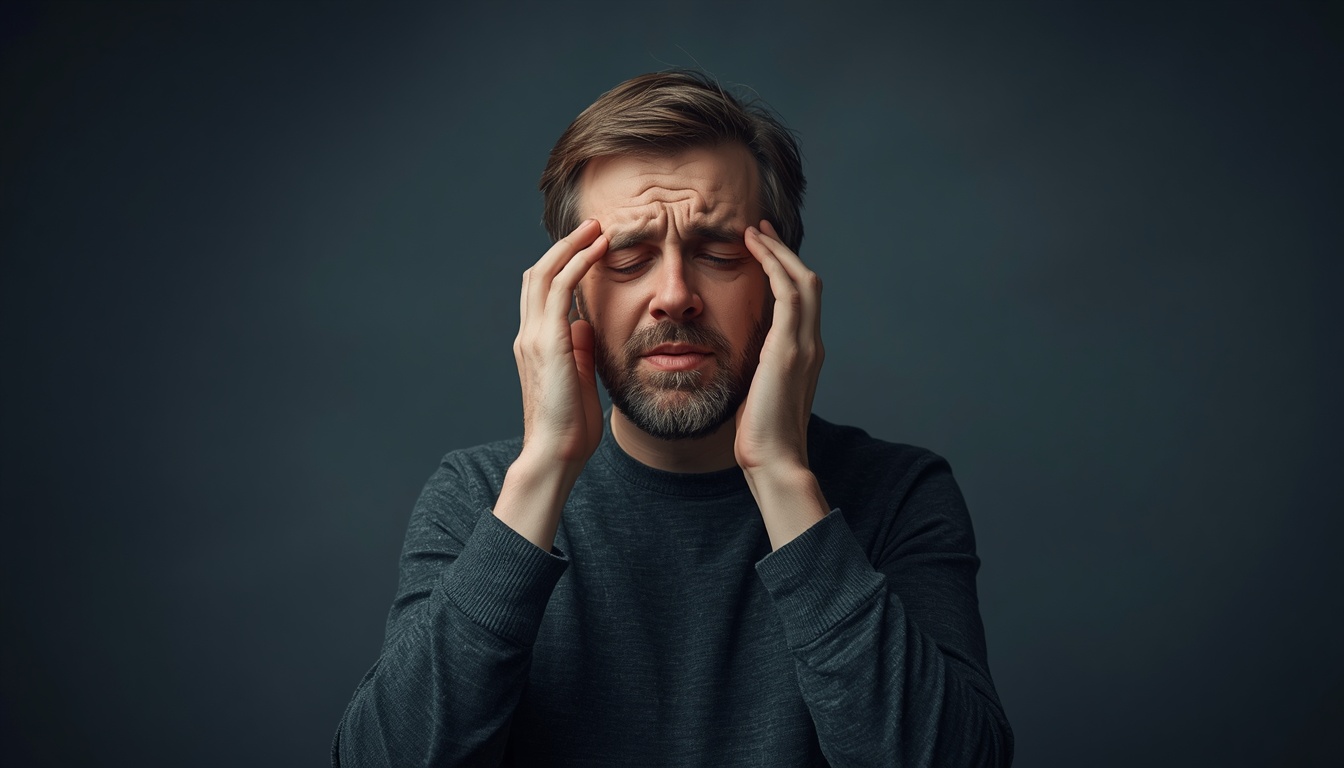
The typical dehydration headache is bilateral and pressing rather than stabbing. People often point to the forehead, temples or the back of the head. Movement, bending and bright light can make it louder. Nausea is mild if it is present at all. There is no one-sided throbbing aura of a classic migraine attack, though someone who already has migraine may find that fluid loss is one of the things that lights an attack.
Clues that sit next to the pain help more than the pain itself. Thirst, dry lips, darker urine, a heavier pulse when you stand, lightheadedness on rising and a day of low intake or high loss (heat, exercise, altitude, illness, diuretics, alcohol) all point the same way. Relief after drinking, without painkillers, is the most useful confirmation you will get at home.
Timing matters. A skipped-meal headache and a caffeine-withdrawal headache can wear a similar dull hat. If the ache tracks a missed lunch, food is the first experiment. If it tracks a missed morning coffee, caffeine is the first experiment. Fluid loss can travel with both. The body does not send separate branded envelopes.
Why Losing Water Can Hurt
Water is not a passive filler. It sets the concentration of sodium and other solutes in plasma. When you lose more water than salt — sweat, dry air, unreplaced urine — plasma osmolality rises. Osmoreceptors in the hypothalamus notice. Thirst rises. Vasopressin from the posterior pituitary tells the kidney to hold water. Those are the useful parts of the script.
The painful part is less neatly mapped, which is why honest researchers still speak in mechanisms rather than slogans. Modest volume loss can change the tension of the meninges and the large vessels that pain-sensitive trigeminal fibers watch. Intracranial volume is a closed, slightly elastic system. When circulating volume falls, the brain and its coverings shift by millimetres that you cannot feel as “shift” — you feel them as pressure, tightness or a band. Standing and straining then tug on the same structures, which is why the ache often worsens upright and eases a little when you lie down and drink.
Blau, writing about fasting and everyday headache triggers, kept returning to the same practical observation: many ordinary headaches are state-dependent. They appear when a homoeostatic variable drifts and fade when it returns. Fluid is one of those variables. Wöber’s work on migraine precipitants put dehydration on the same list as sleep change, alcohol and skipped meals — common, plausible, rarely acting alone. A randomized trial led by Mark Spigt in people with recurrent headache found that extra daily water reduced headache hours for some participants. The effect was modest. It was not magic. It was consistent with a trigger that is real for a subset of heads and irrelevant for others.
Attention does the rest. A dry mouth is easy to ignore at a desk. A band across the forehead is not. Once the ache starts, the same interoceptive circuits that report thirst also report pain, and the two blend. That is why “I didn’t notice I was thirsty until my head hurt” is such a common sentence.
How Much Loss Does It Take
You do not need a desert. Body-water loss of around one to two percent of body weight — a range sports-medicine groups have used for decades when they talk about early dehydration — is enough to affect mood, attention and comfort in many people. For a 70-kilogram adult that is roughly 0.7 to 1.4 kilograms, which is a plausible day of forgotten drinks plus coffee, air-conditioning and a long meeting.
Sweat rate varies wildly. Heat, humidity, clothing and fitness can push losses to a litre an hour in hard work. Airplane cabins are dry. Fever and gastroenteritis dump water from both ends. Loop diuretics and SGLT2 medicines increase urine. Alcohol suppresses vasopressin, so the night’s extra urine is a water debt you pay the next morning, often together with other hangover chemistry.
There is no universal millilitre target that prevents every headache. “Eight glasses” is a slogan, not a set point. Thirst, urine color (pale straw rather than apple juice) and a stable morning weight are rougher and more honest guides than a number invented for a poster.
Hidden Triggers That Look Like “Just Thirst”
Heat and exercise are obvious. The quieter ones hide in ordinary weeks.
Coffee and tea count as fluid, but they also send some people to the toilet and they are easy to treat as the only liquid of the morning. A large protein-salty lunch without water leaves plasma a little more concentrated. High-altitude days increase breathing water loss. Mouth breathing at night, the same pattern that leaves a dry throat at dawn, quietly raises overnight water loss. Anticholinergic medicines, some antihistamines and older bladder drugs dry the mouth and can flatten the thirst signal you were counting on.
Migraine brains are more trigger-sensitive, not more dramatic about every glass. Fluid loss may not start a migraine in isolation. Combined with a late night, a skipped meal or a glass of wine, it becomes part of the stack. People who already get a headache when they skip a meal or when they miss their usual coffee often discover that water was the third uncounted variable.
Weather is a separate but overlapping file. A falling barometer does not dehydrate you. A hot, dry wind can. If your ache tracks both thirst and a front, treat both. The article on weather-change headaches is the better map for the pressure half of that pair.
When It Is Not Dehydration
Water-responsive pain is reassuring. Pain that ignores water is information.
A sudden thunderclap headache that peaks in seconds is not thirst. Neither is a headache with fever and a stiff neck, new weakness, slurred speech, a drooping face, a first seizure, confusion or a painful red eye. Headache after a head injury, headache that wakes you from sleep every night, a new headache after age fifty with a tender scalp or jaw pain on chewing, and a progressive headache with morning vomiting all sit outside the “drink a glass and wait” experiment.
Low-pressure headache after a lumbar puncture or an epidural has a different signature: worse upright, better flat, sometimes with muffled hearing or a stiff neck. That is a CSF leak pattern, not a dry tank. High-pressure patterns (worse lying down, visual dimming, pulsatile tinnitus in some people) need a different workup. Severe vomiting from any cause can dehydrate you and also be the primary problem. Replacing fluid does not replace the diagnosis.
Electrolyte swings after endurance events, crash diets or eating-disorder behaviors can produce headache plus cramp, confusion or irregular heartbeat. Those are medical, not lifestyle, days.
Myths vs Facts
Myth: If your head hurts, you must drink two litres immediately.
Fact: Gulping a huge volume can nauseate you and, in rare endurance settings with very low sodium, worsen hyponatraemia. Steady glasses over an hour, plus a little salt in food if you have been sweating, are closer to how the gut actually absorbs water.
Myth: Clear urine all day means perfect health.
Fact: Persistently colorless urine can mean you are over-drinking relative to thirst. Pale straw is a reasonable daytime target for most healthy adults. The kidney was built to concentrate when water is scarce, not to run like an open tap.
Myth: Dehydration headache is just “low blood pressure in the brain.”
Fact: Cerebral blood flow is tightly guarded. The more plausible contributors are meningeal and vascular stretch, osmolality, and the way a thirsty brain rates discomfort. Calling it low brain blood pressure oversimplifies a closed box.
Myth: Caffeine dehydrates you so thoroughly that coffee cannot count as fluid.
Fact: Habitual coffee drinkers develop tolerance to the mild diuretic effect. Coffee still counts toward intake for most people. It is a poor only source if it is also replacing meals and sleep.
Myth: Everyone with frequent headaches is walking around one glass away from a cure.
Fact: Spigt’s water trial helped some people and not others. Migraine, tension-type headache, medication-overuse headache and cervical pain have their own machinery. Water is a cheap first test, not a diagnosis.
What Actually Helps
Drink when you notice thirst, and drink earlier on days you already know will cost water: heat, long talks, flights, training, fever. A glass with each meal and one between meals is a quieter habit than a heroic chug at 4 p.m. If you have been sweating, pair water with food that contains sodium rather than with litres of plain water on an empty stomach.
Cold water is fine. It is not a medicine. The relief clock is absorption plus the time it takes intracranial and vascular signals to settle — often 20 to 120 minutes if fluid was the main driver. Painkillers can mask the cue. They do not replace volume. If you need a painkiller more than a couple of days a week, the pattern itself needs a look, water or no water.
Oral rehydration solution is for gastroenteritis, heavy sweat with salt loss, or a clinician’s advice — not for a routine office afternoon. Sports drinks are optional for long, salty sessions. They are extra sugar for a desk day.
The unglamorous prevention list is the one that works: a water bottle you actually open, less alcohol the night before a demanding day, some respect for heat, and not treating coffee as the only morning ritual. If mouth breathing or a dry bedroom is part of your mornings, fix the air and the nose rather than only the glass.
When to See a Doctor
Use the ordinary experiment first: drink, rest from glare, eat if you have also skipped food, and notice whether the ache fades. See a clinician promptly if the headache is sudden and severe, different from your usual, associated with neurological signs, fever and neck stiffness, a new pattern after fifty, jaw claudication, or a recent injury. See someone less urgently, but still actually see them, if headaches are frequent, if water never changes them, if you are using painkillers most days, or if dizziness on standing, fainting, very dark urine or confusion travels with the thirst.
People on diuretics, SGLT2 inhibitors, lithium or fluid-restricted heart-failure plans should not invent their own high-volume protocol. The target is individual. So is the risk of overshooting.
FAQs
How fast should a dehydration headache go away after I drink?
If fluid was the main driver, many people notice softening within 30 to 60 minutes and clearer relief by two hours. Instant vanishing is uncommon because the gut still has to absorb the water and the pain-sensitive structures still have to settle.
Can dehydration trigger a migraine, or only a tension-type ache?
Both are possible. In people who already have migraine, fluid loss is a documented precipitant in diary studies. The attack may then follow the person’s usual migraine script — light sensitivity, nausea, one-sided pain — rather than a simple band. Treating the trigger does not replace migraine-specific care.
Is dark urine always a sign I will get a headache?
No. Dark urine means the kidney is conserving water or that something else (food pigment, vitamins, blood, bile) is coloring it. It raises the odds that you are behind on fluid. It does not guarantee pain.
Should I drink extra water every day to prevent headaches?
If your intake is low and your headaches track dry days, a steady increase is a reasonable trial for two weeks. If your urine is already pale and your headaches continue, look at sleep, meals, caffeine, neck load, medicines and migraine criteria instead of forcing litres.
Why do I get a headache the morning after drinking alcohol even if I also drank water?
Alcohol is a diuretic, but it is also a vasodilator, a sleep fragmenter and a source of acetaldehyde and inflammatory leftovers. Water helps the volume part. It does not cancel the rest of the hangover chemistry.
Can you drink too much water trying to stop a headache?
Yes, especially during endurance events or if you keep sipping far past thirst while eating almost no salt. Headache plus nausea, swelling and confusion after very high water intake is a reason to stop the experiment and get help, not to drink more.
Conclusion
A headache that arrives with thirst and leaves after water is one of the more readable messages the body sends. It is a homoeostatic nudge, not a moral failing and not proof that your brain is “drying out” in a dramatic sense. Modest volume and osmolality shifts are enough to make pain-sensitive coverings complain. Blau’s everyday-trigger logic, Wöber’s precipitant lists and Spigt’s simple water trial all point to the same practical stance: treat fluid as a real lever, test it honestly, and do not let a glass of water become the only explanation you ever consider.
Drink on the days that cost water. Keep the other headache files open. The goal is not colorless urine at every hour. The goal is a head that no longer has to shout before you reach for the tap.