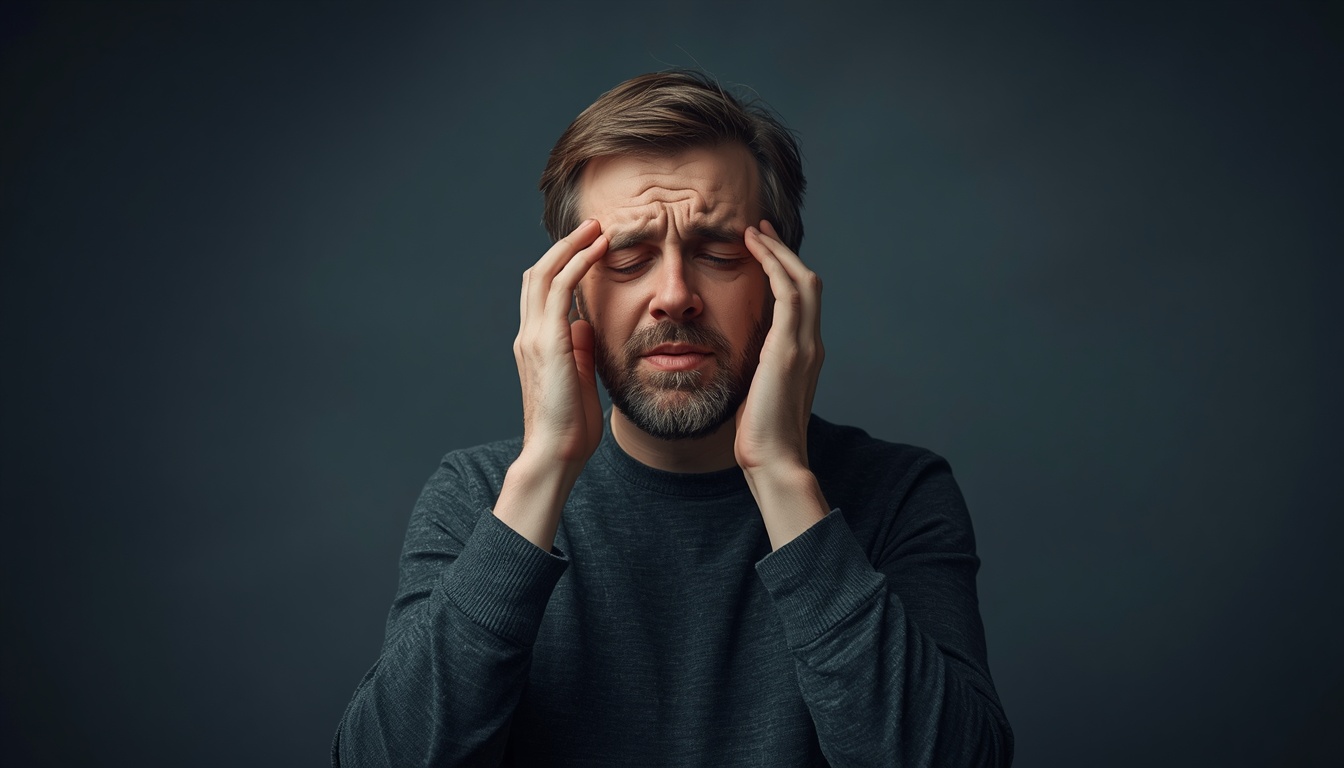

You slept in. The café was closed. The office machine was empty. By late morning a dull band sits across your forehead, the room feels slightly too bright, and concentrating on a sentence takes more effort than it should. A sip of coffee later, the pressure eases.
That pattern is not imaginary, and it is not a sign that coffee has “poisoned” you. It is one of the most reproducible withdrawal effects in everyday life.
What This Headache Feels Like
A caffeine-withdrawal headache is usually:
- Bilateral — both sides of the head, often the forehead or a “hatband”
- Pressing or throbbing rather than a sharp stab
- Worse with movement, bright light, or mental effort
- Accompanied by tiredness, fogginess, irritability, or a flu-like heaviness
- Relieved, often within 30 to 60 minutes, by a usual dose of caffeine
It is not the same as a classic migraine aura, a one-sided ice-pick pain, or the sudden “worst headache of your life.” Those belong in a different conversation.
Yes — It Is a Documented Syndrome
Psychologist Laura M. Juliano of American University and Roland R. Griffiths of Johns Hopkins University School of Medicine reviewed more than 170 years of reports and dozens of controlled experiments in a 2004 paper in Psychopharmacology. Headache was the most consistently validated symptom. In experimental studies, about half of regular consumers developed a headache after abstinence. About 13 percent had symptoms severe enough to interfere with work.
Typical timing in that review:
- Onset: 12 to 24 hours after the last dose
- Peak: about 20 to 51 hours
- Duration: 2 to 9 days if caffeine stays off
Doses as low as about 100 milligrams a day — one modest cup of coffee — were enough, in some people, to produce withdrawal when stopped. A 1992 New England Journal of Medicine study by Kenneth Silverman, Roland Griffiths and colleagues had already shown that average daily drinkers, not only heavy users, could get moderate-to-severe headaches on placebo days when their usual caffeine was quietly removed.
The International Classification of Headache Disorders lists caffeine-withdrawal headache as a recognized secondary headache: a headache that develops within 24 hours of stopping a daily caffeine habit of at least 200 milligrams for more than two weeks, and that improves within about an hour of taking caffeine again.
Why the Head Hurts When the Cup Is Missing
Caffeine is an adenosine-receptor antagonist. Adenosine builds up in the brain during waking hours and promotes sleepiness and wider blood vessels. Regular caffeine occupies those receptors. The brain adapts by making more receptors and by shifting vessel tone.
When the next dose does not arrive:
- Adenosine suddenly has more open receptors.
- Cerebral blood vessels that had been slightly narrowed can dilate.
- That stretch, plus a drop in alertness chemistry, is read as a headache and a slump.
The same chemistry is why a first morning coffee can feel like a “reset.” Part of what you feel is relief of overnight mini-withdrawal, not only extra energy on top of a neutral baseline. That is also why a late-day extra cup can steal sleep later — adenosine signaling is part of the night’s permission to rest.
Caffeine’s other familiar effects, such as the morning bathroom urge described in why coffee makes you need the bathroom, come from different gut and kidney pathways. The headache is mostly a brain-vessel and adenosine story.
Common Triggers That Look Like “Random” Headaches
The skip does not always look like a planned detox.
- Weekend sleep-ins that push the first cup four hours later
- Travel, fasting blood tests, or religious fasts
- Switching to decaf without noticing the drop
- A new “healthy” week that cuts soda or tea as well as coffee
- Headache after a long nap or a late night that scrambled usual timing
Weekend delay often stacks with social jet lag — the off feeling after sleeping in that we covered in why you feel off after sleeping in. The clock, the meal, and the cup all shift together.
Weather and barometric swings can add a second headache layer on the same day, which is why a missed coffee during a storm front can feel especially unfair. Those pressure patterns are separate and are outlined in why weather changes give you a headache.
Who Notices It More
You are more likely to feel a clear withdrawal headache if you:
- Drink caffeine on a fairly regular daily schedule
- Get most of it in one or two concentrated doses
- Suddenly stop rather than taper
- Already get tension-type or migraine headaches
- Sleep poorly the night before the skip
People who sip small amounts all day sometimes notice a milder slump instead of a discrete headache. People who already drink little may feel nothing.
Myths vs Facts
Myth: If you get a headache without coffee, you are “addicted” in the same way as to harmful drugs.
Fact: Caffeine can produce physical dependence. That is real. It is not the same as a substance-use disorder that takes over work, relationships, and health. Most people function well with a stable modest habit.
Myth: Only espresso drinkers get withdrawal.
Fact: Tea, cola, energy drinks, pre-workout powders, and some pain tablets contain enough caffeine to matter.
Myth: The headache means coffee is damaging your brain.
Fact: The headache is a rebound from an adaptation. It is uncomfortable. It is not evidence of structural injury.
Myth: Decaf always prevents withdrawal.
Fact: Many “decaf” cups still contain a little caffeine. A full switch from several strong coffees to decaf can still be a large drop.
Myth: You must quit forever if one missed cup hurts.
Fact: You can keep a steady modest intake, taper if you want to stop, or simply treat the rare skipped day as a known, time-limited effect.
How to Manage a Missed-Cup Day
If you want relief now
- A usual serving of caffeine often shortens the headache quickly. That is diagnostic as well as practical.
- Water, a small meal, dimmer light, and a short walk help the accompanying slump.
- A simple analgesic that you already tolerate can be reasonable for a day. Some combination headache tablets already contain caffeine — useful to know so you do not double up by accident.
If you want fewer of these days
- Keep the first dose at a similar clock time, including weekends, even if the serving is smaller.
- If you plan to cut down, reduce by about 25 percent every few days rather than stopping overnight.
- Watch hidden sources if you are tapering on purpose: tea, chocolate, soda, “focus” drinks.
- Protect sleep. A short night makes both withdrawal and ordinary tension headaches louder.
If you are fasting for a lab or procedure
Ask whether a small black coffee is allowed. If it is not, plan a quieter morning and know that a withdrawal headache is a common explanation — one Griffiths and colleagues have long urged clinicians to consider before more exotic tests.
When to Worry
Seek urgent care for a sudden explosive headache, a headache with fever and a stiff neck, weakness, confusion, a drooping face, or a headache after a head injury. Those are not caffeine withdrawal.
See a clinician in ordinary time if:
- Headaches are new, rapidly worsening, or always one-sided with aura
- Painkillers are needed most days
- Cutting caffeine does not change a daily headache that has lasted weeks
- You have chest pain, palpitations that worry you, or very high home blood-pressure readings with heavy energy-drink use
Withdrawal is common. It should not become the default label for every head pain.
Frequently Asked Questions
How much caffeine is in a typical drink?
A small home coffee is often 80–120 mg. A large café coffee can be 200 mg or more. Black tea is often 40–60 mg per cup. A can of cola is roughly 30–50 mg. Labels vary widely, which is why “I only had one drink” is not a precise dose.
Will I get a headache if I quit coffee for good?
Many daily drinkers will for a few days. Peak discomfort is usually in the first two days. It then fades. A taper is kinder than a sudden stop.
Why does half a cup sometimes fix it and sometimes not?
Relief tracks how close you get to your recent usual dose, plus sleep, hormones, and other headache triggers that day. Half a cup can be enough after a small habit and not enough after a large one.
Is tea withdrawal milder than coffee withdrawal?
Often, because many tea habits deliver less caffeine. A strong all-day tea habit can still produce a clear headache when stopped.
Can children get this from soda?
Yes, if intake is regular. The same adenosine and vessel story applies at lower body weights, so “just soda” is not automatically too little to matter.
Does caffeine help migraines or cause them?
Both can be true in different contexts. A dose can abort some headaches. A daily high intake and then a skip can also trigger one. People with migraine often do best with a stable, modest, earlier-in-the-day pattern rather than big swings.
Conclusion
A headache after a skipped coffee is a normal, well-studied rebound. Your adenosine receptors and cerebral vessels adapted to a daily signal. When the signal is late, they announce the gap with pressure, fog, and fatigue. That is inconvenient. It is not a character flaw and not proof that your brain is failing.
You can keep the ritual, stabilize the timing, or taper with a plan. The goal is not purity. It is fewer surprise mornings when the mug is empty and the day still has to get done.