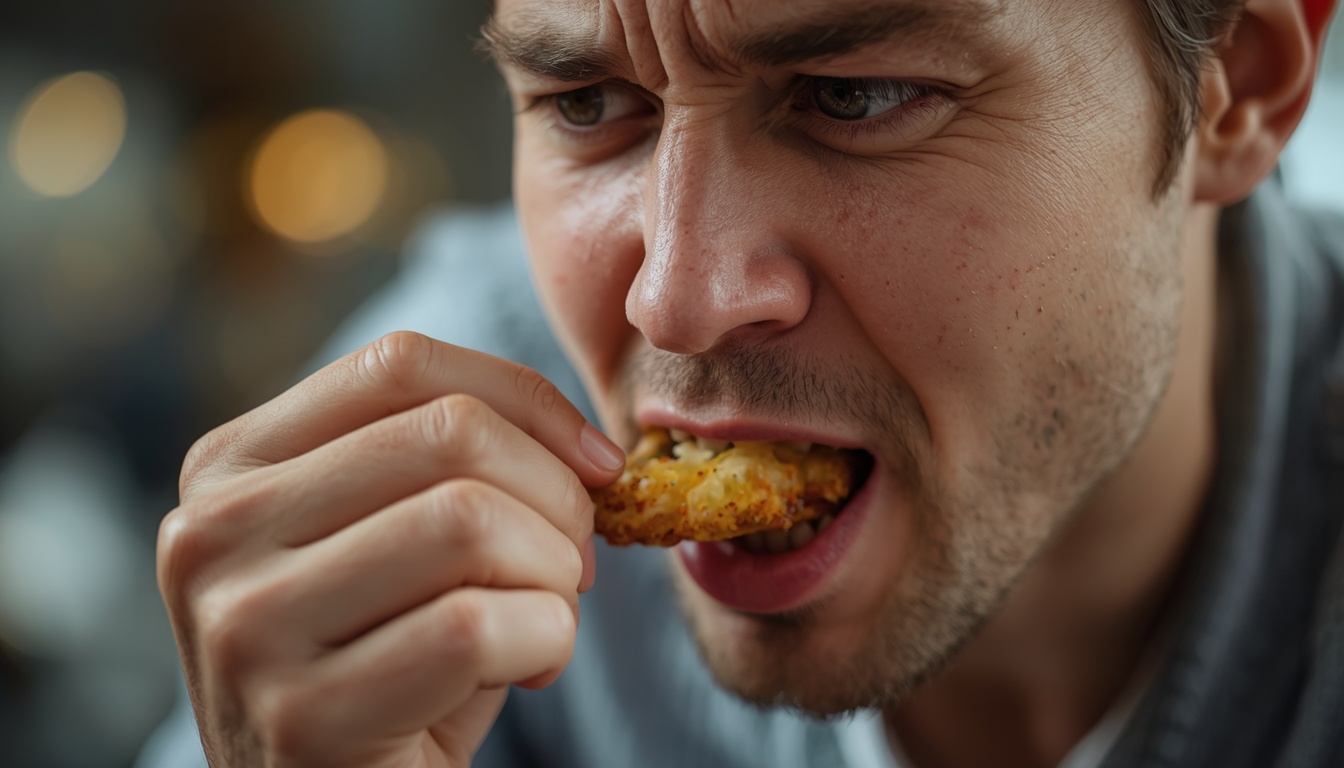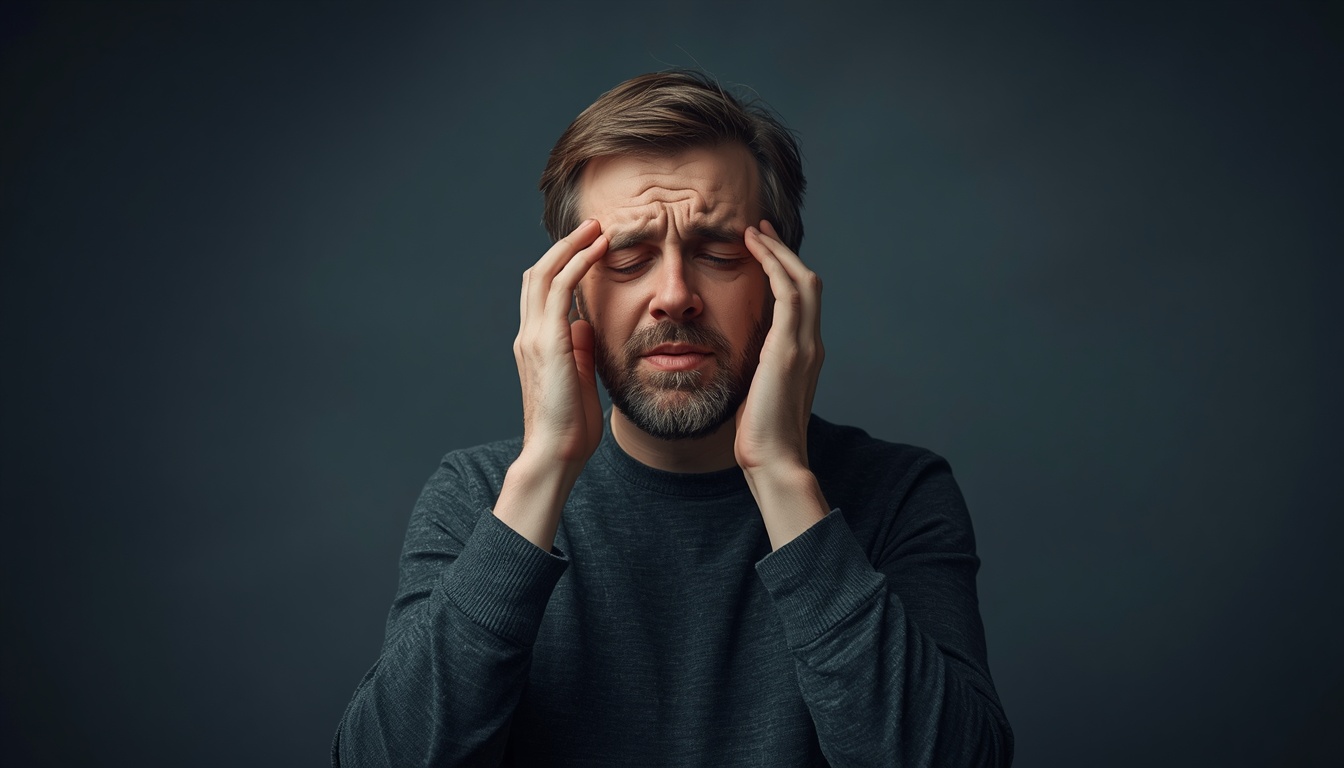
A skipped meal often brings a dull, whole-head ache that eases after food. Here is what fasting headache really is, why it is not always low blood sugar, and when to look closer.
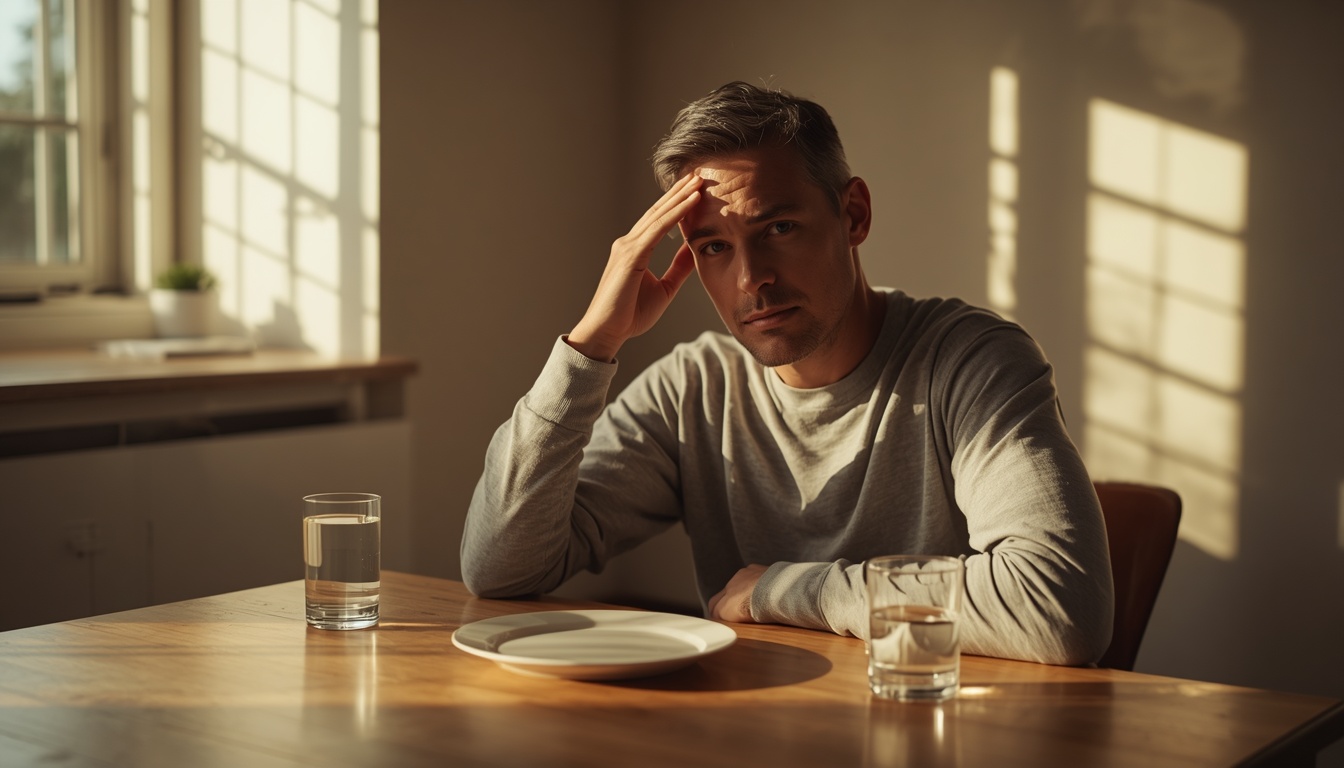
Lunch slipped. Breakfast was coffee and a calendar. By mid-afternoon a dull band sits across the forehead, the screen feels brighter than it should, and thinking takes more effort than the work deserves. A sandwich later, the pressure eases.
That pattern is common enough to have its own name in headache medicine. It is usually not a sign that the brain is starving in an emergency sense. It is a homoeostatic headache — the nervous system objecting to a long gap without food.
What This Headache Feels Like
A typical hunger or fasting headache is:
- Diffuse — both sides of the head, often the forehead or a hatband
- Pressing more than stabbing, mild to moderate rather than disabling
- Worse with movement, bright light, or mental effort
- Paired with emptiness, irritability, fogginess, or a shaky, slightly sweaty edge
- Clearly better within an hour or so of eating
It is different from a one-sided migraine with aura, from the sudden “worst headache of your life,” and from a headache that arrives with chest pain, fainting, confusion, or one-sided weakness.
People who already live with migraine often get a different version: the missed meal does not invent a new headache type so much as lower the threshold for an attack they already know.
Why Skipping a Meal Can Hurt
The International Classification of Headache Disorders (ICHD-3) lists “headache attributed to fasting” as a real secondary headache. The official picture is a diffuse, non-pulsating ache that starts after at least eight hours without food and eases after eating.
Paola Torelli and colleagues at the University of Parma reviewed the fasting-headache literature and found a consistent pattern: the longer the fast, the more likely the ache, and the pain often looks like tension-type headache rather than classic migraine. Studies of religious fasts — Yom Kippur and Ramadan among them — show the same rise with hours without food.
The obvious suspect is low blood sugar. The brain runs on glucose, and a sharp drop can scramble neuronal metabolism. I. Martins and J. N. Blau documented hypoglycemia-linked headaches in people with insulin-treated diabetes: some brief aches that lifted within minutes of carbohydrate, and some longer attacks that behaved more like migraine.
But ICHD-3 is careful on this point. Fasting headache can appear when blood glucose is still in a normal range. Insulin-induced hypoglycemia does not reliably trigger migraine in people who get migraine. Emergency patients with symptomatic low glucose do not all walk in holding their heads. Hypoglycemia can cause headache. It is not the whole story.
Other pieces that travel with a skipped meal:
Caffeine that arrived with breakfast and then vanished. If the missed meal was also the missed coffee, adenosine rebound and vessel dilation can do the aching on their own. That pattern is covered in is it normal to get a headache when you skip coffee.
Dehydration and salt shift. Food carries water and sodium. A long gap, especially in heat or after coffee, thins plasma volume. Vessels and meninges notice.
Stress chemistry. Fasting raises cortisol and catecholamines. Those hormones keep you moving when food is scarce; they also change vessel tone and make the trigeminal system a little more talkative.
Circadian timing. The afternoon already carries a natural energy dip. A late or skipped lunch lands on that trough and feels worse than the same gap at 10 a.m., a timing theme also seen in why you hit a wall at 3 pm.
Migraine biology. In a migraine-prone brain, a delayed meal is a classic trigger — not because glucose has crashed into the danger zone, but because the hypothalamus and trigeminovascular system are already close to threshold.
Hidden Triggers People Miss
A few everyday patterns keep the ache coming back:
- Coffee for breakfast and nothing solid until mid-afternoon
- A large late dinner, then a long overnight fast that stretches past noon
- Training hard in the morning on an empty stomach without planning the first meal
- Heat, air travel, or a long meeting with no water
- A usual caffeine dose that rides along with the first meal and disappears when the meal does
- High-sugar breakfasts that spike and then drop before lunch
- Treating the ache with more coffee and no food, which buys an hour and steals the next one
Meal timing itself is a circadian cue. Bodies that expect food in daylight hours, a theme explored in why your appetite still expects daylight meals, complain more when the first real calories arrive after the brain has already spent the morning negotiating an empty gut.
When It Is Usually Harmless
A missed-meal headache is usually ordinary when:
- It tracks a gap of many hours without food
- It is bilateral, pressing, and moderate
- Eating a mixed snack or meal clearly helps within an hour
- There is no sudden thunderclap onset, fever, stiff neck, or neurologic deficit
- It does not become a daily pattern that needs increasing painkillers
True medical hypoglycemia — shakiness, sweating, confusion, a reading well below the usual range in someone on insulin or certain diabetes medicines — is a different event and needs glucose, not just a theory about fasting headache.
Myths vs Facts
Myth: Every hunger headache means dangerous hypoglycemia.
Fact: Many fasting headaches occur with normal glucose. The classification criteria do not require a low lab value.
Myth: If coffee fixes it, the problem was never food.
Fact: Caffeine is a decent short-term analgesic and a vasoconstrictor. Relief from a cup does not prove the meal was irrelevant — especially if the cup usually arrives with breakfast.
Myth: Skipping breakfast is always healthier, so the headache is “detox.”
Fact: Some people feel fine with a later first meal. Others have a nervous system that still expects morning fuel. The headache is information, not a badge.
Myth: Fasting will train the headache away if you push through.
Fact: Adapted time-restricted eating can be comfortable for some adults. Pushing a pounding first week without water, salt, or caffeine planning usually just trains you to associate fasting with pain.
How to Manage a Hunger Headache
When the band is already there:
- Eat something mixed — carbohydrate plus protein or fat — rather than only sugar. A piece of fruit with yogurt or nuts often works faster than another espresso.
- Drink water. If you have been fasting in heat, a pinch of salt in the first glass can help more than water alone.
- Dim the screen, loosen the jaw, and take ten easy nasal breaths. Muscle guarding makes a modest ache feel larger.
- If you use caffeine, a usual modest dose can take the edge off while food lands. It is a bridge, not the meal.
To make the pattern rarer:
- Do not let the first calories of the day be only coffee if you already know that combination ends in a 2 p.m. forehead.
- Keep a small, non-perishable snack where the long gap usually happens — desk drawer, bag, car.
- If you prefer a later first meal, shift caffeine with the meal or taper it, and drink water through the morning.
- Build the afternoon meal before the circadian dip, not after you have already gone foggy.
- If migraine is part of your history, treat a delayed meal as a trigger you can schedule around, the same way you would treat missed sleep.
When to See a Doctor
Get urgent care for a sudden severe headache, a headache with fever and stiff neck, a headache after a head injury, or any headache with weakness, speech change, vision loss, confusion, or fainting.
See a clinician in ordinary time if:
- Missed-meal headaches are becoming frequent or need regular painkillers
- You have diabetes or take medicines that can drop glucose, and the ache comes with sweating, tremor, or confusion
- Eating does not help, or the pain is always one-sided with nausea and light sensitivity
- You are losing weight without trying, or hunger and headache arrive with other new symptoms
- You wake from sleep with headache more nights than not
A clinician can sort fasting headache from migraine, caffeine withdrawal, medication-overuse headache, and the rarer metabolic causes.
Frequently Asked Questions
Is a headache after skipping lunch the same as low blood sugar?
Not always. True hypoglycemia has a cluster of symptoms and a low reading. Many fasting headaches happen while glucose is still acceptable. Food still helps because it ends the fast, restores fluid and salt, and quiets stress chemistry.
How long without food does it take?
ICHD-3 uses a threshold of about eight hours for the named diagnosis. Plenty of people notice an earlier dull ache at five or six hours, especially if they also delayed caffeine or water.
Why does a small snack work better than waiting for a huge dinner?
A modest mixed snack ends the fast sooner. A giant late meal can add reflux, sleepiness, and another swing. The headache wants an end to the gap, not a feast.
Can intermittent fasting still be reasonable if I get these headaches?
For some adults, yes — if caffeine, water, and salt are planned, and the eating window still lands in daylight hours. If the first week is a daily hatband, the protocol needs adjusting, not more grit.
Does this mean I have diabetes?
A predictable ache after a skipped meal in an otherwise well person is not a diabetes test. Unexplained thirst, frequent urination, weight change, or headaches with true hypoglycemic symptoms do deserve lab work.
Should I take a painkiller on an empty stomach?
Occasional simple analgesia is reasonable for some people, but food is the specific treatment for this headache. Repeated painkillers on an empty gut irritate the stomach and can, over time, feed medication-overuse headache.
Conclusion
A forehead that protests a missed meal is usually a homoeostatic signal, not a verdict. The brain likes a somewhat predictable supply of fuel, fluid, and — for many people — a morning caffeine cue that travels with breakfast. Eat something mixed, drink water, and treat the pattern as scheduling information. The ache that leaves after a sandwich was doing its job: asking for lunch before the afternoon had to shout.