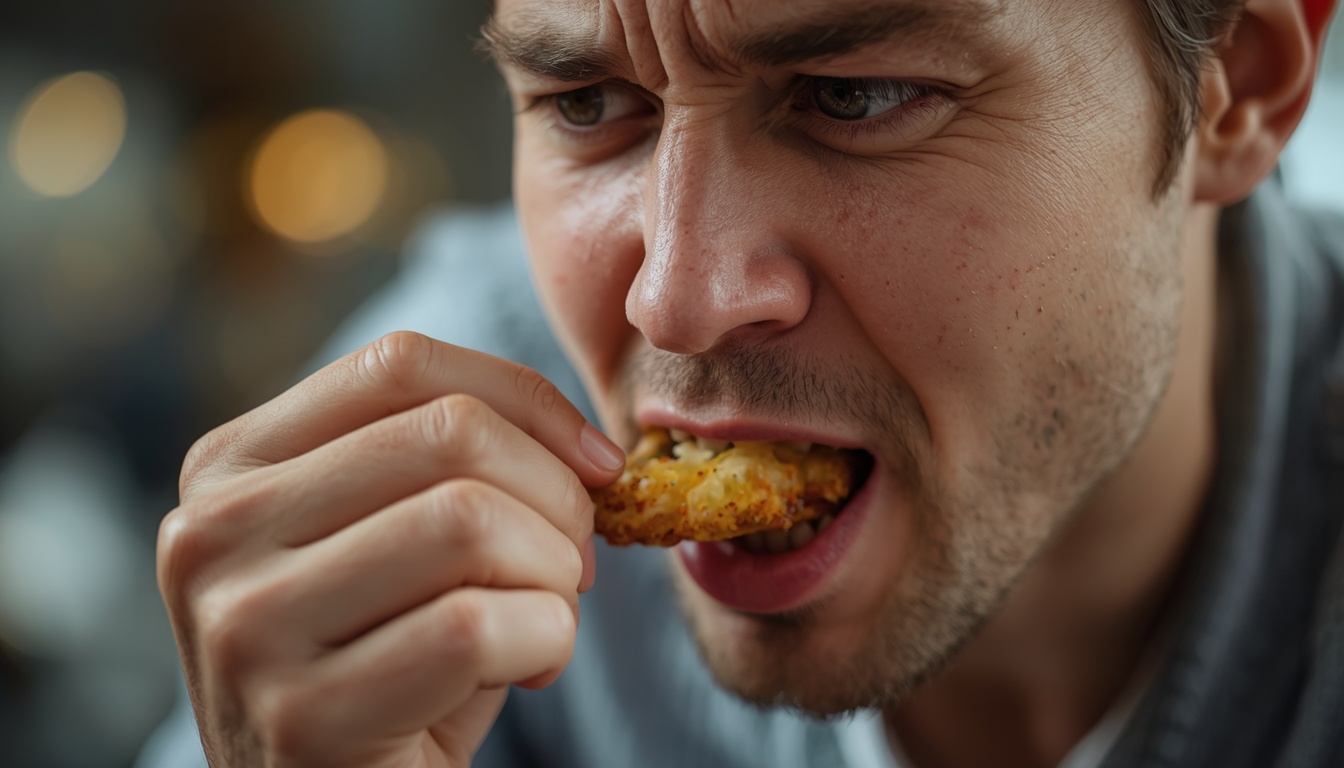

The stomach does not only care what you eat. It cares when. Acid production, enzyme release, insulin sensitivity, gut motility, and the liver’s overnight repair shift all run on clocks. Those clocks were set by a world in which calories arrived with daylight and nights were for fasting, not for a second dinner in front of a screen.
Electric light and always-available food uncoupled eating from the sun. The hormones did not get the memo. That is the mismatch: a digestive day that still expects breakfast-to-dusk fuel, asked to process snacks at 11 p.m.
What a Clock-Confused Appetite Feels Like
Some people notice it as evening hunger that has little to do with an empty stomach. Others feel heavy and reflux-prone after late meals, then wake unrefreshed. Morning appetite may be muted even though the last calorie was not that long ago. Blood sugar can swing more after the same plate eaten at night than at noon.
There can be bloating that shows up mainly after late eating, a sour taste on waking, or a pattern of “I am not hungry until I start, then I cannot stop.” None of this is a moral failure. It is a timed system running on a schedule the kitchen no longer keeps.
How the System Was Designed to Work
Almost every organ that handles food has a circadian rhythm. Insulin sensitivity tends to be higher earlier in the waking day. Gastric emptying and intestinal motility follow a daytime bias. The liver switches, overnight, toward glycogen handling, detoxification pathways, and repair — work that is easier when it is not also managing a large incoming meal.
Melatonin, which rises in dim evening light, is not only a sleep signal. It interacts with insulin and with the gut’s own clocks. Eating against a rising melatonin tide is a different metabolic event than eating against morning cortisol and daylight.
For most of human history the eating window was bounded by foraging, cooking fire, and darkness. There were exceptions — night hunts, ritual feasts, winter scarcity. The default was still a long overnight fast because there was nothing left to eat and no safe light to eat by.
Researchers who study time-restricted eating and meal timing consistently find that when calories are held roughly constant, earlier eating windows often produce better glucose patterns and easier overnight rest than the same calories pushed late. The effect is not magic. It is alignment.
Why This Happens in Modern Life
Workdays delay dinner. Screens keep arousal high after dark. Kitchens stay open. Delivery arrives at any hour. Shift work flips the clock entirely. Even people with “normal” jobs often eat the largest meal when insulin sensitivity is falling and then sit still.
Late eating also clusters with other mismatches: bright light at night, low movement after the plate, and highly palatable food designed to override fullness. The appetite system evolved to take calories when they appeared. Ultra-processed food makes them appear after the biological day is over.
Social life is evening-heavy in many cultures. That is human too. The physiology still prefers that the last substantial meal not be the one closest to melatonin’s peak.
Less Common but Serious Causes
Not every night hunger is a circadian mismatch. Ulcers, reflux disease, gallbladder issues, pregnancy, some medications, and poorly controlled diabetes change appetite and timing. Unintentional weight loss, swallowing trouble, black stools, vomiting blood, or severe night pain needs medical care, not an earlier dinner.
Eating disorders can hide inside “clean” timing rules. A restricted window used to punish the body is not circadian health.
This article is about the common pattern: a healthy gut asked to run a night shift it was not scheduled for.
Hidden Triggers
Several ordinary habits slide meals later without a decision:
- Skipping a real daytime meal, then arriving home ravenous
- Bright kitchen and screen light that delay melatonin and keep snack interest alive
- Alcohol in the evening, which can both stimulate appetite and fragment sleep
- Grazing from dinner to bedtime so the gut never gets a clear overnight job
- Shift schedules or late training sessions that force a large post-workout meal near midnight
- Using food as the only downshift after a wired workday
The last one is understandable. The body still prefers a wind-down that is not another metabolic load.
When to Worry
Get help if late-night eating comes with chest pain, breathlessness, vomiting, or food that will not stay down. Persistent heartburn that wakes you, difficulty swallowing, or signs of bleeding are not timing problems.
If appetite rules start shrinking your life, or if you feel unable to eat during the day and unable to stop at night, talk with a clinician who understands both metabolism and eating behavior.
Myths vs Facts
Myth: A calorie at midnight is identical to a calorie at noon.
Fact: Energy content can match while hormonal context does not. Timing changes how glucose is handled and how the night is spent.
Myth: You must skip breakfast to be healthy.
Fact: Some people do well with a later first meal. Many do better with earlier fuel. The useful principle is a defined window that leans toward daylight, not a mandatory skipped breakfast.
Myth: Intermittent fasting means eating from 4 p.m. to midnight.
Fact: A compressed window that sits entirely in the late evening can fight the same clocks it claims to honor.
Myth: Hunger at night means you did not eat enough protein at lunch.
Fact: Daytime protein and fiber help. Night hunger is also a learned cue, a light cue, and a clock cue. Fix more than the macros.
How to Feed the Clock You Actually Have
You do not need a monastery schedule. You need a clearer day for the gut.
- Place most calories in the hours when you are awake and the sky is, or recently was, bright. Slide dinner earlier by 30–60 minutes if you can do it without social wreckage.
- Eat a real daytime meal so evening hunger is not rescue eating.
- Give the last substantial plate two to three hours before sleep when life allows. A small planned snack is kinder than a second dinner if training or medication requires food.
- Dim lights after the kitchen closes. Appetite follows light almost as much as it follows the stomach.
- Walk after meals when you can. Muscle is a daylight-friendly glucose sink.
- On shift work, pick the most consistent 8–12 hour eating window you can keep on work days, and protect a dark sleep block. Perfect ancestral timing is not available. Consistency still helps.
Families can keep one shared earlier meal most nights and treat late events as exceptions. The clock learns patterns, not slogans.
When to See a Doctor
See a clinician for reflux that persists despite earlier meals and smaller evening portions, for suspected diabetes or reactive hypoglycemia, for sleep apnea symptoms that worsen with late eating, or if weight and energy change quickly without explanation.
People on insulin, steroids, or other timed medications need individualized meal maps. Do not compress an eating window against medical advice.
FAQs
Is an 8-hour window required?
No. Many people do well with 10–12 hours of eating that ends earlier. Extreme restriction is not the point.
What if I train at 8 p.m.?
Eat enough to recover, then keep the meal focused rather than turning the session into an open buffet until bed.
Does coffee with milk at 9 p.m. count?
Calories and light both count. A splash is not a feast. A large sweetened drink is a late meal in a mug.
Why am I ravenous only after 9 p.m.?
Under-eating by day, palatable food, habit loops, and delayed melatonin all stack. Move fuel earlier and change the evening setting before blaming willpower.
Can children follow this?
Children need enough total food for growth. A regular daytime rhythm and a calmer evening kitchen help. Do not put kids on adult fasting protocols.
Conclusion
Your appetite is not only a stomach. It is a clock that still expects food when the world is lit and a quieter job when it is not. Modern life can feed you at any hour. That does not mean every hour is the same hour inside the body.
You do not have to eat like a farmer in 1800. You only have to give digestion a day and a night again — most calories earlier, a real pause later, light that matches the plan. The gut remembers the sun even when the fridge does not.