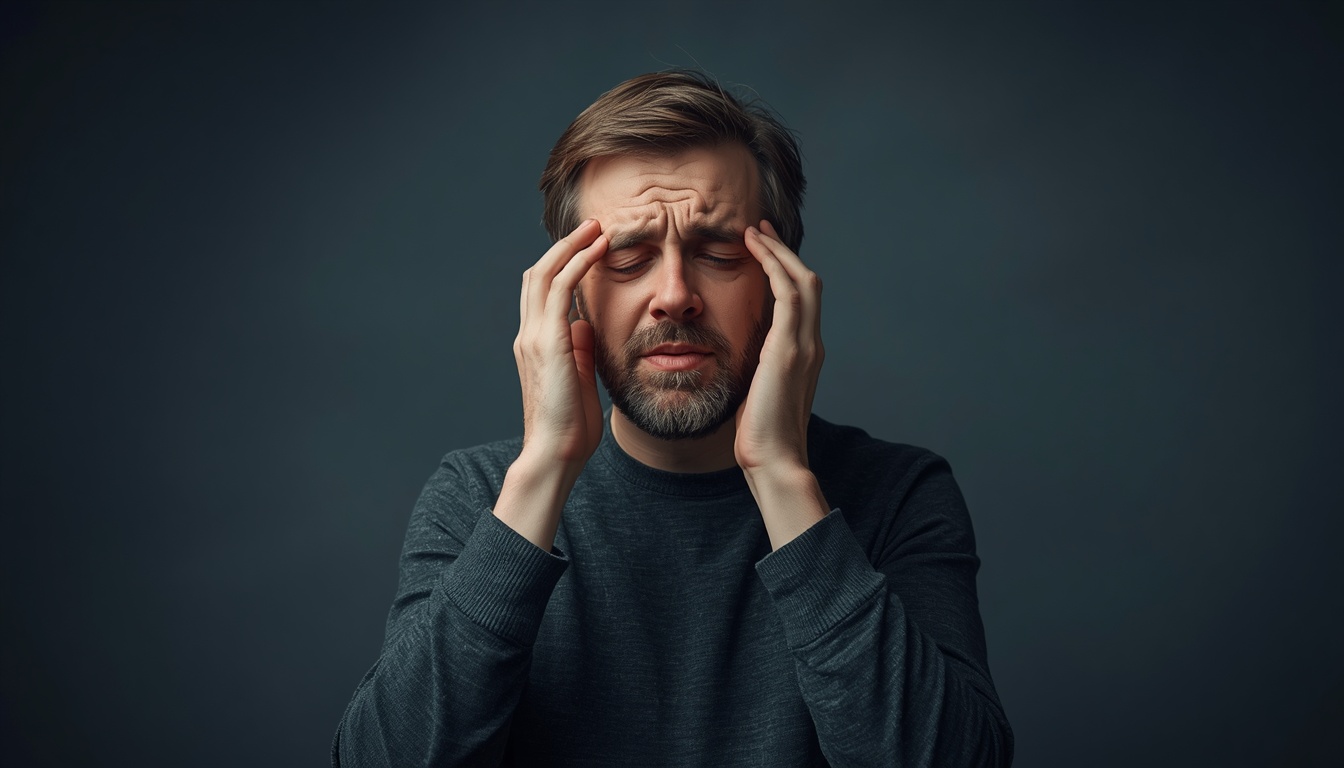
A temple pulse you can feel is often a superficial artery close to the skin, louder after caffeine, stress, or a hard pillow. New one-sided pain with jaw or vision change is different.

You are lying on the couch after a second coffee, or you have just climbed the stairs, and the side of your head seems to keep time. It is not a sound, exactly. It is a small tap under the skin, in front of the ear and up toward the hairline. Press lightly and it is unmistakable. Stop pressing and it fades into the background until you notice it again.
That tap is usually the superficial temporal artery doing ordinary work. It sits close to the surface, it carries a share of the blood headed for the scalp, and it is one of the few arteries you can feel without a stethoscope. Awareness of it rises when the pulse is stronger, the skin is thinner, or attention is turned up. A new, persistent, one-sided temple pain with jaw tiredness on chewing or any change in vision is a different problem and should not be filed under “I can feel my pulse.”
What a Temple Pulse Feels Like
People describe a soft thud, a flicker, or a wire moving under the finger. It matches the heartbeat. It is often easier to find on one side than the other, because the artery’s path and how much soft tissue covers it are not perfectly symmetric. Lying with that side of the head on a firm pillow can make it louder, the same way a pulse in the ear gets louder against a mattress. A walk, a flight of stairs, a hot room, or a stressful email can bring it forward for a few minutes, then it settles.
The sensation is not the same as a temple ache from clenching. A true pulse has a rhythm you can count. Muscle fatigue from the temporalis, the broad chewing muscle over the same area, feels more like a dull band or a tired pressure, and it does not tick in time with the heart. Screen days blur the two, because people both clench and notice body signals more when they are still. If the jaw muscle is the real source, the ache often tracks chewing, gum, or a long teeth-together hour, which is the same pattern described in a jaw that still expects a tough chew.
Why the Artery Is So Easy to Find
The superficial temporal artery is a branch of the external carotid. It crosses the zygomatic arch in front of the ear and divides into frontal and parietal branches over the temple and scalp. There is little muscle between it and the skin. In a lean face, or in anyone whose pulse pressure is wide, a fingertip can feel the wall expand with each beat.
That is anatomy, not a fault. Clinicians have used this artery for a pulse check for generations precisely because it is accessible. Bayard Horton, working at the Mayo Clinic in the 1930s, also made it famous for a rarer reason: inflammation of that vessel can cause a serious temple headache in older adults. The fact that the artery is easy to feel in healthy people is why a normal tap and a diseased artery can be confused if the only clue is “I feel something there.”
Pulse pressure, the gap between the pressure at the peak of the beat and the pressure between beats, decides how dramatic the tap feels. Exercise, anxiety, fever, anemia, pregnancy, and an overactive thyroid widen that gap or speed the rate, so the same artery announces itself. Caffeine does it through a mix of alertness and vessel tone. Bertil Fredholm’s work on adenosine receptors helps explain why a familiar cup both sharpens attention and changes how forcefully some vascular beds feel. Skip the usual cup and the opposite problem, a withdrawal headache, is common. Feeling the artery after the cup is not that headache.
Attention Turns the Volume Up
A pulse can be present all day and only become a symptom when you look for it. Interoception, the brain’s readout of internal signals, is not a fixed meter. Anxiety, poor sleep, and a quiet room all raise the gain. Once you have found the temple tap, checking it again teaches the nervous system to expect it. The artery has not grown. The monitoring has.
This is the same loop that makes a heartbeat obvious against the pillow, or a whoosh obvious in a silent room. A pulse you can hear in the ear is covered separately in hearing your heartbeat in your ear. A beat you notice only when you roll onto your left side is a different window on the same heart, described in feeling your heartbeat on your left side. Temple awareness sits between those: a surface artery, plus a brain willing to listen.
Migraine Throb Is Not Proof the Artery Is the Pain
A migraine often lands in the temple and is described as throbbing. Older accounts, including Harold Wolff’s mid-century vascular theory, treated that throb as the temporal artery stretching pain-sensitive walls. The picture has been revised. Peter Goadsby and others showed that migraine pain is driven mainly by trigeminal and brainstem signaling, with vessel-caliber changes as a fellow traveler, not the whole explanation.
Andrew Ahn looked at the timing directly. In many people with migraine, the rate of the felt throb did not lock to the arterial pulse. A temple that pounds during an attack can still be a migraine, a tension-type headache, a jaw-muscle ache, or a sinus flare. Feeling the artery between attacks, with no pain, is even less informative. Peter Drummond’s measurements of extracranial flow during migraine are part of the history of this question. They do not mean that a painless tap on an ordinary afternoon is a migraine warning.
Less Common but Serious Causes
Giant cell arteritis, once called temporal arteritis, is the diagnosis this sensation is often feared to be. Horton’s description and later criteria shaped by Gene Hunder put the emphasis on age and accompanying signs, not on the ability to feel a pulse. It almost always appears after 50, and much more often after 60 or 70. The headache is new and persistent. The scalp may hurt when you comb your hair or rest your head on a pillow. Chewing can bring on jaw fatigue, because the inflamed vessels poorly supply the chewing muscles. The emergency feature is vision: blurred sight, double vision, a curtain, or sudden loss in one eye. Untreated inflammation can threaten the optic nerve. A painless tap in a younger adult, gone by the next morning, is not this disease.
Other reasons a temple pulse feels new include a fever, significant anemia, an overactive thyroid, and poorly controlled high blood pressure. High blood pressure does not reliably announce itself as a temple tap, and the absence of a tap does not mean pressure is fine. A one-sided whoosh with the pulse, a sudden severe headache, weakness, trouble speaking, or fainting needs urgent care, not a home comparison of the two temples.
Hidden Triggers in an Ordinary Week
Caffeine late in the day, a short night, and a deadline are a common trio. The rate is up, the arteries feel snappier, and you are still enough to notice. Alcohol can do a similar thing the next morning, partly through dehydration and a faster pulse. A warm office after a cold commute opens skin vessels and can make the scalp and temples feel busier.
Pillow pressure is an under-noticed trigger. The artery is squeezed between skull and foam, so each beat is mechanical as well as vascular. People who sleep on one side often report the tap only on that side, in the first minutes after waking. A tight hat, a headphone band, or a ponytail does not create the pulse, but compression makes it easier to feel and can add an external ache on top.
Jaw posture matters more than most people expect. Hours of tooth contact recruit the temporalis over the same real estate as the artery. The muscle can twitch or ache in a rhythm that feels vascular until you count it against a wrist pulse and find it does not match. Gum chewing, a hard crust, and a night guard that is too tall can all leave the temple busy the next day.
Screen stillness plays a part. A walking day spreads cardiac output to the legs and gives the sinus node the workload it expects. A seated day leaves rate and attention both a little louder when you finally stand. That mismatch is the subject of a heart rhythm that still expects a walk.
When to Worry
Worry less if the tap is brief, both sides can do it, it follows coffee, stairs, heat, or a hard pillow, and there is no real pain. Worry more, and arrange prompt care, if you are over 50 with a new one-sided temple headache, scalp tenderness, jaw pain on chewing, or any visual change. Seek urgent care for a sudden worst-ever headache, a pulse felt with chest pain or fainting, weakness on one side, slurred speech, or a whooshing sound that is new and constant. A temple pulse with unexplained fever, night sweats, or unintended weight loss also deserves a clinician, not a week of self-checks.
Myths vs Facts
Myth: If you can feel your temple pulse, your blood pressure is high. Fact: Many people with normal pressure can feel this artery. Many people with high pressure cannot. A cuff, not a fingertip, measures pressure.
Myth: A throbbing temple always means migraine. Fact: Migraine can throb, but Ahn’s timing studies showed the felt throb often does not match the pulse. Muscle ache, sinus pressure, and a normal artery also live in that spot.
Myth: Pressing the artery flat is a useful test. Fact: Occluding a scalp artery with a finger does not diagnose arteritis or migraine, and repeated hard pressure only makes the area sore.
Myth: One side stronger than the other means a blockage. Fact: Mild asymmetry is common. A clearly missing pulse with pain, pallor, or neurologic signs is the pattern that matters, not a tap that is easier to find on the side you slept on.
How to Manage a Benign Temple Tap
Treat it as a signal to audit the day, not as a measurement to repeat every hour. Note caffeine, sleep, alcohol, and whether you were clenching. A short walk often drops the sense of a bounding pulse faster than sitting and checking. If the tap appears only against the pillow, a slightly softer or lower loft on that side is a fair experiment.
Loosen hat bands and headphone clamps. Give the jaw a rest from gum. Keep the teeth apart at rest, with the tongue on the palate, during screen blocks. If you are dehydrated after travel or a salty meal, fluid and a normal meal are more useful than another temple check. People who get a withdrawal headache from skipping coffee should not “test” the temple by quitting abruptly on a workday.
Do not start aspirin or steroids on your own because you have read about temporal arteritis. Those drugs matter in confirmed disease and cause harm when used as a guess.
When to See a Doctor
See a doctor soon if the awareness is new, one-sided, and paired with headache you cannot explain, especially after age 50. Vision symptoms, jaw claudication, and scalp pain are same-week or same-day problems, depending on severity. Vision loss is an emergency. A clinician may check inflammatory markers, examine the artery, and, when the story fits, arrange a temporal-artery ultrasound or biopsy. None of that workup is needed for a young adult who feels a matching pulse after coffee and can make it quieter by getting up and walking.
Mention thyroid symptoms, heavy periods or other clues to anemia, and blood-pressure history if the tap arrived with a faster resting rate. Bring a short note of what you were doing when you noticed it. That context is more useful than a phone video of a normal artery.
FAQs
Is a visible pulse at the temple normal? Often yes. Thin skin, a wide pulse pressure, and good lighting make the frontal branch visible in healthy people. Visibility without pain is not a disease. New bulging with pain or neurologic signs should be examined.
Why is it only on one side? Sleep position, slight differences in the artery’s course, and the fact that you checked one side first are the usual reasons. A painful, persistent one-sided temple headache is the pattern to take seriously, not a stronger tap alone.
Can anxiety create a temple pulse? Anxiety does not invent an artery, but it raises heart rate and the brain’s attention to pulses that were already there. The tap often shrinks when the stressful task ends, which is a useful clue.
Does a temple throb mean I am about to get a migraine? Not by itself. Some people notice vascular awareness in the hours before an attack. Many never do. Pain, light sensitivity, and the pattern of your usual headaches matter more than a painless tap.
Should I stop caffeine if I feel this? Only if the timing clearly follows large doses and cutting back is otherwise reasonable. A sudden stop can cause its own headache. A smaller, earlier cup is a gentler test than quitting overnight.
Conclusion
Feeling your heartbeat in your temples is usually a close-to-the-skin artery plus a moment of attention. Coffee, stairs, heat, a firm pillow, and a jaw that has been working all day make it louder. The dangerous lookalike is uncommon and looks different: new persistent temple pain in later life, scalp tenderness, jaw fatigue on chewing, or any change in sight. If the tap is painless and it keeps time with a wrist you can count, it is allowed to be ordinary. If the company it keeps has changed, that is the moment to let a clinician feel it too.