Red, itchy, puffy toes after cold damp air are often chilblains, a non-freezing cold reaction, not frostbite or a fungal rash.
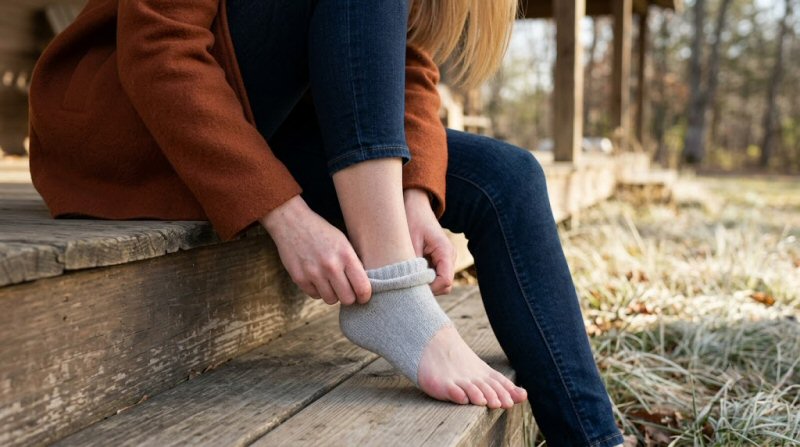
The toes look fine in the cold. The trouble starts later, back inside, when the boots come off. The skin over the smaller toes turns dusky red or violet, feels hot and tight, and itches with a deep burn that scratching only makes louder. A sock line sits higher than usual. By the next morning a toe or two may be swollen enough that the shoe feels mean, sometimes with a small blister or a tender purple patch that lasts days, not minutes.
That pattern has an old name: chilblains, or pernio. It is a reaction to cold that never quite froze the tissue. It is common in damp, cool climates, more often in women and in people who run cold, and it is not the same thing as frostbite, athlete’s foot, or the white-finger spells of Raynaud. A few itchy toes after a wet walk home are usually a circulation-and-skin story. Sores that ulcerate, a single toe that stays cold and dark, or the same patches in warm weather deserve a closer look.
What Cold, Itchy, Swollen Toes Feel Like
Chilblains announce themselves after the exposure, not always during it. You were out in cool drizzle, stood on a sideline, worked in a chilly stockroom, or slept in a room that dropped overnight. Hours later, often as the feet rewarm, one or more toes itch, burn, and swell. The color is red, purple, or a bruised blue-red, usually on the tops of the toes, the sides, or the pads, sometimes the heel or a finger.
The itch is out of proportion to how the skin looks. Pressure from a shoe hurts. A small clear blister or a dark crust can appear. The patch may stay tender for one to three weeks, then fade, sometimes leaving a thin stain. Both feet can be involved, often unevenly. The rest of you feels well. There is no spreading redness up the leg and no fever.
People who get them once tend to get them again in the same season. The first cold damp week of autumn is a classic trigger. Dry deep-freeze weather is less typical than cool and wet.
Why Cold Damp Air Does This
Toes are built to trade heat away. They have little muscle, a large surface, and arteriovenous shunts that can shut blood flow down to protect core temperature. In ordinary cold, those shunts open again in brief bursts, the hunting reaction described by Thomas Lewis, so the skin does not stay clamped forever.
In chilblains that handover goes wrong. Cold-induced narrowing lasts too long. When flow finally returns it comes as a rush into small vessels that have been irritable and a little leaky. Fluid and inflammatory cells leave the capillaries. The toe swells, reddens, and itches. Damp air and wet socks make it worse because water pulls heat from skin much faster than dry air at the same temperature. You do not need a blizzard. A long commute in thin shoes and 5 to 10 °C drizzle is enough for susceptible feet.
The exact immune piece is still incomplete. Reviews by authors such as Cribier, Prakash, and Souwer describe pernio as an abnormal vascular and inflammatory response to non-freezing cold, not a simple vitamin shortage and not an infection. Low body weight, smoking, and already-poor acral circulation raise the odds. Tight shoes and elastic sock cuffs add a mechanical clamp on top of the cold clamp.
This is different from the brief mottling some hands show outdoors, and different from the hot flush of ordinary rewarming. Those settle in minutes. Chilblains linger as a patch.
Common Everyday Triggers
Most winter cases have a boring setup.
Thin fashion shoes, damp leather, or cotton socks that stay wet after a walk. A desk or a driver seat with cold air aimed at the feet. Sitting still after coming inside, so the calf pump never helps the toes rewarm evenly. A bedroom that is cold and a duvet that does not cover the feet. Sudden heat once you are in: a hot bath, a radiator, a hair dryer on the toes. Rapid rewarming feels kind and often worsens the itch.
Women are reported more often than men, partly because of lower muscle mass at the feet, hormonal effects on small vessels, and colder footwear. Teenagers and young adults get them. So do older adults with stiffer arteries. A first episode in midlife is still usually ordinary pernio if the story is cold, damp, and both feet.
Less Common but Serious Lookalikes
A few conditions borrow the same toes.
Raynaud phenomenon is color first: white, then blue, then red, in attacks set off by cold or stress, often with a clear border. The white phase is the clue. Chilblains are the lingering red-purple patch after the cold, and they can occur in people who also have Raynaud. Persistent sores, pits in the fingertips, or color change only on one hand need a vascular check.
Frostbite is freezing injury. The skin was numb, waxy, and hard in true freezing air, then blistered as it thawed. Chilblains happen above freezing.
Trench foot, or immersion foot, follows many hours in cold water, as in wet boots that never dry. The foot is pale, wrinkled, numb, then hot and swollen. A single wet commute is not trench foot. Days of soaked footwear can be.
Chilblain lupus, described in the older literature after Jonathan Hutchinson, makes similar acral patches but they show up even without cold, often with other lupus signs. A clinician may check this if lesions ignore the season.
Infection looks different: a hot red streak, pus, fever, or a puncture wound. Athlete’s foot prefers the web spaces, scales, and does not wait for a cold week. A dark streak under the nail that grows out is usually a bruise from the toe box, not pernio.
During the early pandemic, clinicians including Freeman and Kolivras described chilblain-like “covid toes,” often in younger people, sometimes without a classic cold exposure. Ordinary seasonal pernio is still the better fit when the only trigger is damp cold and the person is otherwise well.
Hidden Triggers People Miss
The cold is obvious. The amplifiers are not.
Smoking and nicotine gum clamp small vessels for longer than the cigarette lasts. Beta blockers and some migraine medicines can cool the extremities. A very low-calorie stretch or a sudden drop in weight leaves less insulation and a more reactive shunt system. Wet kitchen work, then a walk to the car in the same socks. Heated car floors that cook cold toes in five minutes. Elasticated tights that leave a ring at the forefoot.
Sitting all day matters too. Toes that never get a calf-pump assist rewarm in a lump instead of a gradient. If your knees already ache in the cold, the same still afternoon is often behind the toes.
When to Worry
Most patches are annoying and self-limited. Ask for a timely exam if:
- A toe stays blue, gray, or black, or will not warm after you are indoors.
- Skin breaks down into an ulcer, or redness spreads with fever.
- Only one toe or one foot is affected, especially with pain at rest.
- The same lesions appear in summer or in a warm room with no cold trigger.
- You also have joint swelling, a facial rash, mouth ulcers, or fingers that turn stark white.
- Blisters are large, or you cannot feel the toe.
- Episodes keep returning hard enough to limit walking despite warm, dry footwear.
Sudden cold, pale, and severely painful foot is an emergency pattern, not a chilblain evening.
Myths vs Facts
Myth: itchy winter toes mean a fungus. Fact: fungus likes warm, moist web spaces year-round. Cold-triggered red swelling on the toe tops is usually pernio.
Myth: you have to have been near frostbite. Fact: chilblains are a non-freezing injury. Cool and wet beats extreme and dry.
Myth: they are a calcium or vitamin deficiency you can supplement away. Fact: low weight and poor diet can coexist, but trials have not made a vitamin the treatment. Warmth and dry skin do more.
Myth: a hot soak is the cure. Fact: rapid heat increases the leak and the itch. Lukewarm rewarming is kinder.
Myth: white fingers and chilblains are the same diagnosis. Fact: fingers that turn white in the cold are a Raynaud spasm. Chilblains are the inflammatory patch that lingers after rewarming. They overlap in some people and not in others.
How to Manage It
Treat the current patch gently, then change the next exposure.
Rewarm slowly. Room air, dry wool or synthetic socks, a blanket, a short walk so the calves pump. Skip the hot water bottle directly on the toes and the hair dryer. Do not rub or scratch. A plain unscented moisturizer on intact skin is enough. If a blister opens, keep it clean and covered. Elevation helps the puffiness overnight.
For the next cold week, keep feet dry more than merely warm. Wool or moisture-wicking socks, a spare pair in the bag, shoes that are roomy at the toe box, and a change out of damp footwear as soon as you are inside. A thin liner sock under a wool sock beats one thick cotton sock that stays wet. Cover the ankles. Avoid tight toe seams.
Keep the core warm so the feet are not sacrificed. A short walk after you come in beats standing on a vent. If you smoke, stopping is one of the few changes that clearly helps small-vessel cold reactivity. People with frequent, blistering episodes sometimes are offered a prescription vessel-relaxing medicine such as a calcium-channel blocker. That is a clinician decision, not a cold-weather staple, and it is reserved for lesions that keep returning.
When to See a Doctor
See a doctor if ulcers, one-sided color change, summer lesions, or signs of a broader autoimmune or clotting problem show up, or if simple warmth and dry shoes fail across a whole season. Photos of the toe at peak color help, because the patch may fade before the appointment. Mention medicines, smoking, and whether fingers also blanch.
A first mild episode that follows the script, both feet, cold damp day, itch after rewarming, intact skin, can be managed with the steps above while you watch the next cold snap.
FAQs
How long do chilblains last?
A typical patch itches for several days and fades over one to three weeks. New cold exposure resets the clock. Recurrent toes in the same season are common and still usually benign.
Are chilblains the same as frostbite?
No. Frostbite freezes tissue, usually in sub-zero wind, with numb waxy skin. Chilblains happen above freezing, especially in damp cold, and show up as red-purple itch after you warm up.
Why do they itch more once I am indoors?
The inflammatory leak peaks as blood returns. Lewis-type rewarming flow into irritable capillaries is why the toe feels worse on the sofa than it did on the walk.
Can chilblains scar?
Most do not. A blistered or ulcerated patch can leave a thin mark or a thicker callused spot. Repeated ulcers are a reason to be examined rather than a reason to keep waiting on socks alone.
Do children get them?
Yes. Cool wet playgrounds, thin shoes, and low muscle mass at the feet are enough. The same warmth-and-dry rules apply. Ulcers or lesions without cold still need a pediatric check.
Should I stop walking until they fade?
Short walks usually help by driving the calf pump, as long as the shoe does not rub an open blister. Standing still in wet shoes is the worse option.
Conclusion
Itchy, swollen, red-purple toes after cool damp air are a familiar cold injury that never reached freezing. The feet shut flow down, then reopened too abruptly into irritable skin. Dry socks, roomy shoes, slow rewarming, and a walk after you come inside settle most episodes. White attacks, black skin, ulcers, or patches that ignore the season are the versions that should not be filed under ordinary winter toes.