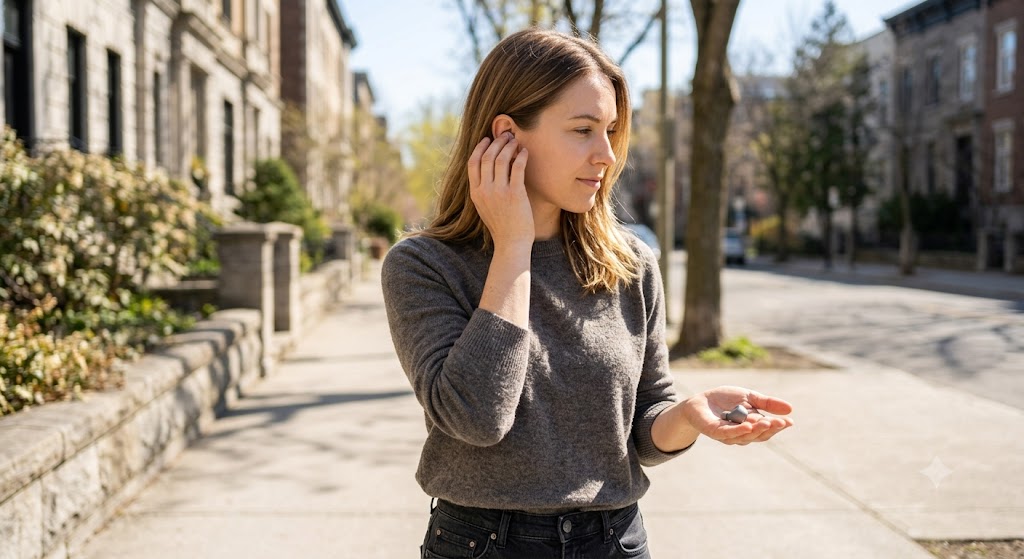
A muffled, waterlogged ear after a swim is usually trapped canal water or swollen wax, not middle-ear fluid. How the external canal, cerumen and eardrum work — and when fullness becomes swimmer’s ear.
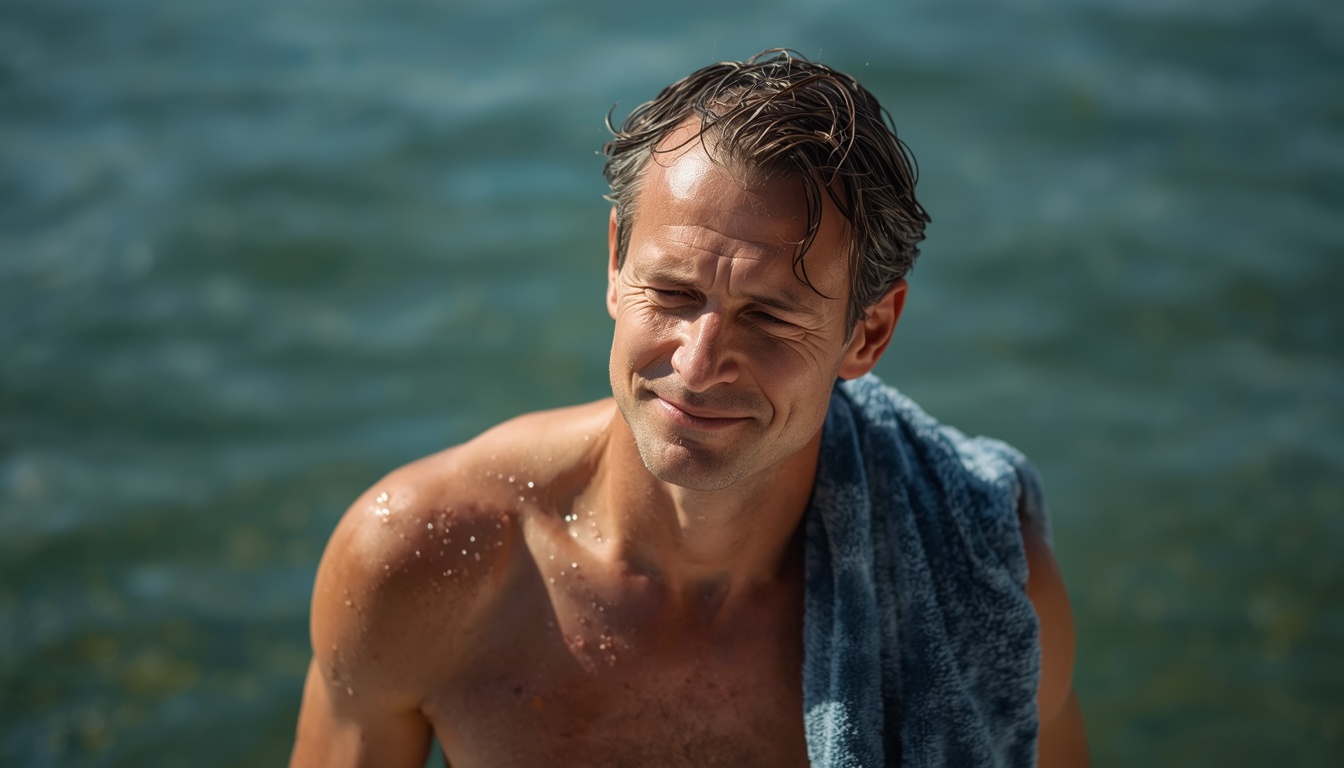
You climb out of the pool, shake your head once, and one ear stays underwater. Voices sound as if they are coming through a towel. Your own voice booms. Tilting toward the shoulder sometimes produces a single warm trickle and the world snaps back. Sometimes it does not. The blocked-after-swim ear is one of the most common brief sensory complaints of summer, and most of the time it is not an infection, not fluid behind the eardrum, and not a sinus problem traveling sideways. It is water, or water-swollen wax, sitting in a narrow, slightly curved tunnel that was built to stay dry enough for sound.
The external auditory canal is a skin-lined tube about 2.5 centimeters long in adults. The outer third is cartilage with hair and ceruminous glands. The inner two-thirds is bone, tightly skinned, and ends at the tympanic membrane. Ben Senturia’s mid-century work on the canal’s ecology showed why the design usually works: a slightly acidic film, migrating epithelium that carries debris outward the way a conveyor belt does, and cerumen that is both water-repellent and antimicrobial. A swim briefly defeats that design. Water enters. Surface tension holds a meniscus against the drum or against a plug of wax. Sound has to travel through liquid and air instead of air alone. Conductive hearing drops a little. The canal feels full because, locally, it is.
What the blocked-after-swim ear actually feels like
The typical pattern is one-sided. You hear your own chewing and speech too loudly on that side — a small autophony from a canal that is no longer an open resonator. Outside sound is dull rather than painful. There is no fever. The outer ear is not red. Pressing the tragus, the little flap in front of the canal, may feel odd but does not send a sharp jolt. A day later the ear is usually normal.
That profile is different from two neighbors that share the word “full.” Middle-ear pressure lag after a flight sits behind the drum and often eases when you swallow or yawn, as described in the site’s piece on post-flight ear fullness. A quiet-room ring is a cochlear sound, not a plug, and does not muffle speech the same way as water in the canal; that pattern is covered in hearing ringing in a quiet room. After a swim, the problem is almost always in front of the drum, not behind it and not inside the cochlea.
Why water stays put
Three physical facts keep a few drops in place. First, the canal is not a straight pipe. It runs slightly forward and then turns, so gravity does not empty it just because you stand up. Second, water has surface tension. A thin film can span the lumen and sit against the drum like a tiny window, which is why a single head tilt sometimes produces a satisfying pop of drainage and sudden clarity. Third, cerumen is hygroscopic. Dry wax takes on water, swells, and can convert a harmless film into a soft plug. People who already make drier, paler wax — more common in some East Asian ancestry groups, as work associated with Takashi Yoshiura and others on ABCC11-related cerumen type has shown — often notice the swell more than people with wetter, honey-colored wax.
Chlorinated pool water and seawater are not identical insults. Chlorine and low pH can strip some of the canal’s acid mantle. Salt water is closer to tissue osmolality but still leaves a residue as it evaporates. Neither is automatically infectious. Infection needs time, a macerated barrier, and usually a bacterium that likes a warm wet canal — most often Pseudomonas aeruginosa or, less often, Staphylococcus aureus. That is swimmer’s ear, acute otitis externa, and it does not start the minute you towel off. It starts hours to a day later, with pain that outruns the muffling.
When fullness is still just water — and when it is becoming swimmer’s ear
Peter Roland, Joseph Dohar and colleagues writing for otology groups have drawn a practical line that still holds. Isolated fullness, muffled hearing, and a trickle when you tilt are water or wax. Pain when you tug the pinna or press the tragus, spreading redness of the canal skin, discharge that is not just clear water, and pain that wakes you are otitis externa. Fever and swelling that close the canal are later still. Diabetics and people with eczematous or already scratched canals cross that line faster because the skin barrier was thin before the swim.
A third pattern is worth naming so it is not over-treated as infection. After a long session, especially with poorly fitted plugs or repeated diving, the drum can look a little pink from barometric and thermal stress without being infected. Hearing returns as the canal dries. If hearing does not return, or if you felt a sharp pop and then marked loss during a dive, that is a different problem — middle-ear or inner-ear barotrauma — and it is not a towel-and-wait situation.
Hidden triggers that make one ear keep flooding
Narrow canals, extra hair at the entrance, and a large wax shelf all trap water. So do earbuds worn into the pool area, which push wax inward, and cotton swabs, which do the same with more force. Eczema and psoriasis of the canal skin change the lipid film so water clings. Hearing-aid molds and frequent in-ear headphones keep the canal humid between swims. Children have shorter, relatively straighter canals and often get water in and out more easily; adults with a bony inner canal and a wax dam get the classic one-sided clog.
Surfer’s ear is a different architecture. Repeated cold-water exposure can grow bony exostoses in the canal, mapped in surf populations by researchers including William House’s later clinical observers and, in modern series, by groups following cold-water athletes. Those bony shelves create pockets. Water stays. Wax stays. The first complaint is often “my ear never dries after a session,” not pain. That is anatomy, not a moral failure to tilt hard enough.
Myths vs facts
Myth: If the ear feels full after a swim, you have water behind the eardrum.
Fact: In an intact drum, pool water stays in the external canal. Middle-ear fluid is a different diagnosis and does not appear because you swam with an intact membrane.
Myth: You should put alcohol or oil in every time you get out.
Fact: A dry, intact canal often needs only gravity, warm air, and time. Alcohol-vinegar drops can help selected wet canals; they sting and dry already cracked skin. Oil can waterproof wax so the next swim traps even more. Neither is a universal rinse.
Myth: Cotton swabs are the way to finish drying.
Fact: Swabs push wax onto the drum, scratch the thin bony-canal skin, and raise the odds of the infection you were trying to prevent. Senturia’s ecology work and every modern otology guideline agree on this more loudly than on almost any other home-care point.
Myth: Ear fullness after swimming means you need antibiotics.
Fact: Most blocked-after-swim ears are sterile water. Antibiotics belong to true otitis externa, usually as topical drops chosen for the likely organisms, not as a reflex pill.
How to drain and dry a waterlogged ear
Tilt the blocked side toward the floor. Pull the pinna up and back to straighten the adult canal, then bounce gently on that heel or tug the earlobe. A single drop often runs out. If nothing comes, lie on that side for ten minutes on a towel. A hair dryer on cool or warm — never hot — held at arm’s length can evaporate a film that gravity missed. Yawning and swallowing move the drum a millimeter and sometimes break a meniscus; they are the same pressure-equalizing motions that pop a flight ear, described with the Eustachian tube in ears that pop when you swallow, but here they are helping the outer surface of the drum, not the middle-ear space.
If you are prone to trapped water, a well-fitted silicone plug or a swimmer’s headband is more useful than a ritual of drops. After a known wet session, a 1:1 mix of white vinegar and rubbing alcohol is the classic home recipe many otologists still accept for intact drums in people without tubes, dermatitis, or a suspected perforation: a few drops, a minute of dwell, then drain. Vinegar lowers pH toward the canal’s normal acid range. Alcohol speeds drying. Skip the recipe if the ear already hurts, drains pus, or you have a hole in the drum.
Leave wax alone unless a clinician has already seen a plug. Softening drops can help a known cerumen impaction; they are not a daily swim accessory. If hearing stays dull for more than a day, an otoscope visit is kinder than another week of home experiments. What looks like “water” is sometimes a swollen wax cast sitting on the drum, and it comes out in one piece in a clinic, not under a shower at home.
When to worry
See a clinician the same day or next morning if fullness turns into pain when you move the outer ear, if the canal weeps cloudy fluid, if the skin around the ear reddens and swells, or if you have diabetes or a weak immune system and any canal pain after water exposure. Go sooner if you felt a pop during a dive and hearing dropped hard, if you are spinning, or if you see blood. Recurrent one-sided blockage in a cold-water swimmer is a reason to look for exostoses before the next season, not a reason to keep buying stronger drops.
Kids who swim daily and keep a mildly wet canal are common. Kids who tug the ear, wake with pain, or drain pus are not “just water.” Pediatric series from groups following van Asperen and others on childhood otitis externa still show that moisture plus a scratch plus time is the usual recipe. Treat the pain and the wet skin. Do not wait for a fever that may never come.
When to see a doctor
A single muffled hour after laps is home care. Fullness that lasts through the next morning, pain, discharge, or hearing that does not bounce back deserves an ear exam. People with tubes, a known perforation, recent ear surgery, or a history of malignant otitis externa — a rare invasive Pseudomonas infection in older adults with diabetes, classically described in the modern era by Chandler and later reviewers — should not self-treat with alcohol drops. They need a look and a plan.
FAQs
Why is only one ear blocked?
Canals are not identical. Wax load, hair, the exact bend, and which ear was downhill in the water all differ. One-sided blockage after swimming is the usual pattern, not a sign that the other ear is healthier in some deep sense.
Can I fly the next day if my ear still feels wet?
If the drum is intact and the problem is canal water, flying is a comfort issue, not a barotrauma issue. If you cannot tell canal muffling from middle-ear lock, delay the flight or get the ear looked at. A wet canal plus a blocked Eustachian tube is a miserable descent.
Do swimmers’ ear drops prevent infection?
Drying and acidifying drops reduce the chance of otitis externa in people who swim often and already get wet canals. They do not replace drying, and they do not treat an established infection as well as prescription drops aimed at Pseudomonas.
Is pool water worse than the ocean?
Both can trap. Chlorinated water is harder on the acid mantle. Seawater leaves salt as it dries. Lakes and ponds add more varied microbes. The canal’s own wetness and any scratch matter more than the brand of water.
Why does my hearing boom in the blocked ear?
A water film or wax plug changes how your own voice and pulse conduct through bone and soft tissue. The outer pathway is dampened; the inner pathway is relatively louder. That boom usually vanishes when the canal opens.
Should children wear earplugs every swim?
Not automatically. Kids with intact drums and no history of otitis externa often do fine with a towel and a head tilt. Plugs help the child who already gets repeated wet-canal pain or who has tubes, and they must fit. A loose plug can trap water behind it.
Conclusion
A blocked ear after swimming is, in the ordinary case, a small physics problem in a tunnel that prefers to stay dry. Water clings. Wax swells. Sound dulls. Gravity, time, and a little warm air usually finish the job the head shake started. Pain, pus, and a canal that will not open are the points where a harmless meniscus becomes skin infection or a hidden plug, and those deserve a light and a plan rather than another swab. The ear was not designed for a chlorinated lane. It was designed to shed rain, not to hold a pool. Treat the water as water first. Save the worry for the ear that starts to hurt.